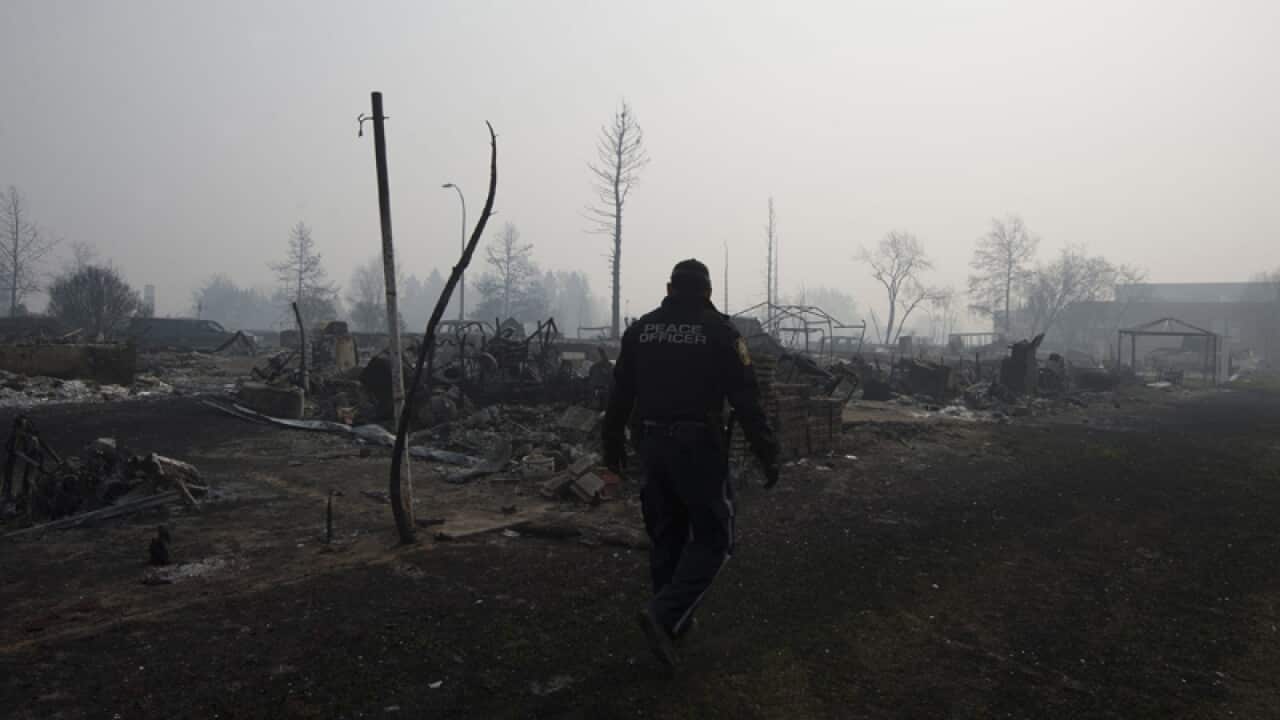
About 8000 workers at oil camps north of the fire-ravaged Canadian city of Fort McMurray have been ordered to evacuate the area as authorities continue the battle to bring wildfires under control.
The mandatory evacuation zone was extended to 50 kilometres north of the city, whose 80,000 residents have been out of their homes for more than two weeks.
Suncor, one of the major operators working on Canada's oil sands, issued a news release late on Monday confirming it had "started a staged and orderly shutdown of our base plant operations" and that personnel were being transported to work camps further north. It stressed there has been no damage to Suncor infrastructure.
The workers had been trying to restart oil production at the facilities after they were halted by the fires and by the need to house a flood of people from Fort McMurray seeking safety. Those people have since been transferred further south.
"Suncor has enhanced fire mitigation and protection around all of its facilities," said the release. "When it is safe to do so, we will continue implementing our restart plans."
News that makes sense
Your trusted source for staying up-to-date with the world around you. Get free daily news updates and analysis, straight to your inbox.
The fire destroyed more than 2400 structures in Fort McMurray, although firefighters managed to save essential infrastructure in the oil sands capital, including the hospital, water treatment plant and the airport.
Crews continued to battle hot spots on the edge of Fort McMurray on Monday while the first still raged out of control deeper in the forest. Hot, dry conditions were not helping firefighters.
Earlier on Monday, officials warned the air quality in the Fort McMurray area was dangerously poor.
Alberta Premier Rachel Notley said the air quality health index is normally one to 10, with 10 being the worst, but the reading on Monday morning was at 38.
Notley said the conditions were hampering efforts to get residents back to their homes.
"Alberta Health Services has recommended that members of the public who had been previously arranging to return to the area under various requests not return until those conditions improve," Notley said at a news conference in Edmonton.
"This is something that could potentially delay recovery work and a return to the community."
Karen Grimsrud, Alberta's chief medical officer of health, said they expect the air quality readings to remain in the extreme range for the next couple of days.
She said workers in the area should be wearing respirators.







