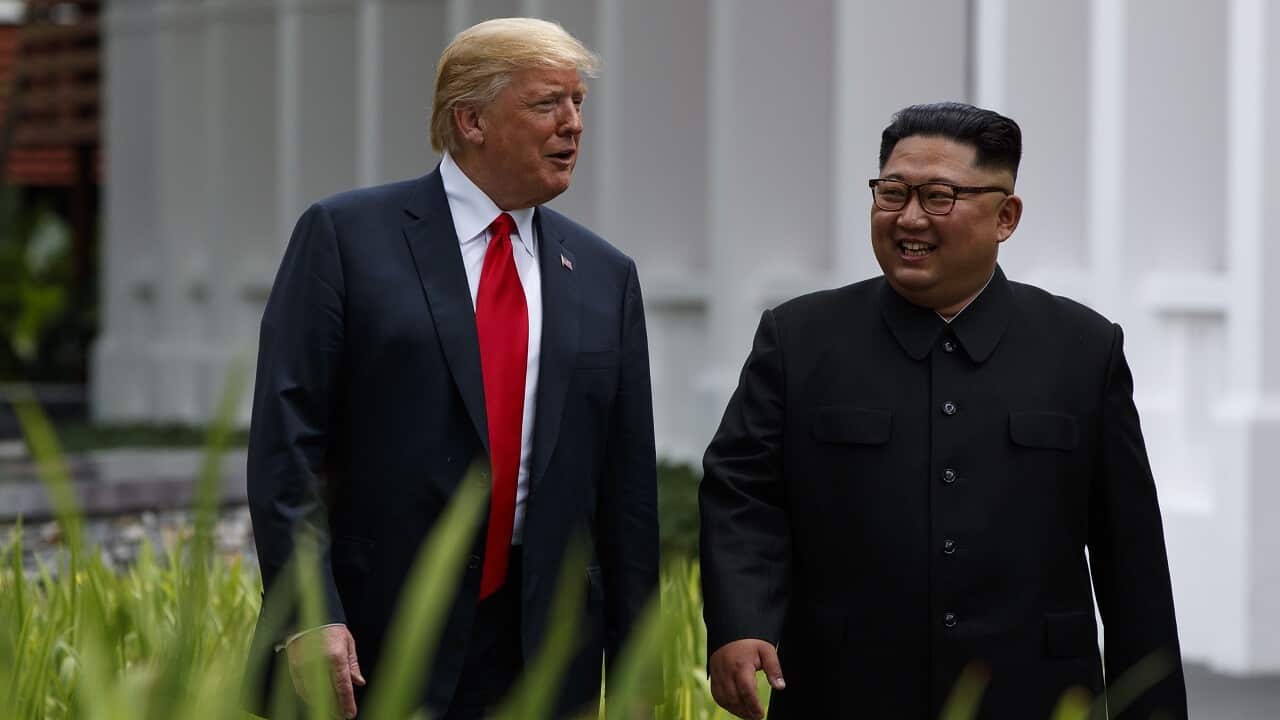
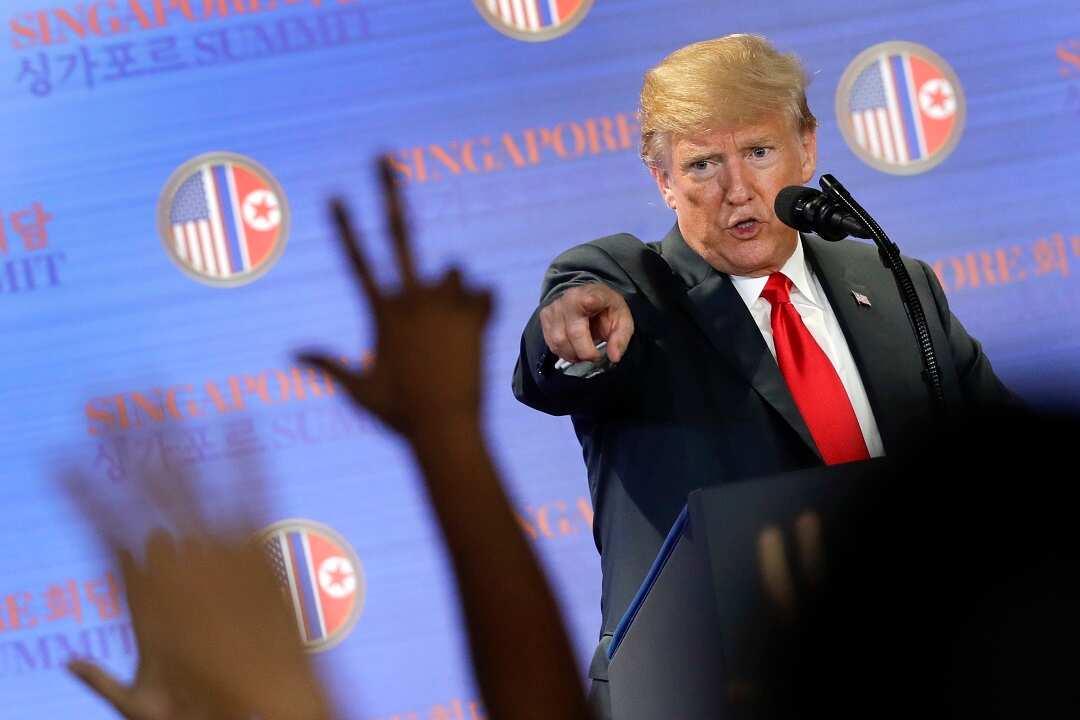
World powers welcomed the summit between US President Donald Trump and North Korean leader Kim Jong Un on Tuesday.
Most cautioned that the summit in Singapore was only the first step in a long journey to full denuclearisation of the the Democratic People's Republic of Korea, or DPRK, as North Korea calls itself.
Here are some of the main reactions so far:
South Korea
South Korea's President Moon Jae-in vowed to write "new history" with North Korea, praising Kim's decision to hold the summit with the US.
News that makes sense
Your trusted source for staying up-to-date with the world around you. Get free daily news updates and analysis, straight to your inbox.
"Leaving dark days of war and conflict behind, we will write a new chapter of peace and co-operation," Moon said in a statement released by his office.
"We will be there together with North Korea along the way."
Moon's comments came after earlier caution from the presidential office, saying it was seeking clarity after Trump pledged to stop joint military exercises with Seoul.
"At this point, we need to find out the precise meaning or intentions of President Trump's remarks," a Blue House spokesman said.
Japan
Japanese Prime Minister Shinzo Abe saw the summit as a "first step" towards "complete denuclearisation" and "the comprehensive resolution of issues concerning North Korea."
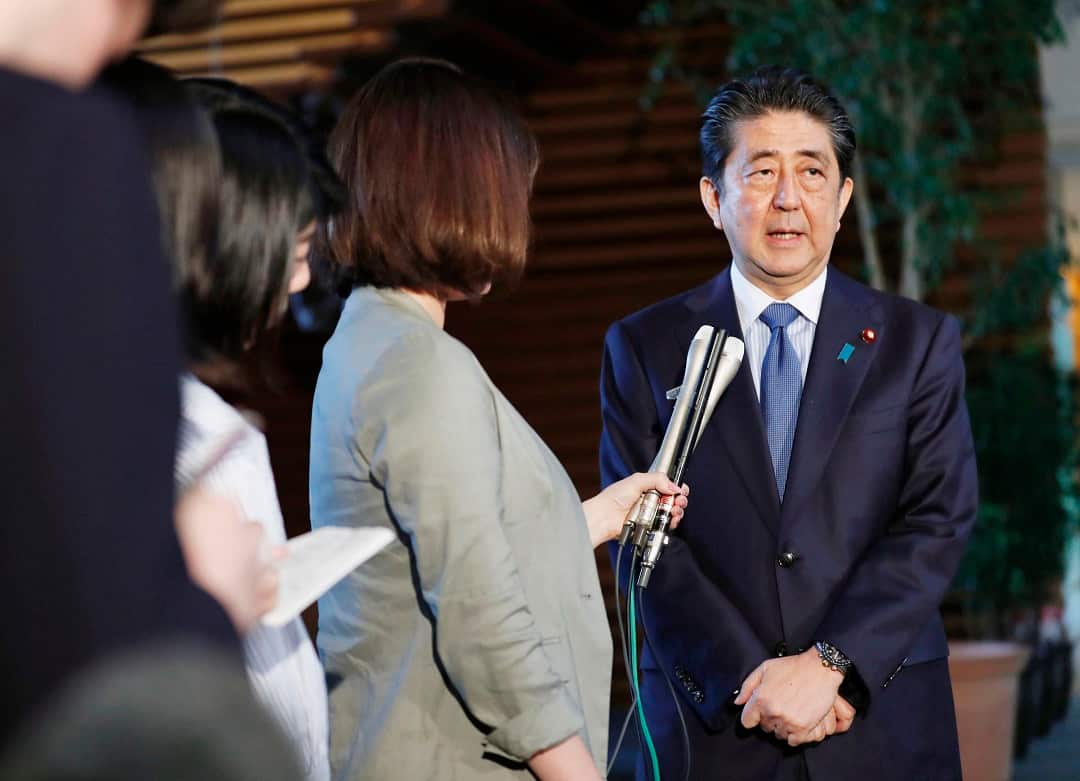
"We see this as a step in a comprehensive resolution," Abe said in Tokyo.
Japan wants North Korea to agree to a complete, verifiable and irreversible denuclearisation.
Abe added that he "would like to thank the president (Trump) for raising the abduction issue," referring to Japan's demand that Pyongyang release any remaining Japanese people it abducted to train its spies.
Malaysia
Malaysia will re-open its embassy in Pyongyang, Prime Minister Mahathir Mohamad said on Tuesday, more than a year after the assassination of the North Korean leader's half-brother in Kuala Lumpur triggered a diplomatic row.
The news came the same day as the historic summit in Singapore.
The North Korean leader's estranged relative, Kim Jong Nam, was murdered at Kuala Lumpur airport in February last year by assassins who smeared a nerve agent on his face, in a Cold War-style killing that shocked the world.
China
The fact that the two leaders "can sit together and have equal talks has important and positive meaning, and is creating a new history," Chinese Foreign Minister Wang Yi told reporters.
"The crux of the peninsula nuclear issue is a security issue. The most important, difficult part of this security issue is for the United States and North Korea to sit down to find a way to resolution via equal talks," Wang said.
"Resolving the nuclear issue, on the one hand of course is denuclearisation, full denuclearisation. At the same time, there needs to be a peace mechanism for the peninsula, to resolve North Korea's reasonable security concerns."
The EU
The EU praised the summit between Trump and Kim as a "crucial and necessary step", saying it indicated "complete denuclearisation" of the Korean peninsula could be achieved.
"This summit was a crucial and necessary step to build upon the positive developments achieved in inter-Korean relations and on the peninsula so far," the EU's diplomatic chief Federica Mogherini said in a statement.
Russia
Russia gave a positive assessment of the deal between Trump and Kim, but "the devil is in the detail", TASS news agency reported.
Deputy Foreign Minister Sergei Ryabkov told TASS that Russia is ready to assist in implementing the deal - to work towards complete denuclearisation of the Korean peninsula - and hopes settling the nuclear crisis will unblock normal economic co-operation.
Iran
Iran warned Kim that Trump could nullify any nuclear deal with North Korea.
The semi-official Fars news agency quoted Mohammad Bagher Nobakht, as saying: "We are facing a man who revokes his signature while abroad.
"We don't know what type of person the North Korean leader is negotiating with. It is not clear that he would not cancel the agreement before returning back home."
The US pulled out of the landmark 2015 nuclear deal with Iran in May.
Britain
British Foreign Minister Boris Johnson said in tweet that the talks had been "constructive" and "DPRK's commitment to complete denuclearisation of the Korean Peninsula is an important first step towards a stable and prosperous future."
IAEA
Yukiya Amano, the head of the UN's International Atomic Energy Agency, welcomed the "DPRK's commitment towards complete denuclearisation of the Korean Peninsula."
"The IAEA stands ready to undertake any verification activities in the DPRK that it may be requested to conduct by the countries concerned," Amano added.
Norway
Norway's foreign minister Ine Eriksen Soreide said that notwithstanding the "fundamentally positive" step the summit represented, it was now "that the largest part of the work actually begins."
Poland
Jacek Sasin, aide to Prime Minister Mateusz Morawiecki, said that "if as a result of the meeting, North Korea will abandon its nuclear aspirations and no longer threatens to launch an attack, it's very good."
President Andrzej Duda's chief of staff, Krzysztof Szczerski, hailed the summit as "spectacular" and a "triumph of diplomacy".







