Next week is the 70th anniversary of the Borneo campaign in which hundreds of diggers died but some historians say was unnecessary.
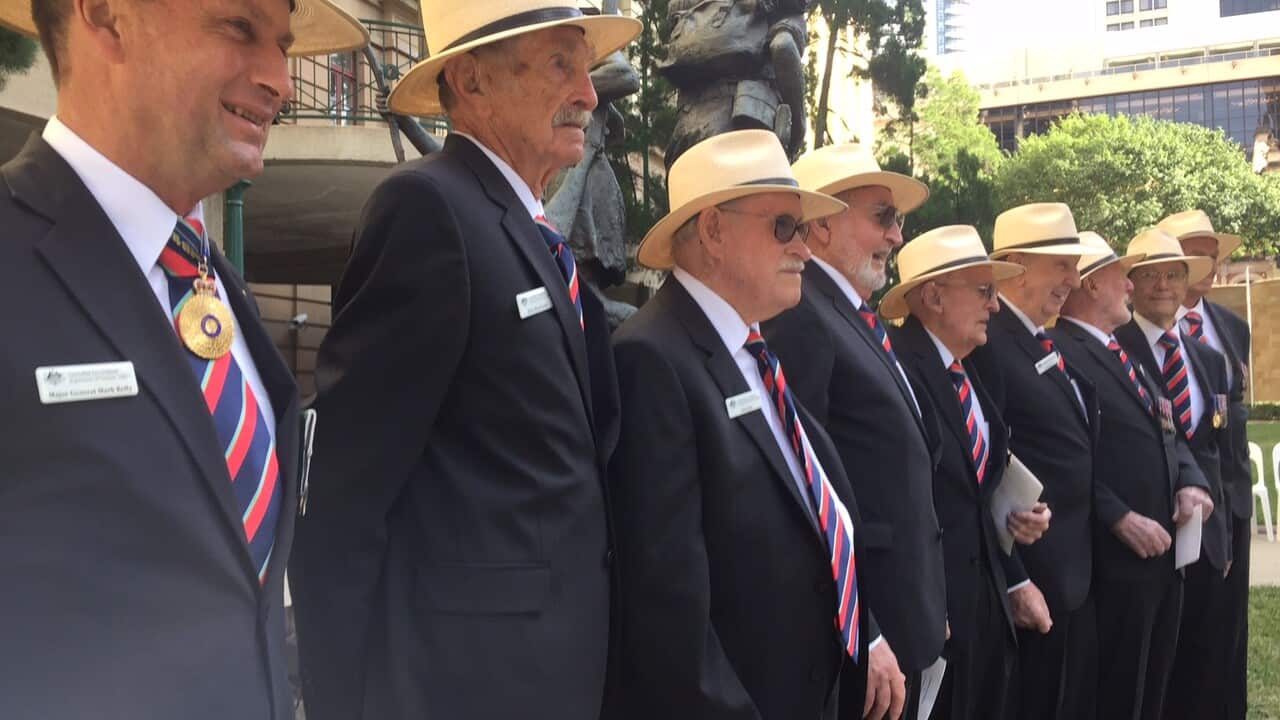
Some of the last veterans of this largely forgotten World War II campaign gathered in Brisbane for a commemoration before travelling to Borneo.
Serving as a telegraphiston on the landing ship HMAS "Westralia," Patrick Curtis was one of more than 70,000 Australians involved in Operation Oboe in June 1945.
About 600 died as part of the largest ever seaborne landing by Australian forces.
"Yes, it’s going to be upsetting, [it] even upsets me now thinking about it," said 90-year-old Patrick Curtis, wiping away tears.
“They were prepared to lay their lives down for their country.”
His wife of almost 50 years, Jan, said he rarely talked about the war. Patrick helped soldiers board landing craft and then watched on from the deck.
“As they went along the beach, we could see them, and then they were strafed, a few times,” he said.
“You could see the soldiers being killed, with the Japanese planes coming in and strafing them, and knocking them over. That was a sad point.”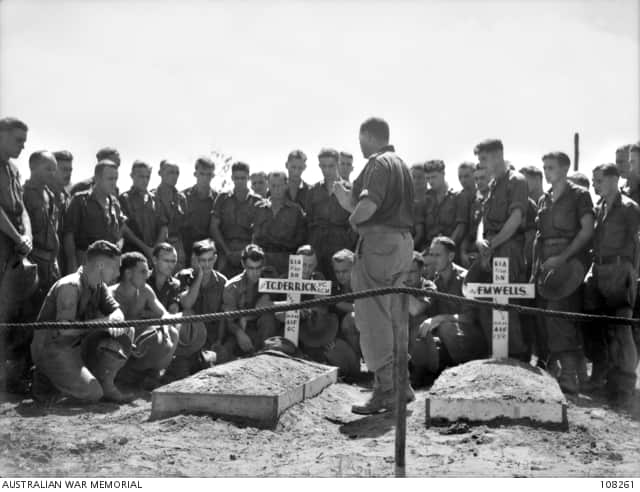 The landings at Tarakan, Labaun and Balikpapan are considered near textbook military operations but are eclipsed in history by the Kokoda campaign in Papua New Guinea.
Men of the 2/48th Battalion gather around the grave of Lieutenant T.C. “Diver” Derrick VC DCM CREDIT (AWM 108261)
“This was not an operation that was at the tip of the spear in terms of defeating Japan, this was an operation that was very controversial even at the time,” said historian Dr Peter Dean, from Australian National University. Dr Dean is the author of "1944 - 45: Victory in the Pacific," due for release later this year.
"Tactically, while an outstanding operation, they were operationally really not that important and strategically quite questionable as well," he said.
In June 1945, the Japanese Imperial forces were on the retreat. The Allies fought them back through Solomon Islands, Papua New Guinea and the Philippines, leaving Borneo sidelined.
"Yes, it’s going to be upsetting, [it] even upsets me now thinking about it."
"The main reason for them going ahead was our alliance, our coalition and ensuring Australia’s place at the peace table, when those peace negotiations came up with Japan," Dr Dean said.
It was less than two months before the United States dropped the atomic bombs on Nagasaki and Hiroshima that ended the war in the Pacific.
"By this stage of the war the fighting is fairly gritty business,” said Dr Karl James, senior historian at the Australian War Memorial.
“A lot of it is being conducted at close quarters. Yes, you have naval gun support, air strikes, flamethrowers but a lot of work is done with bayonets. It’s a very gritty business.”
The Australian 7th and 9th Division, some veterans of fighting the Germans and Italians in North African, were the main force.
Among the casualties, war hero and Victoria Cross recipient lieutenant Tom "Diver" Derrick.
"The death of Derrick was a huge blow to the Australians fighting on Tarakan," Dr James said.
“This is a decorated soldier, he served at Tobruk and El Alamein, was awarded the Victoria Cross in New Guinea and, for many, his death highlighted the futility of the campaign.
“In the early 1940s he was possible Australia’s best known soldier in the war.”
The Australian forces were serving under the Supreme Commander of Allied forces in the South West Pacific, US General Douglas MacArthur.
“He played a very duplicitous hand. He told the Australian government [Operation Oboe] was being demand by the US Joint Chiefs of Staff and US High Command, and he was also telling US High Command the Australian government wanted this to go ahead,” Dr Dean said.
“So while there were concerns by both the US and Australian governments, it was really MacArthur who drove this ahead.”
General MacArthur’s interest in Borneo was likened to a vanity project.
“It’s a little bit of a sideshow, the operations in Borneo, and they really only came about because of MacArthur’s personal desire to liberate parts of Netherlands East Indies,” Dr James said.
For battle-scarred veterans like Patrick Curtis, those debates were no longer a concern.
By returning to Borneo for the anniversary, he just wanted to remember those lost 70 years ago on a faraway shore.
"About Borneo, I don’t think there’s anything outstanding to remember it by," he said.
Share


