(Transcript from World News Radio)
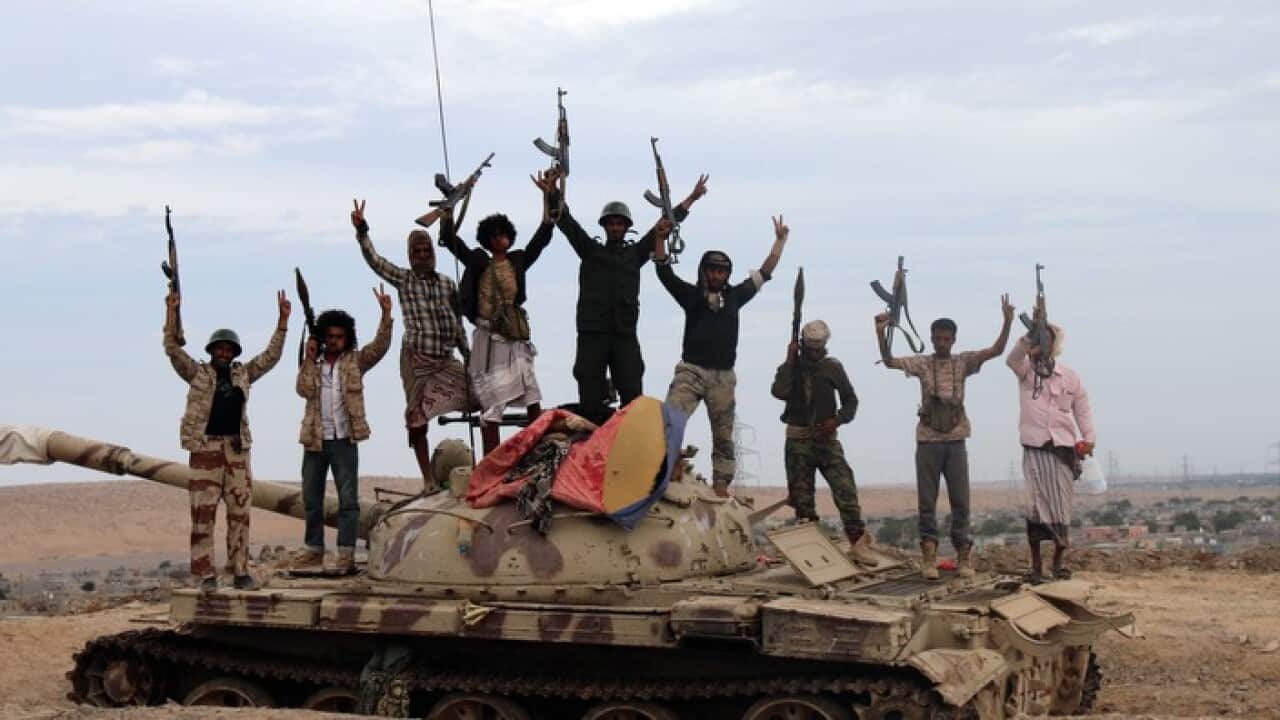
Britain has joined the US in withdrawing its special forces from Yemen, as the security situation in the country deteriorates.
The UN is warning the country is on the brink of civil war - with implications beyond the country's borders.
News that makes sense
Your trusted source for staying up-to-date with the world around you. Get free daily news updates and analysis, straight to your inbox.
Brianna Roberts reports.
Yemen has long been described as a country on the brink of civil war, but so far all-out war has been averted.
After Houthi rebels seized control of Taiz - the country's third largest city,the UN's special envoy for Yemen Jamal Benomar has warned the country is once again at crisis point.
"Events in recent weeks and days seems to be leading Yemen farther away from a peaceful settlement and towards the edge of civil war."
The country's political turmoil deepened in September last year, when Houthi rebels ousted President Abd-Rabbu Mansour Hadi, seizing control of the capital San'aa.
President Hadi fled to the southern port city of Aden and established a power base.
The Houthis seizure of Taiz has brought them further south - and closer to Aden.
Yemen's Foreign Minister Riyadh Yaseen has called for the six-nation Gulf Co-operation Council to intervene, to halt the advance of the Houthis.
"(trans) Nobody wants to be pulled into direct military action on the ground. The majority of us consider it a final option. However, if we felt compelled and the ministers felt it necessary, we would without question, go ahead with the proposed plan."
Saudi Arabia says it and the other Gulf Co-operation Council members back President Hadi.
Saudi Arabia's Foreign Minister Saud Al-Faisal says Arab countries will take necessary measures to protect the region against what he calls "aggression" from Iran-backed Houthis.
"(trans) "We are keen on protecting Yemen's sovereignty, the legitimacy of Yemen represented by President Hadi alone. We hope that the crisis can be resolved peacefully and we are ready to respond to any demand at the President's request."
UN brokered peace talks will be held in Qatar, with any agreement to be signed in Riyadh, Saudi Arabia.
Former advisor to the Yemeni Prime Minister Muhamed Qubart has told al Jazeera its in the interests of the global community to resolve the crisis.
"It seems that the regional and global powers have now realised that an ungovered space in that region would be very harmful to their interests."
There are fears the ongoing security crisis could further empower the country's extremists.
Yemen is home to Al Qaeda in the Arabian Peninsula - considered one of the group's most dangerous branches.
And a new threat could be emerging - with IS claming responsibility for two recent suicide attacks on mosques in the capital.







