There are fears the conflict in Yemen could turn into outright civil war after Saudi Arabia and Arab allies launched air strikes throughout Yemen.
Houthi fighters took over parts of the capital Sana'a in September, forcing President Abd-Rabbu Mansour Hadi to flee to the southern city of Aden.
The rebels and their allies had been closing in on the port city, raising Saudi fears that they would take control of the whole country.
Saudi-owned Al-Arabiya television reported the kingdom deployed 100 fighter jets to the operation, while the United Arab Emirates committed 30, Bahrain and Kuwait 15 each and Qatar, 10.
Egypt, Jordan and Sudan have confirmed they are also joining the campaign.
The United States says it supports the operation and has provided what it's described as logistical and intelligence support.
Al-Arabiya also reports Saudi Arabia has also mobilised 150,000 troops near the border, while all civilian flights were halted at seven Saudi airports in the border region.
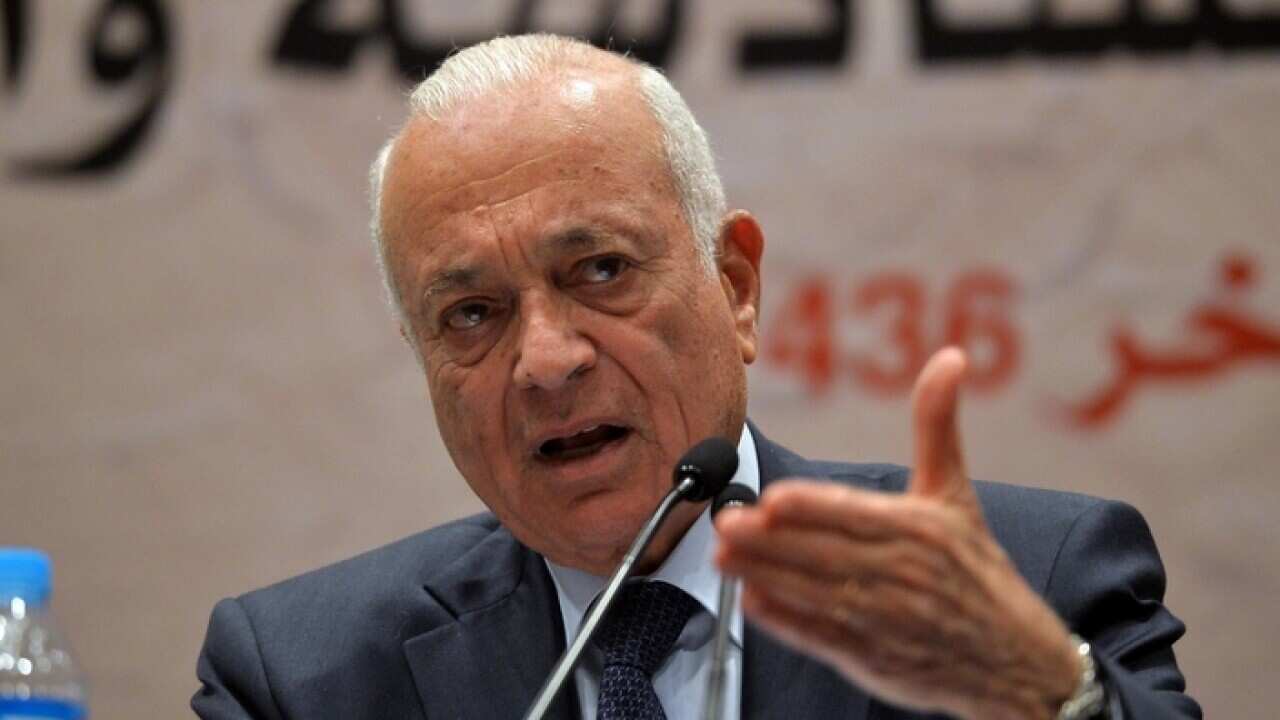
The Arab League's Secretary General, Nabil al Araby, says the regional bloc supports the airstrikes targeting the rebels.
"I would like to reconfirm our full support [of the operation] hitting specific targets that belong to the Houthi forces. [The operation] came as a response to a call by Yemeni President Abd Rabou Hadi who represents Yemeni legitimacy and the protection of the Yemeni people. This military operation took place after the failure of all trials to stop the Houthi coup d'etat. After their persistence to take escalated steps against the constitutional legitimacy and the national Yemeni will."
Iran has been accused of backing the Houthi rebels, accusations it denies.
Iranian Foreign Minister Mohammad Javad Zarif has called for an end to the attacks.
"It is necessary for all military action to end as soon as possible and for dialogue to resume toward reaching a solution. We believe that these military actions can only plunge the region further into turmoil and will have no benefit for any of the countries who enter into such actions. We have done our utmost to try to limit and control this crisis and will hopefully continue these actions."
President Hadi has reportedly departed Yeman with Saudi assistance, on his way to Egypt to take part in a two-day Arab League summit starting tomorrow.
Katherine Zimmerman is a Research Fellow at U-S conservative analysis centre American Enterprise Institute.
She says the conflict in Yemen could have broader implications for the region.
"The outbreak of conflict in Yemen, despite being a local conflict is part of a broader sectarian war that is ongoing in the Middle East. We saw it become a hot war in Iraq and Syria and the Saudis and the Gulf states are very aware of the threat they see Iran pose to them as a Shia state. The reason why Yemen is so important is because historically its not been a sectarian country and the Iranian position which has grown in Yemen over the past couple of weeks and months is much stronger and therefore much more of a threat to the Sunni states in the region."
Ms Zimmerman warns that the situation could push Yemen into an all-out war.
"I think the trajectory is certainly towards civil war and the forces that would have backed President Hadi will line with the Saudis and use this to their advantage. The problem is its not going to be a two-sided civil war. We will see a al-Houthi faction, a pro-Hadi faction and also al Qaeda trying to take advantage of the conflict to move further its own gains in Yemen."
Share


