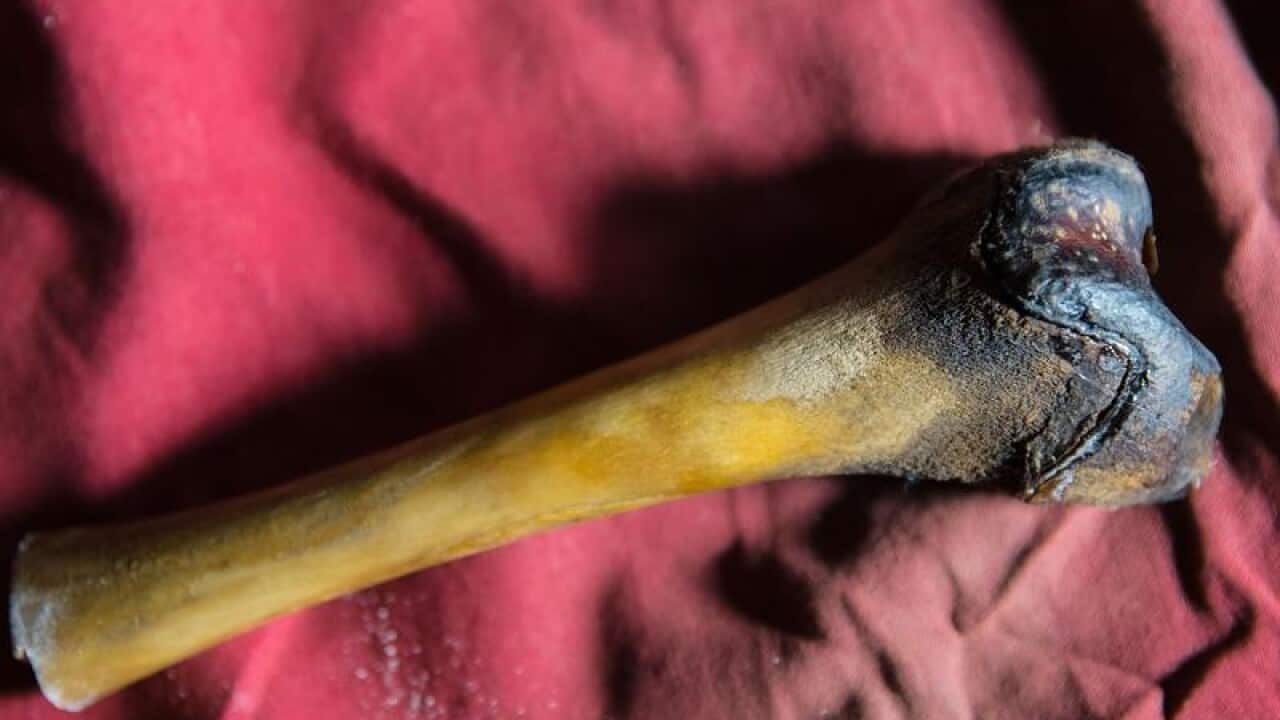
Alleged Yeti remains from museums and private collections are abominable fakes, a study has found.
Eight specimens, including bones, teeth, skin, hair and faecal samples, were found to come from bears and one belonged to a dog.
All the remnants, collected from the Himalayas and Tibetan Plateau, were claimed to be evidence for the existence of the Abominable Snowman or Yeti.
DNA tests proved they were nothing to do with hairy human-like creatures living in remote regions of Nepal and Tibet.
Lead scientist Dr Charlotte Lindqvist, from the University of Buffalo, US, said: "Our findings strongly suggest that the biological underpinnings of the Yeti legend can be found in local bears, and our study demonstrates that genetics should be able to unravel other, similar mysteries."
News that makes sense
Your trusted source for staying up-to-date with the world around you. Get free daily news updates and analysis, straight to your inbox.
She added: "Clearly, a big part of the Yeti legend has to do with bears."
The study was the "most rigorous analysis to date" of samples linked to mythical "hominid-like" creatures, said the researchers writing in the journal Proceedings Of The Royal Society B.
The Yeti legend is part of Nepalese folklore dating back many hundreds of years.
Stories of the Abominable Snowman first emerged in Western popular culture in the 19th century.
Numerous sightings of the creature and its footprints have allegedly been made, supported by blurry photos and shaky video footage.
But over the years no-one has come forward with any definitive evidence that the Yeti is real.







