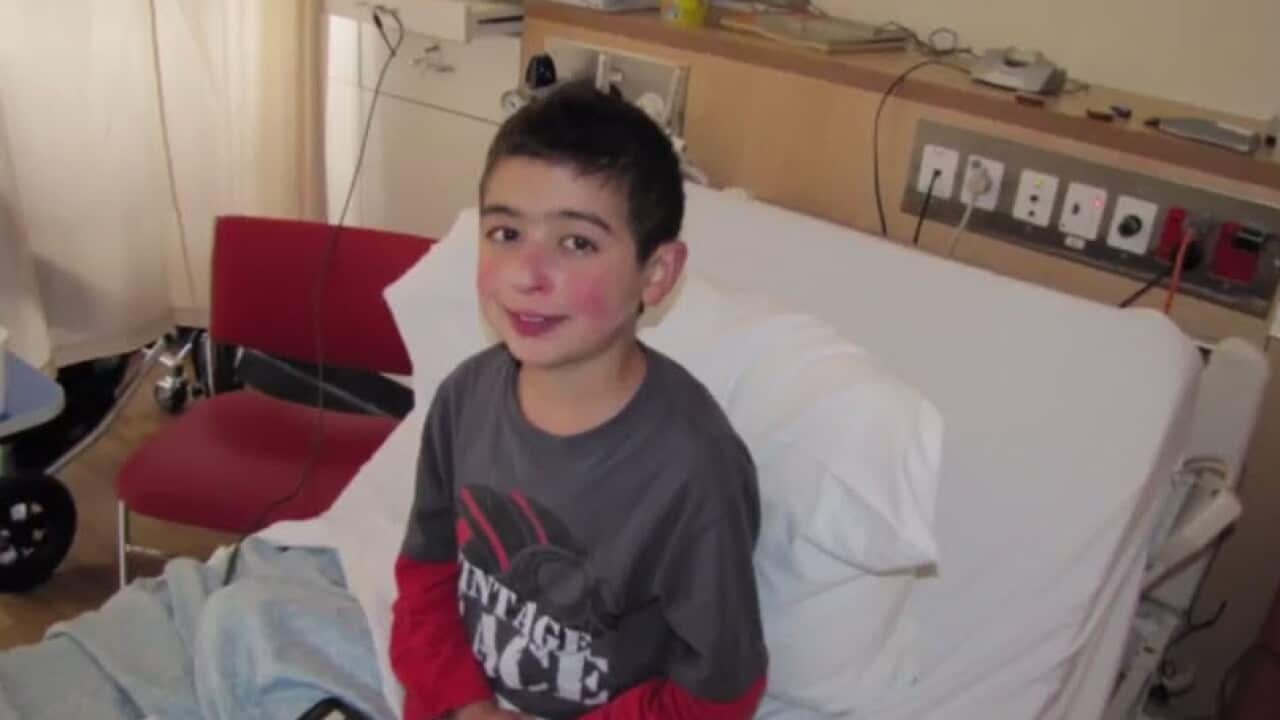
Mohammad Farran was three when he was diagnosed with restrictive cardiomyopathy, a rare heart disease.
He lost his appetite, his face and stomach became swollen, and the once energetic youngster had to sit on the sidelines to watch his mates play sport.
“They were growing much bigger and I stayed small. I was disappointed. Very, very disappointed," he said, now aged 13.
His father Ahmad Farran knew something was wrong.
"His lips were turning blue when he goes swimming, so we took him for a check-up and we found that he's got some heart problems," he said.
News that makes sense
Your trusted source for staying up-to-date with the world around you. Get free daily news updates and analysis, straight to your inbox.
Mohammad’s condition deteriorated when he was nine and a half, and his family was told by doctors he had only six months to live.
He was put on a transplant list with nine other people, and received a call from the Melbourne Children’s Hospital which changed his life. Mohammad received a new heart.
"It means a lot, it means the world to me,” he said.
Mohammad’s own heart valves were used to help someone else.
“I also donated heart valves and I'm very thankful for the person who donated their heart. Hopefully that person's, the valves that I gave them, can help someone else too."
Mohammad’s story was part of a new digital campaign to improve organ donation rates in Australia's Arab and Chinese communities.
The campaign tells the stories of three recipients, in the hope they will inspire others to start a conversation with their families about organ and tissue donation.
Mohammad is encouraging others to donate their organs – especially in multicultural communities where donation rates are very low.
His story is being told online in Cantonese, Arabic and English. It was developed as part of the Diversity Project - a partnership between Transplant Australia, the New South Wales Multicultural Health Communication Service, and the New South Wales Organ and Tissue Donation Service.
Multicultural Health Communication Service Peter Todaro says the program also aims to clear up myths and misconceptions about organ donation.
"If there's people around you that want to discourage you because of Islam or Buddhism... go and talk to somebody that you know, go and talk to an Imam or go and talk to a priest, and say look this is what I want to do - and I think you'll find that you'll be encouraged to do that."
Transplant Australia Chris Thomas says it's essential people look at the facts.
"Australians with an Asian background [make up] a little less than 4 per cent of donors, but they represent 16 per cent of people waiting for a kidney transplant,” he said.
“The reality is that your chances of receiving a transplant are indeed improved if someone from your genetic or family background is donating.”
Mr Thomas said more than 1,500 Australians are waiting for a life-saving transplant right now, and just one organ donor can save the lives of up to seven other people.
In Australia the family will always be asked to confirm the donation decision of the deceased before donation can proceed, which is why authorities say it’s so important loved ones know their donation wishes.
Mr Farran said while he doesn’t know his son’s heart donors, he thanks them dearly.
“It's a gift of life they gave to my son," he said.







