
In a research breakthrough, Australian scientists have found a new pathway that could lead to the development of important blood stem cells in the laboratory.
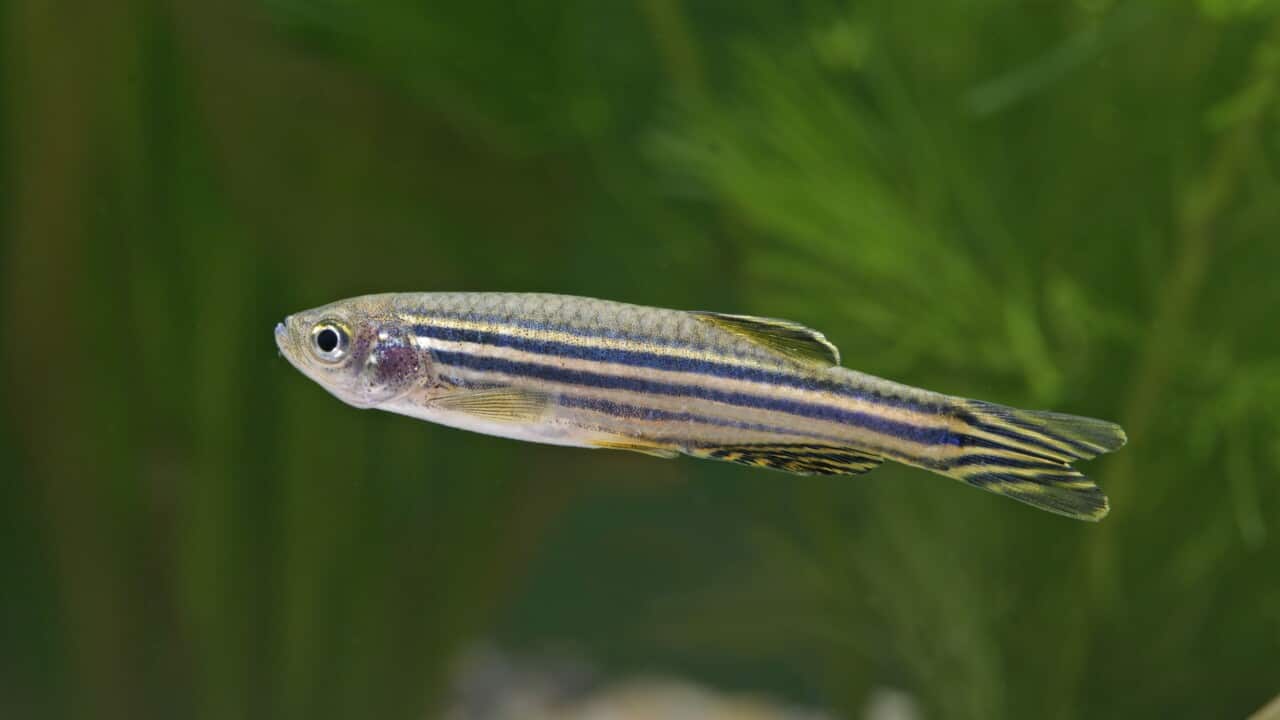
Researchers at the Sydney Garvan Institute of Medical Research made the discovery while studying zebra fish, which surprisingly are not too dissimilar to humans.
"They've got equivalents of most of the major organ systems and cell types of humans. So although they look very different, they've got a digestive system and a circulatory system and all these same systems as we've got in humans," said Dr Georgina Hollway, a researcher at the Garvan Institute.
Dr Hollway was studying a type of zebra fish that had less than the normal number of muscle stem cells.
"We identified what gene was causing the defect and we also found that while they had less than the normal amount of muscle stem cells they also had more than the normal amount of these blood stem cells."
These blood stem cells, known as hematopoietic stem cells, generate all the different types of blood and immune cells in our bodies.
"We identified a group of cells that travel to where the blood stem cells are made and they communicate with the cells there and enable them to become blood stem cells. At that point they haven't commited to becoming a blood stem cell but when these other cells arrive they influence what they can become," said Dr Hollway
Discovering these cells is just one piece of the puzzle. Scientists now have to work out exactly how they trigger these blood stem cells to form and then how to replicate that in a lab. A breakthrough that could take at least a decade.
"This piece of the puzzle allows us to one day imagine the possibilty of producing these blood forming cells outside the body to treat a multitude of human diseases - leukaemia, lymphoma, multiple myeloma, some solid cancers and, indeed, genetic diseases and that really is a Holy Grail," says John Rasko a haemotologist from the University of Sydney.
The research was undertaken in collaboration with Monash University's Australian Regenerative Medicine Institute. It has been published in the Nature International Weekly Journal of Science.





