
The Australian stock market shed more than six per cent - about $130 billion - as coronavirus panic and an oil price plunge handed the bourse its worst morning since the global financial crisis.
An early afternoon flash crash also sent the Aussie dollar plummeting to a new 11-year low against the US greenback, with the local currency diving from 66 US cents to a low of 63.04 US cents before bouncing back to 65.5 US cents by 2.18pm (AEDT).
Nick Twidale from IC Markets said an oil price dive and coronavirus concerns were central to the carnage.
"It's been an ugly day out there," Mr Twidale said.
"It's a sea of red across the board".
The benchmark S&P/ASX200 dropped 350.8 points, or 5.64 per cent, to 5,865.4 by 1.45pm AEDT on a horrid Monday for traders, while the broader All Ordinaries index was 364.8 points, or 5.8 per cent, lower at 5,922.7.
The market had earlier shed as much as 6.2 per cent, or close to $130 billion.
The 14-month market lows come after the OPEC+ alliance between Saudi Arabia and Russia to prop up oil prices collapsed over the weekend, with both countries expected to ramp up production in a stunning reversal of policy.
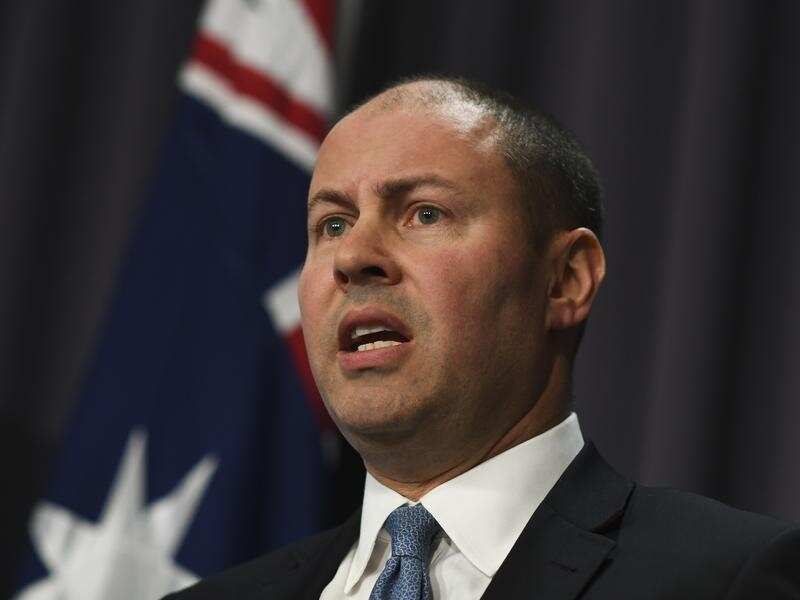
Federal treasurer Josh Frydenberg sought to calm things down, saying market volatility was not uncommon in times like this and there were a number of factors at play.
"This is a very different situation to what we saw through the GFC, which was, essentially, a problem with the banking and the financial system and issues of liquidity," he said.
"We haven't seen those same problems in relation to this health crisis."
More than $440 billion has been lost from peak-to-trough since the bourse hit an all-time high of 7289.7 points on 20 February - just three weeks ago.
Losses over that period are close to 20 per cent, which represents the threshold of a so-called bear market.
If a 6.2 per cent loss is sustained through to the close of trade, it would be the worst day for the ASX/200 since 16 October in 2008, when the world was in the throes of the GFC.
The energy sector endured its biggest ever intraday percentage slump, falling by as much as 19 per cent after Saudi Arabia slashed its oil prices in a bid to gain market share from Russia.
Goldman Sachs warned that the price of Brent crude could hit as low as $US20 a barrel.
By 1pm AEDT, Woodside Petroleum had fallen 17.73 per cent to $21.86, Santos lost 26.5 per cent to $4.925, Origin was down 15.61 per cent to $5.73, Oil Search was 30.75 per cent weaker at $3.525, and Beach Energy slipped 22.12 per cent to $1.285.
The materials sector was also a major casualty, with Rio Tinto down 8.99 per cent to $78.50, BHP down 12.71 per cent to $28.10, and Fortescue Metals down 11.41 per cent to $8.505.
Gold added rare lustre to the market as investors flocked to the safehaven precious metal.
Evolution Mining was one of the beneficiaries, gaining 7.36 per cent to $4.67.
Newcrest Mining enjoyed a gain of 5.42 per cent to $30.655, and Northern Star added 3.98 per cent to $15.035.
All four major banks were more than five per cent lower, with NAB shedding 6.57 per cent to $20.55 and Westpac down 6.65 per cent to $19.93.
Commonwealth Bank lost 5.38 per cent to $69.95 and ANZ lost 6.68 per cent to $20.66.
Macquarie lost 8.88 per cent to $120.21.
Airlines were also among those to suffer significant falls.
Qantas lost 39 cents, or 8.37 per cent, to $4.27.
Air New Zealand's price fell seven cents, or 3.52 per cent, to $1.92
The supermarkets did not fare quite so badly.
Coles lost 40 cents, or 2.55 per cent, to $15.30. Woolworths suffered only an 11.5-cents loss, or 0.3 per cent, to $37.88.
The S&P 500 index in the US had on Friday posted its 10th decline in 12 sessions as moves to contain the virus crippled supply chains and prompted a sharp cut to global economic growth forecasts for 2020.





