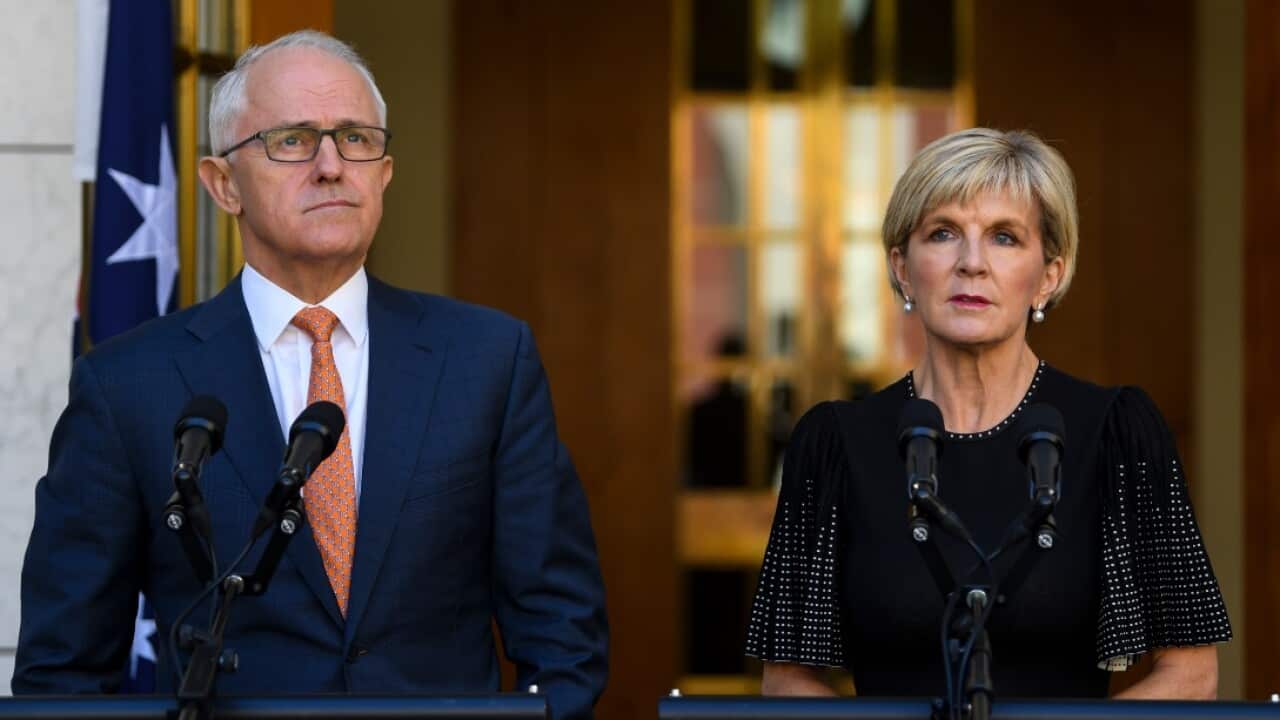
Australia's foreign ministry is expecting two diplomats to be sent home from the Australian Embassy in Moscow in retaliation for Australia's move to expel two Russian diplomats.
Two Russian diplomats accused of acting as foreign spies were instructed to leave Australia within seven days, as part of a global diplomatic response to the recent nerve agent attack on a double agent living in Britain, which Western nations have blamed on Russia.
More than 100 Russian diplomats were expelled from the United States and Britain’s allies in Europe.
News that makes sense
Your trusted source for staying up-to-date with the world around you. Get free daily news updates and analysis, straight to your inbox.
Foreign minister Julie Bishop said the two Russians were in Australia on diplomatic duties but were really "undeclared intelligence officers", meaning they were suspected of spying for the Russian government.
Prime Minister Malcolm Turnbull said the recent poisoning of Sergei Skripal and his daughter, who both remain in hospital, was a "criminal attack".
"We will not tolerate this reckless undermining of international law, this reckless assault on the sovereignty of nations," Mr Turnbull said.
Ms Bishop said the government was expecting a "comesurate" retaliation, based on conversations with the Russian ambasssador to Australia.
"We believe that Russia intends to expel diplomats from our embassy in Moscow," Mr Bishop told reporters at Parliament House on Tuesday.
"We are planning for this to occur."
Earlier in the month, Russia expelled 23 British diplomats after the UK ejected the same number of Russians.
Opposition leader Bill Shorten said he supported the tough diplomatic action.
"The prime minister briefed me this morning and I have spoken to the security agencies. I am very supportive of this measure," the Labor leader told reporters.
The Russian Embassy in Canberra declined to comment when contacted by SBS News early on Tuesday morning.
Australia joins a global response
The United States joined Britain's allies in Europe and around the world Monday in expelling scores of suspected Russian spies in an unprecedented response to a nerve agent attack.
At least 114 alleged agents working under diplomatic cover were ordered out by 21 governments, dwarfing similar measures in even the most notorious Cold War spying disputes, and marking a British diplomatic victory.
Washington led the way, ordering out 60 Russians, in a new blow to US-Russia ties less than a week after President Donald Trump congratulated Vladimir Putin on his re-election.
Canada, Ukraine, Albania and most European Union states matched the move with smaller-scale expulsions, after Britain urged allies to respond to the poisoning of double agent Sergei Skripal.
Russia has denied it was behind the attempted assassination, which left Skripal and his daughter gravely ill in perhaps the first nerve agent attack in Europe since World War II.
It warned that there would be a tit-for-tat response to those countries "pandering to British authorities" without, Moscow claims, fully understanding what had happened.
But Western officials made it clear in announcing the expulsions that they share Britain's assessment that only the Kremlin could have been behind the March 4 incident in Salisbury, England.
White House spokeswoman Sarah Sanders said Washington and its allies were acting "in response to Russia's use of a military-grade chemical weapon on the soil of the United Kingdom."
The strong language contrasted with the warm words Trump shared with Putin last week, when he overrode his advisors' concerns and congratulated his opposite number Putin on his election win.
"The United States stands ready to cooperate to build a better relationship with Russia, but this can only happen with a change in the Russian government's behavior," Ms Sanders said.
- with wires







