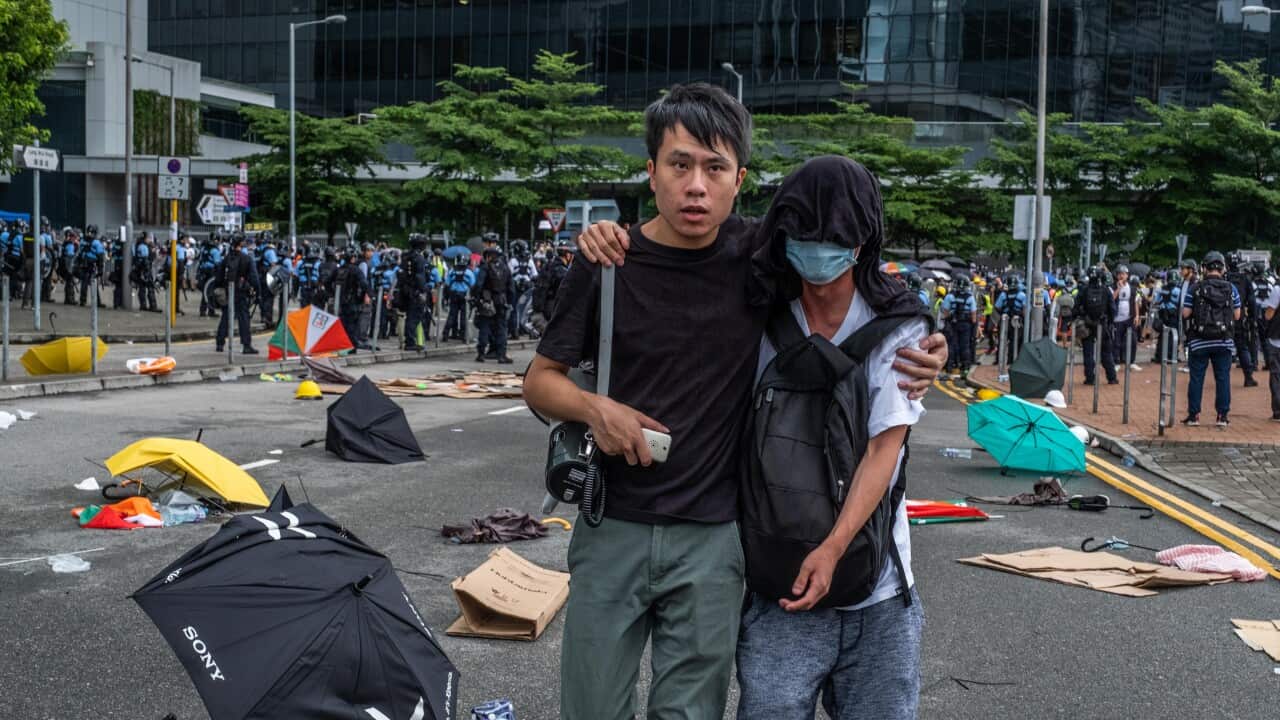
Above: Grandma Wong gives Hong Kong protesters a lesson on endurance
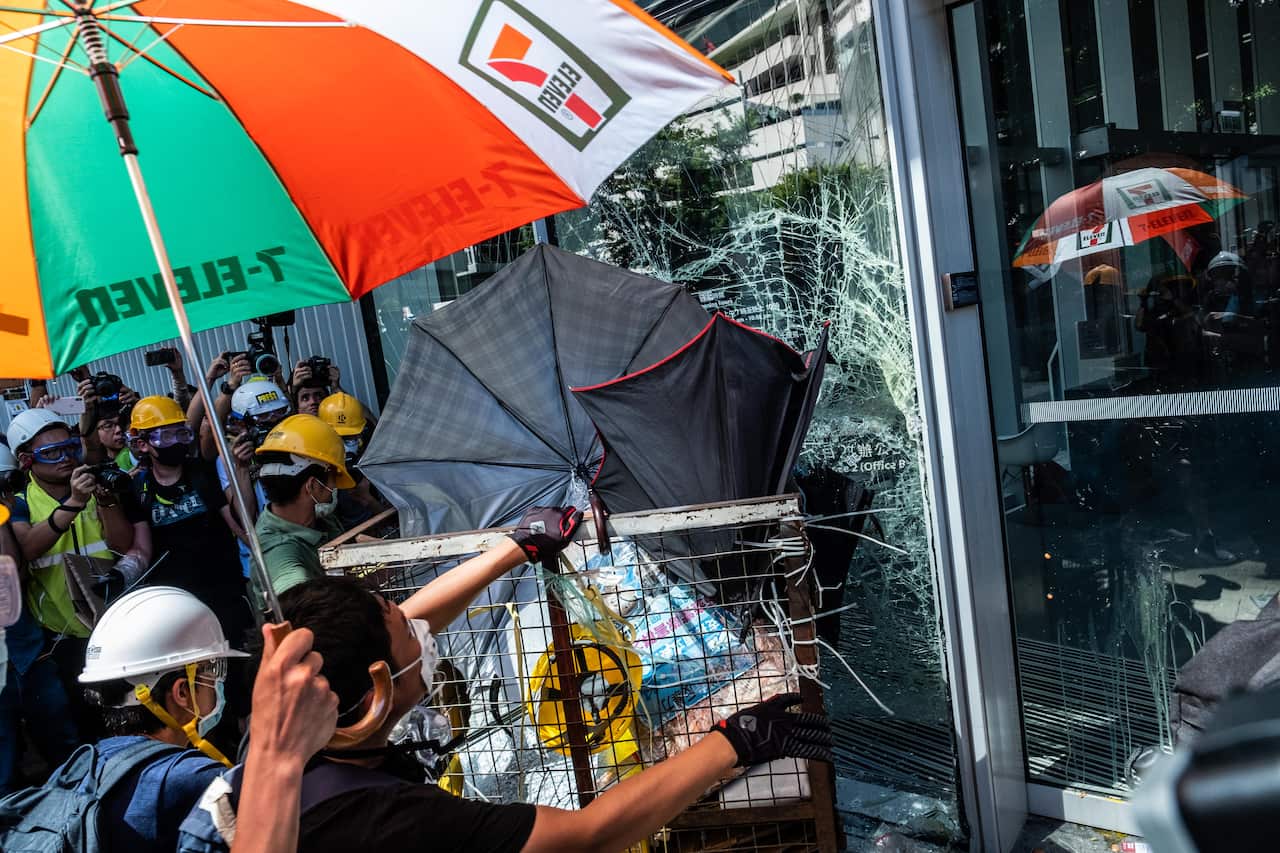
As protesters smashed their way into Hong Kong’s legislature this week, a young politician rushed to the front lines with a desperate plea.
The politician, Roy Kwong, a lawmaker who had been a driving force behind protests sweeping the city, was trying to stop a small group of demonstrators from ramming a metal cart through the front doors of the legislative complex.
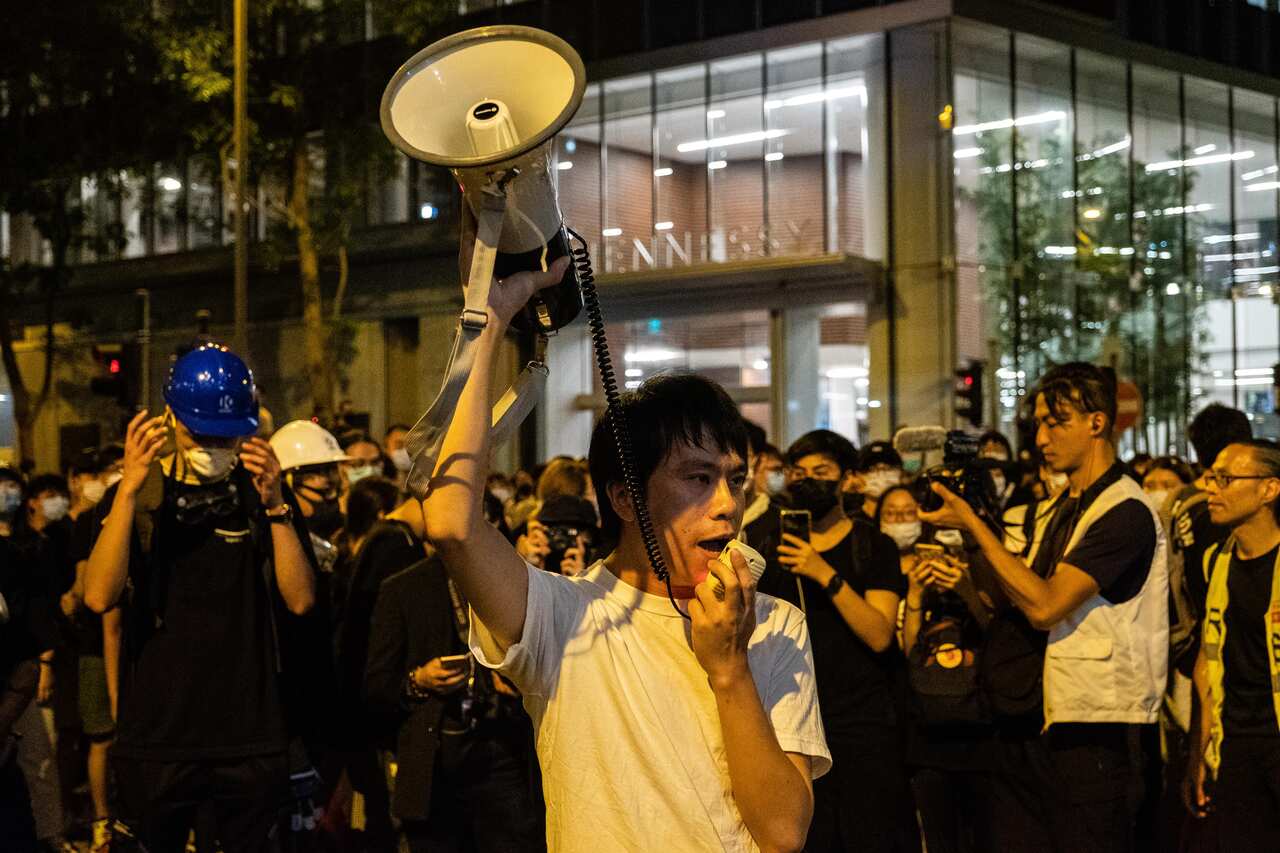
“We are trying to protect you,” Kwong, 36, shouted into a megaphone, jumping up and down as he pleaded with demonstrators.
There are no official leaders in Hong Kong’s protests against an unpopular extradition bill that has brought to the surface deep-seated anxieties about Beijing’s grip over the territory. But Kwong, a long-time advocate who is also a romance novelist, has emerged as a leading voice for moderation and a hero for the city’s youth, who have nicknamed him “God Kwong.”
News that makes sense
Your trusted source for staying up-to-date with the world around you. Get free daily news updates and analysis, straight to your inbox.
After the attack on the legislature, he is now a key figure in the effort to hold together one of Hong Kong’s most potent political movements in recent years.
On one hand, Kwong is seeking to reassure a core group of young protesters — whose vandalism of the legislature highlighted their disillusionment with politicians as a whole — that he is on their side. On the other, he is trying to persuade the broader public that the demands and tactics of the protesters, even at their most extreme, are legitimate.
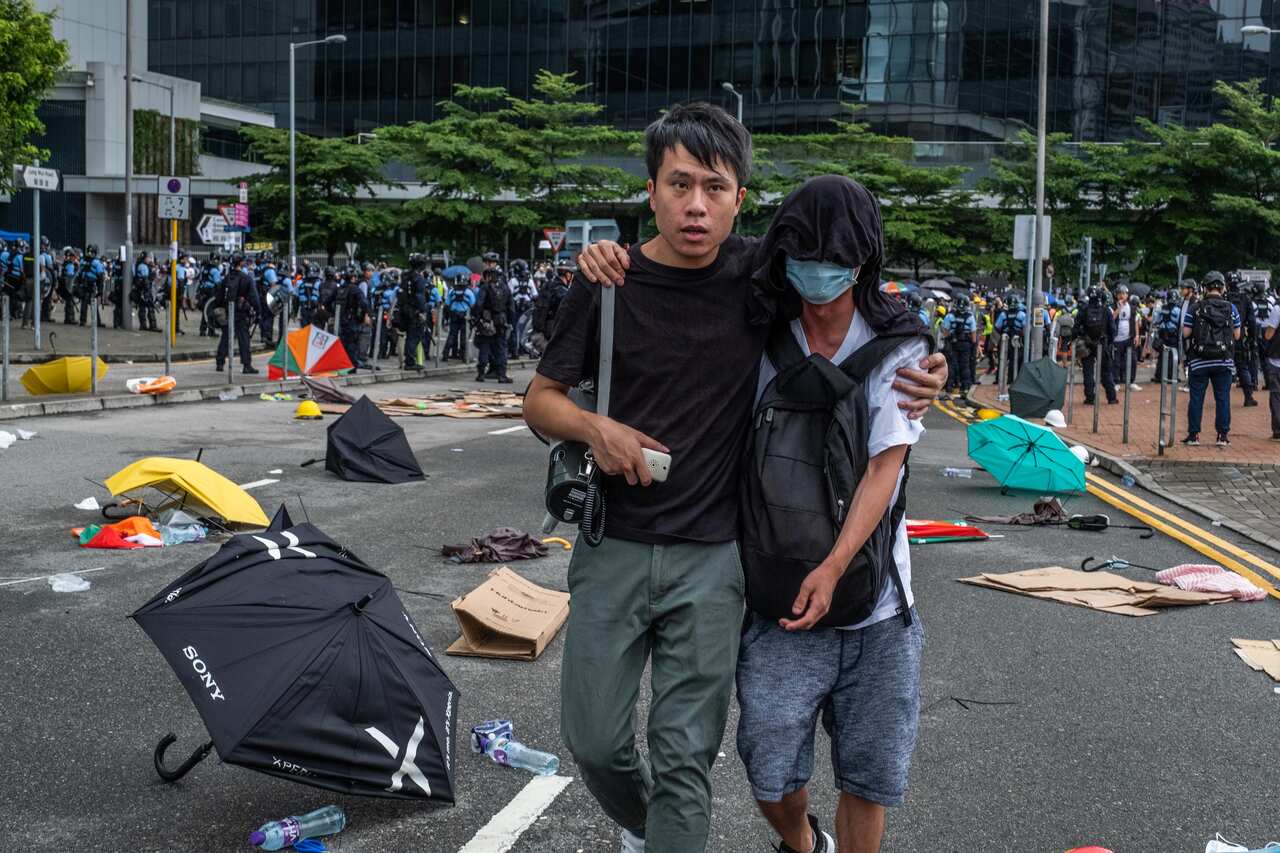
To his critics, Kwong is a zealot fuelling distrust between young people and the political establishment. To his fans, he is a nimble tactician unafraid of standing up to Beijing and determined to protect those who speak out.
“These students are my comrades, my brothers, my family,” Kwong said during a recent interview in his office at the Legislative Council, where, before Monday’s siege, he had been sleeping in case protesters who often camped out there clashed with the police. “I don’t want to see any blood.”
Kwong said he did not consider himself a leader of the protests, which began in early June in opposition to a bill that would allow criminal suspects in Hong Kong, a semiautonomous territory, to be extradited for trial in mainland Chinese courts.
But Kwong, a professed admirer of Abraham Lincoln who races around the city in a T-shirt, jeans and sneakers, has assumed the role of peacemaker, foot soldier and guardian at critical moments.
When a man last month threatened to jump from the top of a shopping mall in protest, Kwong rushed to the scene with a loudspeaker to plead with him to reconsider. When demonstrators considered storming the headquarters of the police at a demonstration in mid-June, he urged them to avoid taking unnecessary risks and possibly getting arrested.
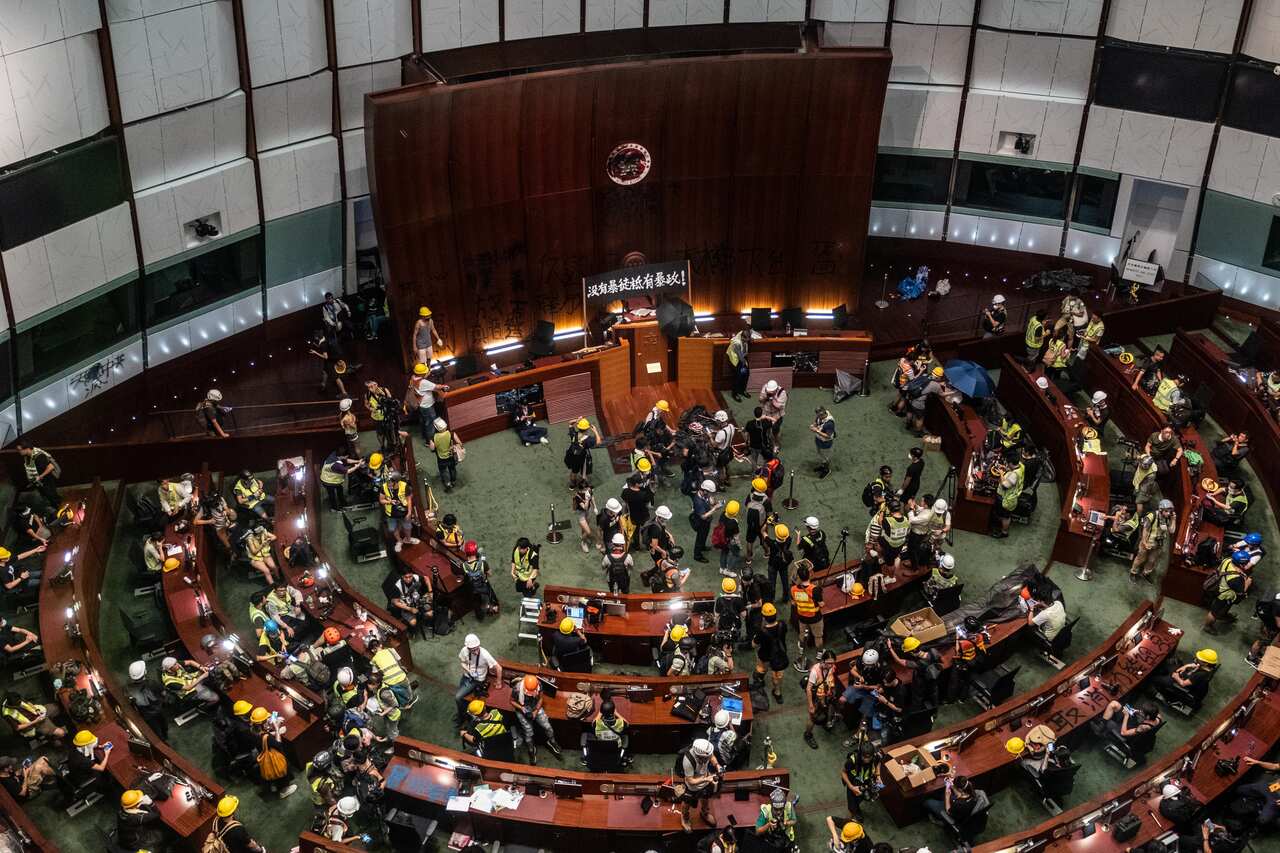
On Monday, when a small group of protesters charged the legislature, undermining weeks of peaceful protests, he faced a new test.
Kwong, along with several other pro-democracy lawmakers, attempted to persuade the masked protesters to walk away, arguing that their actions would have little impact given that the building was largely empty. But the protesters pushed back, dismissing the politicians as “useless” and resuming their destruction.
Hundreds of thousands had marched peacefully Monday in a protest urging the withdrawal of the extradition bill and the resignation of the territory’s chief executive, Carrie Lam, among other demands. But the chaos at the legislature, and scenes of protesters spray-painting the inner chamber and defacing official portraits, shocked the city and raised questions about the credibility of the movement.
Kwong has stopped short of condemning the violence, saying that the protesters are motivated by a love for Hong Kong.
“The real violence is coming from our government,” he said in an interview Wednesday between meetings with demonstrators.
Kwong and other pro-democracy lawmakers now face the challenge of keeping a united front among the protesters as tensions with city officials rise.
Victoria Hui, an associate professor who studies Hong Kong politics at the University of Notre Dame in Indiana, said the lawmakers had been “put in the middle, and nobody appreciates that.”
But Hui added that Kwong and others might benefit from the fact that many protesters in Hong Kong had been sympathetic to the activists who stormed the legislature, even if they disagreed with their methods.
Kwong, the son of a driver and stay-at-home mother, grew up in public housing and once served as a social worker. He is accustomed to playing the role of mediator.
His career as an elected official began at age 24, when he won a seat on a district council in Yuen Long, in northwestern Hong Kong. In 2016, he was elected to the Legislative Council, the city’s 70-member legislature.
Even as his prominence as a lawmaker has risen, he is still better known in some circles as the author of a series of romance novels with titles like, “Love You Like We Just Met” and “There is a Kind of Happiness Called Forgetting.” On a bulletin board in his office hangs a letter from a prisoner raving about his books and sharing the details of his own romantic struggles.
In the legislature, Kwong has aligned himself with pro-democracy legislators who support free elections and oppose Beijing’s growing influence in Hong Kong.
Last year, as lawmakers debated a plan to allow mainland Chinese police officers to operate in a section of a new train station, Kwong stood on his desk in protest. He was later removed from the chamber.
Kwong’s spirited tactics have endeared him to Hong Kong’s youth, who see him as down-to-earth and fearless, and greet him with applause on the streets. Protesters praised him when he helped find private doctors for demonstrators injured in clashes with the police, after many feared being arrested if they went to government-run hospitals.
But Kwong’s critics say he is irresponsibly inflaming tensions in Hong Kong.
Leticia Lee, an activist who supports the government, said that Kwong was pushing dangerous views on young people and that he should denounce the destruction outright.
“There could have been a violent clash,” Lee said of the attack on the legislature. “He just told young people to protect themselves, but he didn’t tell them to calm down or not to do it.”
After Monday’s unrest, Kwong has kept his ire directed at Hong Kong’s leaders, including Lam, the chief executive.
On social media, he shares video updates on the movement, as well as reflections on Marvel movies, cartoons and his childhood. He says he has received more than 10,000 messages on Facebook since the protests began in June, some asking for help, others offering encouragement.
In a video this week, he appeals to parents and middle-class residents, who he says might have thought the protesters had been “too radical.” He explains that they resorted to extreme methods because they “really love this place.”
“You were young once, too,” he says. “ You might also have had a great fire in your soul.”

Dateline is an award-winning Australian, international documentary series airing for over 40 years. Each week Dateline scours the globe to bring you a world of daring stories. Read more about Dateline

Have a story or comment? Contact Us







