
You will be hearing a lot about Mars in the weeks to come. Three missions are launching toward the red planet, taking advantage of the way Earth and its neighbour get closer every 26 months or so, allowing a relatively short trip between the two worlds. If they launch successfully, the spacecrafts will arrive at Mars early next year.
The first of the three missions, built by the United Arab Emirates, lifted off Monday morning from a launch site in Japan (it was the end of Sunday afternoon in the United States). Carried into calm skies by a Mitsubishi H-IIA rocket, the spacecraft separated from the rocket about an hour later and began a journey to Mars that will last until February. The trip to the red planet begins a bold entry into interplanetary exploration by a small country that has previously only sent a few small satellites to orbit.
What is the UAE sending to Mars, and what will it do?
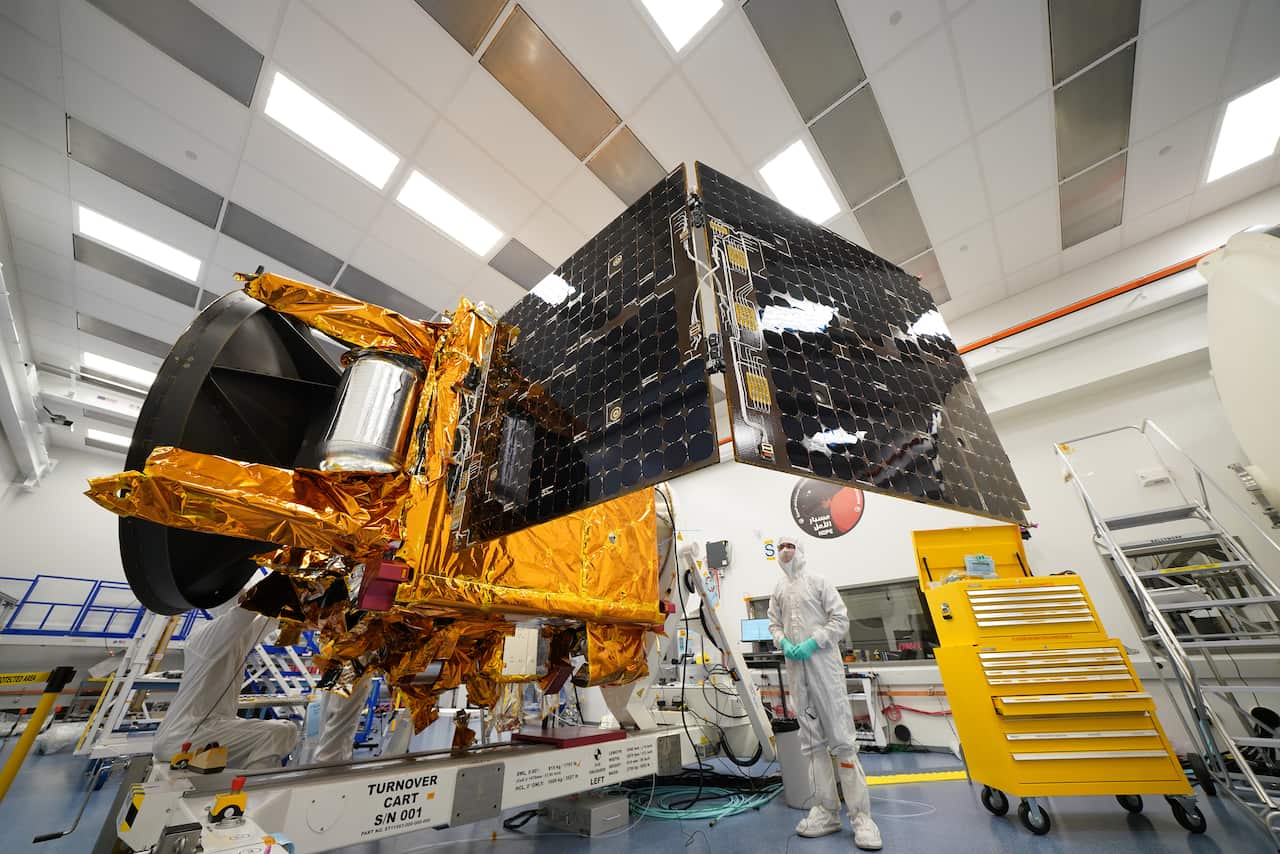
The Emirates Mars Mission, also known as Hope, is an orbiter that will study Mars from above the planet. It will join a fleet of six other spacecrafts studying the red planet from space: three operated by NASA, two by the European Space Agency (one shared with Russia) and one by India. Each contains different instruments to help further research of the Martian atmosphere and surface.
The Hope orbiter is carrying three instruments: an infrared spectrometer, an ultraviolet spectrometer and a camera. From its high orbit — varying from 12,400 miles to 27,000 miles above the surface — the spacecraft will give planetary scientists their first global view of Martian weather at all times of the day. Over its two-year mission, it will investigate how dust storms and other weather phenomena near the Martian surface speed or slow the loss of the planet’s atmosphere into space.
News that makes sense
Your trusted source for staying up-to-date with the world around you. Get free daily news updates and analysis, straight to your inbox.
How extensive is the Emirati space program?
The Emirates previously built and launched three Earth-observing satellites, gaining experience from a collaboration with a South Korean company. The country also has a nascent human spaceflight program. Last year, its first astronaut, Hazzaa al-Mansoori, who completed an eight-day stay at the International Space Station, was carried there aboard a Russian rocket.
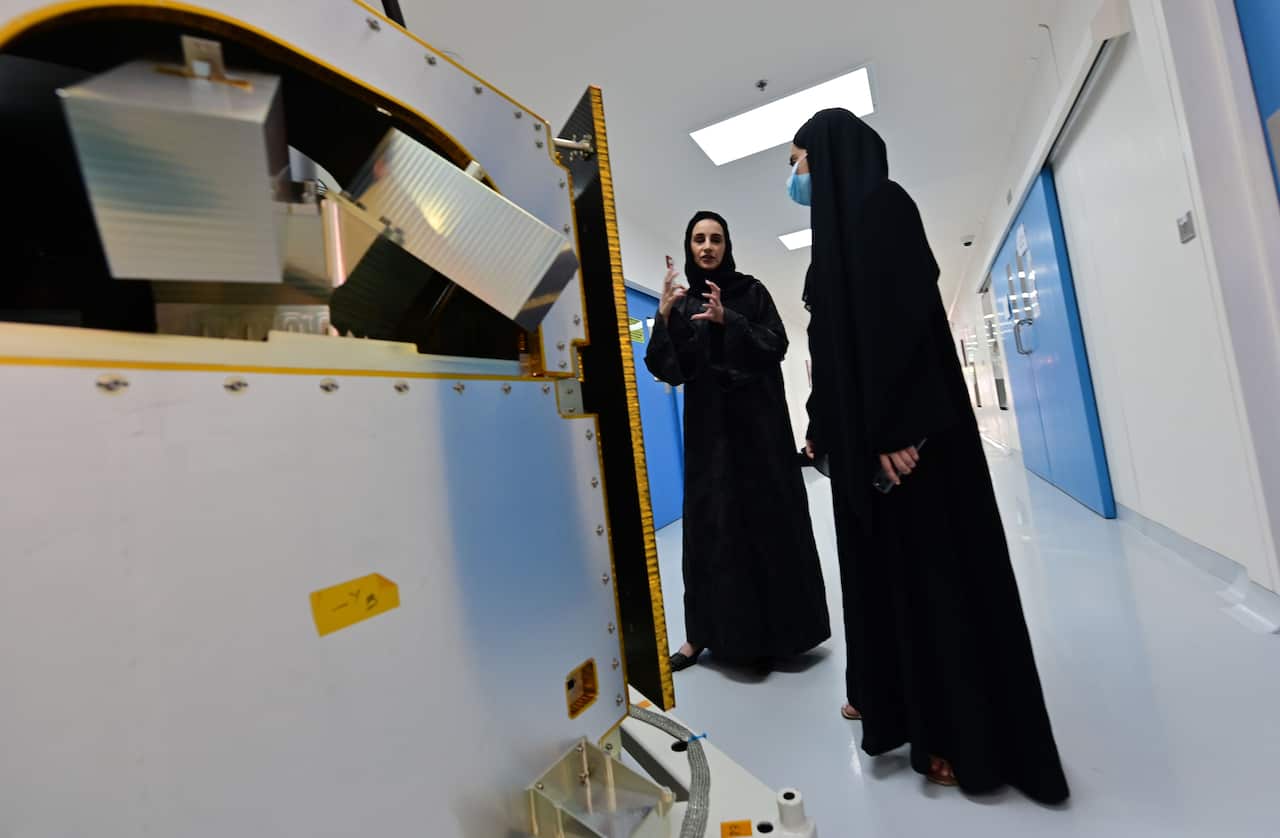
For the Mars mission, the country took a similar approach to the earlier satellites by working with the Laboratory for Atmospheric and Space Physics at the University of Colorado, where Hope was built before being sent to Dubai for testing.
Emirati engineers worked side by side with their counterparts in Boulder, Colorado, learning and doing as they designed and assembled the spacecraft.
What else is launching to Mars this summer?
Two other missions are headed to Mars in the weeks to come.
The next expected launch will be China’s Tianwen-1, which could occur between later this week through early August.
The Chinese mission includes an orbiter, a lander and a rover that will study the Martian soil’s water and ice content, among other research targets. This will be China’s second attempt to get to Mars. Its first, Yinghuo-1, failed to escape Earth in 2011 when the Russian rocket that was carrying it malfunctioned. In the years since that mission, China has completed a number of successful crewed missions in low-Earth orbit, and it landed a rover on the far side of the moon, the only spacecraft that has ever accomplished that feat.
On July 30, NASA is scheduled to launch Perseverance, a robotic rover that will be the fifth wheeled U.S. vehicle to explore Mars. It will land in a crater called Jezero, seeking to find signs of ancient, extinct life that might have once thrived when the crater was a lake.
Early in its mission, Perseverance will release a small experimental helicopter, Ingenuity. It will attempt short flights in the thin Martian atmosphere, aiming to demonstrate that the technology can extend the reach of missions beyond the limited range of robotic rovers.
A fourth mission, the joint Russian-European Rosalind Franklin rover, was to launch this summer, too. But technical hurdles, aggravated by the coronavirus pandemic, could not be overcome in time to meet the launch window. It is now scheduled to launch in 2022.

Dateline is an award-winning Australian, international documentary series airing for over 40 years. Each week Dateline scours the globe to bring you a world of daring stories. Read more about Dateline

Have a story or comment? Contact Us







