
IDF announces new 'large-scale strikes', Red Crescent says hundreds now killed
The Israeli military has said that, for the first time since its latest wave of attacks on Iran, it is now "striking targets belonging to the Iranian terror regime in the heart of Tehran".
"Over the past day, the Israeli Air Force conducted large-scale strikes in order to establish aerial superiority and to pave the path to Tehran," the Israeli Defence Forces (IDF) said via its Telegram channel.
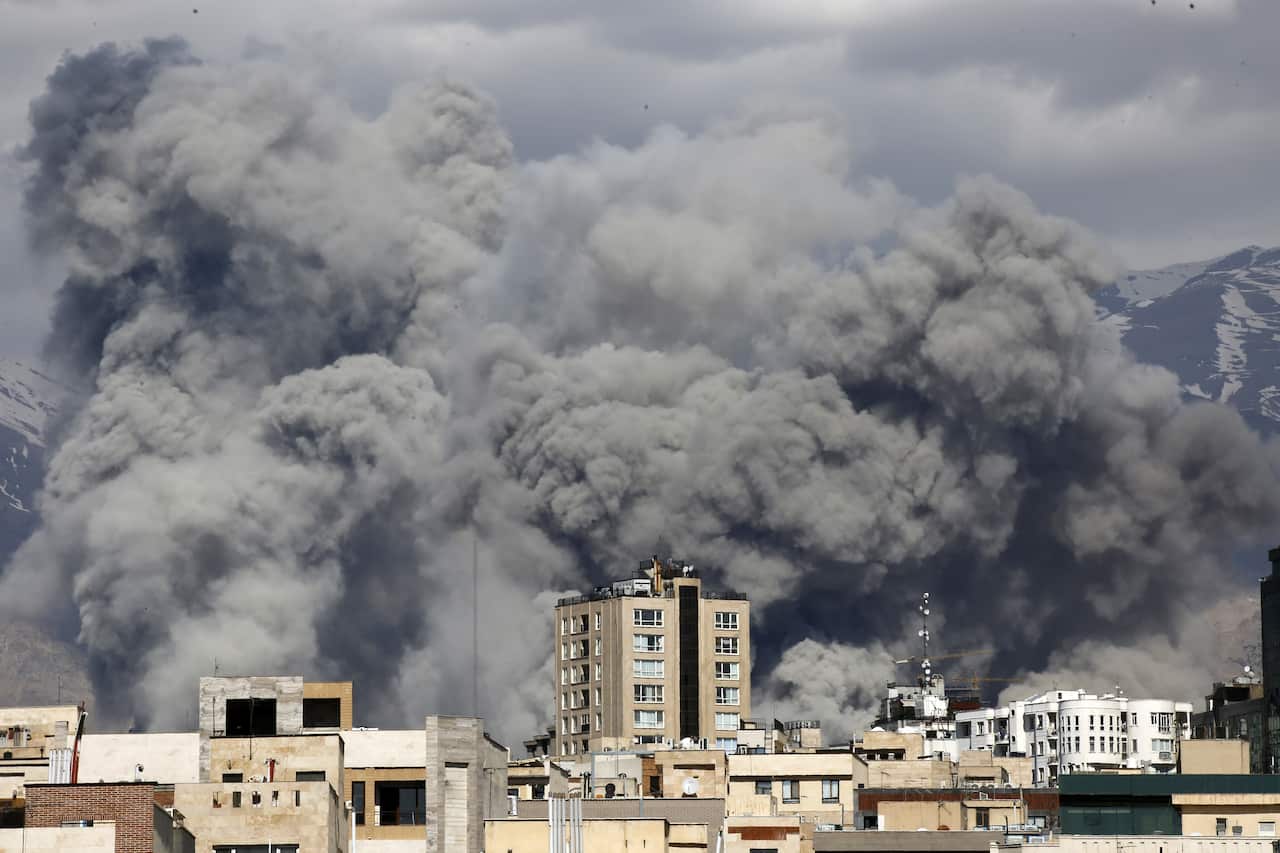
The IDF also released footage of a strike via social media, with the accompanying Hebrew text saying the video showed "the final moments of the destruction of the headquarters of the Iranian terror regime in the heart of Tehran".
Iran's Red Crescent Society said recently that Tehran had been hit by 60 attacks in 24 hours, killing 57 people, according to reports in Iran's state-run Islamic Republic News Agency.
The humanitarian organisation reported on Saturday evening that at least 201 people had been killed and 747 wounded by the US-Israeli strikes.
— Zacharias Szumer
Crowds gather across Australia to celebrate Khameini's death, protest Israeli-US strikes
People gathered in multiple cities on Sunday, expressing mixed reactions to the US and Israel's war on Iran, which began with strikes overnight.
The attacks have killed Iran's supreme leader Ayatollah Ali Khameini and several other senior figures, while the Iranian Red Crescent has reported over 200 confirmed fatalities and 750 injuries.
In Canberra, a group of over 100 gathered outside the Iranian embassy, with many dancing, celebrating, cheering, playing music and waving flags.
A woman who spoke to journalists said she was celebrating the end of Khameini's harsh regime, and considering returning to Iran for the first time since 2017.
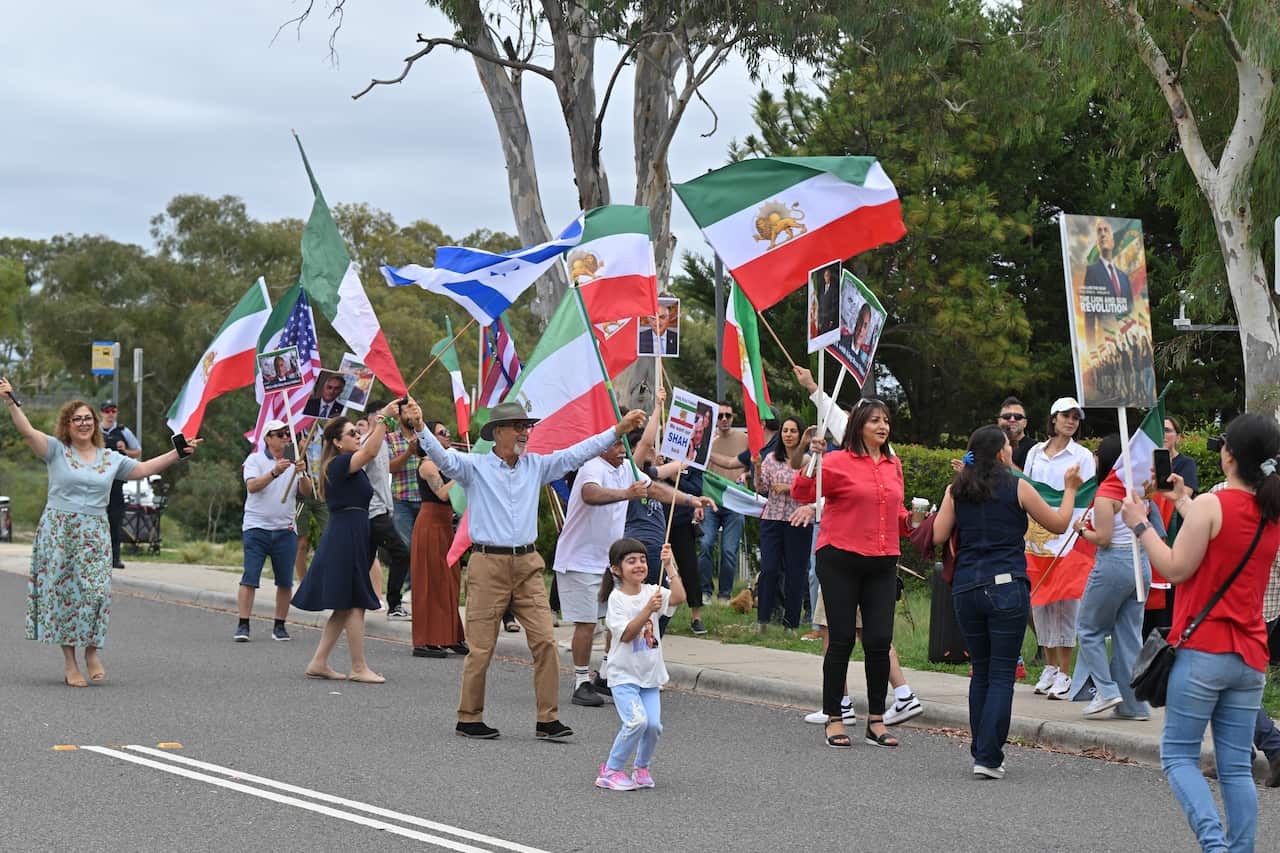
In both Brisbane and Adelaide, similar gatherings took place, with people thanking the US and Israel and waving flags — generally the pre-1979 Revolution flag, which is often used as a symbol of resistance by protesters against the Iranian regime.'
In Adelaide, Iranian-Australian gynaecologist and surgeon Fariba Willison said: "I feel that my country is going through a big surgery, that they are cutting out cancer, and this is a big process and a big procedure."
In Melbourne, a group also gathered at Federation Square in the CBD on Sunday morning to celebrate the death of Khamenei.
Attendees interviewed by ABC News said they hoped the recent strikes would ultimately result in the collapse of Iran's government and a more democratic system of government.
However, other events did not have a celebratory tone.
In Melbourne, an event organised by the Free Palestine Coalition Naarm gathered near the State Library to condemn the attacks.
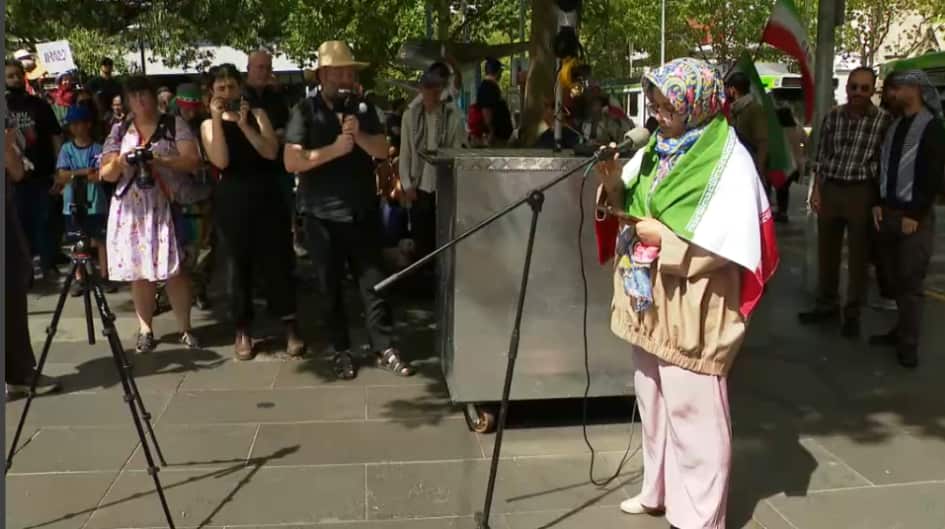
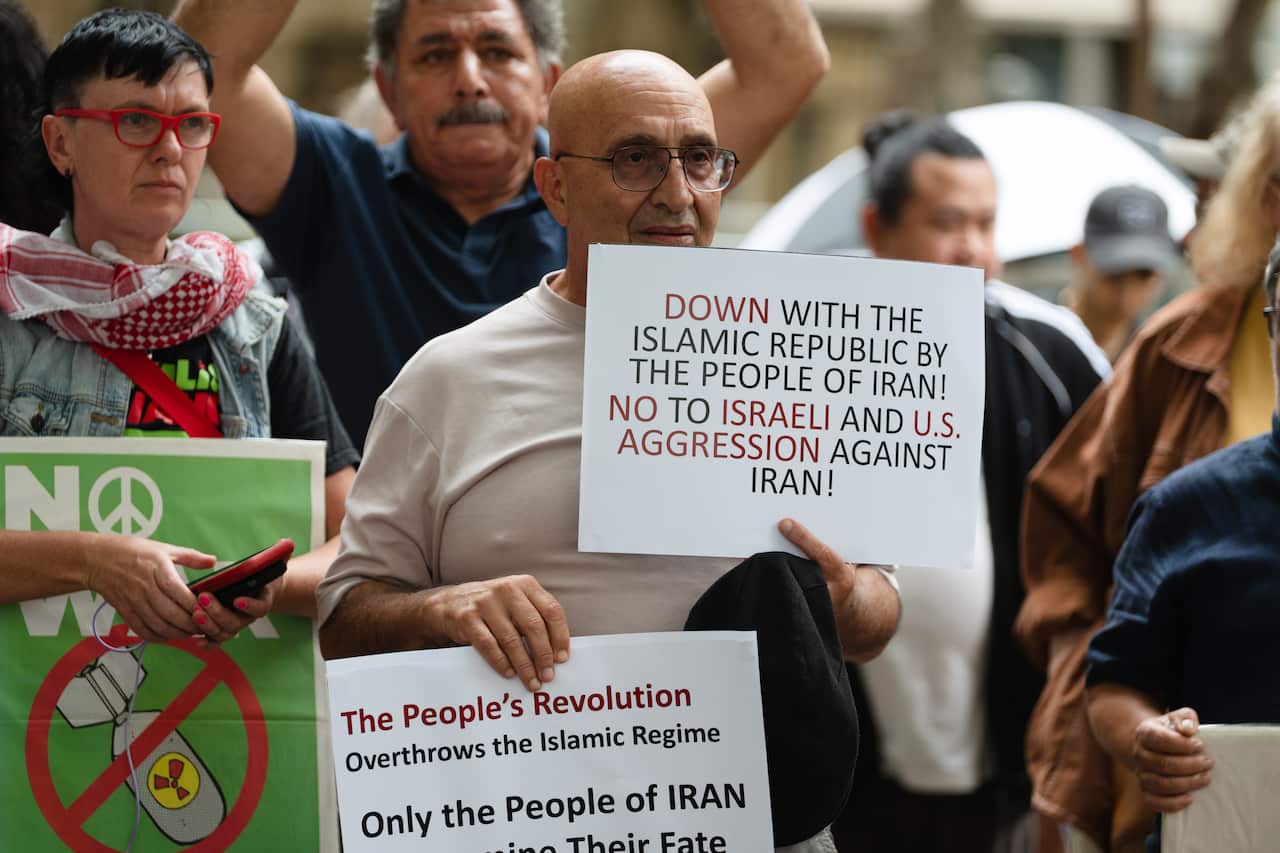
At Sydney's Town Hall, a demonstration organised by a group of Iranian leftists and their supporters was held to protest the strikes.
An Iranian community member identified only as Seema said in a video posted online: "I cannot celebrate this death of Khamenei".
"If it was the case that people of Iran had done that, yes, yes, that's what we all want, but not by bombs that are at the same time killing students, killing innocent people."
Also in Sydney, a celebratory event was held at Hyde Park to mark the death of Khamenei and rejoice in the possibility of regime change.
Members of the Iranian diaspora were seen dancing, waving flags and holding up posters of exiled crown prince Reza Pahlavi — for some, the ideal choice for Iran's next leader.
One Iranian-Australian attendee at the Sydney event, Mohammad Hashemi, brought a picture of his cousin who was executed in Iran after participating in the Woman Life Freedom protests in 2022.
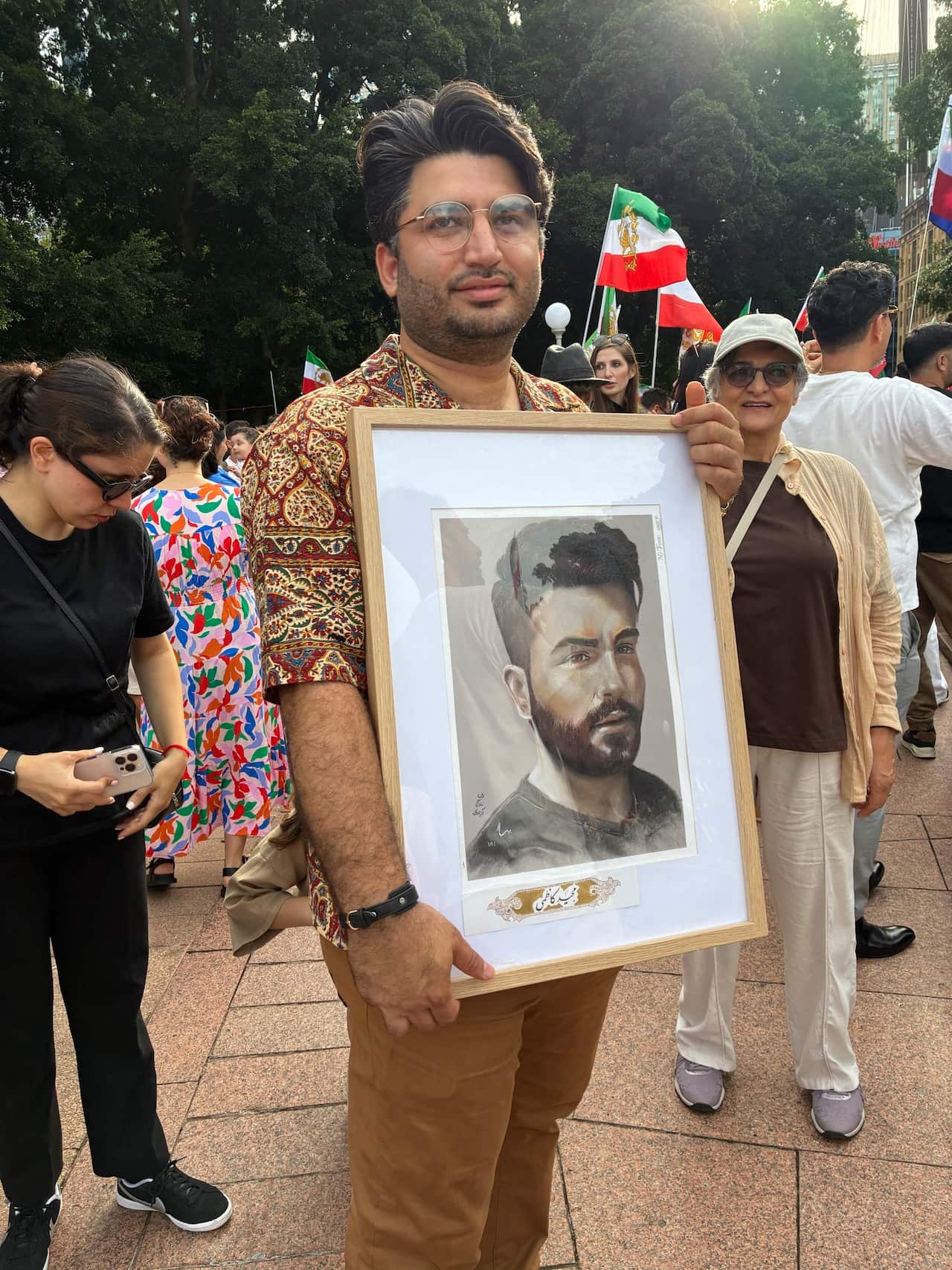
— Madeleine Wedesweiler / Zacharias Szumer
Australia did not take part in strikes against Iran: Wong
Foreign Minister Penny Wong is speaking at a press conference in Adelaide.
Wong said Australia did not participate in the US-Israeli strikes on Iran.
"We are in contact with our partners," Wong said.
"We do not want to see this escalate into a wider regional conflict."
She said: "You would not expect us to participate."
Wong also said Australia was not given advance notice of the strikes.
Australia's military is stationed in parts of the Middle East, including the United Arab Emirates.
— Rashida Yosufzai
UN chief responds to reports Iran's supreme leader killed
United Nations Secretary-General Antonio Guterres spoke an an emergency UN security council meeting a little earlier.
Guterres said he was "not in a position to confirm" whether Iran's supreme leader Ayatollah Ali Khamenei had been killed.
He said the US-Israeli strikes on Iran had reportedly hit 20 cities including the capital Tehran, Qom, Ham and Mashad.
Several high-ranking Iranian officials, including Khamenei, had been killed according to Israeli sources, he said.
Iran has not confirmed the death of Khamenei. Earlier, foreign minister Abbas Araghchi told US broadcaster NBC he believed Iran's senior leadership was safe.
Guterres also said: "Iran's airspace has been closed and the country is under a near-total internet blackout.
"The attacks have reportedly caused significant civilian casualties."
— David Aidone
What to know about Ayatollah Ali Khamenei
Ayatolla Ali Khamenei has spent nearly four decades as Iran's supreme leader.
Now, Israeli officials say he has been killed, though this has not been confirmed by Iran.
Khamenei came to power in 1989 and holds ultimate authority over all branches of government, the military and the judiciary in the Shiite Muslim republic.
He is deeply sceptical of the west, especially the United States, which he has accused of attempting to overthrow his regime.
Once seen as an unlikely successor to the Islamic Republic's late founder, Ruhollah Khomeini, lacking his popular support and religious credentials, Khamenei has steadily tightened his grip to become Iran's unquestioned decision-maker.
In the absence of religious credentials, has used his paramilitary forces internally to snuff out dissent, repeatedly turning to the Islamic Revolutionary Guard Corps (IRGC) and the Basij, a paramilitary force numbering hundreds of thousands of volunteers.
His reign has been marked by mass civilian protests, including the 2022 Woman, Life, Freedom movement, after the death in custody of 22-year-old Mahsa Jina Amini, who was arrested allegedly not observing the country's mandatory hijab laws.
Thousands were killed in late December when the IRGC and Basij cracked down on protesters rallying against decades of repression and sanctions.
Amid this, there has been near-constant international pressure.
While keeping up the rhetoric of confrontation with the US and Israel and backing proxies like Hezbollah in Lebanon, Khamenei long kept Iran out of direct conflict with its foes.
But Saturday's strikes on Iran come amid a cascade of crises.
Khamenei was forced into hiding last June by strikes from the US and Israel that killed several close associates and Revolutionary Guard commanders, and smashed prized nuclear and missile facilities.
While the US and Israel have said Khamenei, along with ten other Iranian officials, is dead, Iran is yet to confirm the reports.
As one of Iran's longest-serving officials, his death would represent a significant blow to the Islamic republic.
— Arielle Richards and Reuters
Trump says Iran's supreme leader is dead
United States President Donald Trump says Iran's supreme leader, Ayatollah Ali Khamenei, is dead.
In a post to Truth social, Trump described Khamenei as "one of the most evil people in history" and said his death was "justice" for Iran, the US and the world.
"He was unable to avoid our intelligence and highly sophisticated tracking systems and, working closely with Israel, there was not a thing he, or the other leaders that have been killed along with him, could do," Trump wrote.
Israeli officials had earlier said Khamenei had been killed. This has not been confirmed by Iran.
— David Aidone
In the bomb shelters of Israel, hope this is a final war
SBS News' chief international correspondent Ben Lewis is in Israel. He sent us this dispatch from a Tel Aviv shelter:
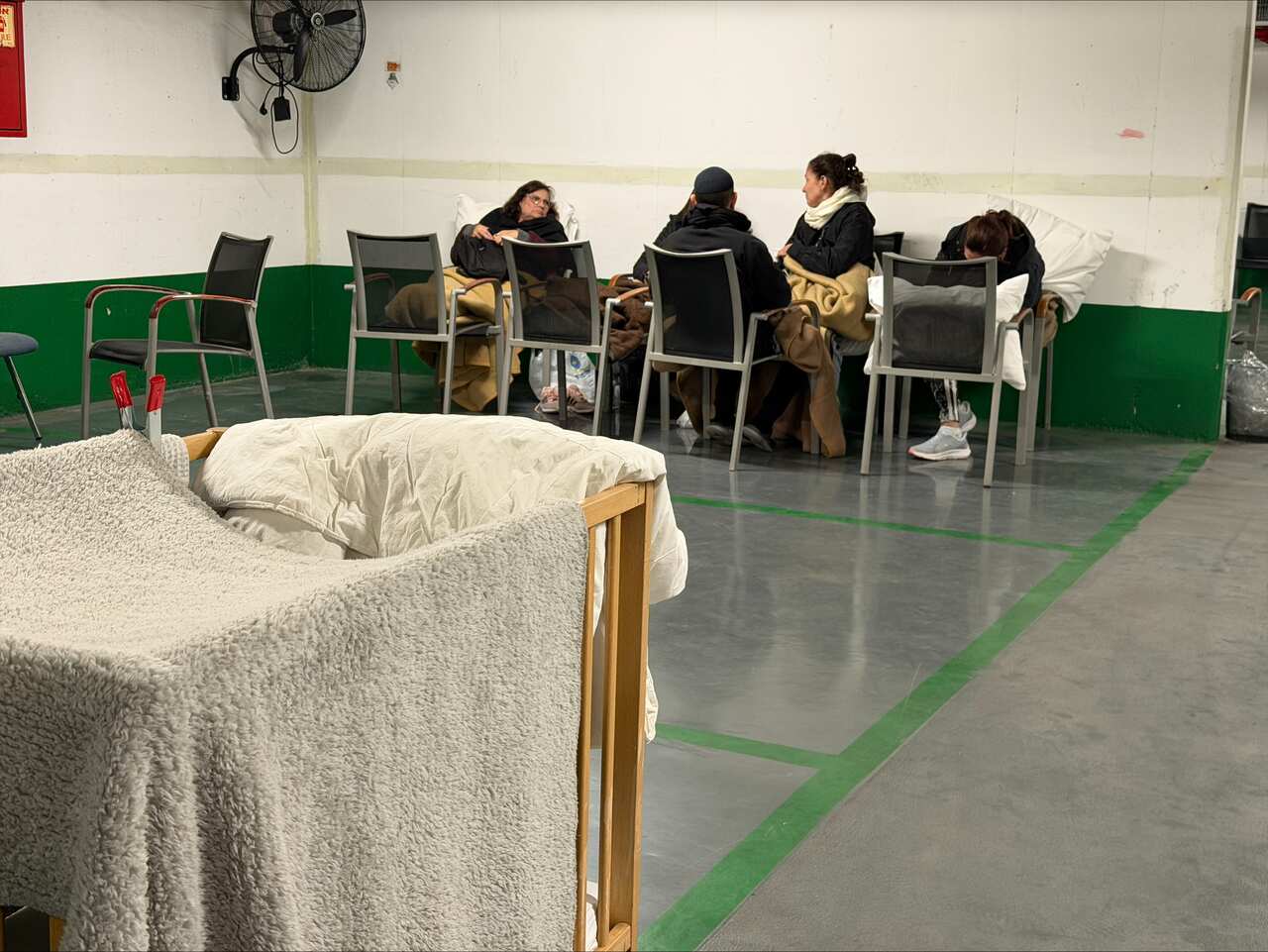
It's the end of shabbat and in a car park a few stories below the Tel Aviv Hilton, men and children are dancing and singing, the traditional Hebrew songs punctuated by the soft thud of air defences operating high above the city.

Over the past few years, Israelis have become accustomed to spending time underground. When Hamas fired rockets after October 7, many did not take the threat that seriously. Iranian ballistic missiles are another matter entirely.
"I would not say I’m scared because we have each other, our resilience," says Jonathan, whose friends have already put together a makeshift bed to sleep on.
"Unfortunately, we’re used to this situation".
'It’s come too late'
While there’s been significant international criticism of the Israeli government’s description of this war as a 'pre-emptive attack', not surprisingly, no-one in this bunker has a problem with it.
James Farkas is an Australian who’s lived in Israel for almost two decades.
"I think it’s come too late," he tells me after the all-clear has been given.
"We’ve been talking about it happening for some time, everyone’s been a bit uncertain. It’s finally here now and I’m pleased that it is."
"It’s worth it if we have neutralised a potential threat that could make much bigger difficulties for us in future than these little ones."
A recent poll from the Israel Democracy Institute research centre found 44 per cent of Israelis thought the IDF should join strikes against Iran from the outset, 50 per cent thought their country should only get involved if attacked first.
But now that it has happened, the national mood appears to have changed.
— Ben Lewis, in Tel Aviv
Where did Iran strike overnight
Explosions rocked cities across the Gulf Saturday, killing a civilian in Abu Dhabi, while smoke and flames rose from Dubai landmark The Palm as Iran launched waves of attacks in retaliation for US and Israeli strikes.
Iran called the strikes unprovoked and illegal and responded with missiles fired at Israel and at least seven other countries, including Gulf states that host US bases.
The attacks hit Kuwait's airport, as well as Gulf military bases and residential areas, raising fears of a wider conflict and rattling a region long seen as a haven of peace and security in the region.
Four people were injured at the luxury Palm development, and missiles streaked across the skies of every Gulf country but Oman, a mediator in the recent US-Iran talks.
The unprecedented barrage also targeted Qatar, host of the region's biggest US military base, as well as Riyadh and eastern Saudi Arabia.
The UAE, Qatar and Kuwait all announced that their airspace was closed.
Many of the missiles and drones were intercepted, but smoke poured from US bases in Abu Dhabi and Manama, home of the American navy's Fifth Fleet, witnesses saw.
Dozens of loud, window-rattling bangs echoed over Gulf cities throughout the day, the second Saturday of the holy month of Ramadan.
A drone struck Kuwait's international airport and a base housing US personnel was targeted. Three Kuwaiti soldiers and 12 other people were wounded, authorities said.
Falling debris killed a Pakistani civilian in Abu Dhabi, the United Arab Emirates' capital, authorities said.
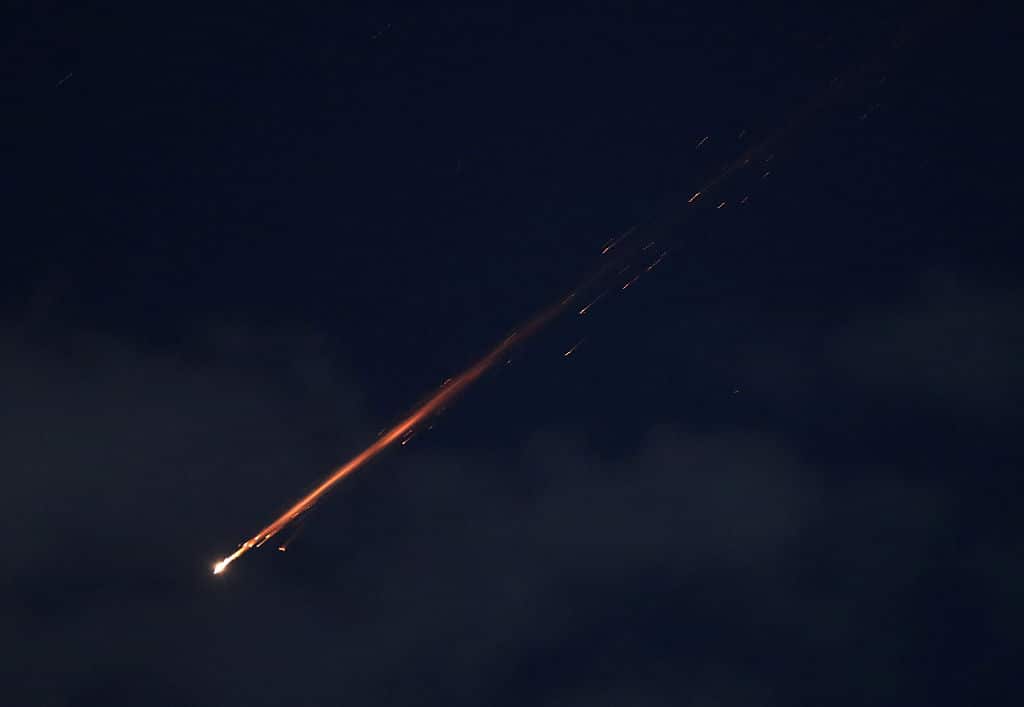
Residential buildings were also targeted in Bahrain's capital Manama, with officials saying firefighters and civil defence teams had been dispatched to the scene.
"The sound of the first explosion terrified me," said a 50-year-old retiree living near the US base in Manama's Juffair area, where residents were quickly evacuated.
The UAE and Saudi Arabia both warned they reserved the right to respond to the attacks.
The oil-and-gas rich Arab monarchies, lying just across the Gulf from Iran, are long-term American allies and host a clutch of US military bases.
However, they also maintain ties with Tehran — once their arch-foe. The UAE and Saudi Arabia were attacked despite pledging not to let US forces use their territory for operations against Iran.
Israel's military said some 200 fighter jets had completed the largest flying mission in its history, hitting 500 targets throughout Iran including strategic defence systems already damaged in strikes last year.
— Agence France-Presse
What we know about reports on Iran's supreme leader's death
Israeli officials are reporting Iran's supreme leader Ayatollah Khamenei has been killed. This has not been confirmed by Iran.
The head of public relations at the Iranian Supreme Leader's office on Saturday accused the country's enemies of "mental warfare" after Israeli reports Ayatollah Ali Khamenei had been killed, Iranian state media reported.
"The enemy is resorting to mental warfare, all should be aware," the public relations official was quoted as saying.
Reuters reported that an Iranian official told state media Khamenei was "commanding the field".
Israeli Prime Minister Benjamin Netanyahu said earlier that there were many signs suggesting Iranian Supreme Leader Ayatollah Ali Khamenei may have been killed in Israeli-US strikes in Iran.
"This morning we destroyed the compound of the tyrant Khamenei," Netanyahu said in a video statement, adding that for more than 30 years Khamenei had "dispatched terrorism across the world, made his own people miserable, and worked constantly and tirelessly on a program to annihilate the state of Israel".
"There are many signs that this tyrant is no longer. This morning we eliminated senior officials in the ayatollahs' regime, Revolutionary Guards commanders, senior figures in the nuclear programme - and we will continue."
In the same speech, Netanyahu warned Israel would hit "thousands more targets of the terror regime," Netanyahu said.
— Madeleine Wedesweiler
Good morning and welcome to our live coverage of Israeli and US strikes in Iran
As Australians rise this morning there have been significant developments overnight in an escalating conflict between Iran and Israeli and US forces. Israeli officials say Iran's supreme leader Ayatollah Khamenei has been killed. Iran has returned airstrikes, after Israel and US forces hit Iran with a major attack, that had been foreshadowed for some time by US President Donald Trump as he urged Iran to commit to not develop nuclear weapons.
Here are the top lines:
- Israeli officials say Iran's supreme leader Ayatollah Khamenei has been killed and his body found. Israeli Prime Minister Benjamin Netanyahu had earlier said Khamenei's compound had been destroyed, and Revolutionary Guard commanders and senior nuclear officials had been destroyed.
- Israel and the United States attacked Iran on Saturday, targeting its top leaders and calling for the overthrow of its government, while Iran responded with missiles fired at Israel and neighbouring Gulf countries, including Bahrain, Qatar and the UAE.
- Trump said the strikes were aimed at ending a security threat and ensuring Iran could not develop a nuclear weapon. He called on Iranian security forces to lay down their weapons and invited Iranians to topple their government once the bombing ended.
- Iranian media reports, citing the Red Crescent, say at least 201 people have been killed across 24 provinces.
We'll be bringing you updates throughout the day.
- Madeleine Wedesweiler







