
A swamp at Lancefield, an hour's drive from Melbourne, is the site of a dig bringing together numerous scientific disciplines.
Experts on the dig include archaeologists, a palynologist analysing fossil pollen, experts in megafauna DNA and dental isotopes and researchers dating sediments and charcoals.
Deakin University Taphonomist Dr Sanja Van Huet is there to find out why there is such a massive accumulation of fossil material in the area.
She says 60,000 years ago, the area would have been a vast plain, home to megafauna.
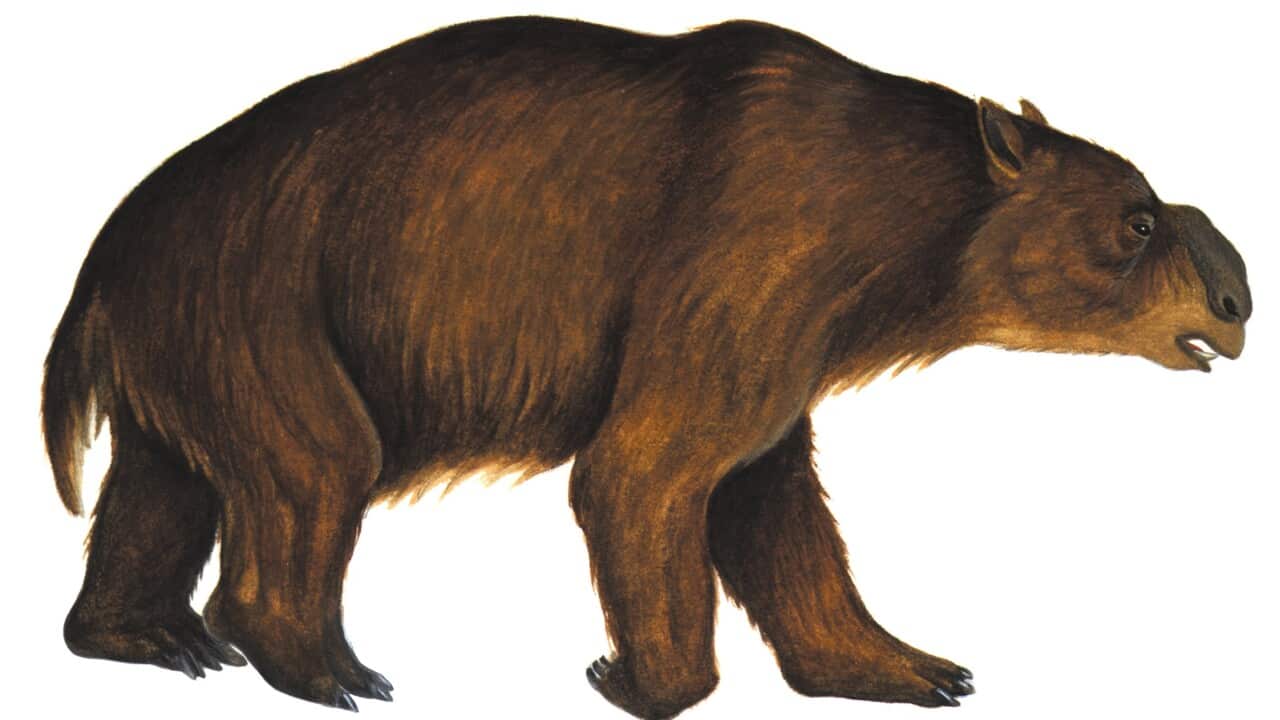
"There would have been a lot of the giant Marcropus Titan kangaroos here and the occasional Diprotodon because they were more tree or branch eating animals," Dr Sanja Van Huet said.
The dig has hosted an open day, inviting the public to see fossils, and the process of uncovering them, for themselves.
Paleontologist Tim Ziegler says the area is especially important because of the abundance of fossils.
"There could be 10,000 individual animals that have been preserved in the bone bed," he said.
The dig has also uncovered evidence of Aboriginal habitation.
However, it's not in the same soil layer, deepening the mystery of whether humans hunted the megafauna to extinction.
The dig is the latest in a series of excavations since the mid 1800s.
But research to date has been piecemeal, with present excavations funded almost completely by donations.
Site manager and paleontologist, Cam McKenzie, said the area is vitally important.
"It has such a vast fossil record," Mr McKenzie said.
"Its imperative that the public knows how important this site is and we get some future scientific work."
Dr Van Huet said, as well as being a window into pre-history, the dig could also hold the key to future events.
"If we've got the cause of megafaunal extinctions and we can find out why that happened, then maybe we can stop modern extinctions as well," she said.





