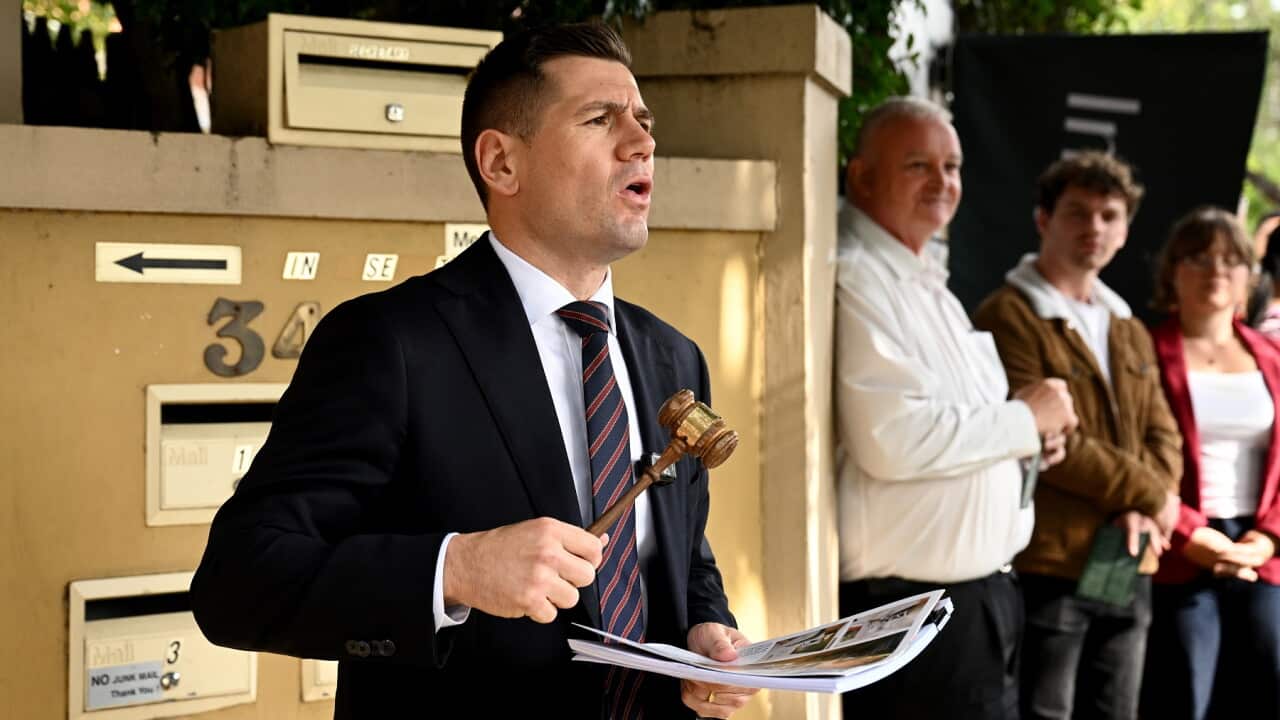

Soaring costs are hurting Australia’s 2.7 million small businesses – especially in hospitality. So, what can the federal government’s May budget offer?
Listen to Australian and world news, and follow trending topics with SBS News Podcasts.
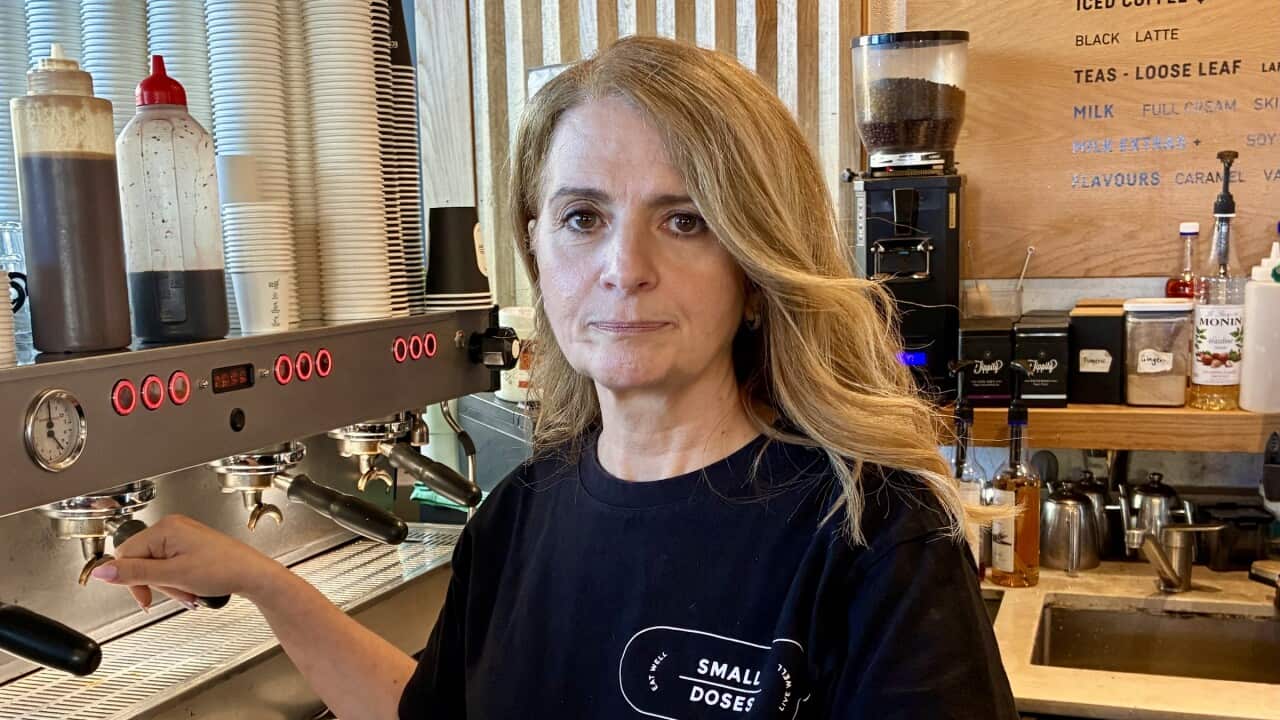
After 40 years on the frontline, café owner Angela Vithoulkas has seen a lot of ups and downs – but says the current conditions are testing!
“I've got to work twice as hard now than I ever used to. I am here from 4:30 in the morning until about 5:00 PM, six days a week."
The former politician and award-winning entrepreneur grew up in a family business.
"I'm the daughter of migrant parents who first came to Australia in the 50s and 60s. They were small business owners as well. So that’s where I learned how to always step up for a challenge. And I think that unique perspective of people who couldn't speak English and didn't have a business background, but saw an opportunity, I think that's what I inherited more than anything else."
Her 18th venture Small Doses café in a medical precinct at Sydney’s St Leonards, is still a partnership with her brother, Con.
"We've always been in business together. I wouldn't do this work and this business without him."
Despite the support of a sibling, even this seasoned operator is finding it tough to turn a profit.
"In the last 15 months that I've been in a new business, I've seen almost 18 per cent increases across everything that we do on average. So, that's product, that's outgoing expenses. Power for us is going up $500 a month. I've tried everything to save power."
Even so, Ms Vithoulkas is reluctant to hike her prices.
Regular customer Lutfi Hady explains.
"I think people do expect prices of things like coffees to go up in line with interest rate rises, inflation, global conflicts, feud supply shortages. However, these guys have been good at keeping their prices stable so I am here every day."
This week’s interest rate rise was another hit for Australia’s 2.7 million small business owners, with many carrying hefty business loans. Credit reporting agency CreditorWatch chief economist Ivan Colhoun explains.
"Two of the key drivers of insolvency are energy prices and interest rates. So, when you think about that, both of those are moving in the wrong direction at the present time. We've seen interest rates rising again this week, and obviously we've got much higher energy prices. So that combination is likely to result in higher insolvencies."
Australia’s hospitality industry is already experiencing record-high business failures, leading all other sectors in insolvency, with roughly one in 10 food and beverage businesses closing their doors.
CreditorWatch’s Ivan Colhoun explains.
''What we are seeing is some increase in credit inquiries, particularly in about food and beverage companies. So, credit managers are worrying about that sector.
To ease the strain, a push for the instant asset write-off to be extended in next week’s federal budget. It allows tax deductions for eligible purchases up to 20-thousand dollars. Skye Cappuccio is CEO of the Council of Small Business Organisations Australia or COSBOA.
"The instant asset write-off is a proven measure to support small business to invest in their own growth. We are looking for the government to make it permanent so that small business has the opportunity to plan ahead to effectively utilise it, but also to increase it. So, the amount that you are able to write off is actually relevant to the amount small businesses really need to invest in things like a new vehicle or an upgrade to manufacturing equipment. So, we're calling on the government to make the instant asset write-off permanent and increase it to what it was in 2021, which was 150,000."
Ms Vithoulkas welcomes the COSBOA plan.
"We'd love to see it increase to 150. I think that gives business owners a chance to assess what they're going to upgrade and how they're going to do it and knowing they can afford it."
But there are other threats lurking in cyberspace. This year, according to the Australian Signals Directorate, the average self-reported cost of a cyber incident for Australian small businesses rose to $56-thousand, 14 per cent up on the previous year.
Ms Vithoulkas was among those affected.
''My server got hacked this week. So, I was offline for three days. Well. I was scared because I didn't know how people were going to reach me. I have no idea what I've lost. I don't know if I'm ever going to get it back and I don't know what's been interfered with. So again, I have to become a cybersecurity expert and work out how I'm going to protect myself in these instances.''
Cyber Wardens offers short courses in cyber security for small business operators.
COSBOA’s Skye Cappuccio wants ongoing budget support.
"We are calling on the government to continue their investment in Cyber Wardens, which is a really important program, supporting small business to increase their cyber awareness."
Despite the headwinds, Ms Vithoulkas isn’t looking for a handout next week.
"40 years of being in business overall means I don't need a box of tissues to get through this. I need to sit down and plan. How does my menu improve to become more profitable? Where else can I save costs? And how can I grow the business?"
However, advocates say a little recognition is due!
"There are 2.7 million small businesses in Australia and they're employing over five million people. Collectively, they make up nearly a third of GDP."
''Australia has been built on the back of small business. Investing in us, as small business owners is investing in Australia's future. Ignoring us, we'll see more unemployment, we'll see less prosperity."