
The ABC and SBS have defended their reporting on conflict in the Middle East, after facing scrutiny at the Royal Commission on Antisemitism and Social Cohesion. Australia’s Special Envoy to Combat Antisemitism Jillian Segal also spoke to the inquiry, calling for both broadcasters to establish an independent oversight body. ABC and SBS maintain their reporting and editorial approaches have been accurate, balanced and impartial.
Listen to Australian and world news and follow trending topics with SBS News Podcasts.
TRANSCRIPT
The ABC and SBS have defended their coverage of the war in the Middle East before the Antisemitism Royal Commission.
The current hearing block focuses upon the dissemination of antisemitic content, and other forms of hateful speech in the online environment, as well as antisemitism in traditional media and broadcasting.
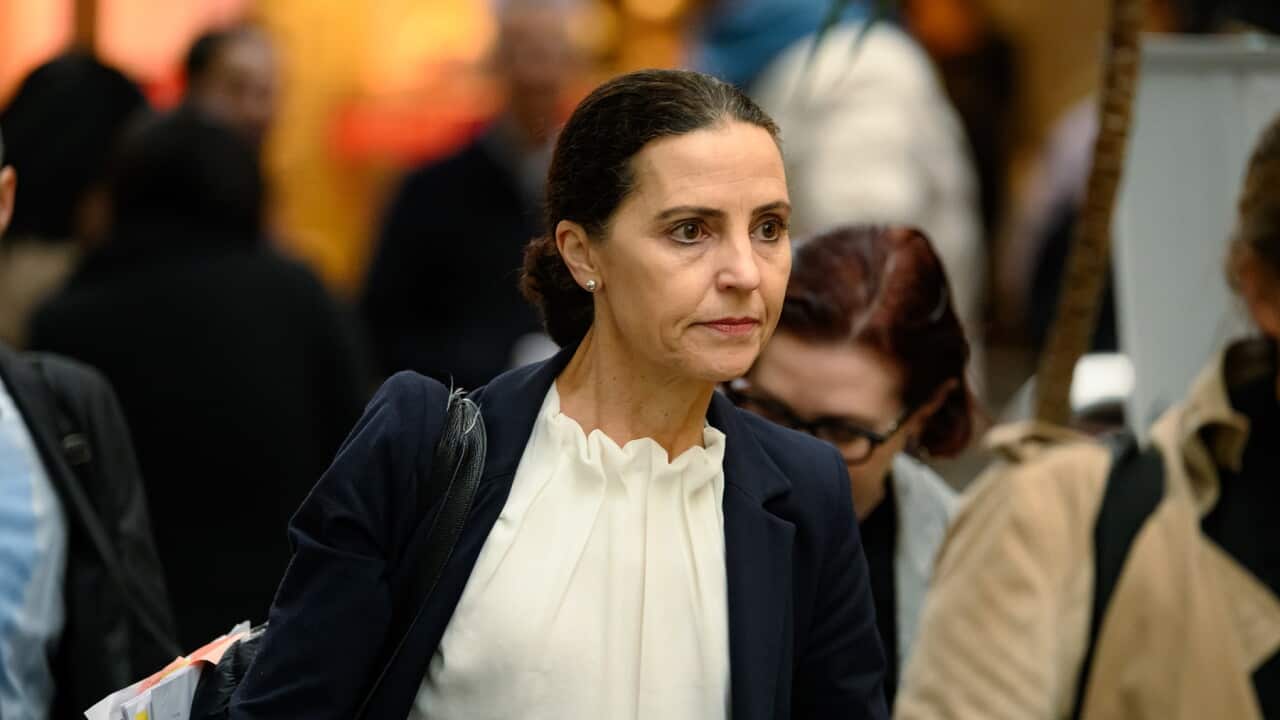
Australia’s Special Envoy to Combat Antisemitism Jillian Segal opened the hearings by stressing the influential role both public broadcasters play in shaping public discourse.
“The ABC and SBS are the most trusted brands and they are watched by many opinion makers, and therefore I think it's very important. Some of the evidence that was given, before this commission, by one of your experts last week also made it clear that young people were increasingly listening to the ABC and SBS. So I, I think they're very important. They have, because of their public funding, they have additional responsibilities set out in their charters. So that's why I think they, they also have a special responsibility.”
In a submission to the inquiry, Ms Segal said that the Australian Jewish Community has repeatedly expressed concern to her that the public broadcasters' coverage of the State of Israel's response to the October 7 2023 attacks, and the ensuing conflict in the Gaza region lacked balance and disproportionately gave voice to anti-Israel perspectives.
Ms Segal told the hearing while these positions are difficult to assess or test objectively, it's a strongly held perception in the Jewish Community.
“It should not, I think, be dismissed, okay? Because it, it's a very serious perception, uh, that a community under attack here in Australia feels that the trusted national broadcaster, uh, is not presenting the, the situation in the Middle East in a way that they think is, uh, not biased and accurate.”
Ms Segal said she believes the conflict in Gaza has received disproportionate attention from Australia's public broadcasters when compared with other global conflicts.
She also said there has been a disproportionate number of stories that are critical of Israel, compared with those critical of Hamas or other parties.
The envoy pressed for stronger external oversight of both the broadcasters' complaints systems, who each have their own independent complaints Ombudsman.
“I do think a structure where independent group of people look at what is happening, and they can give it a, a huge tick or they can give it guidance as to, the fact that it needs to understand, uh, this particular hatred we're focused on better.”
The ABC has consistently pushed back on what it says are unfounded accusations of biased coverage.
ABC Editorial Director Gavin Fang reiterated this position to the inquiry, rejecting claims ABC has given disproportionate attention to the conflict in the Middle East.
He said the ABC's coverage of conflict in the Middle East is in line with its commitment to deliver content in the public interest.
“The ABC has a, a commitment to tell stories, uh, to Australian audiences through Australian eyes, and I think that's an important part of our charter obligation. And so reporting on important international events and, and events overseas that affect Australians, uh, in significant ways, like the conflict in the Middle East does, is part of us meeting our charter obligation to create, uh, news and current affairs that's impartial and accurate, uh, and objective.”
He said while the ABC has received audience complaints about its coverage of conflict in the Middle East, these complaints have been split relatively evenly between those who consider the content too critical of Israel, and those who consider it not critical enough.
In a submission quoted at the Inquiry, the ABC Ombudsman said it had received 573 complaints relating to coverage of the Israel/ Hamas conflict, with 89 per cent of these complaints alleging that coverage was biased or lacked balance.
The Ombudsman said 52 per cent claimed Hamas or Palestine favoured, and 47 per cent claimed Israel was favoured.
Speaking to the inquiry, Mr Fang rejected Ms Segal's suggestion that the ABC disproportionately favours anti-Israel voices
“I think that in all of our reporting, um, our goal is to meet our standards and to be accurate, uh, to be impartial. Um, we, uh, we seek to, where relevant, uh, hear from affected parties on a variety of sides of the conflict, and that means hearing from both Palestinians and from, uh, Israelis, uh, from hearing from government sources and from non-government, and from hearing from people that have, um, a relevant perspective, uh, to be included in, in a story so that Australians can understand what's accurately, accurately what's happening.”
The ABC rejected claims its journalism has contributed to antisemitism or social division.
It did concede one major correction should have been handled better, after broadcasting an incorrect claim from the United Nations about babies at risk in Gaza.
But Mr Fang pushed back against Ms Segal's call for an independent oversight body to be established to handle complaints.
“But I think our current structures, which involve an Ombudsman that is separate to the content teams that reports to the board, is functioning effectively, and there's still... and there is additional oversight for, from the ACMA. I'm, I'm not sure how an-another oversight body might function in addition to that existing oversight body, which already has the power to, uh, review and examine the ABC's content.”
SBS Director of Audio and Language Content, David Hua also spoke at the inquiry.
He said SBS has shown a dedication to enhancing social cohesion and building cultural knowledge across communities, including by presenting information on antisemitism in multiple languages.
“An example of a service that, a centralized service that we have is called SBS Examines, and that's where we can do more in-depth reporting of topics, uh, that affect social cohesion, um, antisemitism being one of those, and that content is then re-expressed across, um, dozens of our language services.”
Earlier, SBS released a public statement, saying the broadcaster "unequivocally condemns antisemitism."
The statement said SBS represents Jewish Australian stories and perspectives respectfully, accurately and inclusively, and has invested significantly "in reporting and programming that helps Australians better understand antisemitism and its impacts."
Director of News and Current Affairs Mandi Wicks told the hearing this has been evident in the broadcaster's overall approach to reporting on conflict in the Middle East.
“The way we approach our content is obviously to cover those, the changing news environment, what's developing. We also then spend time thinking about what are the impacts on relevant communities here in Australia, and making sure we, we give them voice, um, and tell their stories is always part of our coverage, whether it's Russia, Ukraine, or the Middle East, or any other. Um, and then we do spend time thinking about, um, context and are there any concepts or issues that we should go further to explain, and we call them explainers.”
Both broadcasters were questioned over why they haven't adopted the contested International Holocaust Remembrance Alliance definition of antisemitism.
It's a definition endorsed by the Australian government and by this royal commission, but some rights groups argue it risks conflating criticism of Israel with antisemitism.
Mr Fang said the ABC has editorial standards covering racism, hate speech, accuracy and impartiality, and that adopting a contested definition could raise concerns about editorial independence.
Ms Wicks said SBS neither accepts, nor rejects the definition.
“You know, we acknowledge that it is an important definition recognized by many. SBS, you know, we're never in a position where we're making a determination that something is antisemitic. We have covered extensively, you know, reporting on anti-Semitic attacks and the abhorrent, um, impacts, um, that that has had on the community here and globally. But we are only ever reporting on antisemitism when it is determined to be such by police, the legal system, the community itself.”
Ms Segal earlier took aim at SBS' use of statistics from the Gaza Health Ministry, saying the figures on the number of people killed are "grossly inaccurate" and fail to distinguish between combatants and non-combatants.
Ms Wicks said she's confident SBS's overall coverage provides adequate context.
“Our sort of position is we refer to the Gaza Health Ministry when we're quoting statistics, um, and we refer to the Israeli government statistics, um, as well. The criticism being that we don't always refer to it being Hamas-run health ministry. If it's to do with ensuring Australians have enough context to understand that Hamas is, you know, running the Gaza Strip, we do frequently refer to the Hamas-run Gaza Strip, the Hamas-run government of Gaza, and we frequently refer to the fact that Hamas is recognized as a terrorist organization by many countries around the world, including Australia.”
SBS's Ombudsman Amy Stockwell was the final representative to speak at Thursday's hearings.
Responding to questions about whether an independent oversight body would be better placed to manage complaints, Ms Stockwell says she's confident the current system is working.
“SBS has had a, an ombudsman for 21 years, so it's been designed and tested and refined over that period. I think this model of co-regulation where there is an internal media ombudsman who is separate from the content divisions, but also still part of that ecosystem so that the audience has a very strong voice within the organisation.”
The Australian Communications and Media Authority is also expected to front the inquiry.