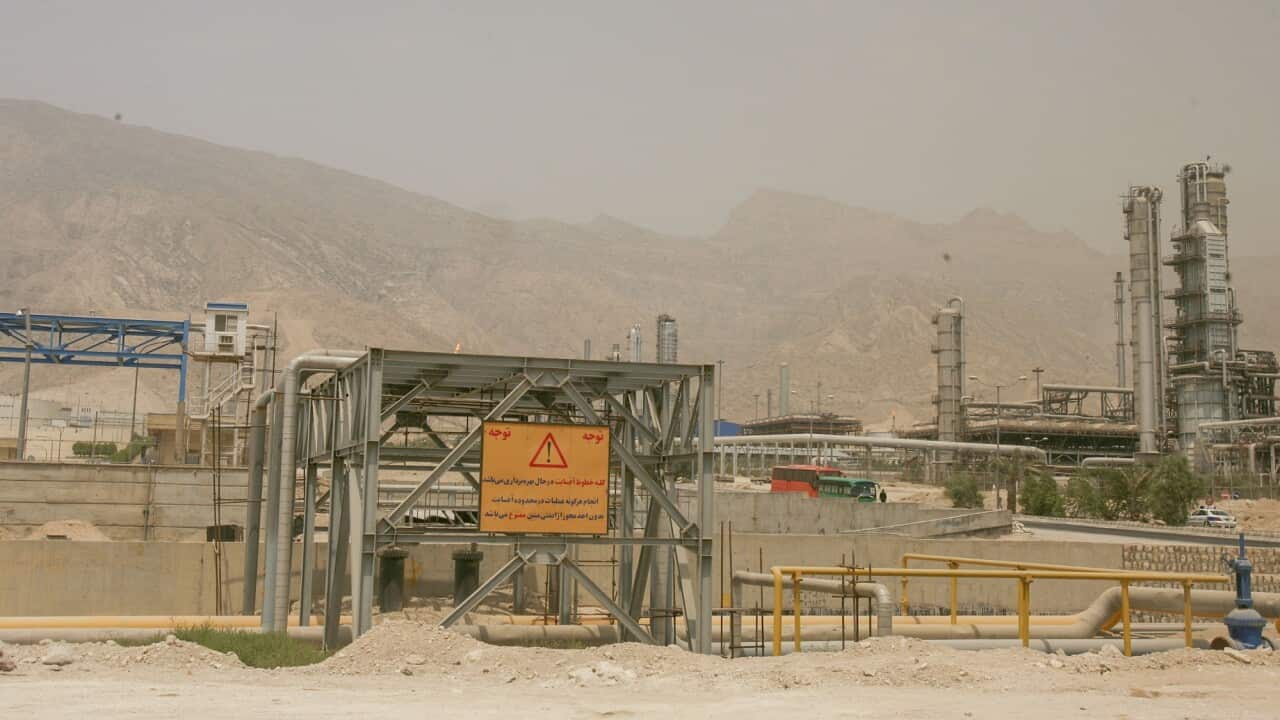

Oil and gas facilities are now being targeted in the war in the Middle East, prolonging the disruption to global fuel supply chains. It has also sent shockwaves to the global economy.
Listen to Australian and world news, and follow trending topics with SBS News Podcasts.
TRANSCRIPT
Energy infrastructure is now at the centre of the conflict between Iran, Israel and the United States, with strikes on oil and gas facilities across the Gulf, raising fears of a wider war and global economic shock.
Iran has escalated its retaliation following an Israeli strike on the South Pars gas field - the world’s largest, shared with Qatar.
It has hit a Saudi refinery in the port of Yanbu, as well as gas facilities in Qatar and oil refineries in Kuwait.
Inside Israel, a refinery in Haifa was also struck, causing minor damage and a brief power outage.
The attack forced millions into shelters, as Israel responded by striking Iranian naval targets in the Caspian Sea, which it says have significantly reduced Iran’s capabilities.
Regional leaders are now pushing back.
Qatar’s Prime Minister Sheikh Mohammed bin Abdulrahman Al Thani says Iran's claims it is targeting US assets do not hold.
"There are unfortunately, continuous Iranian claims that the attacks are attacks on US assets or on US bases in Qatar and the region. We reject this claim which cannot be accepted under any circumstance. The biggest proof of this, is that the attack which happened yesterday, was an attack on a Qatari natural gas facility, which is a source of income for the Qatari people; but not just for the Qatari people, what they did yesterday also impacted the millions of people who Qatar is helping."
Turkiye, where earlier this month, two Iranian missiles landed, is warning against further escalation.
Foreign Minister Hakan Fidan says the focus now is stopping the conflict from spreading.
"While speaking with Iran, we are trying to ensure that the war does not spread. Iran itself is being attacked, but there is nothing that can justify it attacking countries in the region. This further deepens divisions, spreads the war, and intensifies the crisis. We continuously offer Iran our most sincere and friendly advice as a responsible state."
Meanwhile, at the United Nations, Secretary-General Antonio Guterres is calling for an immediate halt to hostilities.
"To Iran: stop attacking your neighbours. They were never parties to the conflict. The Security Council has condemned these attacks, has ordered them to stop, as it has ordered to open the Strait of Hormuz."
That warning matters because the Strait of Hormuz carries roughly a fifth of the world’s oil; and disruptions to international shipping have quickly driven global prices higher.
The UN estimates oil prices have risen by around 45 per cent - and gas by 55 per cent - since late February. That is feeding inflation and hitting poorer households the hardest.
With energy facilities now being targeted, there are also now growing signs of a rift between Washington and Tel Aviv.
US Director of National Intelligence Tulsi Gabbard says the objectives of the United States and Israel are no longer aligned.
"The objectives that have been laid out by the president are different from the objectives that have laid out by the Israeli government. We can see through the operations that the Israeli government has been focused on disabling the Iranian leadership. The president has stated that his objectives are to destroy Iran's ballistic missile launching capability, their ballistic missile production capability, and their navy, the IRGC navy, and mine laying capability."
That split is shaping how the United States is approaching the conflict.
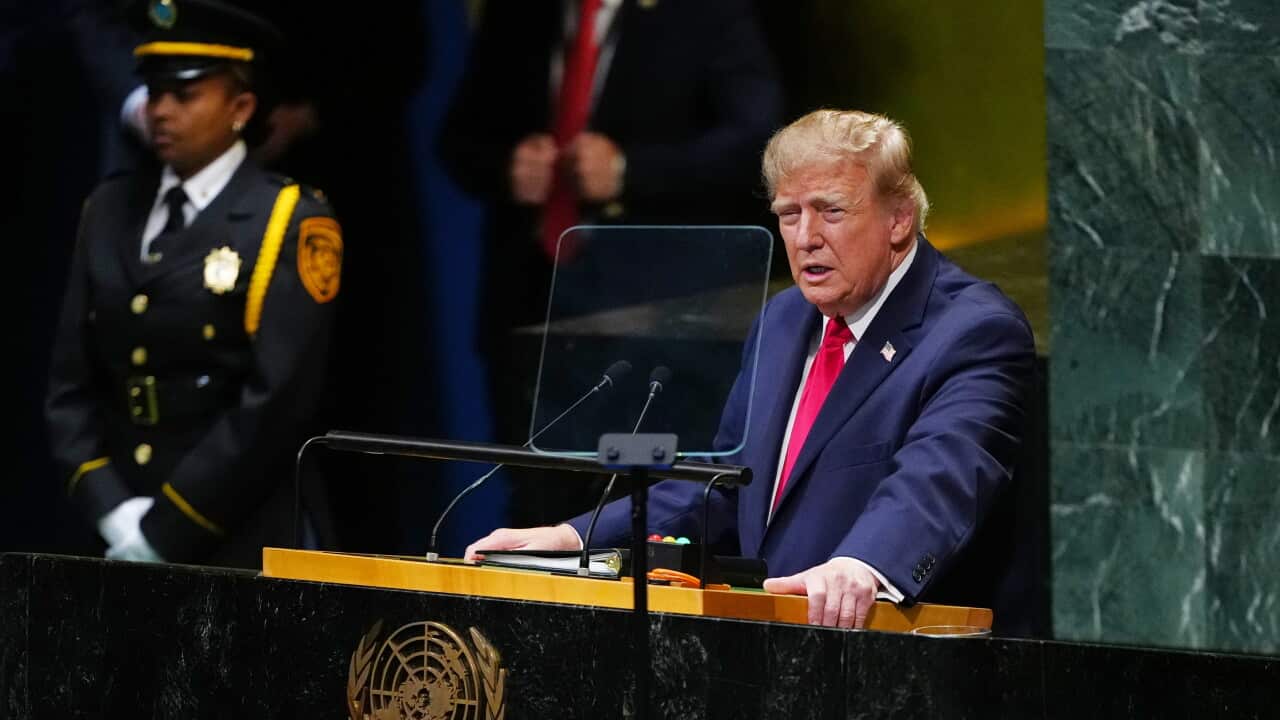
President Donald Trump says he does not want to signal what the US might do when it comes to military tactics.
"No, I'm not putting troops anywhere. If I were, I certainly wouldn't tell you, but I'm not putting troops."
And he says while the US military did target military facilities on Iran's Kharg Island - it left the oil infrastructure intact.
"We've taken out everything but the pipes. We left the pipes because to rebuild the pipes would take years for, you know for them to do."
Even so, Washington is preparing for the possibility the conflict drags on.
The Pentagon is seeking up to US$200 billion (A$280 billion) in additional funding for the war.
President Trump says the situation demands it.
"Well, we're asking for a lot of reasons beyond even what we're talking about in Iran. This is a very volatile world, and the military equipment, the power of some of this weaponry is unthinkable. You don't even want to know about it."
At the Pentagon, US Secretary of War Pete Hegseth says allies should be backing the campaign.
"The world, the Middle East, our ungrateful allies in Europe, even segments of our own press, should be saying one thing to President Trump: Thank you. Thank you for the courage to stop this terror state from holding the world hostage with missiles while building or attempting to build a nuclear bomb. Thank you, for doing the work of the free world."
And beyond the politics and military strategy, the impact is being felt on the ground in Iran.
In Tehran, preparations for Nowruz - the Persian New Year - are continuing under the shadow of conflict.
This resident says people simply want the violence to stop.
"Considering the events that have occurred in Iran and the region, and that many of our compatriots have been lost, unfortunately, many of our young people, I hope these issues end soon."