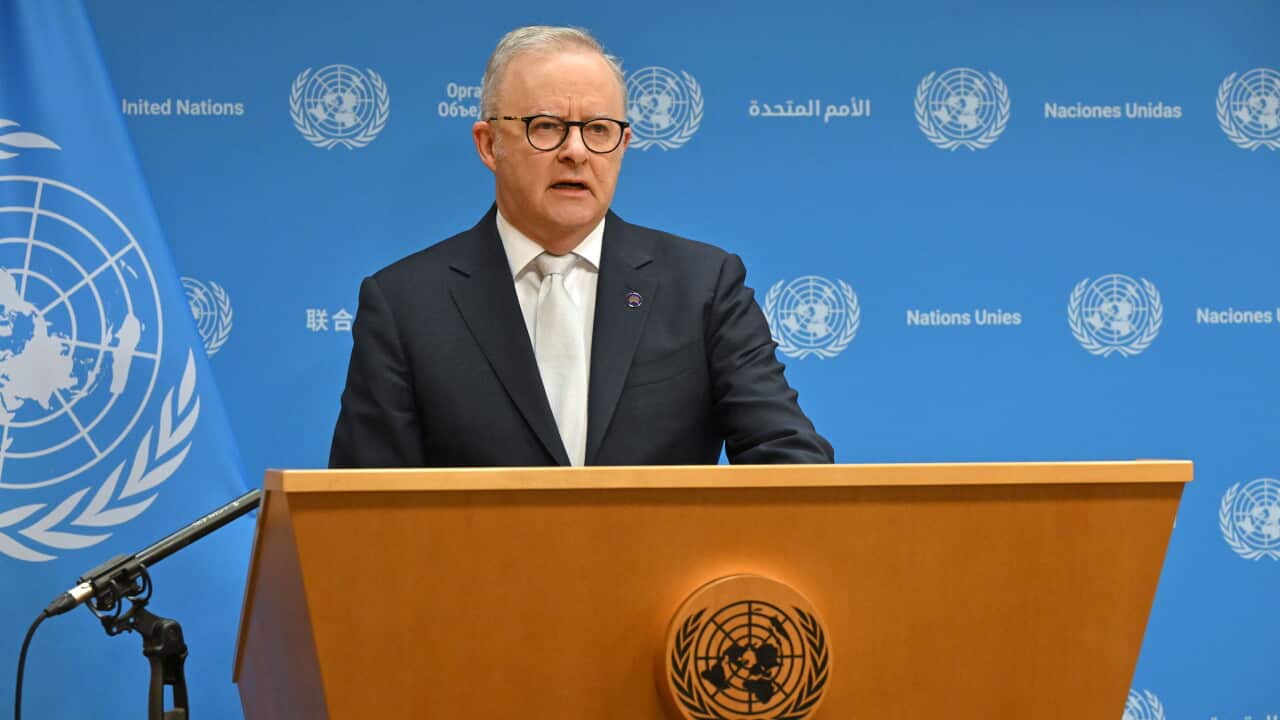

Australia has formally launched a campaign for a non-permanent seat on the United Nations Security Council between 2029 and 2030. Prime Minister Anthony Albanese announced Australia's bid for a seat at the UN's highest table in New York ahead of the General Debate, which begins on Tuesday. But the federal government has also been the subject of an urgent UN plea to address the over-representation of Indigenous children behind bars..
Listen to Australian and world news and follow trending topics with SBS News Podcasts.
TRANSCRIPT
“Australia is a Pacific nation inhabiting an entire continent and connected to Southeast Asia, the Indian Ocean and Antarctica. We are home to the oldest continuous culture on the planet and to people from more than 300 different ancestries.”
"We listen. We partner. We protect."
That's the theme behind Australia's campaign for a two-year seat at the UN Security Council, which is responsible for maintaining international peace and security.
Prime Minister Anthony Albanese says the seat would allow Australia to engage with the world during a time when international affairs directly impact "Australians' way of life".
He's in New York for the general debate of the 81st session of the UN General Assembly.
“We have an opportunity through this potential seat on the UN Security Council to play a key role in shaping the global issues that really matter to Australians.”
The UN Security Council is composed of five permanent members - China, France, Russia, the UK and the US - as well as ten non-permanent members who are elected for two-year terms.
Australia last held a spot on the Council in 2014 and used the position to push for an international inquiry into the downing of Malaysia Airlines flight MH17 over eastern Ukraine, which killed 298 people, including 38 Australian citizens and residents.
Finland has also nominated for a non-permanent position on the Security Council, with a secret ballot to take place in mid-2028.
To succeed, a country must secure a two-thirds majority of UN General Assembly members [[or at least 128 votes if all 193 members vote]].
“If elected to the Security Council, we will use our seat to advance the safety and prosperity of Australia, our region and the world. And, the challenge of climate change is another one, where, particularly for our Pacific neighbours, Australia having a seat at the table will be very important.”
The government says the cost of the campaign for the UN seat will be modest.
But Deputy Liberal leader Jane Hume told News 24 she wants more details:
“What we would call, though, for is transparency in that bid, because let's face it, this government doesn't have a terrific record on how it uses taxpayer dollar.”
Australia's record on Indigenous incarceration could overshadow this announcement.
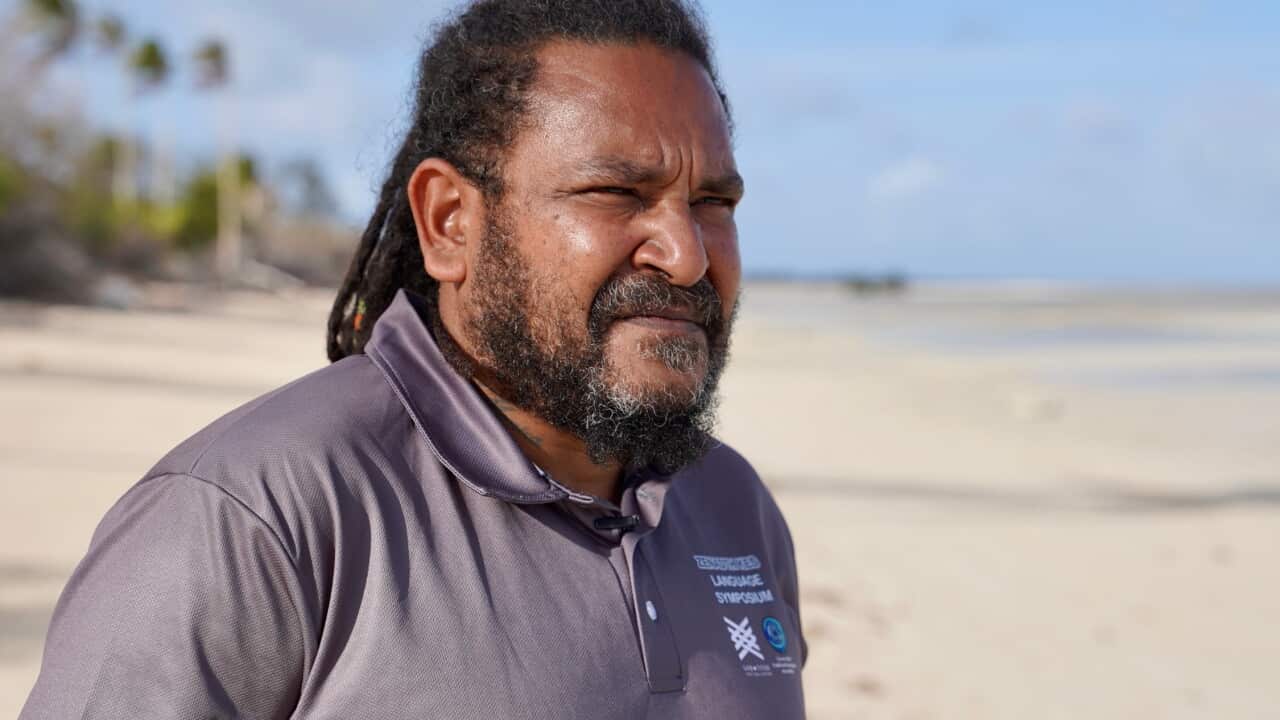
In May, the UN Committee on the Elimination of Racial Discrimination issued an "early warning and urgent action procedure" about the persistent overrepresentation of Indigenous children in the criminal justice system.
The committee expressed grave concerns about racial discrimination through Australian education, healthcare and housing conditions which contribute to the "heightened vulnerability to arrest, incarceration and re-offending".
In New York, SBS pressed the PM about federal Treaty obligations to support First Nations children.
Anna: "What do you say to those Indigenous leaders who don't feel you've shown enough federal leadership? How are you going to change that?
Albanese: "I'll be discussing it with them back in Australia."
Anna: "Sorry, just in terms of the question I raised, it's the United Nations report so you've leaned into - "
Albanese: "Indigenous disadvantage is a fact in Australia. That is my - "
Anna: "My question is about leadership -"
Albanese: "That is a fact, and my government continues to work on closing the gap in a range of areas in Australia.”
Mr Albanese did respond to questions about an investigation by The Australian newspaper into the Indigenous child protection system in Australia, despite dodging similar questions yesterday, saying he would not address domestic issues while abroad.
“We're not about to intervene against the Western Australian government ... This is a Western Australian issue, and, you know, I will refer you once again to Malarndirri McCarthy, our minister in Australia. It is impossible to follow, on an hour-by-hour basis, what is happening in Australia from New York.”
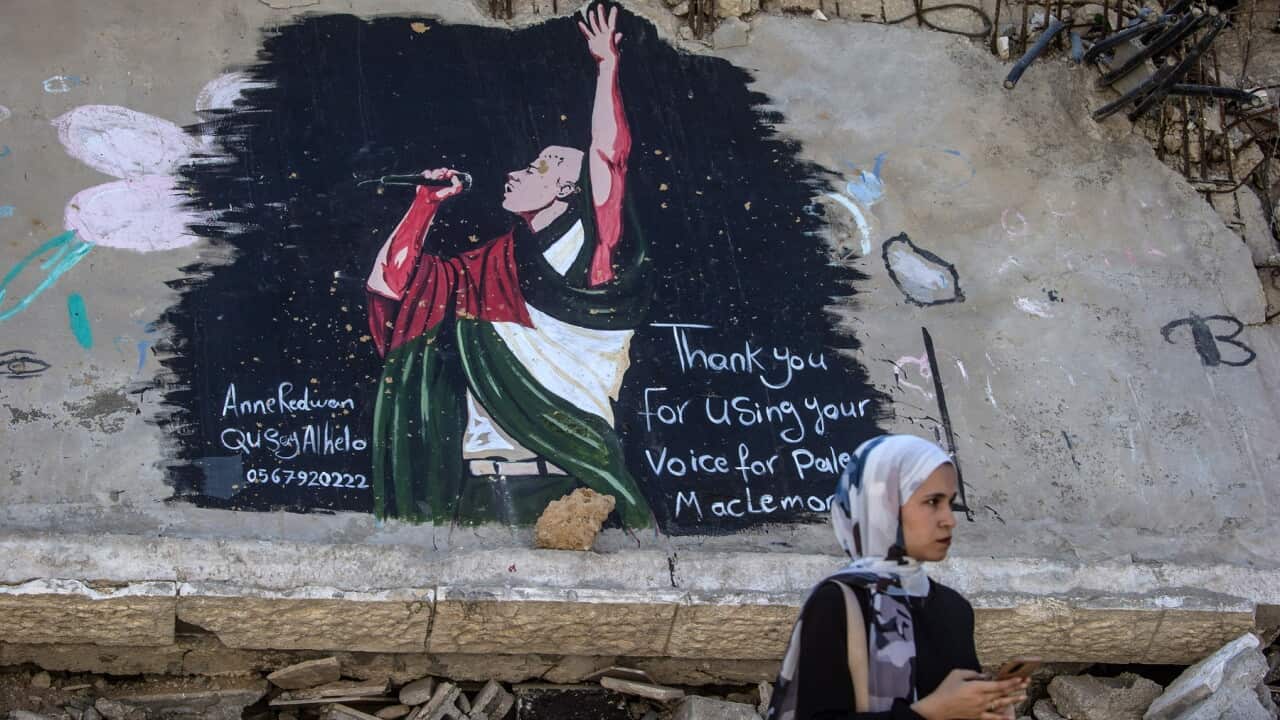
SBS also spoke with Foreign Affairs Minister, Penny Wong on the sidelines of New York, including about the US State Department's decision to deny entry to Palestinian officials.
It's the second year in a row officials from the Palestinian Authority (PA) and members of the Palestine Liberation Organisation have been sanctioned from gathering in New York in-person.
“We welcome continued engagement with the Palestinian Authority because ultimately, we believe that the only way to assure peace and stability in the Middle East, the only way to assure security for both Israelis and Palestinians and for the broader region is for there to be two states.”
The UN has adopted a text which enables the high-level Palestinian delegation to participate virtually in the general debate.
Ms Wong confirming she spoke to "her counterpart" from the PA last week ahead of the General Assembly.
“I did think that it was important for us to, a year on from the recognition of the state of Palestine, along with many others, to continue to engage at a foreign minister level.”
US Treasury Secretary Scott Bessent also met with Chinese Vice Premier He Lifeng on Sunday.
Beijing described the talks as "constructive", while Mr Bessent proposed a new artificial intelligence "notification mechanism" for incidents that could affect national security.
“We think that just like with any cross border activity, that moving from opaque to more transparency between the number one and the number two AI powers in the world is very important.”
Chinese president Xi Jinping last addressed the UN General Assembly in 2021.
This year, he's opted to skip New York and instead meet with US President Donald Trump at the White House on Thursday [[24 September]].
It's fueled debate over the relevance of the UN General Assembly to address global crises.
But nearly 130 heads of state and government will attend the week-long high-level talks, with AI, climate action and the "descalation" of international conflicts on the agenda.
UN Secretary-General António Guterres, delivering a message to those diplomats set to be in attendance.
“My message to them is clear: Come together for peace, for dignity, for justice, and for humanity. Only with international cooperation can we build a better world, and we should never give up on fighting for it.”