
Reports of sexual violence in Australia have reached their highest level in 33 years, according to the latest report by the Domestic, Family and Sexual Violence Commission. Experts say that migrants, refugees and people seeking asylum can face higher barriers to disclosing domestic and family violence. It's sparked calls for more education and funding to support culturally-responsive support services. And a warning, this story contains references to family and domestic violence.
Listen to Australian and world news and follow trending topics with SBS News Podcasts.
TRANSCRIPT
"I have to say, she was one of the most incredibly courageous and resilient people I have ever met. All she wanted was for her experience to be the last time anyone, you know, ever had that experience. So, she wanted to do something to help other women."
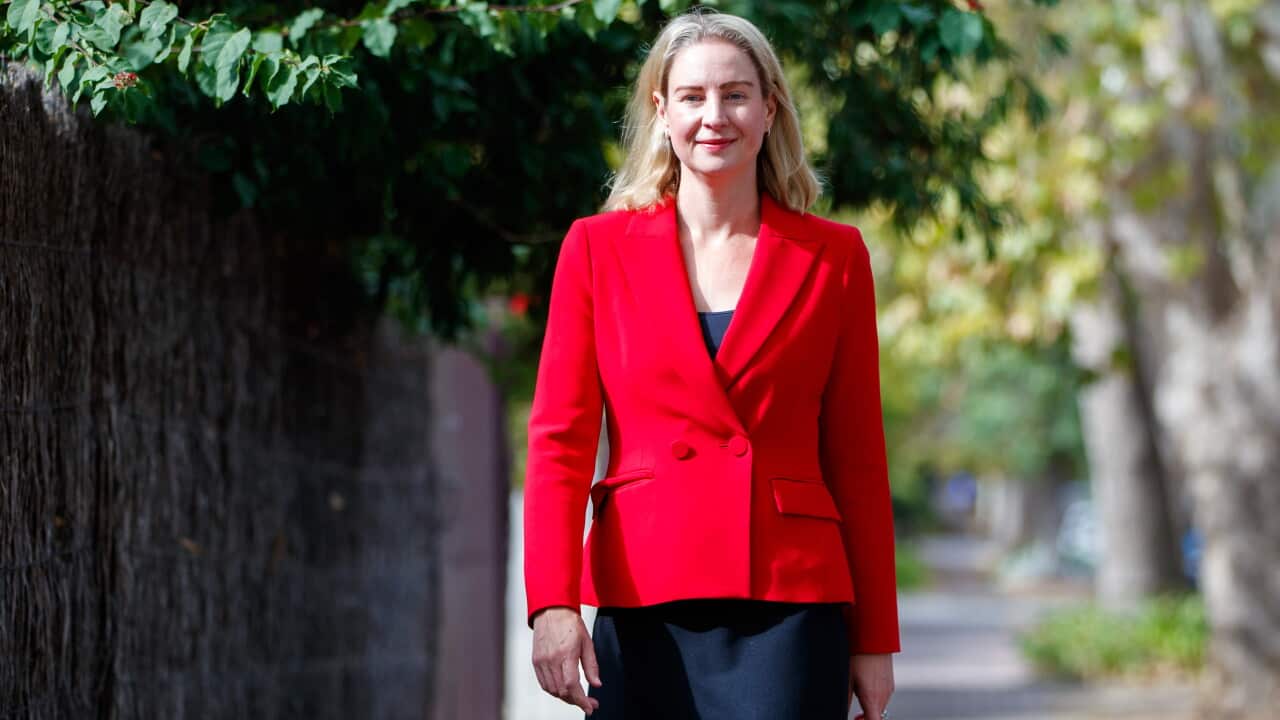
That's Claire Clutterham [[clutter-ham]], the Member for Sturt in South Australia.
She says a young woman in her constituency migrated to Australia as part of an arranged marriage.
Ms Clutterham alleges the woman's husband soon took control of her bank account.
He told her a call to Triple-Zero would cost $5,000.
"It turned into a situation of coercive control and physical violence. She was denied access to her bank account, movement restricted and really deprived of any agency to help herself and then physical threats and actual physical violence."
Ms Clutterham says the woman eventually left the relationship.
The Labor MP is now calling for public service announcements to be delivered to new arrivals, akin to biosecurity warnings shown on planes into Australia.
"I said to her well, what would have helped you? What could have been done just to make your situation a little bit better? And it was then that she said it would be really great if people coming to the country knew that Triple-Zero is free. It's the national police, fire and ambulance line."
She says the announcement could be played in English and the language from the country where the plane departed.
Ms Clutterham says she has also engaged the Department of Home Affairs and the Parliamentary Friends of Aviation group regarding the proposal.
"So, there are a couple of videos you would know that get shown on international flights. You get the biosecurity, fruit, vegetables, animal products, etcetera video - that's a statutory obligation that airlines have to show. And then, you have a video about sort of working your way through customs and the entry to the airport, entry to the country. We thought, well, you know, maybe you can add 10 seconds to that statutory video saying that the police emergency line in Australia is Triple-Zero; it is free to call."
While the plan is still in its early stages, Mitra, the CEO of the Immigrant Women's Support Service, has welcomed the proposal.
"It does make sense, I think, for anyone, regardless of their visa type, how they arrived here, for what purpose; tourist, like you know, working holiday, new migrants coming or even returning migrants. I think it's really important. But I think even the general public, it's really important to have access to that information. Our police force a key role in the safety for people to know how they can access or where they can go to seek the support."
The Queensland-based domestic violence and sexual assault service provides support to migrant and refugee women and children experiencing violence.
But Mitra says there are still myths about domestic violence among some culturally and linguistically diverse communities.
"Culture doesn't define the experience of people. There is also other misconceptions about different cultures have different levels of tolerance to violence, if people are from one particular culture they don't just leave the violence because they just used to that. Those are some of the myths that we need to change."
Karen Beaven [[beh-van]] is the CEO of Full Stop Australia and says misconceptions about domestic, family and sexual violence exist among all communities.
"Whatever background, I hear it everywhere I go. I think there are particular things that can really impact culturally diverse communities and particularly more newly arrived communities and you know, those things are that lack of information about how our legal system works, the role of police and some of the safeguards that sit around policing. And a lack of information about what is truly acceptable and unacceptable conduct."
She says the proposed public service announcement could increase awareness about services available in Australia, but believes the recommendation doesn't go far enough.
"I don't think it can hurt to have more information made available to people in translated resources about core public services available in Australia. I think that could be helpful but it won't be enough because ... the work that's being done is really done in community. It's done by settlement services; it's done by the sort of community first responders. So, they are the people that tend to translate that into real lived action."
In 2024, reports of sexual violence in Australia were at their highest level in 33 years, according to the Domestic, Family and Sexual Violence Commission's Yearly Report released this week.
Separate data published by the Australian Bureau of Statistics found the number of family and domestic violence offenders increased by eight per cent to 97,800 offenders during the 2024-25 financial year.
A 2021 study by Monash University's Migration and Inclusion Centre estimated that one in three refugee and migrant women in Australia experienced domestic and family violence.
Temporary visa holders reported disproportionate rates of abuse, including forms of violence that weaponised their migration or visa status.
"A lot of women will seek migration advice first to decide whether they will leave a violent relationship, because our advice if there's a pathway for them, safety for them - they can feel free and safe to leave. But if they find that they can't, they basically may be left with impossible choices. Do I stay in an abusive relationship? Do I become one of those women who are murdered once a week? Or is there somewhere, places like our services, that we can provide to support them in the legal frameworks for migration for family law."
That's Vanessa Burn, the head of practice in migration at the Women's Legal Centre in Canberra.
Women's Legal Services Australia [[WLSA]] has called on the government to establish a standalone family violence visa to address what it describes as gaps in current migration law.
Currently, the Department of Home Affairs offers family violence provisions to protect people on certain visas, including partner visas, while awaiting permanent residency.
But Ms Burn believes this system excludes many migrants and refugees.
"We still see there's still a lot of women who are falling through the cracks in the system and so, we look at ... you know, one big change is that we are calling on is for a standalone visa that can you know, allow a woman to have that time to access justice in a dignified way, not have to feel that she has to leave Australia without her children."
A government-funded pilot program has supported more than 2,500 women to navigate complex intersections of migration and family law and domestic and family violence systems.
But the organisation has called for more funding to support programs like this and wraparound services.
Ms Beavan also believes more action is needed to support people experiencing violence on temporary visas.
"Often, people are made more vulnerable by the nature of their visa. You know, the whole bureaucratic seeking assistance around your visa and seeking help; we know that is very real ... and we need to act. Because we cannot have domestic violence being perpetrated against women and the class of their visa being weaponised against them."
Settlement Services International is backing the proposal for public service announcements on this issue.
In a statement to SBS News, Yamamah Agha, the general manager of newcomers, said:
"Newly arrived people from migrant and refugee backgrounds often can only find support when essential service information is available and how to access them in their language.
"Translated information is one of the most basic strategies for making sure people know what's available and how to reach it, and it can make a real difference. Information about accessing essential services pre- and post-arrival, in language and reinforced at the right times, is incredibly crucial for new arrivals. "
If you or someone you know is impacted by family and domestic violence, call 1800RESPECT on 1800 737 732 or text 0458 737 732.
The Men’s Referral Service, operated by No to Violence, can be contacted on 1300 766 491.