
Cuts to the National Disability Insurance Scheme are the largest source of savings in the federal budget, leaving many in the disability community angry and anxious about what's to come. The details of which participants will lose their supports, and whether state governments will fill those gaps, are still being worked out.
Listen to Australian and world news and follow trending topics with SBS News Podcasts.
TRANSCRIPT
Federal budgets always feature so-called winners and losers, and many in the disability community are feeling like they are in the latter category this year.
"I will proudly table this petition in the Senate, on behalf of the 13,000 people who have signed it. All of us in the disability community are united against these savage Labor cuts to our NDIS, some $37 billion."
Greens Senator Jordan Steele-John has been a vocal critic of cuts to the National Disability Insurance Scheme - which were the largest source of savings in the budget.
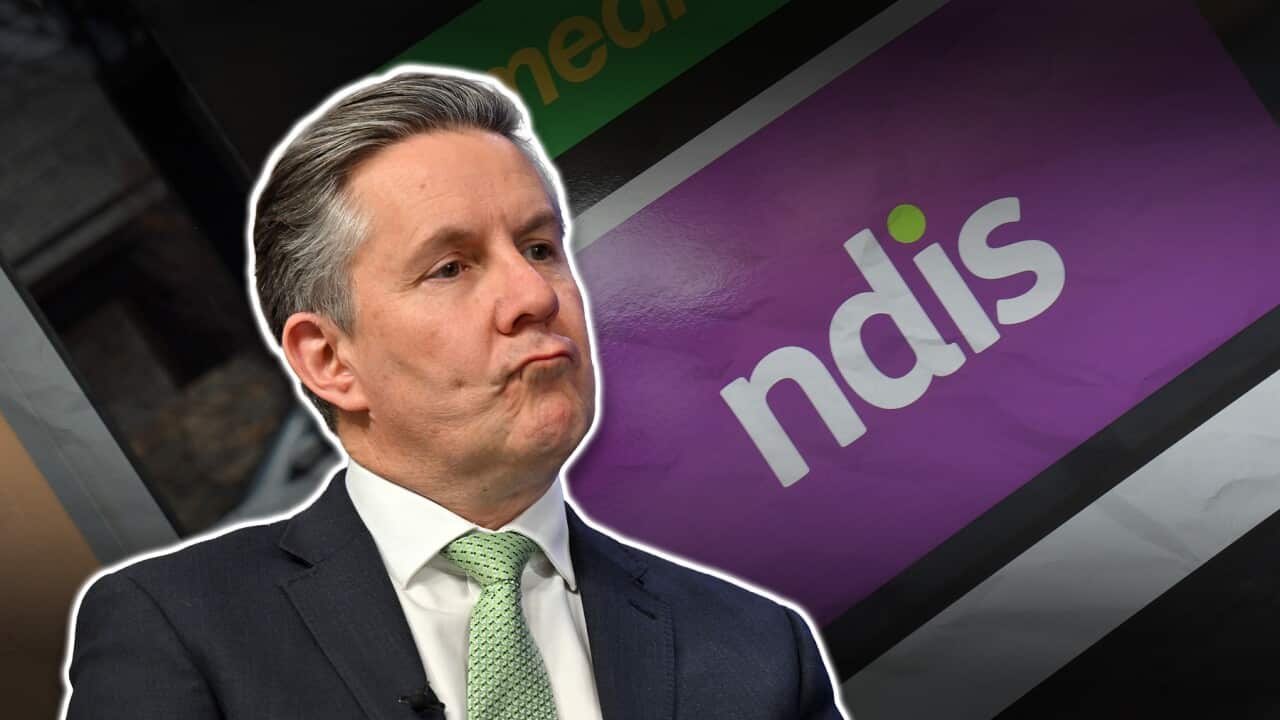
Federal Health Minister Mark Butler says around 160,000 people will be diverted from the scheme before 2030 as tighter eligibility rules come into play.
"We know that for so many disabled people and our families in the community, the NDIS is the difference between being able to get up in the morning and maybe have a shower a couple of times a week, maybe get out in the sunshine, get a job, connect with friends. All of these services and supports have been put on the chopping block by Labor and savagely cut in this budget."
Who will be kicked off the scheme is still being worked out - and the scope of the budget cuts didn't come as a surprise.
But People with Disability Australia Acting Chief Executive, Megan Spindler-Smith, says that hasn't lessened the anger and anxiety being felt by her community.
"We are deeply devastated by what has occurred overnight. We are hearing that the government is basically finding savings on the backs of people with disability."
Leading up to the budget, the government was keen to highlight how sharply spending growth in the scheme has increased.
The NDIS will cost around $50 billion this year, and that had been projected to reach an annual cost of $70 billion by 2030.
Mr Butler says that needs to be cut back to $55 billion by 2030, to ensure ongoing sustainability and social licence.
Mr Butler is promising a collaborative approach.
"We'll be working with people with a disability on that question. We'll have to have a technical advisory group to go through the process of moving essentially from a system that that provides people with entry to the NDIS based on a diagnosis, so we can get a diagnosis, find a doctor, pay that often thousands of dollars to get that diagnosis you in moving from that system to what was always intended, which was to assess a person's functional capacity."
It's likely people with autism will be among those affected.
As promised, the budget includes $2 billion for Thriving Kids - a program for children with autism or mild-to-moderate developmental delays.
States are expected to match that federal funding, and play a greater role in providing foundational supports for kids who don't meet the stricter criteria coming to the NDIS.
But some state leaders have already said they can't provide like for like supports as participants start to be shifted off the NDIS.
Mark Peach from Every Australian Counts says cuts have deeply affected the disability community.
"Not only into the future, but up until this day. These changes are already echoing and reverberating through our communities. At Every Australian Counts, we've got people from all over this country that have been writing in, sharing stories of plans that are being slashed, lives that are collapsing, and, unfortunately, in some cases lives being lost."
The government is due to introduce its legislation on the issue in the coming months.
Mr Peach making an appeal to the government what for it is to come, saying the issues that it needs to combat are structural in nature.
"There's so many unknowns that are creating fear in our community, and we need to acknowledge that and start to work constructively together where the government engages with the disability community, stops the slashing, stops the cuts, and works to actually fix the system, which will help to drive those costs down in the long term."