
Across the Middle East, diplomatic efforts are stalling. Iran is denying US claims of direct negotiations, issuing fresh threats against warships attempting to enforce a new shipping route through the strategic waterway. Meanwhile, the war in Gaza continues to exact a devastating human toll, with the UN describing July as the deadliest month there this year and in Lebanon, another fragile ceasefire is facing a fresh test.
Listen to Australian and world news and follow trending topics with SBS News Podcasts.
TRANSCRIPT
After months of war, the United States says talks are under way to end its conflict with Iran and reopen the Strait of Hormuz, while Tehran insists it is not negotiating directly with Washington.
For now, diplomatic efforts are tentative.
The threats are not.
US President Donald Trump says he'd rather avoid a major military strike against Iran, but makes it clear that option is still on the table.
"I want to give them every last chance before decapitation. Very tough to do what we have planned, still planned. We'll see what happens. But it's very, very tough thing to do. ... To do an attack that big on the country, I'd rather not. ...Hopefully they'll come to their senses."
But Tehran says there are no ongoing negotiations with the United States.
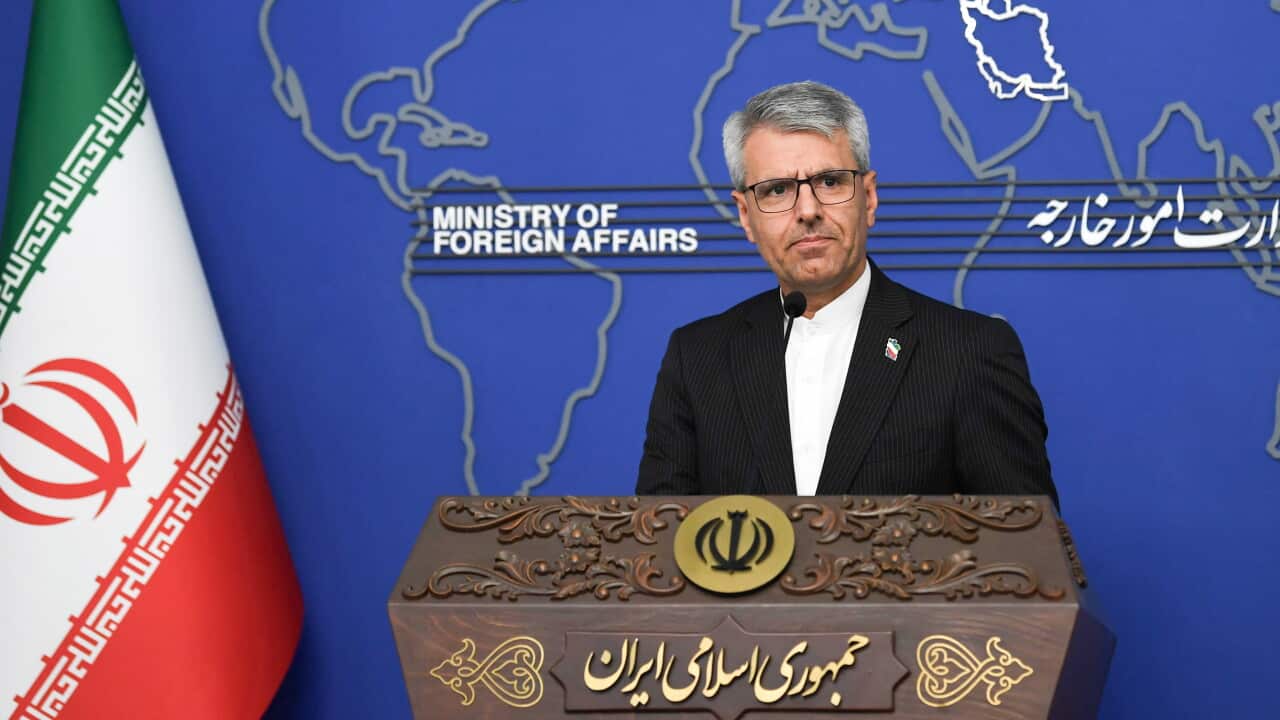
In fact, Iranian Foreign Ministry spokesman Esmaeil Baghaei says his country has no plans of entering into talks with the US at all – until it sees a change in its attitude.
"There will be no substantial change in the situation in the Strait of Hormuz as long as the United States continues its malicious actions, its naval blockade, its military aggression against Iran and Iran's interests, and all the crimes it has committed during this period. Therefore, the focus of negotiations with Oman will focus on navigation through the Strait, while the relevant issues between Iran and the US should be discussed in a later stage to see how the situation will develop."
Iran says the only talks it is currently engaging in are with its neighbour Oman, focusing on a temporary route through the strait that would let tankers and cargo ships move again under joint Iranian‑Omani oversight, instead of a US‑controlled passage that bypasses Tehran altogether.
Mr Baghaei says that is the priority for now, adding that talks with the U-S can come later.
Washington, meanwhile, has been pushing for an alternative lane that keeps the Strait of Hormuz open but limits Iran’s ability to control global shipping, tying the route discussions to wider demands on Tehran’s nuclear and military activities.
For now, Iran says its military is ready for any eventuality, with Mohsen Rezaei, the senior adviser to Iran's Supreme Leader Mojtaba Khamenei, saying the United States will not be allowed to do what it pleases with the Hormuz Strait.
"We will, by no means, allow the second corridor in the Strait of Hormuz. We won't allow the second corridor to open. Even if they deploy warships, we will target them."
Australia's Defence Minister, Richard Marles, says the Albanese government is maintaining its call for stability and diplomacy in the Middle East.
"We need to see the rules of the road respected and that means the Strait of Hormuz being opened and we call on Iran to do that. It is utterly unacceptable that Iran has effectively closed down the Strait of Hormuz. So we need to see the Strait of Hormuz be opened, we need to see a return to normality."
While diplomats debate shipping routes through the Strait of Hormuz, another conflict continues to exact a devastating human toll in Gaza.
United Nations Deputy Spokesperson Farhan Haq says attacks by Israel have resulted in the killing of dozens.
“Turning to the occupied Palestinian territory, the Office for the Coordination of Humanitarian Affairs says that the daily airstrikes, shelling and shooting continued across Gaza over the weekend, reportedly killing dozens of people including children and other civilians. ... The Ministry of Health reported that more than 150 fatalities, including dozens of civilians, were documented in July – the highest reported monthly death toll since the beginning of the year.”
Israel says its strikes are targeting Hamas militants.
The recent bombardment comes days after President Trump announced an agreement for Hamas to disarm as part of his "Board of Peace" plan to end the war, rebuild Gaza and remove the security threat to Israel.
But Israel has since raised serious concerns about the proposal, insisting it will not withdraw its forces until Hamas has verifiably disarmed.
Gaza is not the only front where diplomacy is being tested.
In Lebanon, officials are preparing for another round of talks in Rome to implement a US-mediated framework agreement reached in June, under which Israel would withdraw from southern Lebanon in exchange for Hezbollah's disarmament.
Lebanese troops have been deployed in parts of the south, but the UN says Israeli military activity there is ongoing, while Hezbollah has yet to lay down its weapons.
“The UN Interim Force in Lebanon continues to observe daily Israeli violations of Lebanese airspace. Between Thursday and Sunday, peacekeepers recorded 125 air violations, with a combined total overflight time exceeding 418 hours. Surveillance and armed drones were observed near or above UNIFIL positions in both sectors. Peacekeepers also report extensive military activity on the ground in south Lebanon, including significant engineering works and active troop movements.”
According to the United Nations Population Fund (UNFPA), since the second of March this year, more than 4,100 people have been killed in Lebanon with more than 12,000 injured.
Hezbollah attacks have killed at least 36 Israelis, including 32 soldiers and four civilians.