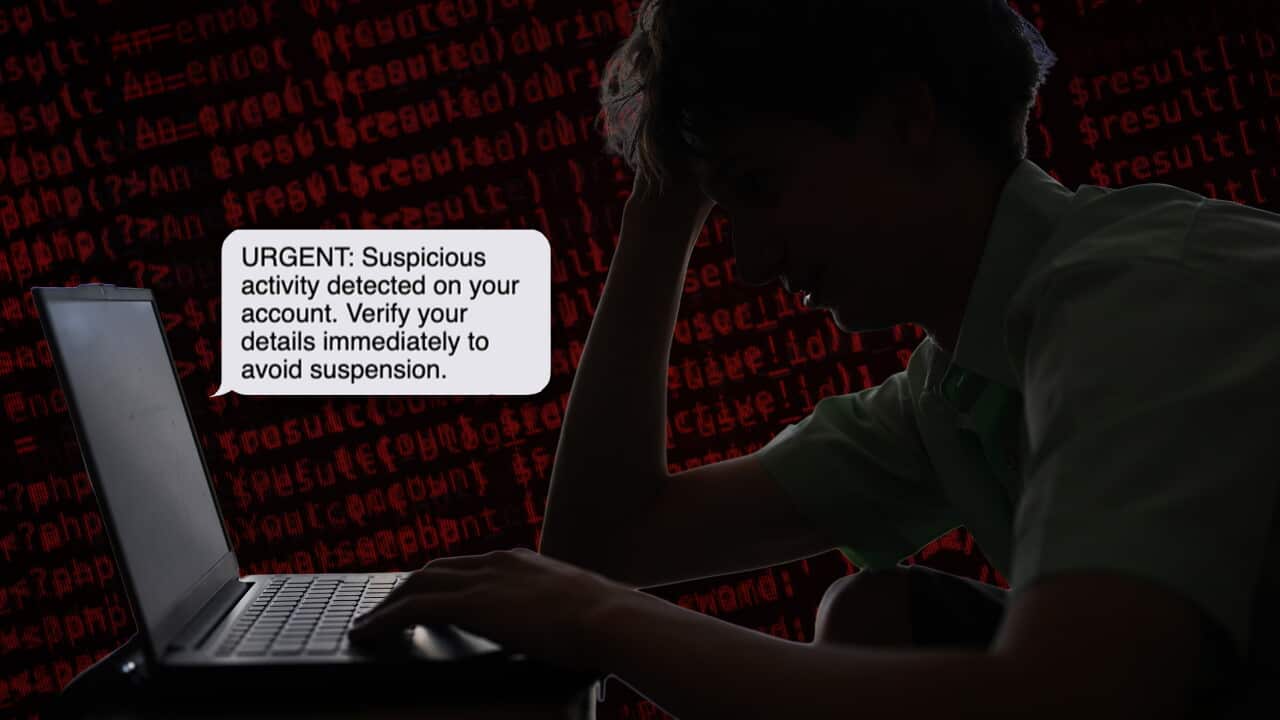

Australians are losing hundreds of millions of dollars to scammers, with swindlers increasingly using artificial intelligence to hoodwink their victims. This Scams Awareness Week, experts in the field are sharing precautionary measures people can take to protect themselves.
Listen to Australian and world news and follow trending topics with SBS News Podcasts.
TRANSCRIPT
According to Scamwatch, Australians have lost nearly $187 million to scammers this year alone.
While that figure is $23 million less than the same time last year, experts say artificial intelligence is making scams harder to detect.
Professor in Cybercrime at the University of New South Wales, Richard Buckland, spoke to SBS.
"Criminals are making good use of AI. They're faster adopters even than the normal populace, and scams are becoming increasingly more sophisticated. In the old days, we used to say, "Don't click on anything suspicious." These days, they won't be suspicious. Don't click on anything"
According to Scamwatch, the main types of scams Australians are falling for are investment scams, romance scams, and account takeover or identity theft.
CEO of the Australian Banking Association, Simon Birmingham, says small and medium businesses are at particular risk.
"So we know around four in five Australian businesses have been reported as targets of a scam in some way. Sometimes that's business impersonation scams where criminals use artificial intelligence to literally impersonate a business, their online profile and presence. Other times it is a fake invoice that's sent out trying to trick a customer, a legitimate customer, into paying into a different bank account. Other times, we see businesses themselves directly scammed by those fake invoices or attempts to extract money from them, and so it can come in a range of ways. And at every step, businesses need to really take care to protect themselves."
According to research from the banking association, 30 per cent of businesses say their banks flagged a suspicious transaction in the last year.
The ABA says it only takes one convincing fake invoice on a busy afternoon to successfully target a small business.
Professor Buckland says convincingly impersonating a business has become much easier.
"It's called business email compromise, where you contact a company if you're a bad guy, and you say, "Oh, we're changing our bank details to be this, or we're changing our address to be that, and so you pay a normal bill that you get, but now it's going to the scammer's bank account, and any correspondence about it is going to their email address. So orders are coming in that look like real orders that AIs are writing that can easily, you know, you could easily pay them if you're an accounts payable person. It looks just like a real email."
While scammers are getting harder to detect, experts say there are things people and businesses can do to protect themselves.
Governor General of the ACCC Catriona Lowe says people should always stop and check anyone asking for details like payments and personal data.
"One of the things scammers are best at is creating a sense of urgency. So, taking that moment to pause before we pay money or hand over personal information is really really important. Then check that the person you think you are dealing with is legitimate. Independently navigate to the website, independently search for the phone number, and use those details to check."