
Community led events are being held across the country to mark National Reconciliation Week, which runs from May 27 to Jun 03. This year's theme is 'All In' - a call for all Australians to commit wholeheartedly to reconciliation, and to advancing Aboriginal and Torres Strait Islander people's rights.
Listen to Australian and world news, and follow trending topics with SBS News Podcasts.
TRANSCRIPT:
This is the voice of Noongar woman Rickeeta Walley, singing at the opening of a Reconciliation Week breakfast in Perth.
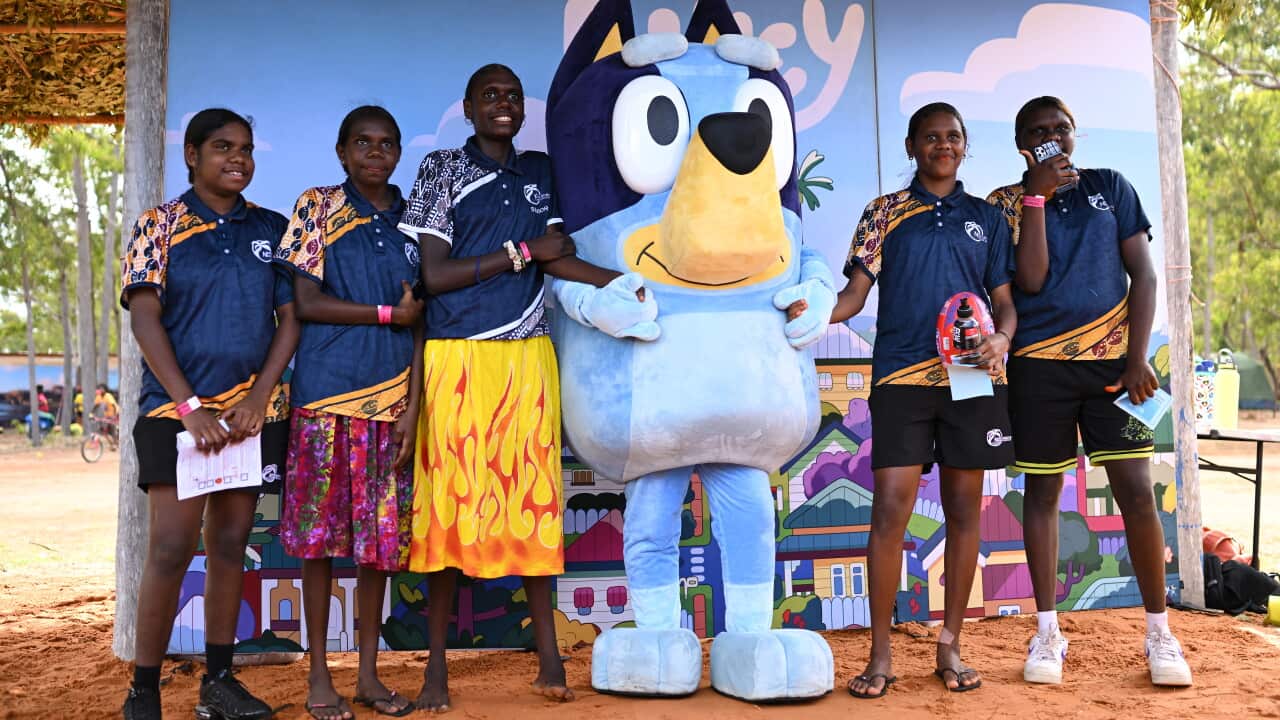
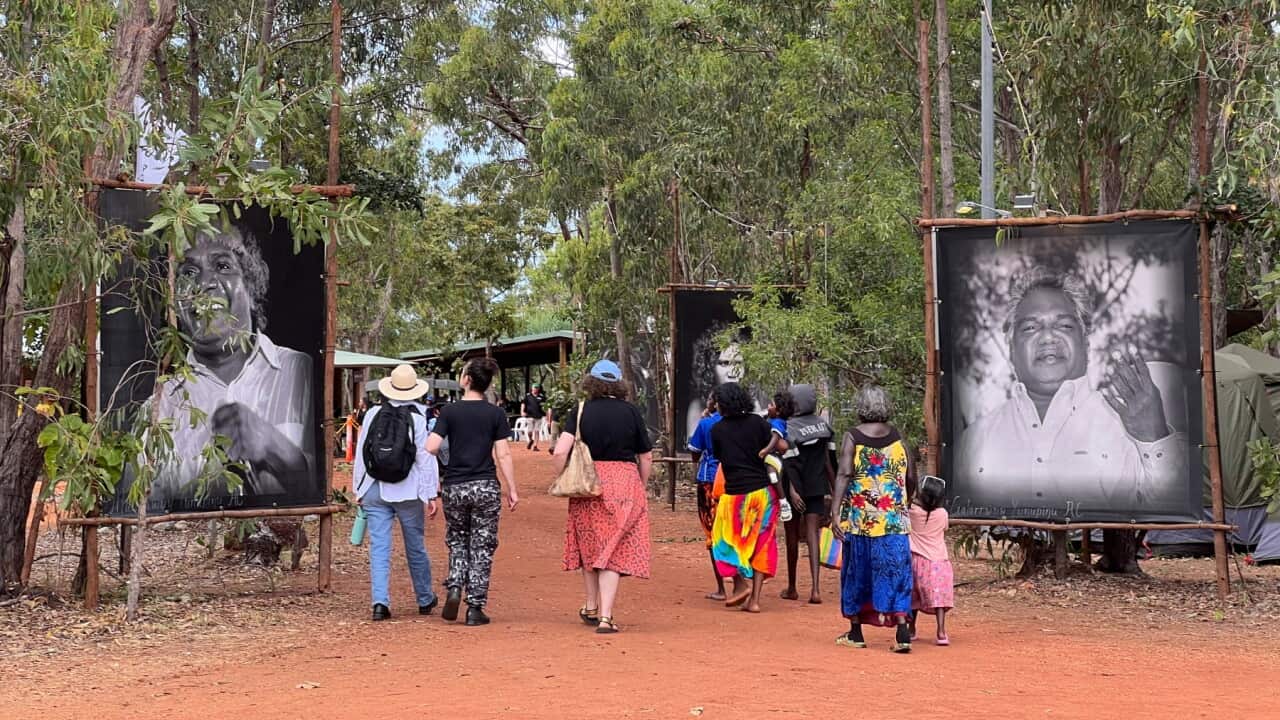
It is one of dozens of community-led events being held across the country - including local history walks, talks, conversations, art exhibitions and performances.
On the New South Wales South Coast, Gayle Nolan is facilitating a Dhurga language workshop.
She has told NITV Radio the week is an opportunity to recognise the importance of language revitalisation.
"Before English colonisation, there were hundreds of Aboriginal languages spoken across our country, Australia. Like many places and greetings, there's actually 250 distinct languages, and about 800 dialects that have been recorded of Aboriginal languages."
In the Illawarra, Wiradjuri man and youth worker Brendan Newton has helped organise the Koonawarra Reconciliation Walk.
The community event includes cultural dance and song for local school children and others, led by Aboriginal Elders.
Speaking to NITV Radio, he says for him, reconciliation is also about continuing the work of his own family, who have a long history of Aboriginal rights activism.
"I'd like to carry that legacy on, basically marking the footsteps that they've provided before me. Basically just providing the right direction for the youth within the area. That's my foresight. reconciliation is really, really important within my role."
The theme of this year’s Reconciliation Week is “All In” -- a call for all Australians to commit to reconciliation every day.
Bundjalung woman and Reconciliation Australia chief executive Karen Mundine says reconciliation cannot be achieved passively.
"What we're trying to say is, you can't just sit on the sidelines, you can't just talk about this. If we want to see things happen, if we want to see the kind of change where Aboriginal and Torres Strait Islander people, our ways of being, knowing and doing, are at the centre of what it means to be Australian then we actually all have to play a role, and play a part. And that means getting off the sidelines, being all in for actions and outcomes."
National Reconciliation Week marks two major milestones in Australia’s reconciliation journey - the 1967 referendum and the Mabo decision.
In 1967, almost 91 per cent of Australians voted to change the Constitution to allow Aboriginal and Torres Strait Islander peoples to be counted as part of the population.
The Mabo decision in 1992 recognised the land rights of the Meriam people in the Torres Strait, overturning the idea that Australia was terra nullius -- or land belonging to no one -- at the time of colonisation.
Ms Mundine says the week is a chance for Australians to reflect on the nation’s shared history, and what still needs to change.
"Really it's an opportunity for all people, all Australians, all of our allies in this work to take stock of where we're at. To take stock of the opportunities and milestones we've marked. But it's also an opportunity for us all to think what more can we all be doing. What are the things that are still challenging us as individuals, as organisations, as communities."
She says migrant communities also have an important role to play in reconciliation.
"Today, what it means to be Australian is so different from where we used to be. There's many more multicultural communities that make up the Australian identity. And one thing we've noticed in the work we do, particularly when it comes to new migrants, they really want to know more. About what the first nations experience is, what it means to be Australian for First Nations peoples. And then what does that mean for them as they settle into this country. How do they pay respect, how do they engage with communities."
Ms Mundine says First Nations people and people from migrant backgrounds can often find shared values and experiences.
That has been the case for Lan Anh Dam, a Centrelink employee and president of the Vietnamese Australian Family Association in Darwin.
She has told SBS Vietnamese, working closely with Aboriginal and Torres Strait Islander peoples has helped her recognise parallels with her own culture and traditions.
"The office where we work is called a Remote Smart Centre. Most of the people we support are Indigenous customers, and many of our coworkers are Indigenous as well. What really surprised us was how similar their culture is to Vietnamese culture. Family and close community connections are deeply important to them, just as they are for Vietnamese people. Before this, I didn’t really understand much about these issues. But I realised they care deeply about their roots, their culture and who they are. They take great pride in preserving those traditions.”
Filipino nurse Lindeil Cuevas says he has seen how much Indigenous Australians value the care provided by Pinoy health workers.
Now working at Amata Clinic in the A-P-Y Lands of South Australia, Mr Cuevas has told SBS Filipino he is proud to continue that legacy of care.
"I'm happy to serve them as well. Also to put yourself in their shoes. What else you need to understand there also their situation that not all of them really trust, like some of them doesn't trust the healthcare system as well. So, so slowly some people are getting educated from Indigenous people. They're trying to encourage more of their fellow people as well to encourage them to see a medical treatment."
Speaking to NITV Radio, Jaru Walmadjari and Jawoyn woman Sasha Greenough says building understanding and recognition of Australia's history is fundamental to reconciliation.
"Reconciliation is first and foremost for us to unite, but also for people who aren't of First Nations descendant to have an understanding of what has happened in this country. And I guess for me, true reconciliation won't happen until that truth is recognised. And there is peace around that."
Architects of the Uluru Statement from the Heart say Australia still has a long way to go on its reconciliation journey.
Uluru Dialogue co-chairs Pat Anderson and Megan Davis say Closing the Gap reports show limited progress, with some critical issues facing Indigenous communities getting worse.
On the first day of Reconciliation Week, Kerrupmara/Gunditjmara Traditional Owner Travis Lovett completed a five-week walk from Melbourne to Canberra.
The trek was part of a call for a national truth-telling process about the impact of colonisation on First Nations people.
He has told NITV Radio truth-telling is essential for national healing.
"Our people have long called for truth, for over 200 years. So it's really important for our people, because we've spoken our truth for the past 200 plus years. But it's time to establish a National truth telling process to bring our country together, based on truth, based on justice, healing and hope."