
For more than six decades, the United States has tried to reshape communist-ruled Cuba through sanctions, diplomacy and political pressure. Now, President Donald Trump is pursuing a tougher approach, arguing increased economic pressure can succeed where previous efforts have failed. But as Washington tightens sanctions and Havana blames the United States for deepening hardship, ordinary Cubans are once again caught in the middle.
Listen to Australian and world news, and follow trending topics with SBS News Podcasts.
TRANSCRIPT:
For more than sixty years, the United States has tried to influence the direction of communist-ruled Cuba.
To achieve this, previous American administrations have employed a combination of sanctions, diplomacy and political pressure believing they can force political and economic change.
But all have failed to deliver.
Now, President Donald Trump says he is the one who is going to make Cuba great again for Cubans.
"It's a failed country. Everybody knows it. ... And we're going to help them along. And we're going to help them because the people, because, number one, I want to help them, you know, on a humanitarian basis."
His administration has declared it a state sponsor of terrorism - without providing any evidence - and has expanded sanctions targeting businesses linked to the Cuban military and tightened restrictions, affecting fuel supplies and international commerce.
Caught in the US president's good intentions are ordinary Cubans, now facing an economic crisis unseen in decades.
In a crowded apartment block in Old Havana, 64-year-old Felicia Alvarez who is blind in one eye, is trying to navigate daily life while also managing diabetes and high blood pressure.
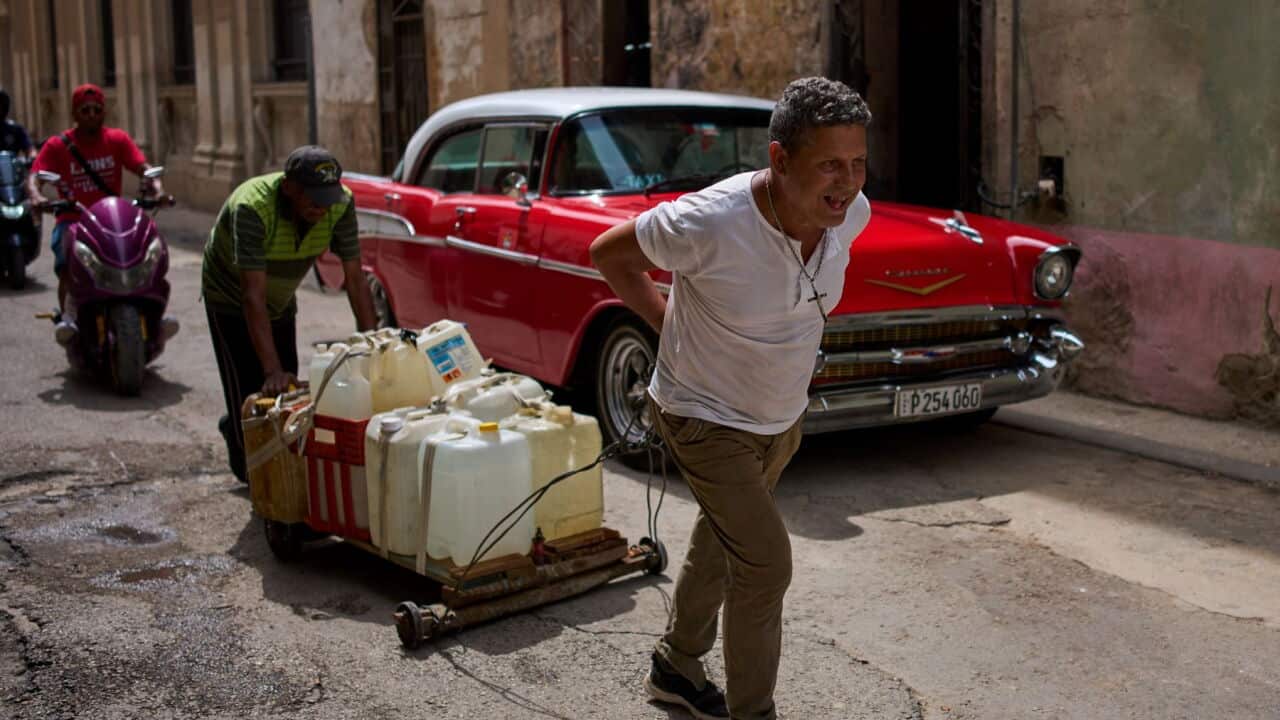
“We’ve been without water for six months. Water is essential in a home; without water, you’re nothing, life doesn’t flow. That cistern is empty; every 21 days, or a little longer, if I don’t push the mayor or the director of Aguas de La Habana, they don’t send a water truck. What we need here is a big one. There are 22 rooms; each room has 8 or 9 people. We have more, we’re 10. So, the power problem affects everyone. But this is where it hits us hardest... yesterday we hit 48 hours without power.”
Stories like hers are becoming increasingly common.
Cubans are measuring weeks without water, days without electricity, and hours spent everyday struggling to secure basic necessities.
And to make matters worse, Cuba this week announced that Visa and Mastercard transactions will stop working on the island after a foreign bank said it could no longer process payments involving a Cuban financial entity targeted by U-S sanctions.
For many Cubans, it's simply one more obstacle in a country where daily life already feels like a constant exercise in adaptation.
Cubans even have a word for it: resistir - To resist.
In Havana, resident Omayra Blanca says generations of Cubans have learned how to survive with very little.
“We Cubans are fighters; we make things happen ourselves. With the little we have, we survive and keep moving forward. That’s just how it is; that’s how we Cubans are: we’re cheerful, enthusiastic, and if you tell us, ‘Let’s go over there and plant a little plant,’ we’ll plant it; you put down a little seed and a sweet potato grows, and we harvest it; we plant chili peppers, whatever it may be, that’s how we are: cheerful, enthusiastic, yet revolutionaries.”
But resilience doesn't pay the bills.
As shortages deepen and prices continue to rise, many Cubans are turning to the informal economy, finding whatever work they can and selling whatever they can get their hands on.
Among them is street vendor Diosmel Ortega, who spends his days sorting through discarded items and selling whatever can be salvaged.
“Everything right now, absolutely everything, practically all these little things we have here, comes from the trash. Given the current situation and the crisis, people come here to buy little things, whether it’s a hose, a book, a CD or even straws. Everyone knows where it comes from. They know we found it and put it there to at least try to make a little money.”
Meanwhile, across Havana, piles of rubbish have become an increasingly common sight, as fuel shortages leave collection trucks idle and local authorities struggling to keep up.
Rotting food, cardboard and household waste now line some streets, attracting flies and vermin while residents worry about the impact on public health as temperatures climb.
Outside her home, resident Maria Ramirez points to a growing pile of rubbish she says has become part of everyday life.
“This pile of trash shouldn’t be here. They should look for another place to put it and not in a central inhabited area like this one. This here is a shame.”
Community groups have organised clean-up projects to help fill the gap.
But as conditions deteriorate, patience is becoming harder to find.
Power cuts lasting hours, and sometimes days and weeks, have triggered protests in parts of Havana in recent weeks.
Residents have taken to the streets banging pots and pans demanding solutions to shortages that many say are becoming impossible to ignore.
Yet even now, many Cubans continue to respond the same way they always have.
Seventy-year-old Maria Mercedes Gonzalez has lived through decades of shortages, economic crises and political uncertainty. She says experience has taught her that some things simply cannot be controlled.
“What else are we going to do? We have to hold on. I’m not going to start making a scene in the street. The power’s out? I go to bed. I sit with the neighbours for a while, and when it doesn’t come back, I just go upstairs and go to bed.”
For Ms Gonzalez, patience isn't optimism, it's necessity.