
New stars emerged alongside established legends at the FIFA World Cup 2026™ . Then there were the moments that had supporters on the edge of their seats. FIFA's unexplained decision on US key player Folarin Balogun's red card, after US President Donald Trump urged FIFA President Gianni Infantino to review the incident. VAR controversies, criticism of hydration breaks, concerns over the treatment of Iran's national team, denying the entry of Somali referee Omar Artan to the US. What can the Socceroos takeaway from the tournament? Join your host Haylena Krishnamoorthy for this final episode on World Cup Daily | The 90+ Podcast, as she breaks down some of these concerns with former FIFA referee, Christina Unkel. Was the expanded 48-team format worth it? Did VAR actually improve the tournament?
Listen to Australian and world news and follow trending topics with SBS News Podcasts.
TRANSCRIPT
Was the expanded 48-team format worth it?
Did VAR actually improve the tournament?
And when you look back on this World Cup... what will you remember the most?
This is SBS News World Cup Daily, The 90+ Podcast, where we bring you the stories from on and beyond the pitch.
Six weeks, 104 matches. Countless unforgettable moments.
From incredible underdog stories, to spectacular goals.
And fierce debates over VAR, hydration breaks and whether expanding the tournament to 48 teams was the right move.
There was plenty to celebrate, and plenty to argue about.
In today's final podcast - the wrap - we'll take a look at some of the things that defined this World Cup - the football, the controversy and the legacy it leaves behind.
So what went well at this tournament - both on and off the pitch?
First - the football itself.
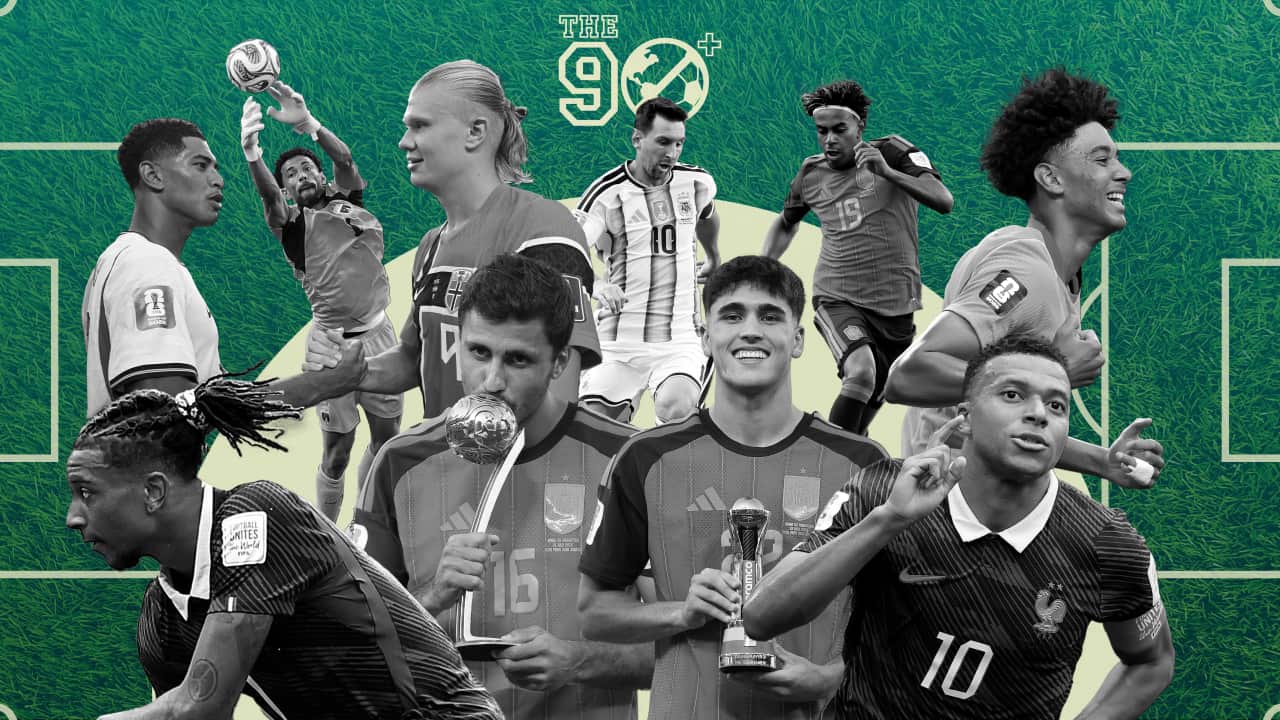
New stars emerged alongside established legends.
And new names announced themselves on the world stage.
There were memorable underdog stories that captured the hearts of fans and the global stage.
The expanded tournament also gave smaller football nations like Cape Verde, and Curaçao a chance to shine.
Teams making history, proving they belong, and winning plenty of new fans along the way.
Then there were the moments that had supporters on the edge of their seats.
Late winners. Last-gaps equalisers. Penalty shoot-outs.
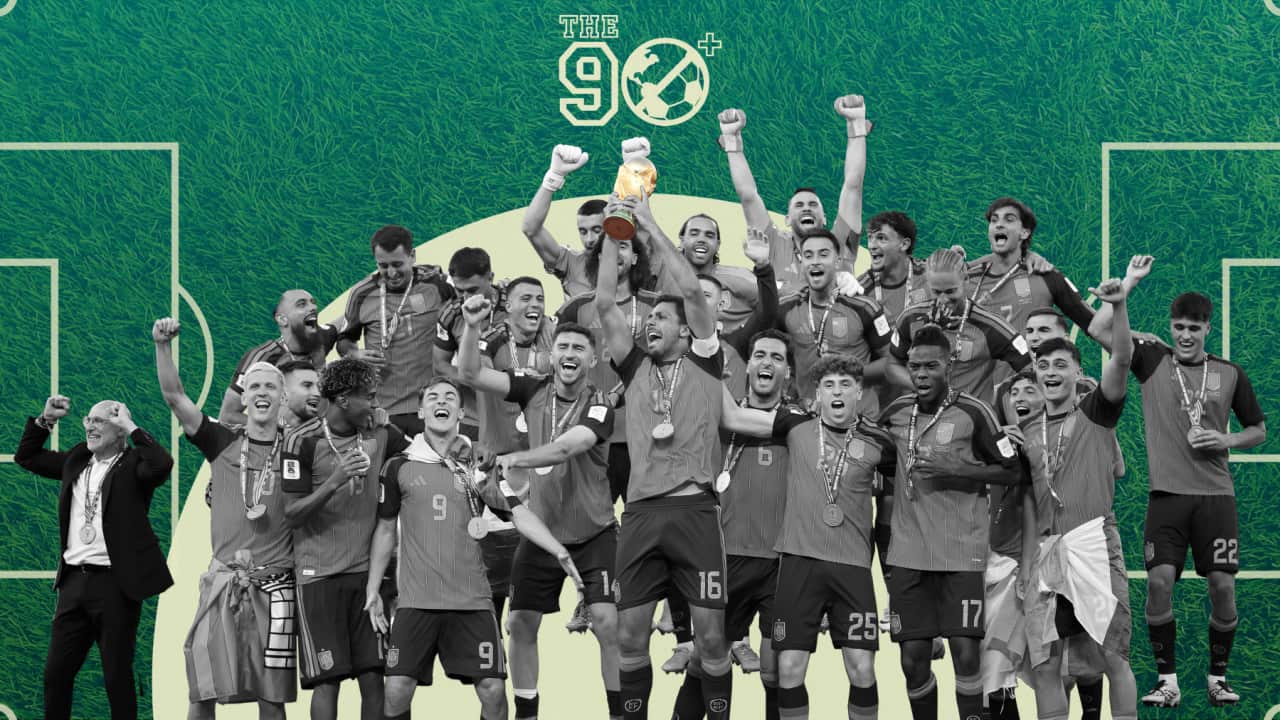
And of course...Spain lifting the World Cup.
Spain's World Cup winning side returned home to Madrid to celebrations with an estimated crowd of almost two million people.
The players and their coaching staff met with the country’s royals and Prime Minister Pedro Sánchez upon arriving in the Spanish capital, after their remarkable 1-0 win against Argentina in New Jersey.
Football fan Lucia Romero says it was hard to believe she was seeing the star players in real life.
“Seeing the bus was amazing. Many times I thought the players weren’t real, as if it was fiction on the other side of the screen. Seeing them bringing another World Cup, such a united team, it was spectacular.”
But as memorable as the football was...
This World Cup wasn't short on controversy.
Questions surrounded officiating, VAR, new competition rules, political interference, and FIFA itself.
One of the biggest talking points came after the suspension of United States striker Folarin Balogun's red card...
...a decision UEFA says crossed a "red line" after US President Donald Trump had urged FIFA President Gianni Infantino to review the incident.
The relationship between FIFA and UEFA became increasingly strained throughout the tournament.
One cause was FIFA's unexplained decision to suspend Balogun's red card, right before the US's game against Belgium..
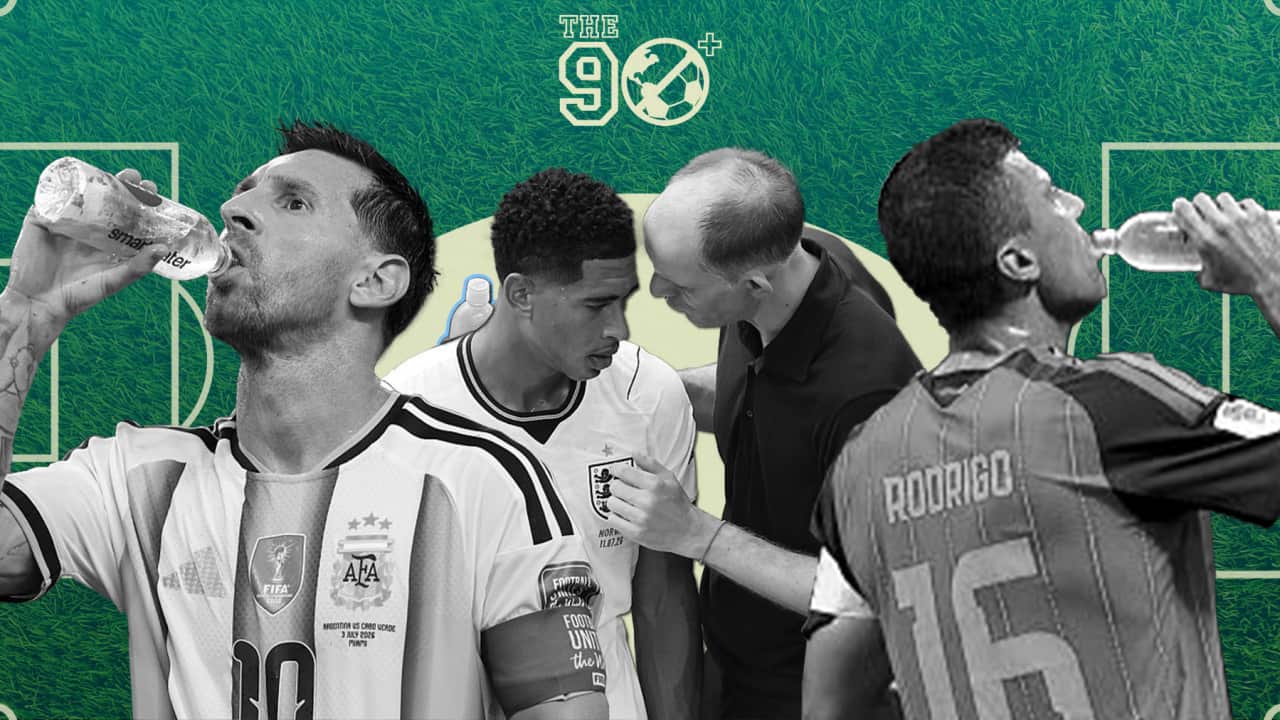
There were also concerns over the treatment of Iran's national team, denying the entry of Somali referee Omar Artan to the US, and criticism of hydration breaks.
Even before the tournament began, UEFA President Aleksander Ceferin - who boycotted the World Cup final - questioned whether expanding to 48 teams would improve the competition.
So... how successful was this World Cup from an officiating perspective?
And did VAR actually do what it was designed to do?
I asked former FIFA World Cup referee Christina Unkel about this.
“Everyone's requesting consistency and just knowing and knowing what to expect from an official. So I think collectively in the beginning stages, the group stages, the round of 32, there was consistency in what you were expecting from the officials, which is not making, many recommendations from VAR down to the official. And then it started to change slightly in the round of 16. You could see some recommendations that were not being made earlier were starting to be recommended down, and I think that's just a little bit of a mix of it becoming more pressure-packed, right? You get a little bit more, anxious in that referee room, or the VAR room. At the same time, there's, while the tournament goes on and after three, four weeks have played on, the education and the insight from one's referee instructors, what they are seeing that they like in the game versus what they haven't liked in the game the first two, three years can kind of change a little bit of that.”
Christina says one of the clearest trends throughout the tournament was referees calling fewer minor fouls.
“I would say one of the most consistent things the officials have done this entire tournament is to not call simple fouls. So where many people were kind of a little bit surprised, but once again, if they're going to expect, like, these simple fouls not to be called, is that you saw officials allow a lot of normal contact in the middle of the field, or a lot of contact in the middle of the field happen without, maybe a couple of misconducts, were not given in the sense of yellow cards. But you didn't see that consistently. That was, that was the most consistent they did, was not calling some of those fouls, and that's what allowed the games appear to seem like they flowed more.”
Officiating wasn't only under pressure on the field.
“Probably the biggest spike I've seen in, social media and the media on different narratives regarding, the tournament, and FIFA itself, and to be quite honest, a bit of attacks on referees in this tournament, from effectively their neutral perspective. I think the officials did a good job of handling quite a bit of that energy that was drawn in their direction that respectfully, they can't defend themselves against. So I feel like they've remained consistent, and the biggest talking points, and there will always be talking points in any game, in any tournament, is about maybe a major decision that wasn't handled correctly. But, we probably have less than 10 of that after we've had six weeks of football. We've had, right, 104 games. So at the end of the day, I can imagine the percentages are very, very low of what we're talking about in the collective decisions given and not given.”
Christina believes VAR generally achieved what it was meant to do.
“Some of the recommendations of where, you know, VAR has worked exactly how as, how people expected it to work, I can think of one right just off the top of my head, is a penalty given in the England match, essentially it was a penalty given for Spence for contact. And then when you see the reverse camera angle that the referee would never have just based upon, you know, geography and just how the football would go, it showed very clearly that Spence basically extended his body horizontally or laterally to initiate that contact. So it was a proper recommendation for VAR. It was very quick, and it overturned, or the referee took the recommendation and overturned his initial decision of a penalty situation. So that's a, a really good probably the latest succinct, demonstration of how VAR was pretty effectual, and you could see football pundits, those ex-footballers who've played before were saying, "Yeah, we agree. That one should not have been given.”
But she says the Balogun red-card controversy will likely have the biggest long-term impact on how FIFA reviews the system before the next World Cup.
“It would've been seen as still an incorrect decision if all of the extra after effects that happened in the red card, by VAR's recommendation for a red card to Balogun for that contact. You still would've had a lot of energy associated with that. You just wouldn't have seen the kind of the storm that occurred after, right? There's a unilateral decision by one individual under Article 27. So, that will be probably the most talked about decision and will have some systemic, impact and effect for those who continue to, do improvements every four years, right, and continue to champion it.”
One of the most heated discussions came after Egypt's loss to Argentina, with many fans accusing officials of favouring the Latin American side.
“The Egypt-Argentina was what I would call as a perfect storm, where there was so many things happening, right? It was on the heels of the Balogun situation, right? It's on the heels of sentiments that people had even before the tournament started that Argentina is historically, benefiting from these, decisions and these calls. So you're going into that tournament, honestly, even as a referee, knowing that like, everyone's looking for something. They're trying to find. Anything that's could potentially be, used for an argument will be used for an argument. And this is where I say, like, some, he nuance of officiating subjective decisions is incredibly important to understand, and it's very easy to paint broad brush strokes versus looking at the details. And what I mean by that is, Egypt, right, was up two-zero, one-zero, but they score that goal that gets taken back because of the foul in in the change of transition in the beginning of the attacking phase of play because the root of the foul happened on the top of the boot.”
She argues that, when the incidents are analysed individually, the decisions followed the laws of the game, even if public perception had already moved in another direction.
“So the Mo Salah situation, if you really take a look at it and don't, and come in it with very, "Okay, let's analyse the two different clips," you see in the Mo Salah plays that the first original initial contact is on the ball. It's between him. Mo's already starting to fall over. Yes, there's a bit of contact on the foot, but it's not the original contact that creates the foul, right? It's not something that actually is a foul in and of itself, and not something that VAR get involved in, versus when Egypt's goal was taken away, there is no contact on the ball. It's completely on the foot, and it is the reason why the person falls, right? So those are nuances, but those are things that aren't gonna be, I'm gonna use the word appreciated, but those are things that are not gonna be appreciated, particularly if someone has a preconceived , perspective and a narrative and an argument.”
The football may have won many people over, but debate about the expanded format is already shifting.
FIFA President Gianni Infantino says a proposal to expand again - to 64 teams - is expected to be discussed after the tournament.
Christina Unkel believes it's simply too early.
She says FIFA should first assess how the 48-team format performs over another tournament cycle.
“This tournament was a good example of where I was okay with it expanding for this tournament. I know there was a lot of loud voices who were not okay before the tournament started, that they, it had been expanded, and to your point, had changed their mind throughout when you have the Cape Verde's of the world, right? When you see a lot of these new first-time debutantes, really, competing.”
She also argues qualifying is only one part of the equation.
For another perspective, my colleague Miles Proust spoke with Sport Studies expert, Dr Steve Georgakis from the University of Sydney.
He believes the biggest success of this tournament was inclusion.
But he doesn't think the World Cup should get any bigger.
“You don't want to cheapen the qualification into the World Cup. It's still quite rigorous. Look at teams such as Italy not making it. You don't want to make it too easy.”
And what will he remember? The controversies.
Balogun's red card and Donald Trump's appearance during Spain's trophy celebrations.
The treatment of Iran's national team and the ongoing debate over VAR.
But despite the criticism, he says technology has improved football overall.
Closer to home, Dr Georgakis believes Australia left this tournament wondering what might have been.
He says changing goalkeepers proved costly, and the Socceroos had a genuine opportunity to go much deeper.
“The decision by Tony Popovic to change goalkeepers was a costly mistake. We had an opportunity through faith, I think, to get through the Egyptians and then take on the Argentinians. And I really, thought we will be a chance against the Argentinians. There was just something about this team-a very solid goalkeeper, a very very solid defence, a very hard running midfield, and then a couple of strikers there who perhaps could have scored these these goals, which could have got us a little further into the tournament.”
More importantly, he says Australian football now needs to answer a much bigger question.
What is its football identity?
Spain developed one over decades, and he says Australia now needs to do the same.
“What has to change is clearly we're at that point where we need to make a decision as a country and as a football nation. What is our philosophy? We currently don't have a philosophy. Spain, the winners of the World Cup have a philosophy. They adopted this philosophy 30 years ago, and they persevered with that philosophy. And that philosophy now is bringing them so much international success. We as a nation have to reflect on what are our strengths as a sporting nation, and and what do we need to do at the junior development level to make sure we have some kind of a system which will be able to produce national teams which can lead well at the very very top level.”
Every World Cup leaves a legacy.
This one will be remembered for brilliant football, key and emerging stars, and fierce debate.
The expanded format divided opinion, officiating remained under the microscope, and football and politics always coexist in many ways.
But still, the game produced moments that reminded us why the World Cup remains unlike any other sporting event.