
Negotiations to reopen the Strait of Hormuz appear to be gaining momentum, with Iran saying talks with neighbouring Oman are nearing completion. But while diplomats discuss shipping routes, Israel and Iran remain deeply divided over Tehran's nuclear programme, and fighting in southern Lebanon continues despite ceasefire efforts.
Listen to Australian and world news and follow trending topics with SBS News Podcasts.
TRANSCRIPT
"From now on, all navigating through the Strait of Hormuz is forbidden. All ship in every type is not allowed to pass from the Strait of Hormuz until next notice. This is Sepahrd Navy. Out."
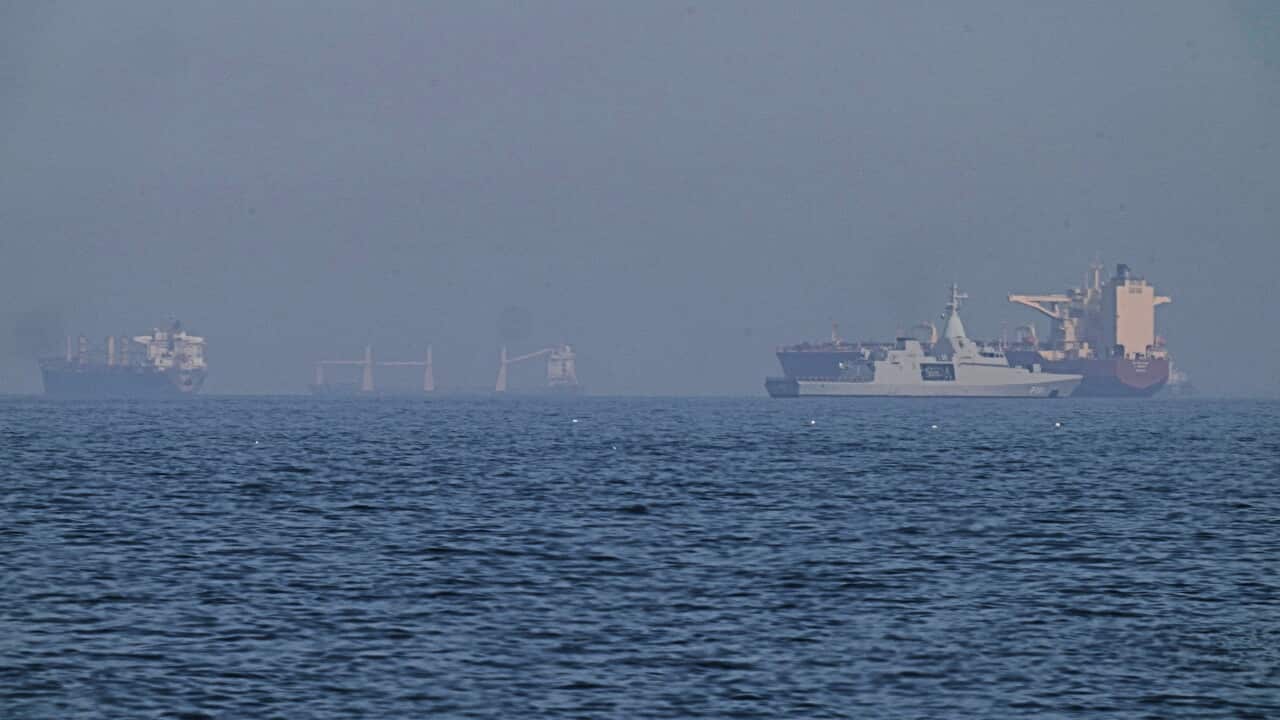
That warning by the naval branch of Iran's Revolutionary Guard Corps may soon be retired as negotiations to reopen the Strait of Hormuz appear to be making progress, not between Tehran and Washington, but rather, between Iran and Oman.
Five months after war brought shipping through one of the world's most important waterways to a near standstill, Tehran says negotiations over a new maritime arrangement for the Strait of Hormuz are almost complete, raising hopes commercial shipping could soon resume through the strategic waterway.
Iranian Deputy Foreign Minister Kazem Gharibabadi says discussions with Omani officials have progressed significantly.
"I can say that the latest situation is that almost all of the topics (are) under discussion: the map, the transit routes, the entering and exiting of maritime traffic, and those bilateral (side) agreements with Oman — because it’s not just a map, these fundamental agreements with Oman have mostly been completed, meaning we have made significant progress in our discussions with Oman and this progress is on the verge of being finalised."
The talks cover proposed shipping routes, how vessels would enter and leave the Strait, and bilateral agreements between Tehran and Muscat.
While few details have been released publicly, the emerging framework could see ships entering the Gulf through an Iranian-managed route before leaving via waters administered by Oman.
Such a deal would go against the Trump administration's desire to deny Iran any control of the strategic waterway, with U-S President Donald Trump stating that a deal with Iran is just days away.
But Iran says - that - is simply not true.
Earlier this week [[3 August]] Iranian Foreign Ministry spokesman Esmaeil Baghaeisaid his country has not entered into talks with the U-S at all – and will not do so until it sees a change in the Trump administration's approach.
"There will be no substantial change in the situation in the Strait of Hormuz as long as the United States continues its malicious actions, its naval blockade, its military aggression against Iran and Iran's interests, and all the crimes it has committed during this period. Therefore, the focus of negotiations with Oman will focus on navigation through the Strait, while the relevant issues between Iran and the US should be discussed in a later stage to see how the situation will develop."
This comes as Israeli Prime Minister Benjamin Netanyahu says Israel will continue preventing Iran from acquiring a nuclear weapon, regardless of any diplomatic outcome, making this unverified claim.
"Today we heard the commander of the Revolutionary Guards, Ahmad Vahidi, explicitly declare Iran's intention to continue developing nuclear weapons... I am determined to continue preventing Iran from possessing nuclear weapons."
Mr Netanyahu was referring to comments he says were made by Revolutionary Guards commander Ahmad Vahidi.
However, there is no publicly available evidence that Commander Vahidi has made the remarks described by the Israeli Prime Minister.
Iran has consistently maintained its nuclear programme is for peaceful civilian purposes and has repeatedly denied seeking to develop a nuclear weapon.
Mr Netanyahu says Israel's position will not change, with or without an agreement.
"And I want to make it clear, President (Donald) Trump is our great friend. The greatest friend we had in the White House, I mean to say. And the United States, it is our great ally, and everyone understands this as well. We greatly appreciate our joint efforts with the United States against Iran's nuclear ambitions. But I also wish to convey, the existence of Israel is not up for negotiation, with an agreement or without an agreement."
While negotiations continue over the Strait of Hormuz, fighting elsewhere in the region is continuing.
Israeli forces have carried out fresh strikes in southern Lebanon, just a day after another round of US-mediated talks between Israeli and Lebanese officials in Rome aimed at implementing the June ceasefire agreement.
Israel says it targeted Hezbollah positions following what it described as violations of the ceasefire.
Lebanon's Health Ministry says one person was killed and twelve others wounded in a strike on the town of Tibnin.
The Israeli military also ordered residents to evacuate the nearby village of Mansouri before launching further attacks.
United Nations deputy spokesperson Farhan Haq says the renewed displacement illustrates just how fragile the ceasefire remains.
"This is the first such order for a location in Lebanon since the latest ceasefire announcement on the 19th of June. According to local authorities, around 1,500 people were in the village as of the end of July. This new order comes as displaced families have been cautiously making their way back to their homes in southern Lebanon in recent weeks, underscoring how fragile the situation remains and the uncertainty that people continue to face. Hostilities continue to affect civilians in southern Lebanon. Demolition operations, shelling and other military activity are damaging homes, agricultural land and civilian infrastructure."
For now, diplomats appear closer than they have been in months to reaching an agreement that could reopen one of the world's most important shipping lanes.
But with Israel continuing its military operations in Lebanon, Iran insisting it will not negotiate with Washington until US policy changes, and both sides holding firm to their positions, any breakthrough over the Strait of Hormuz is unlikely to mark the end of a conflict that still stretches well beyond its waters.