
Voters in the southern New South Wales seat of Farrer have headed to the polls to choose a new MP after their former representative Sussan Ley resigned from parliament. Analysts say the vote could have lasting consequences for the coalition.
Listen to Australian and world news and follow trending topics with SBS News Podcasts.
TRANSCRIPT
Like these democracy sausages that volunteers cook at every election, the Coalition has also been an institution in the seat of Farrer.
Farrer is the 10th biggest federal electorate in Australia, with its more than 126,000 square kilometre size making it larger than countries such as Iceland, South Korea and Austria.
And it's been either a Liberal or Nationals MP elected here in its more than seven decades as a seat.
But not anymore.
Voters in Farrer have cast their ballots in a by-election to decide who will replace former Liberal leader Sussan Ley in parliament.
OFFICIAL: "Have you voted before today?"
WOMAN: "No, I have not."
And their verdict was clearly against the Coalition.
Within two hours of polls closing on Saturday, results from across the sprawling electorate showed the Liberals suffering a swing against them of more than 30 per cent.
Still, Liberal candidate Raissa Butkowski says she has no regrets.
"Obviously this by-election result didn't go the way that we all had hoped. But I'm still so incredibly grateful for the experience. It really has been the best experience of my life, and I wouldn't change a thing."
Analysts had speculated before the vote that preferences could get the populist One Nation party over the line.
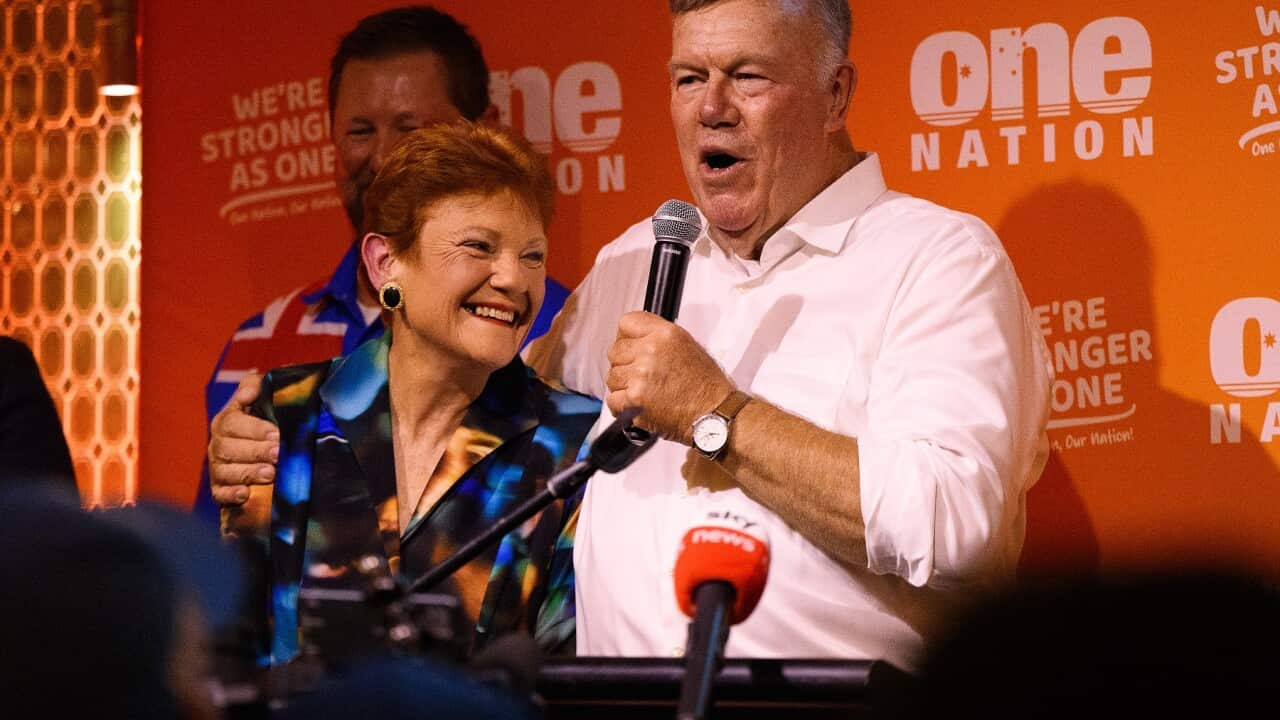
But much of the primary vote appeared to have been in favour of One Nation's candidate David Farley, who garnered 42 per cent of votes with 63 of 94 polling places returned on Saturday night.
He's thanked his supporters in an emotional speech in Albury.
"The biggest achievement I think that my career has delivered to me, but it's also the most passionate, most euphoric experience I've had. It's a job that I've got, and that job is for you, and you, and you. All the way up to Pooncarrie, all the way up to Hillston, all the way across to Holbrook, all the way down to Gol Gol, all the way through to Balranald and Hay, and right along the great Murray River, and then back here in Albury."
The most likely alternative to One Nation was independent Michelle Milthorpe, but the 25 per cent of the vote she secured was not enough.
Labor did not field a candidate.
The mood of the electorate was evident in random media interviews conducted throughout the day, though for this man his choice of David Farley was more about the man than the party.
MAN: "Because I've known him for 45 years... He's a go-getter, mate. He will fix this area."
But then there were voters like this woman who says she voted based on her belief the major parties only thought of city constituents, and because she wanted an alternative.
REPORTER: "Can I ask who you voted for today?"
WOMAN: "One Nation."
REPORTER: "And why is that?"
WOMAN: "Because we need a change."
Nationals leader Senator Matt Canavan - who spent 23 days campaigning in the seat - has maintained that other regional coalition seats are not at risk to a One Nation surge, arguing there are unique circumstances at play in Farrer.
But he says he has been well prepared for whatever the verdict of voters might be.
"I'm going to cop it on the chin, whatever the result, because we've got to take that feedback. And I understand that, that people want change."
Meanwhile RedBridge pollster and former Liberal Party strategist Tony Barry has said a One Nation win would show the populist party is a strong electoral force, particularly in regional areas.
One Nation leader Pauline Hanson has told Channel 9 she doesn't disagree.
"This election is going to be a turning point for Australia, because this will be the first One Nation seat that's won in the lower house."