
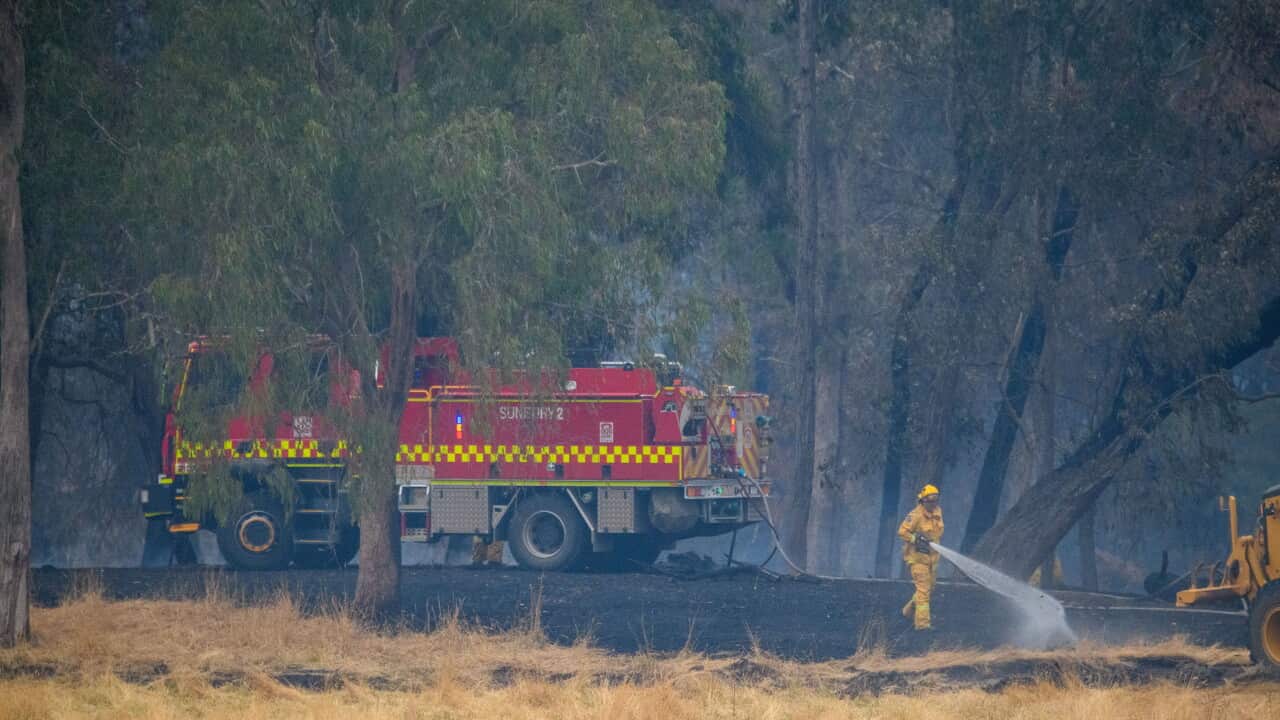

Australians are being urged to prepare for a potentially challenging spring, with an elevated bushfire risk forecast across several parts of the country. Authorities say conditions vary significantly from region to region, with dry weather, warmer temperatures and increased fuel loads contributing to the risk.
Listen to Australian and world news and follow trending topics with SBS News Podcasts.
TRANSCRIPT
From the tropical north to Australia's southern states, fire authorities are preparing for a spring that could bring very different risks across the country.
The Bureau of Meteorology's Michael Egan says a strengthening El Niño is influencing the outlook, but it is not the only climate driver at play.
"I will just remind everyone that the bureau's long range forecast does incorporate all of the influences from our surrounding oceans and the atmosphere as well as other long term climate trends and I mention that because I'm sure most people are aware an El Nino event is underway, it is strengthening and it is going to be a very strong one but that is not the only climate driver that influences the Australian climate."
Victorian Emergency Management Commissioner Tim Wiebusch says the state could see early bushfire activity.
"Victoria can expect a hotter and drier spring which means that we could see significant bushfire risk commencing from as early as October this year and our emergency services in Victoria are now starting to prepare for that scenario that could mean that we could see campaign fires start as early as October and take us right through the summer months."
Further north, parts of Queensland's southern interior and south-east are expected to face above-average fire danger.
Acting Deputy Chief Officer Aaron Howard says crews are already working hard.
"At Queensland fire department we continue to prepare, our crews continue to take hazard reduction burns and mitigation activities in high risk localities across the state where conditions allow. However and I echoll my colleagues we can't do this alone."
In the Northern Territory, Fire and Emergency commissioner Andrew Warton says there is a possibility of heightened fire risk across several regions at the same time.
"This year the forecast later onset of the top end wet season meets an elevated fire danger in the north, could extend into November, and at the same time the Barkley, Tanami and Central Australia regions move into their high risk period. That creates the potential for significant fire risk across multiple regions of the Northern Territory simultaneously."
Indigenous fire managers are also using traditional practices to reduce the threat before the worst conditions arrive.
Indigenous Carbon Industry Network CEO Anna Bousted says that includes cool burning early in the dry season.
“We support those Indigenous fire managers that are raising carbon credits through savannah fire management. That includes using early dry season burning, or cool burning, during the very cool time of the year in March or April, and then also following up with fire suppression to push back hot fires in the late dry season.”
In Western Australia, the south-west is coming off its second driest July on record, with low rainfall forecast during spring.
Fire and Emergency Services Commissioner Darren Klemm says preparation now could make all the difference.
"It's the perfect time to prepare. Don't wait for a bushfire to start. Take the time now to make a plan, understand your risks, and discuss it with your loved ones."
In South Australia, recent rain has left much of the landscape green, but Country Fire Service Chief Officer Brett Loughlin says the risk could change quickly.
"Whilst the landscape is very green and the fire risk is currently low we are urging people to not be complacent we're urging people to take the risk of fire seriously."
Tasmania is also preparing for the possibility of an early start to the season.
Deputy Chief Officer Matt Lowe says the focus is on getting people prepared before conditions worsen.
The ACT is expecting an average overall bushfire risk, although fire danger ratings could rise during dry periods.
In New South Wales, drier conditions are forecast particularly west of the Great Dividing Range, but severe storms can still bring heavy rain, damaging winds, large hail and flash flooding.
For households, the advice is much more practical.
NSW Emergency Services Minister Jihad Dib says simple jobs around the home can help reduce the damage.
"So we're trying to get everybody out to be prepared as much as they possibly can and our SES will turn up and they will support you but we also need communities to do their bit - clear your gutters and the reason we say clear your gutters is that will stop the flooding in your gutters that then go back in to your home."
Despite the different outlooks around the country, authorities say the message is the clear: know your local risk, plan and prepare before an emergency begins.









