

The world has just experienced the hottest 11 years on record. A new climate report warns that the planet is not only warming, but storing more energy than it releases - accelerating climate change. But what is that likely to mean for us here in Australia?
Listen to Australian and world news and follow trending topics with SBS News Podcasts.
TRANSCRIPT
"When history repeats itself 11 times, it is no longer a coincidence. It's a call to act."
That's Antonio Guterres, the United Nations' Secretary-General.
He says the global climate is in a state of emergency, and planet Earth is being pushed beyond it's limits, with every key climate indicator flashing red - citing the latest report from the World Meteorological Organisation, or WMO.
The report raises alarm as the world has just experienced the hottest 11 years on record - between 2015-2025.
Mr Guterres says the report confirms that the Earth's energy imbalance, and the gap between heat absorbed and heat released, is the highest on record.
"And on the edge of war, climate stress is also exposing another truth. Our addiction to fossil fuels is destabilising both the climate and global security. Now more than ever, we must accelerate the just transition to renewable energy."
The UN Secretary-General says in other words, our planet is trapping heat faster than it can shed it.
WMO Secretary-General, Ko Barrett says that 2025 was the second or third hottest year on record, depending on the dataset used.
It was about 1.43 degrees Celsius above the 1850 to 1900 baseline.
She says in 2025, our glaciers continued to retreat, and ice continued to melt.
"Extreme events, including intense heat, heavy rainfall, and tropical cyclones, created challenges for virtually every continent and are a key way that societies are experiencing a changing climate."
She says the ocean continues to warm and absorb carbon dioxide, playing a fundamental role in the climate system.
This, as ocean heat content reached a new record high in 2025.
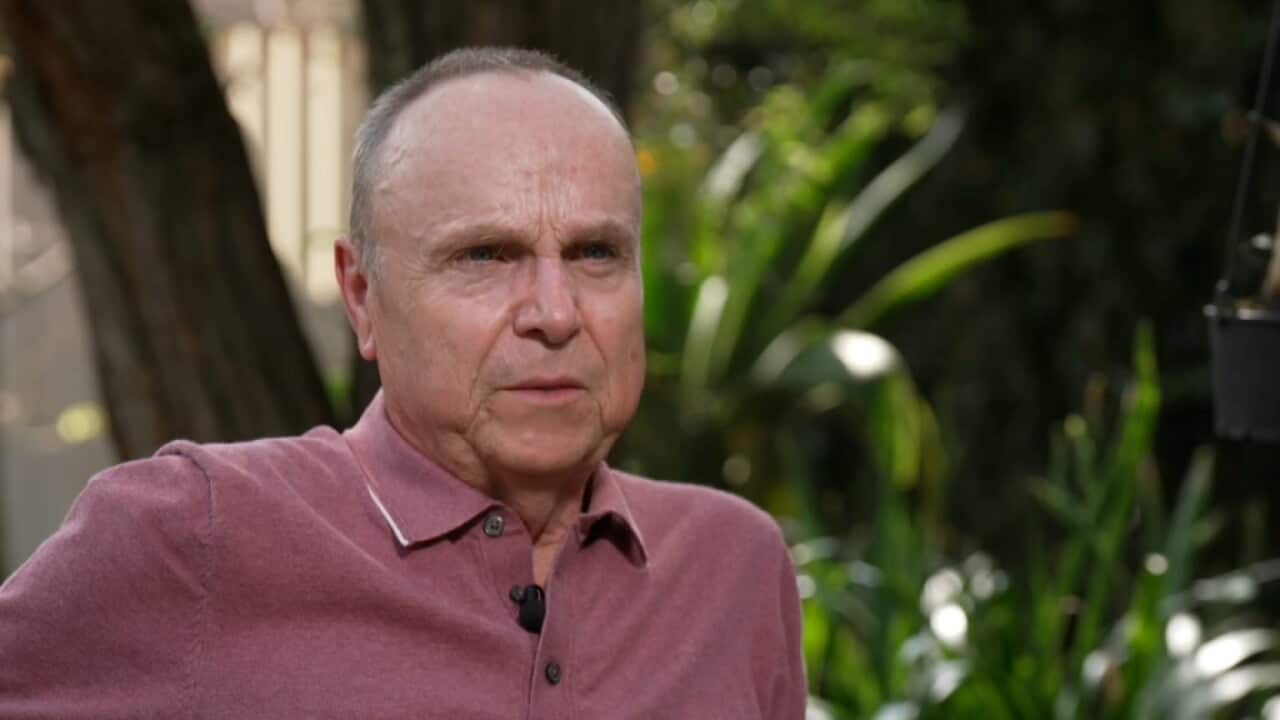
Dr Andrew Watkins is a Climate Councillor at the Climate Council, and Adjunct Professor at the School of Earth, Atmosphere and Environment at Monash University.
He says Australia is normally a little bit hotter than the global average temperature.
"That's because the global average temperature includes the oceans as well as land. We're just looking at the land for Australia. So although 2025 was in the top two or three warmest on record for the globe, for Australia, it was the fourth warmest on record."
Adding that it looks like Australia will confront more extremes into the future, particularly as the world heats up due to the climate pollution, and the extra carbon dioxide that we're putting into the atmosphere.
Professor Watkins refers to the last summer as climate whiplash - where things went from one extreme to another.
One of the key findings in a recent report [[Breakneck Speed: Summer of climate whiplash]] he co-authored suggests climate pollution is now overpowering natural climate cycles like El Niño and La Niña.
"An amazing example was Marree in our back South Australia near Lake Eyre. Marree had five days in a row, over 48 degrees Celsius, and topped out at almost 50 degrees. And then only a short time later, that was in January, in February, it had eight days in a row of rainfall, and the roads ... Well, the town was cut off due to floodwaters and the whole landscape turning to mud."
The WMO's annual State of the Global Climate report found the concentration of carbon dioxide in the atmosphere has continued to increase.
"We're at the record high level now of carbon dioxide, and those records actually go back 800,000 years. That's the measurements we've been able to do from ice cores in Antarctica. So we know that carbon dioxide levels now are at their highest in 800,000 years, and humans weren't even on the planet 800,000 years ago. So we are getting to something that is totally unseen by anyone in history."
Professor Watkins says, unfortunately in Australia we're impacted by this.
He shares with SBS ways we can mitigate this as a nation.
"Primarily as individuals, we can do things like turning off lights or recycling, or if we have enough money, putting solar panels on our roof or driving an EV [[electric vehicle]]. But as a nation, our government really needs to stop approving more fossil fuel projects and reducing the amount of carbon dioxide that we are producing either here or when we export the coal, gas and oil to other countries."
He says the national climate risk assessment looked at the parts of Australia that are most vulnerable to climate change.
John Kennedy is the lead author of the report.
He says what we are increasingly seeing is people affected by multiple events, and they don't have time to recover.
"Ocean heat content was the highest it's ever been. Glaciers around the world continue to lose mass. Arctic sea ice extent was the lowest or second lowest on the record."
Under the 2015 Paris Agreement, governments pledged to try to avoid exceeding 1.5 Celsius of global warming, measured as a decades-long average temperature compared with pre-industrial temperatures.
Akshay Deoras is from the UK National Centre for Atmospheric Science says governments need to start preparing.
"Governments need to start preparing for this. We don't know yet which kind of extreme weather event will happen and when. But there's a very good chance they will be very extreme over the next two years."
Professor Watkins says there are two different things that we really need to focus on in Australia to help us with the future of our climate.
"Two things we can do, adaptation and mitigation. So first of all, mitigation is reducing the amount of carbon dioxide that we put into the atmosphere. And that might mean driving a bit less, taking the train instead of driving the car or riding to school, instead of getting mum to give us a lift. It might be putting solar panels on our roof to reduce the amount of dependence upon electricity produced by coal or gas. But we also need to adapt as well because there's some aspects of climate change that are locked in."
The WMO Secretary-General says she hopes their latest report will encourage action.
"Let's just be, you know, honest here. This is a bit of a dire picture. And we just, it's our job to kind of provide the evidence that we're seeing with the hope that this information will encourage people to take action."
But admits we have a long way to go.
"There's no denying that these indicators are not moving in a direction that provides for a lot of hope."