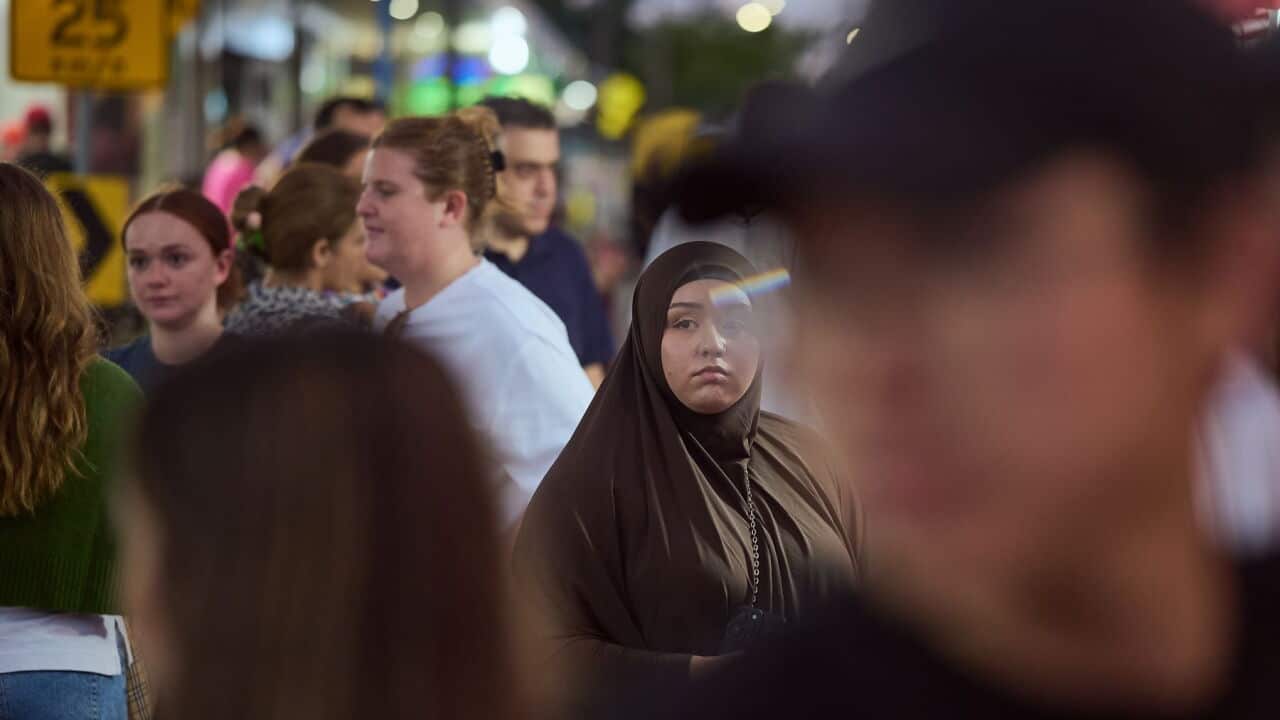

A new report by the Lowy Institute reveals support for multiculturalism in Australia has plunged in the past two years. A recent poll has linked a decline in support for both current migration levels and multiculturalism, which coincides with growing fears about economic and social safety.
Listen to Australian and world news, and follow trending topics with SBS News Podcasts.
TRANSCRIPT:
In the past two years, there has been a shift in how Australians feel about cultural diversity.
The latest Lowy Institute survey shows that while 90 per cent of people found it was good for the nation in 2024, this year that figure is just 73 per cent.
The same survey found 55 percent of the population thinks Australia's current migrant intake is ‘too high’.
Charles Lyons Jones is a Research Fellow in the Public Opinion and Foreign Policy program at the Lowy Institute, and says while the decline in support for migration at its current level represents a seven-point increase from 2024 , it is on par with the previous high recorded in 2018.
"Australians have long been skeptical about the current intake of migrants. The previous record high occurred in 2018 and this year's result is not especially higher than in 2018, so it is not particularly unusual."
Independent Senator David Pocock says the figure is not surprising, citing stretched infrastructure and a lack of a coordinated plan to manage migration.
"As a country, we should have a plan when it comes to migration and population. We should be looking at the impacts on housing, the impacts on infrastructure, the impacts on the environment. Currently there is none of that. There is this arbitrary number that both sides of politics fight over rather than saying, "what do we want as a country?"
Experts in public policy have identified a rise in populism or anti-multicultural sentiment being heavily tied to uncertainty.
Mr Lyons Jones says the latest Lowy Institute data tells that story.
"Australians are growing anxious about societal issues in general. For instance, 64% of Australians believe the risks of Artificial Intelligence outweigh the benefits. The decline in the proportion of Australians who say cultural diversity been good or mostly good for the country fits squarely within that context."
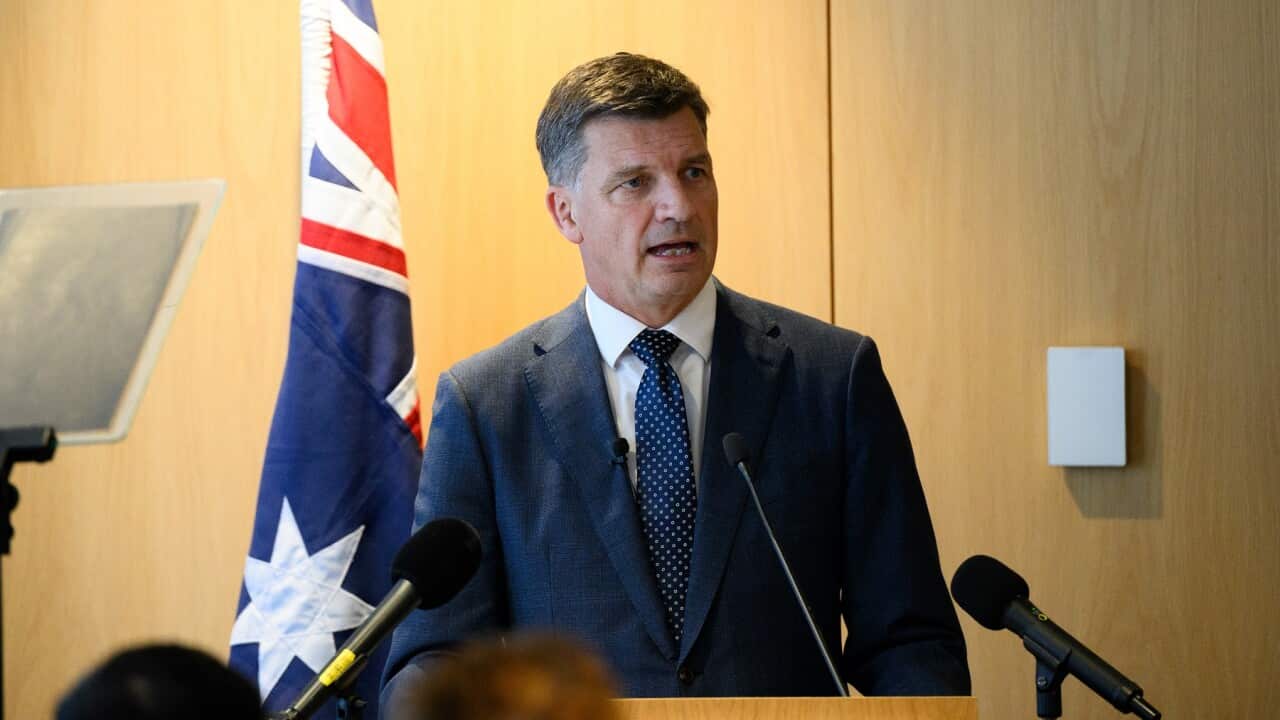
The survey was conducted in the days following an address by politician Pauline Hanson at the National Press Club in Canbera this month [[June]].
Senator Hanson has since defended her remarks, which called for monoculturalism over multiculturalism and to ensure all incoming migrants already speak English.
Prime Minister Anthony Albanese has rejected the party leader's comments again, saying there is a positive impact to cultural diversity.
"Our diversity as a nation is a strength, you know, the fact that in the last month, yesterday, Sunday, I was at an Assyrian function. It was a wonderful function in South western Sydney. Should that be allowed to happen?"
But the Senator has issued a pointed message to Anthony Albanese while blaming Britain's political upheaval on its migration policy.
"The big issue in Britain that I can see is about the mass migration, people coming in to the country. People don't feel like they're British anymore, they feel like they can't fly the flag. So he wants to take a few lessons from that. Our economy is in the toilet actually."
International students represent Australia's fourth largest export: education, bringing $53.6 billion to the local economy between 2024 and 2025.
More than half of Australian's were born overseas or have at least one parent who migrated to the country.
Multicultural affairs academics say Australia's relationship with migration and multiculturalism, while linked, is also not a perfect overlap.
Last year, as inflation soared beyond normal levels and cost of living pressures were felt by many Australian households, mass anti immigration protests overtook roads in major cities around the country.
"We have to curb immigration, curb immigration yes!"
The same year, the Scanlon Institute's Mapping Social Cohesion report found 51 percent of respondents said immigration was too high, and 48 per cent of Australians thought immigrants take jobs away.
46 per cent felt a sense of belonging in the nation, down from 64 per cent in 2020, and two in five Australians born in Africa or Asia had experienced discrimination between 2024 and 2025.
Critically, the same report found 83 per cent of Australians at the time believed multiculturalism has been good for Australia, although that down from 89 per cent in 2023.
Scanlon Institute CEO Anthea Hancocks believes the change in sentiment is in part due to the political discourse.
"I think there are issues that are going on within society that are related to the loudest voices that are trying to influence people's views about blame and grievance and fear. The message about how much our prosperity has actually depended on immigration and new and interesting ideas coming into Australia tends to get lost."
Dr Wesa Chau serves on the Advisory Board for the National Foundation of Australia-China Relations and the Victorian Government Anti-Racism Taskforce.
She says that rather than some politicians reflecting public opinions, they are informing them.
"Sometimes we think that it is what people are thinking and therefore it gets reflected in the news, but it could also be the other way round. Which means that whatever gets sent out into the airwaves gets received by the community and basically what we are saying is these views are accepted and people who might have certain views can also be talking about it as well."
Researchers in the space say it is not solely economic uncertainty that triggers a rise in anti-multicultural sentiment.
Australia was heavily criticised for closing its international border well beyond most nations during the COVID-19 pandemic.
In the face of a perceived threat to health and the maintenance of public systems - there was a reported rise in racism.
Dr Chau says there was a spike in anti-Chinese sentiment, borne of contested reports about the origins of the virus.
"Rather than treating this as a global pandemic and everyone was trying to just find out what to do, they blame it on the Chinese. At the time I remember my friends including myself -it was the first time in many many years people experienced racism in the community as well."
This September will mark 30 years since Senator Hanson made her maiden speech to parliament, then raising her alarm about migration from Asian countries.
"I and most Australians want our immigration policy radically reviewed and that of multiculturalism abolished."
Polling then and since has showed support of that sentiment has never been recorded as representing most Australians.
Recent political polling, however, shows the message is resonating with a wider audience than ever before - albeit not the majority.
Renee Coffee was a teenager when Ms Hanson was first sworn into parliament.
Now a Federal MP herself, she says Hanson's policies at odds with financial wellbeing for households, particularly families.
"I'm in Federal parliament and I can't believe 30 years on we are are still talking about Pauline Hanson, we are still talking about One Nation. That is very upsetting to me and so many members of our community. What I would say is with Pauline Hanson and One Nation's rise in the polls and what we've seen in the community, I would ask Australians to have a look at her track record and One Nation's track record. Over the past 30 years, they have consistently voted against higher wages for workers, workers' rights. They have argued for a divisive Australia."