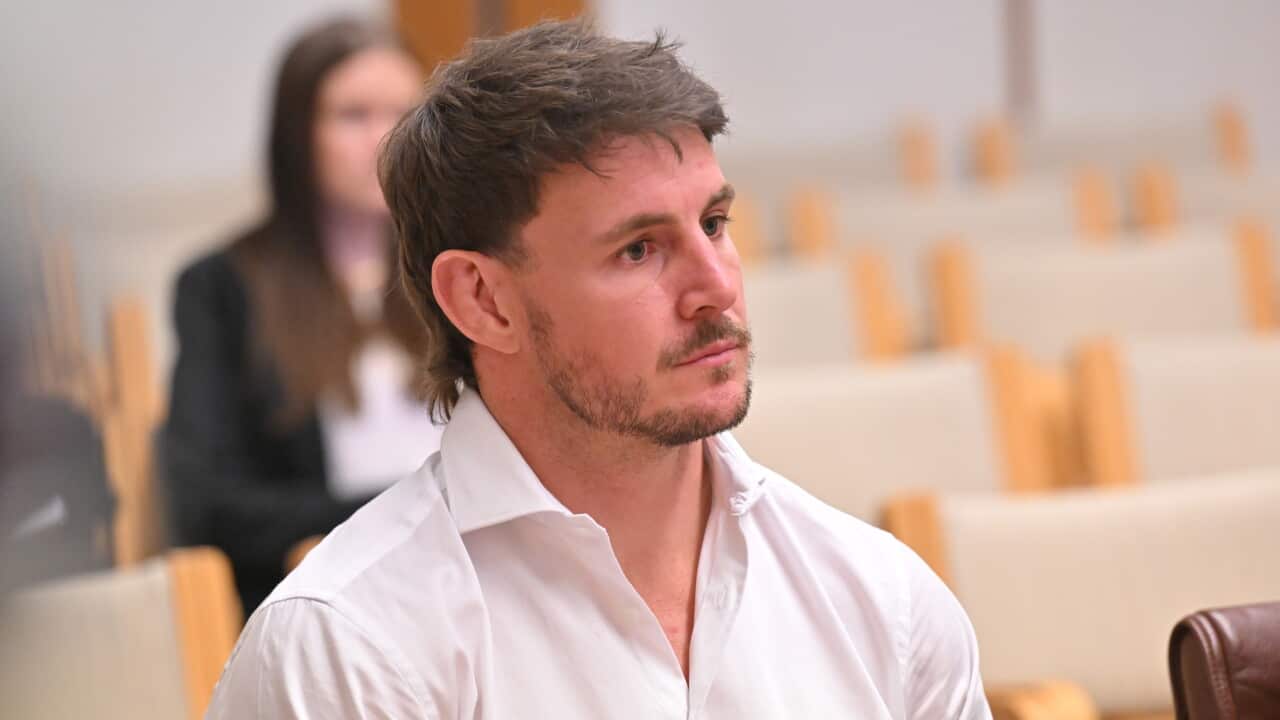

As Labor's national conference continues, critics argue it has allowed little room for dissent, with key issues like gas, gambling and AUKUS largely resolved before being publicly debated on the conference floor. Backbencher Ed Husic is among those calling for more robust debate.
Listen to Australian and world news and follow trending topics with SBS News Podcasts.
TRANSCRIPT
Gambling. Gas. Gaza. AUKUS. And AI. These are some of the topics being discussed at the Labor National Party conference, which is held every three years.
But much of the decision making has been done on the sidelines, out of public sight.
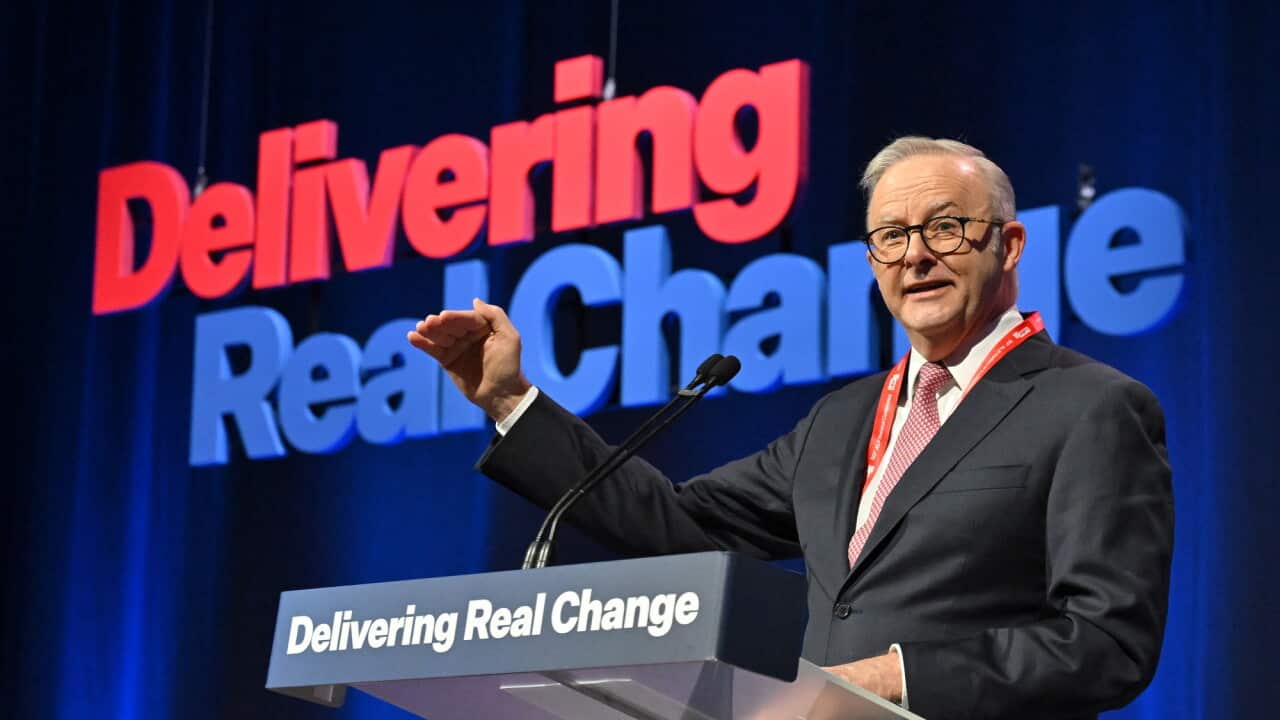
Opening the conference on Thursday, Prime Minister Anthony Albanese made a virtue of party discipline.
"We choose progress over protest. We choose purpose over chaos. We choose unity over division. We choose outcomes over outrage. We choose real change that makes a real difference."
Motions voted on by delegates at the conference become binding policy, but how and when they are implemented remains up to Labor members in parliament.
There has been movement on some key issues - including support for a new court to handle workplace disputes, establishing a Fair AI taskforce, and mandating superannuation for all teenagers.
The policy shifts are not yet law, the formal platform commitment could clear the way for legislation, and set the stage for internal party policy debates over coming years.
Developments around the most contentious issues have been more incremental.
Former minister Ed Husic says his party has become allergic to dispute and dissent, after he broke ranks to call for a gas tax.
"The reality is, though, the clock is ticking. Like I think Australians will expect at some point, this decision gets made. And for us, well, I just want to make this point. You know, there's a lot of talk about, you know, the sort of insurgency of certain parties, etc. Labor has a chance to be able to show, particularly to the broader public, that it's got what it takes, that it's got the steel in the spine to be able to make a call that's in really the nation's long-term interests."
On day two, delegates voted unanimously to strengthen the party's platform on gambling regulations.
The outcome is a result of a grassroots push from party members, but the final policy position fell short of calling on the federal government to set up a national gambling regulator, a key recommendation of the 2023 report on gambling reform from late Labor MP Peta Murphy.
After negotiation on the sidelines of the conference, Labor's official platform will include a commitment to strengthen the powers of relevant national regulators; and reinforce measures to prevent harm caused by gambling inducements.
Tim Costello, from the Alliance for Gambling Reform, says he was hoping to see stronger action.
"Why do we have the greatest gambling losses in the world? Because there is no national regulator. And the prime minister seems to want us to believe that the de facto regulator - the Northern Territory Racing Commission is doing a great job. They hadn't even filed a report for 31 years. That is why Labor can amend the Northern Territory act and take over the regulation of online gambling tomorrow. That's what they should do."
The second day was also overshadowed by new US tariffs, and the announcement of $4.6 billion in new funding for Adelaide's Osborne shipyards as it prepares to build new AUKUS nuclear-powered submarines.
It comes as former Labor minister Peter Garrett leads a public inquiry into the deal, amid increasing uncertainty over whether the US will deliver the promised submarines.
Outside the Adelaide Convention Centre on day two of the conference, opponents of the deal were making sure their voices were heard by the Labor figures inside.
"We're spending billions of dollars building war machines, murder machines."
The issue is due to be discussed on the final day of the three-day conference, but Defence Minister Richard Marles has played down expectations.
He says AUKUS was debated at the last conference, three years ago.
"The statement of support by the party itself for the AUKUS program has been utterly clear and overwhelming, and that remains the case. And of course, from the government's point of view, we are implementing that."
Agriculture Minister Julie Collins says some conferences have featured more robust debate than others.
"But what they're about is about rank and file members of the Australian Labor Party having a say in one of Australia's oldest and most democratic political parties. I'm a very proud member of the Australian Labor Party, and I've been attending conferences for decades; and they have been different at every single conference. I think what you see at this conference is a lot of robust debate, but primarily we agree on the direction of the country and we agree on the principles and the aspirations that we have for this nation."
Paul Strangio is an emeritus professor of politics at Monash University, specialising in the history of Labor politics.
He says complaints about party conferences being stage-managed affairs are nothing new.
"It's a songbook that accompanies each conference. And look, it's true in the sense that there is a reality that probably for almost half a century now, there has been a process of a migration of authority to the parliamentary party and especially the leader of the Labor Party."
He says the days of Labor politicians being seen as servants of a broader extra-parliamentary party - that emphasises party processes and members outside parliament - are long past, as it becomes more professionalised with centralised power.
While unity, discipline, and constructive government have become repeated slogans under Anthony Albanese's leadership, Professor Strangio says stage-managing dissent also carries risks.
"There is no doubt that there are tensions between the parliamentary party and the prime minister and elements of the grassroots, something over gas policy over AUKUS, there are examples. At the moment though, certainly with this government, it's not being translated into great tensions within the government at all. There are very few signs of that."