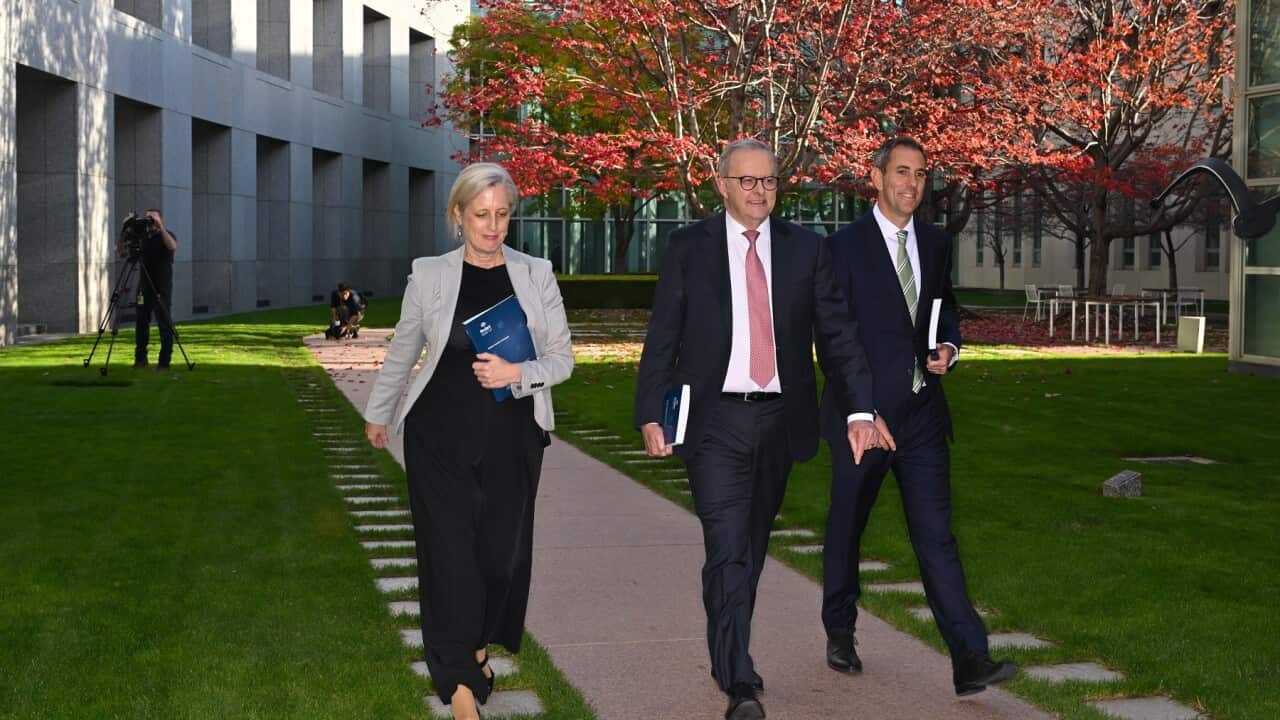

Treasurer Jim Chalmers has delivered his 2026 budget, which he says takes what he's called the 'hard road of reform'. At the heart of the budget are housing tax changes, and a $35 billion saving from reform to the runaway National Disability Insurance Scheme. Labor has been keen to portray this budget as one of spending restraint, after warnings by economists and Reserve Bank governor Michele Bullock that splashing out would only fuel inflation and risk further rate hikes.
Listen to Australian and world news and follow trending topics with SBS News Podcasts.
TRANSCRIPT
As Treasurer Jim Chalmers prepared to unveil his fifth budget, he foreshadowed a hard road of reform.
"This budget makes a number of difficult decisions in the near term and in the longer term, to get our budget into better nick and to deal with some of these issues that have been left unattended for far too long."
Finance Minister Katy Gallagher had a similar message on Channel 7's Sunrise.
"People expect governments to make the right decisions for the right time ... Governments also have to make sure we're dealing with all of these really difficult issues. We can't put our head in the sand."
Now the budget has been delivered, and we know exactly what these reforms look like.
The Treasurer has told Parliament the war in the Middle East has been pushing prices up, growth down, and punishing Australians.
"We were already dealing with price pressures in our economy, but Treasury is now forecasting inflation to peak around 5 percent in the middle of the year because of the conflict. For the same reasons, it’s expecting growth to come in half a percentage point lower next financial year, to be 1 ¾ percent overall.”
He says the Budget is therefore about getting Australia through the global oil shock and building an economy that works for more people.
“The core of this Budget is an economic strategy with five main parts: getting through the global oil shock and building resilience; taking the pressure off people where we can; making the economy more productive to lift living standards over time; reforming the tax system for workers, businesses and future generations, including a new tax cut for every working Australian taxpayer; and making the budget stronger, more sustainable and helping to take the pressure off inflation by saving more than we spend.”
Part of the plan to help Australians cope with the impact of the war is a fuel security package previously announced by Prime Minister Anthony Albanese.
"The Strengthening Australia’s Fuel Resilience Package will deliver more fuel for drivers and industry, more fertiliser for farmers, and more fuel security for our economy. Its centrepiece is a $10 billion investment in immediate fuel supplies and a permanent Australian Fuel Security Reserve to get the fuels and fertiliser that we need.”
For Australians, there are more tax cuts to help with the cost of living.
"This government cut taxes two years ago, we’re cutting them again this year, and next year too… We will put more money into the pockets of 13.3 million workers with a new $250 Working Australians Tax Offset… Averaged out over the year, our three tax cuts, instant deduction and the new offset are the equivalent of up to $54 back in the average earner’s pocket each week."
And as promised, after weeks of speculation, the Treasurer has confirmed changes to the tax system he says will make the housing system fairer for everyone.
"House prices have decoupled from incomes. Since 1999, house prices have risen over 400 percent, more than twice as fast as average incomes. Our tax changes will help about 75,000 Australians achieve the dream of home ownership. We’ll limit negative gearing for residential property to new builds from July next year. And we’re replacing the 50 percent capital gains tax discount with inflation-adjusted indexation, to restore the taxation of real gains… We’ll also introduce a minimum 30 percent tax rate on capital gains from July next year, and on discretionary trusts from July the year after."
Some big-ticket spending measures have been announced, including on defence, rail infrastructure, and health.
"This Budget includes another $250 billion for public hospitals. We're also investing $5.9 billion to lit more medicines on the Pharmaceutical Benefits Scheme, so Australians can continue to access life saving medicines at cheaper prices."
The Treasurer says a new productivity package is designed to attract and absorb more investment, in the hope it will raise the standard of living and wages for more people.
And an additional 4,000 migrant trade workers will be able to enter the workforce each year as the government accelerates skill assessments and occupational licences.
But Labor has been keen to portray this budget as one of spending restraint, after warnings by economists and Reserve Bank governor Michele Bullock that splashing out would only fuel inflation and risk further rate hikes.
The Treasurer says there are $63.8 billion worth of savings in the Budget – with the bulk of that to come from changes to spending within the National Disability Insurance Scheme.
"A big part of our savings package will restore the NDIS to its original intent and secure its future, so it grows in a sustainable way in line with programs like Medicare. This difficult but necessary reform will save $37.8 billion over the forward estimates."
The Treasurer says the choices made in this year’s Budget are necessary.
"Faced with a choice between resilience or reform, this Budget demonstrates that our government and our country are capable of both… We choose the hard road of reform, not the path of least resistance, by responding to the pressures that Australians confront today and fulfilling our obligations and our responsibilities to the generations to come."