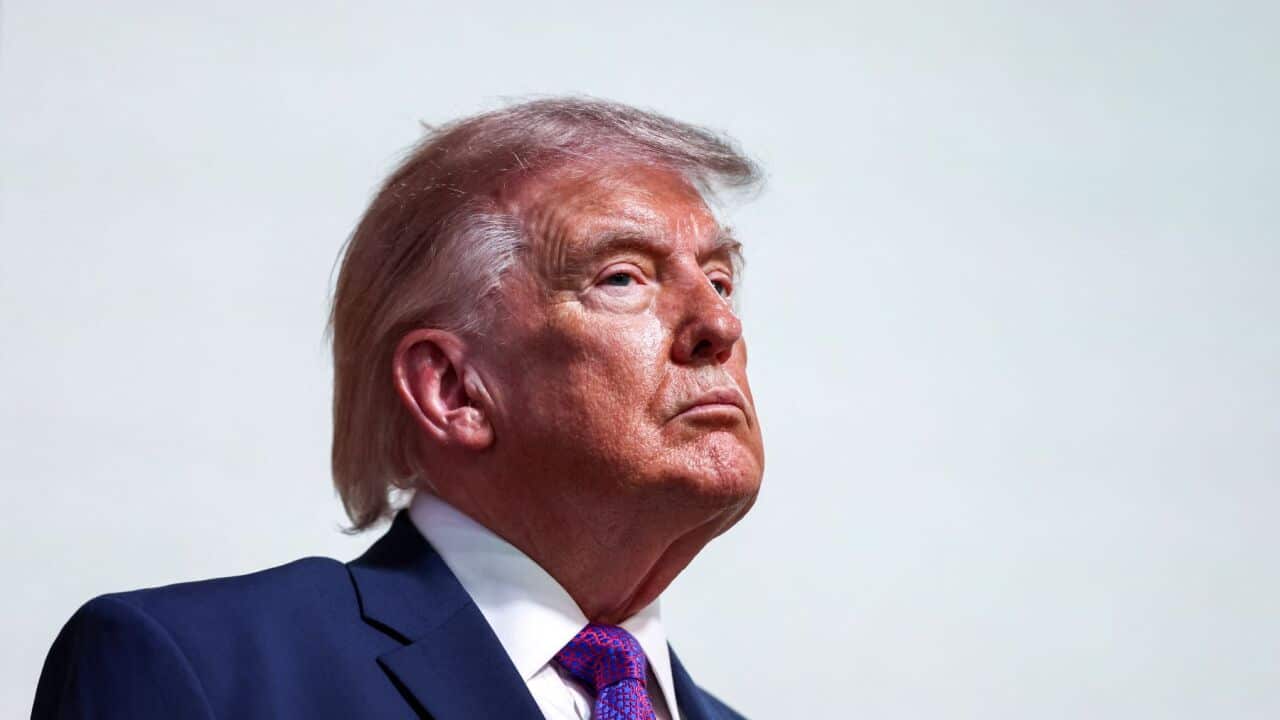

United States President Donald Trump says he has held off on an attack on Iran that was planned for today after Gulf countries' request. But President Trump says the U-S military is still prepared to go forward with a full, large scale assault on Iran if no deal is reached.
Listen to Australian and world news and follow trending topics with SBS News Podcasts.
TRANSCRIPT
The United States President says the leaders of Qatar, Saudi Arabia and the United Arab Emirates have asked him to hold off on scheduled attacks on Iran, for several days.
Iran has threatened Gulf countries with reciprocal attacks* if the US and Israel relaunch their assault and end a nearly six-week ceasefire.
Donald Trump has confirmed that serious negotiations are now taking place.
"Well, other countries have come to me and they've said we were getting ready to do a very major attack tomorrow. I've put it off for a little while. Hopefully, maybe forever, but possibly for a little while. Because we've had, very big discussions with Iran and we'll see what they amount to. I was asked by Saudi Arabia, Qatar, UAE and some others if we could put it off for two or three days, a short period of time, because they think that they are getting very close to making a deal. And if we can do that where there's no nuclear weapon going into the hands of Iran, I think and if they're satisfied, we will be probably satisfied also."
But the US Commander in Chief has also instructed the military to be ready for a large scale assault, in the event that an "acceptable deal" is not reached.
Iran has repeatedly rebuffed the White House offers on a deal to end the conflict.
In a social media post on X, Iranian President Masoud Pezeshkian offered reassurance, stating that speaking with Washington and attempting to reach a deal does not mean Iran is in a position of weakness.
"Dialogue does not mean surrender. The Islamic Republic of Iran enters talks with dignity, strength and with the preservation of the people’s rights, and will under no circumstances retreat from the legal rights of the people and the country. We will, with reason and with all our strength, to the last drop of our blood, remain in the service of the people and safeguard the interests and dignity of Iran."
The country, whose supreme leader was killed in the initial US-Israeli strikes on the 28th of February, has proven resilient.
The regime is now demanding the release of Iranian assets frozen abroad and the lifting of long-standing sanctions among the conditions of any truce.
On Sunday, Iran's Fars news agency said the US had presented a five-point list, which included a demand for Iran to keep only one nuclear site in operation and transfer its stockpile of highly enriched uranium to the United States.
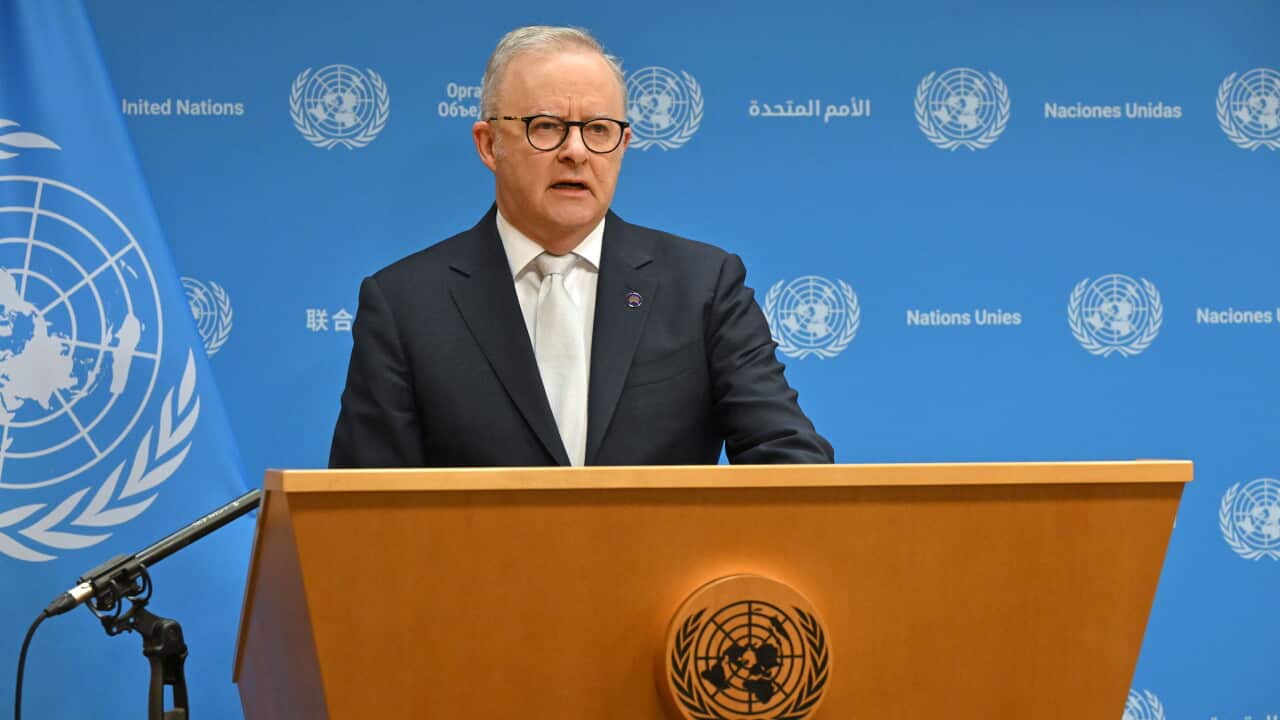
The United Nations says the conflict is impacting the movement of essential goods through the Strait of Hormuz.
UN Deputy Spokesperson, Farhan Haq, says this will have serious global consequences.
"I think the problem is… it's a huge problem for the world. And, ultimately, the lack of fuel and the lack of fertiliser will cause different crises in terms of high rates of inflation, lower growth, and ultimately a food crisis down the line, and particularly affecting the countries who can least afford it. So that is why he wants to make sure that basic freedom of navigation, as enshrined in the Law of the Sea and other relevant laws, is restored."
For months, Tehran has exerted control over the vital trade waterway into the Gulf, sending global oil prices spiralling.
And the knock on effects are being felt in regional Australia.
Australia typically imports more than half its nitrogen fertilisers from the Middle East, but supply has been choked by the closure of the Strait of Hormuz.
Justin Everitt, whose family has farmed for six generations near Brocklesby, 300 km northeast of Melbourne, has had to make radical changes to his cropping plans.
He is planting 50 per cent less wheat this year than he had forecast.
"Doubling or tripling of fertiliser prices, it's just not something we budgeted on when we did our budgets at the start of the year, we were budgeting on 800 dollars a tonne urea and now its 16, 17 hundred dollars a tonne urea and that's if you can get it, there's still no guarantee that we're gonna get it. So it's just gonna be, it's really gonna hurt the bottom line and makes you think about what crops you're gonna put in and then how you're gonna put them, how you're gonna fertilise it during the year, whether you limit the amount of applications or you pull back on how much you provide the crop."
Australia is the first major grain exporter to plant wheat since the beginning of the Iran war, which throttled exports of fuel and fertiliser from Gulf nations.
Other countries are also likely to grow less, shrinking food supply further.
A ceasefire agreed to in April meant to facilitate talks between Iran and the United States has largely been observed despite occasional exchanges of fire.
*During the war that began with US and Israeli strikes against Iran on 28 February, Iran has repeatedly targeted the UAE and other Gulf states that host US military bases.