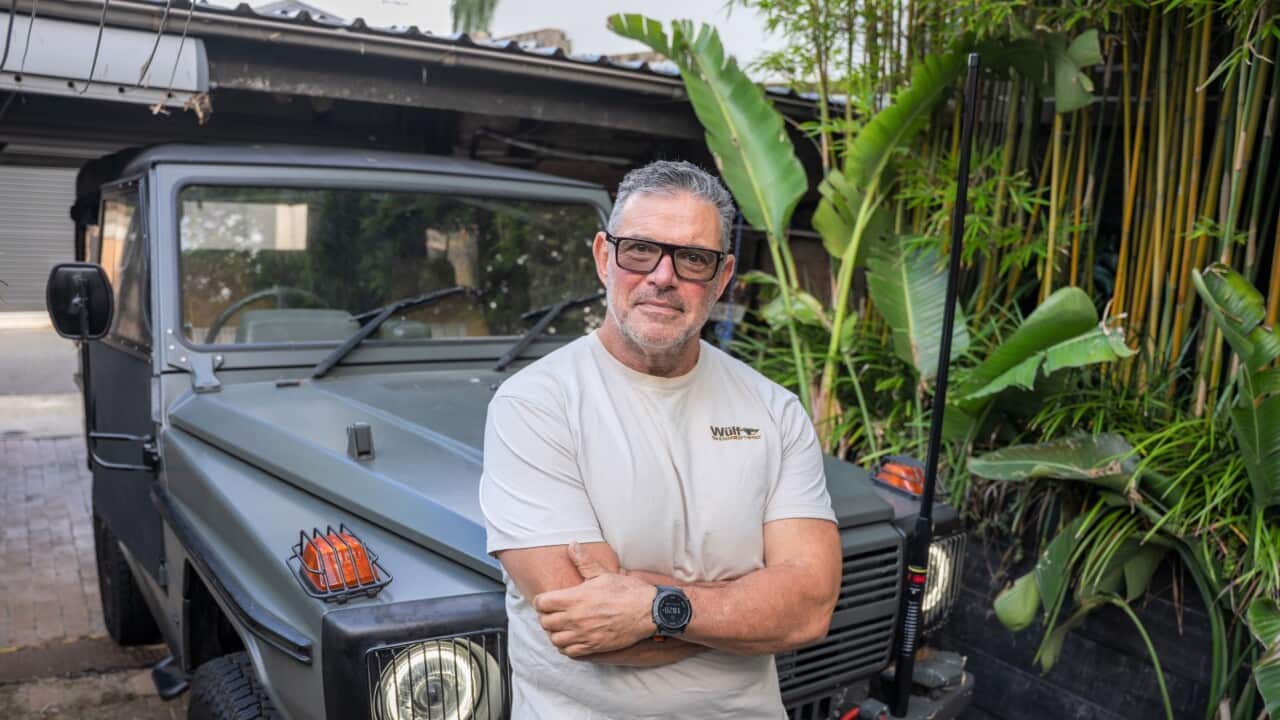
In a suburban garage in Sydney, Dr Adrian Cohen is polishing his pride and joy — a restored cross-country wagon now running silently on electric power.
A vehicle once built for war in Germany has found an unlikely second life in the clean-energy transition.
"It started its life as a 1990 Mercedes-Benz G-class," Cohen tells SBS News.
"When it was in military service, it was known as the wolf. It was designed to take the tough stuff."
His rebuilt military wagon is a part of a growing trend in Australia, with some classic car owners converting ageing petrol vehicles into electric cars amid rising fuel costs and growing interest in electric vehicles (EVs).
News that makes sense
Your trusted source for staying up-to-date with the world around you. Get free daily news updates and analysis, straight to your inbox.
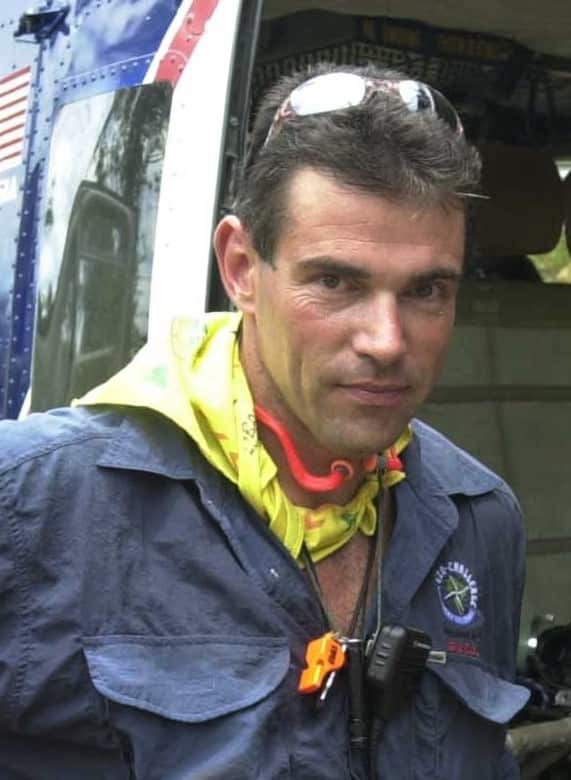
Converting the car to EV wasn't easy, but Cohen is no stranger to challenges.
As an emergency medical expert, he travels the globe with some of the world's biggest reality TV shows.
But he says this project, which was carried out in a Sydney-based workshop, tested his patience.
"From start to finish, this project took just over a year, and the cost was about $200,000. Now that's a lot, but then we needed to replace every hose, every piece of electrical wiring, every conduit, every piece of rubber."
Classic cars get a second charge
Businesses specialising in EV conversions remain niche in Australia, partly because of the cost, engineering complexity and evolving vehicle regulations.
But industry operators say interest is growing as more Australians look for alternatives to rising fuel costs and ageing petrol engines.
Nick Cummins, founder of a vehicle conversion workshop in western Sydney where Cohen's car was rebuilt, says the growing interest reflects "a new trend that is renewables in vehicles".
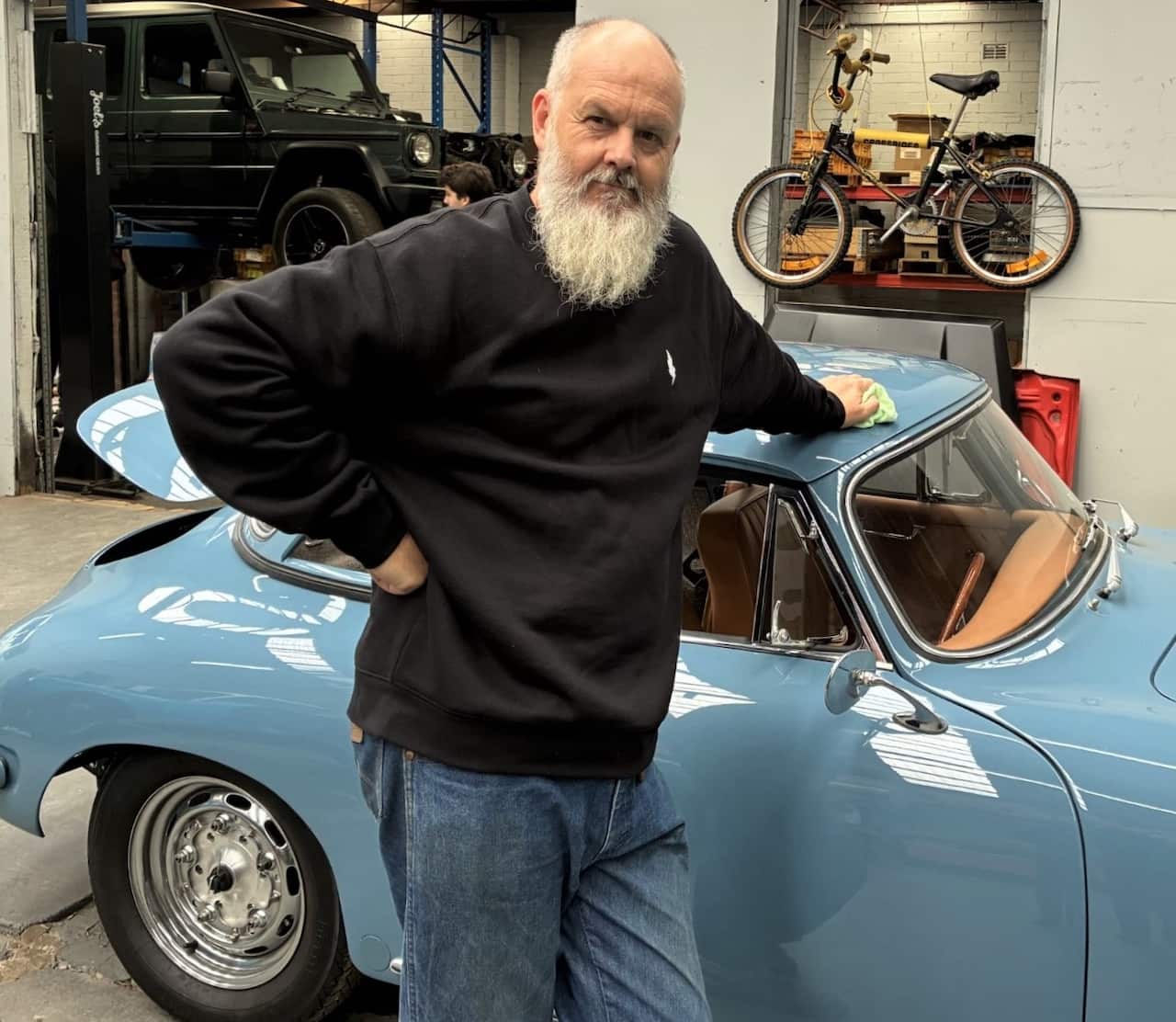
"People who convert classic cars to electric come from all walks of life," Cummins tells SBS News.
"Most owners have a passion for their vehicle. Many feel very nostalgic about a particular car. It may have been their dad's car or their grandfather's.
"As replacement parts get harder to find, conversion to an EV also 'future proofs' the vehicle for later generations," he says.
On the workshop floor, engineers are working on a range of EV conversion projects, from everyday classics to high-value collector cars, including a blue Porsche.
"This is probably the most expensive car we've got on the floor," Cummins says.
"The whole process of converting it was very expensive, as it is with a lot of car restoration. We had to replace a lot of mechanical parts.
"It can take six to eight months, repairing rust, spray painting, adding new interiors. So, the bills do add up."
While supporters of the trend argue EV conversion extends the life of classic vehicles and reduces tailpipe emissions, critics within the community say removing original engines can reduce a vehicle's heritage value and authenticity. It may also complicate insurance and warranty considerations for modified cars.
Used EV market accelerates
Sellers of used EVs say demand is surging, amid concerns about fuel prices, cost of living pressures and uncertainty about long-term fuel supply.
Brendon Green, general manager of automotive solutions at Pickles Auctions, a privately-owned asset remarketing and auctioneering company, tells SBS News: "We saw a hyper focus on used electric vehicles across March and into April and even into May.
"Sales rose by about 20 to 30 per cent, depending on different vehicles, across the month of March in particular.
"I suspect a lot of 31 to 40-year-olds are quite leveraged with their mortgages. Now interest rates have gone up again, they are looking for meaningful ways to minimise their cost of living."
Australia's broader EV market has also continued to grow. According to data released by the Federal Chamber of Automotive Industries, EVs accounted for a record 16.4 per cent of all new car sales in April — roughly one in every six vehicles sold.
Industry analysts say the rise has been driven by a wider range of available EV models, government incentives and higher petrol prices.
Green expects demand to eventually level out, but says interest remains strong.
"Electric vehicle sellers probably know they're on a good thing right now; there is quite a waiting list.
"If fuel supply remains disrupted, or petrol prices rise again, I suspect to see more hybrid-type families.
"They may have a diesel car, an SUV or a light commercial vehicle to tow the boat or caravan for the summer trips. And a second family car could be a used EV."
Cummins is a former advertising executive who swapped marketing campaigns for motor conversions, opening his EV workshop five years ago.
"I grew up on a dairy farm in Victoria, where I learned to not throw something out but to fix it instead," he says.
"Some classic cars sit idle in sheds and garages because owners are afraid to get behind the wheel, fearing they will overheat or break down on the road.
"Converting it to electric means there are minimal moving parts."
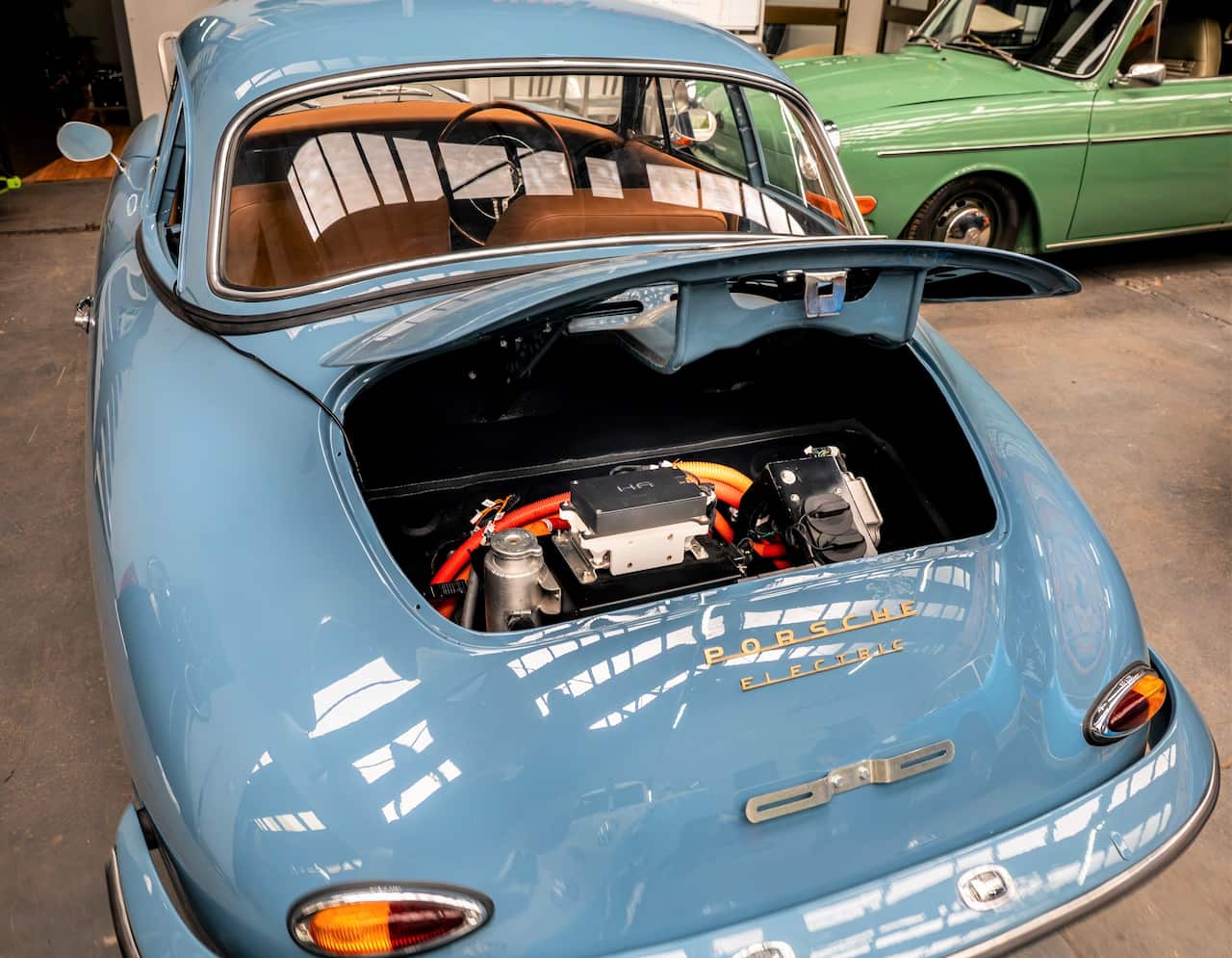
But retrofitting modern battery technology into decades-old vehicles poses major engineering challenges.
"These old cars were not made to take batteries, which are very heavy. So, converting them is an incredibly complex process," he says.
Nearby, a 1967 Volkswagen Kombi is also being given a second life — this time for leisurely road trips through wine country.
"We put a giant battery pack in it, with DC [direct current] fast charging. That means it can go anywhere," he says.
Although Cummins has only converted 16 cars in the past five years, he says the process is "getting faster".
"Some cars are harder to convert than others. With very small vehicles, it's a challenge to fit all the components in."
Driving towards an electric future
For Cohen, moving away from fossil fuels is a big part of the appeal.
"Renewables are the future. We know that being able to charge at home means I never have to go to a petrol station," he says.
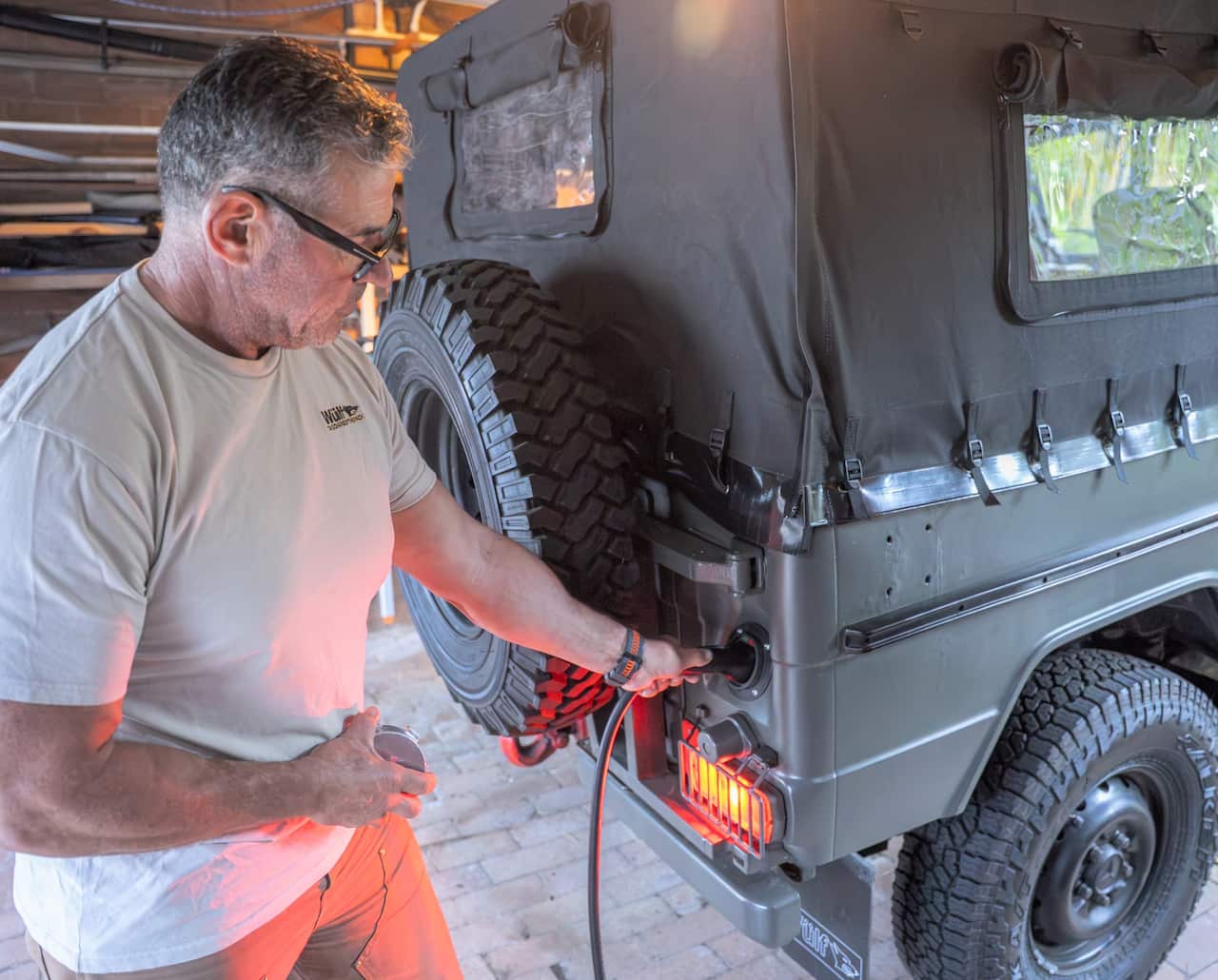
"I can do it in my own backyard, with a car that I know is more efficient for the environment," Cohen says.
For EV enthusiasts like Cohen and workshops like Cummins', the appeal of EV conversions is not just about preserving the past — it is about proving old machines can still have a future even if the process comes with technical complexity, high costs and additional compliance requirements.
For the latest from SBS News, download our app and subscribe to our newsletter.

Sharing business secrets of inspiring entrepreneurs & tips on starting up in Australia's diverse small business sector. Read more about Small Business Secrets

Have a story or comment? Contact Us







