IN BRIEF
- China's halting of sulphuric acid exports follows supply chain disruptions linked to the war in the Middle East.
- The move could have significant impacts on the costs of battery and fertiliser production.
China has banned exports of sulphuric acid, the world's most used industrial chemical and a crucial ingredient in battery and clothing manufacturing, as well as fertiliser production and metal processing industries.
The move comes amid pressures on supply of the chemical after conflict in the Middle East disrupted sulphur shipments through the Strait of Hormuz earlier this year.
Marina Zhang from the University of Technology Sydney's Australia-China Relations Institute said that, while the ban may have been presented by China as temporary, it signals a policy shift from Australia's largest trading partner towards increasingly prioritising control over industrial inputs.
"It's not just finished products, but the upstream materials, processing technologies and basic industrial ingredients that allow advanced manufacturing to scale … So while the immediate measure may be temporary, the underlying logic is structural," Zhang told SBS News.
A critical chemical under pressure
News that makes sense
Your trusted source for staying up-to-date with the world around you. Get free daily news updates and analysis, straight to your inbox.
Sulphur is the primary ingredient used to produce sulphuric acid, meaning shipping and processing delays of the raw material in the Gulf region have created flow-on effects for manufacturers reliant on a steady supply.
In 2025, about half of the global seaborne supply of sulphur came from the Middle East.
China accounted for a significant share of sulphuric acid shipments from Asia last year and remains one of the world's largest exporters. The loss of that supply is now raising concerns among overseas buyers already scrambling to secure alternative sources.
While the impacts are expected to be spread across multiple industries, analysts say battery supply chains could be among the most exposed.
Zhang said the situation "reveals a paradox at the heart of the clean-energy transition … which depends on minerals that require very energy-intensive, chemical-intensive and often environmentally difficult processing".
"Yet many Western countries have spent decades outsourcing precisely those 'dirty' industrial activities."
Battery supply chains in focus
Sulphuric acid also plays an important role in processing metals such as nickel and copper, both used extensively in electric vehicle batteries and energy storage systems.
Indonesia's rapidly expanding nickel-processing industry is considered particularly vulnerable to the bans.
The country has become a major producer of battery-grade nickel used in global electric vehicle (EV) supply chains, including by manufacturers linked to Chinese battery maker CATL.
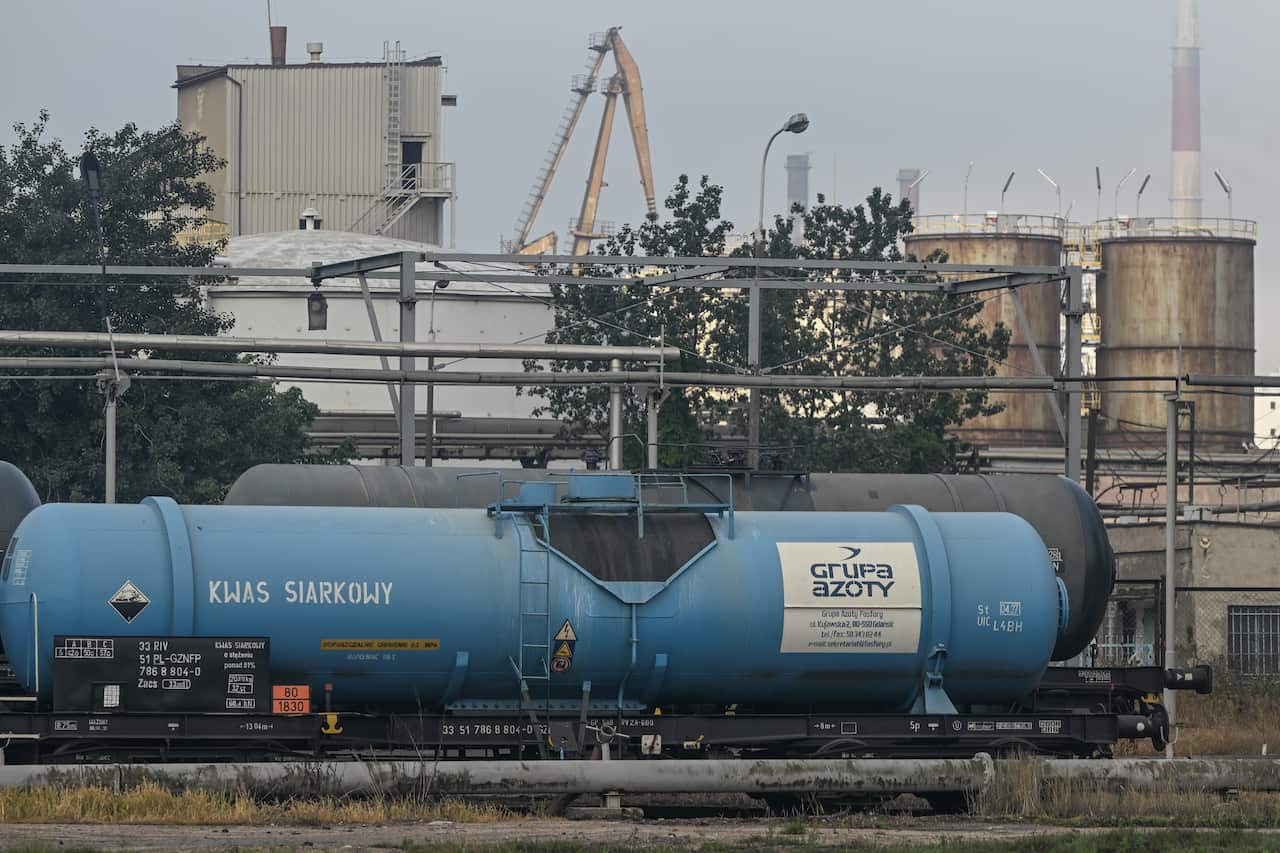
Refining lower-grade nickel ores into battery materials requires large volumes of sulphuric acid for a process known as high-pressure acid leaching.
If supplies remain constrained, refiners could face higher production costs, delays and increased competition for feedstock, potentially flowing through to battery makers and EV manufacturers.
Analysts have said it could increase input costs for refiners and place additional pressure on battery supply chains already facing volatility.
Who absorbs the shock?
Industry analysts say the challenge may not hit the world's biggest mining companies first.
Instead, smaller manufacturers and regional industries operating on tighter margins could feel the pressure sooner as prices rise and buyers compete for limited volumes.
With around 60 per cent of global sulphuric acid demand related to fertiliser manufacturing, prolonged shortages could eventually affect agricultural supply chains and food prices.
The disruption is also exposing a broader tension at the centre of the global energy transition.
While governments and manufacturers race to scale up electric vehicle production and critical mineral processing, many of the industries underpinning that transition still depend heavily on chemical supply chains linked to oil refining and other heavy industries, as well as geopolitical stability in the Middle East.
For overseas buyers, the concern is no longer just about whether sulphuric acid remains available, but who will still be able to afford it if supply disruptions continue.
Can global supply chains adapt?
Industry analysts say alternative suppliers could help ease some pressure on global markets, with buyers likely to turn to producers in countries including Canada and domestic refiners in other regions.
However, replacing Chinese exports at scale may prove difficult in the short term due to transport constraints, limited spare production capacity and strong global demand from fertiliser and battery industries.
Some manufacturers are also expected to increase stockpiles and secure longer-term supply agreements to reduce exposure to future disruptions.
The supply squeeze may also renew pressure on governments and industry to expand domestic processing capability, particularly in countries such as Australia seeking to grow critical minerals and battery manufacturing sectors.
Analysts say the disruption highlights the risks of relying on concentrated global supply chains for industrial chemicals and battery materials central to the energy transition.
A broader dependence on global supply chains
Zhang said the reported restrictions highlighted how dependent countries such as Australia remain on global processing and manufacturing networks, and could strengthen calls for such countries to expand domestic and allied processing capability for critical minerals and battery supply chains.
Although Australia has abundant mineral resources, much of the downstream processing capability, industrial equipment and chemical supply remains concentrated offshore, she said.
Developing domestic processing capability involved more than simply constructing refineries, Zhang said, adding that long-term industrial capability also depended on securing chemical inputs, skilled labour, energy supply and broader manufacturing infrastructure.
For the latest from SBS News, download our app and subscribe to our newsletter.







