
In the remote NSW town of Broken Hill, Bells Milk Bar is stirring up history and a little nostalgia with every soda.
Its art deco memorabilia, vintage signage, and classic counter service whisk visitors back to another era, stretching to the late 1800s. For those who come through the door, it's a taste of history as much as a taste of fizzy cordial.
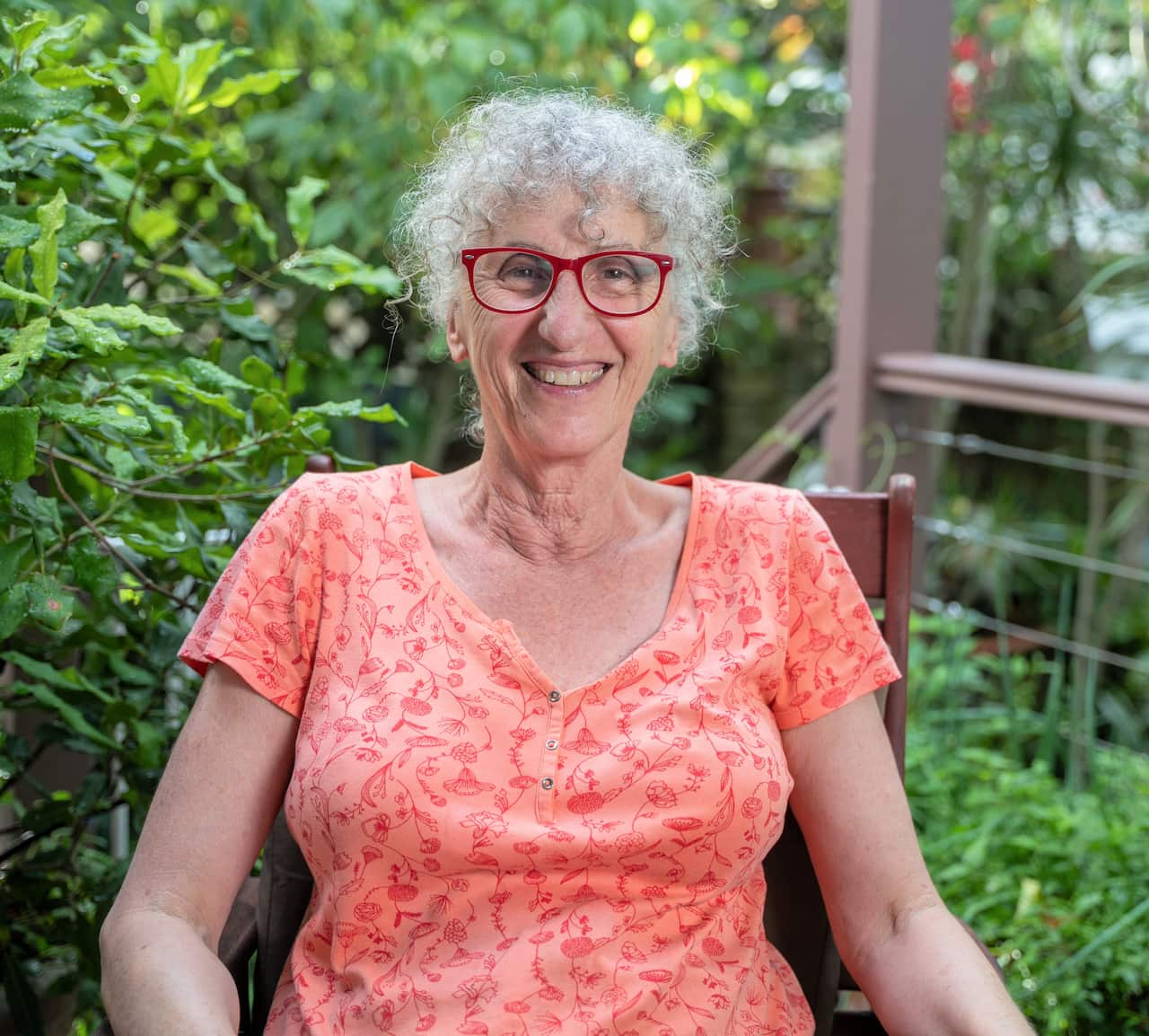
The milk bar's owner, Kylie Evans, 51, could not be more proud to keep tradition alive, serving iconic drinks like the spider — a mix of ice cream, syrup, and soda.
"It's called a spider because when the ice cream hits the soda, it foams up a bit like a cobweb," she tells SBS News.
"So, I add even more soda at the end to give it extra fluffiness."
News that makes sense
Your trusted source for staying up-to-date with the world around you. Get free daily news updates and analysis, straight to your inbox.
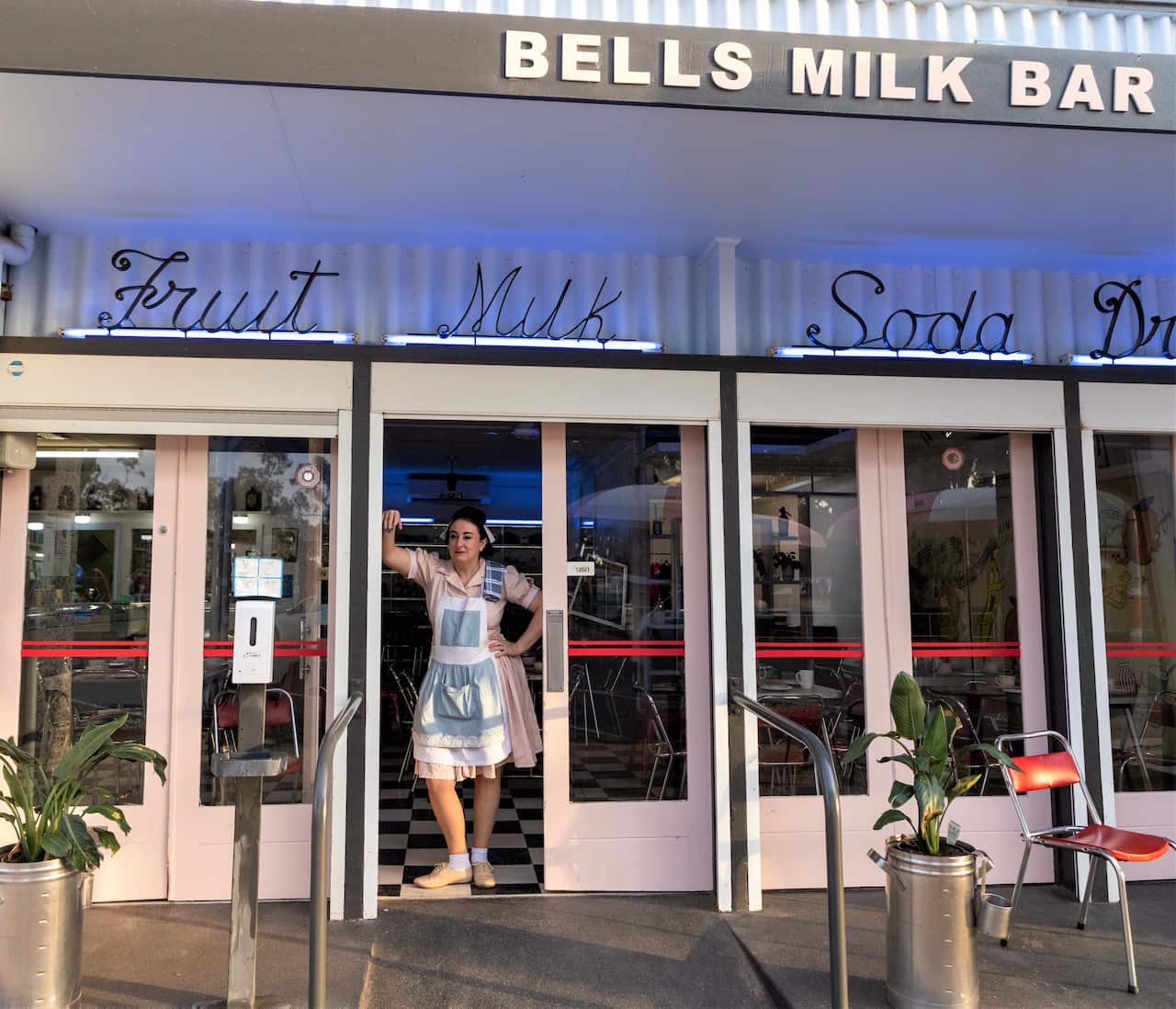
A former teacher, Evans fulfilled a dream buying the landmark tourist destination two years ago. It is one of Australia's oldest continuously operating milk bars.
"Tourists coming in here experience a bit of magic, something from the past virtually untouched and unchanged," Evans says.
Established as a confectionery store in 1892, Bells was converted into a milk bar in 1938. Former owner Jason King later transformed it further with a 1950s aesthetic.
A living piece of history
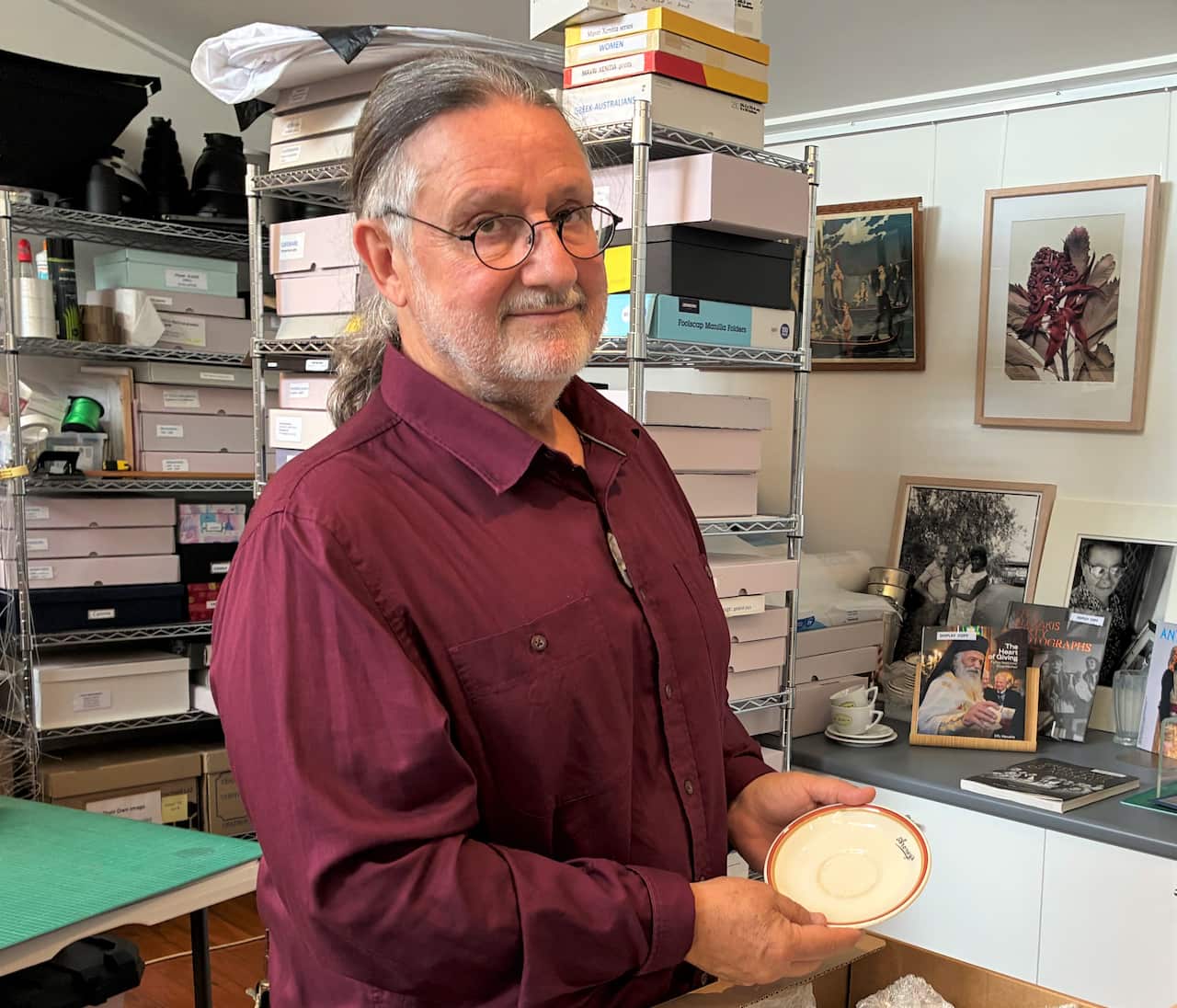
Historian Leonard Janiszewski, who has spent decades researching Australia's cafes and milk bars, says it is one of the few remaining venues of its kind.
"Bells is not just simply a piece of living history; it's part of our public collective identity. Who we were, where we came from, what type of things did we enjoy?" he tells SBS News.
"From the 1930s onwards, Australians began to embrace the idea of modernity, especially from the United States.
"In fact, it was the milk bar that actually introduced rock and roll into Australia. Not the commercial radio stations or the government radio stations, it was the milk bar."
By 1937 approximately 4,000 milk bars were operating in Australia. Many, if not most, were run by Greek migrants.
"The vibe was not only about juke boxes and entertainment. It was also about being able to consume food that people had previously only seen in American movies," Janiszewski says.
"So, people in Australia started drinking spiders and various milkshakes."
Milk bars also borrowed heavily from American architecture, decor and uniforms. They permanently changed Australia's public eating culture.
Preserving the legacy
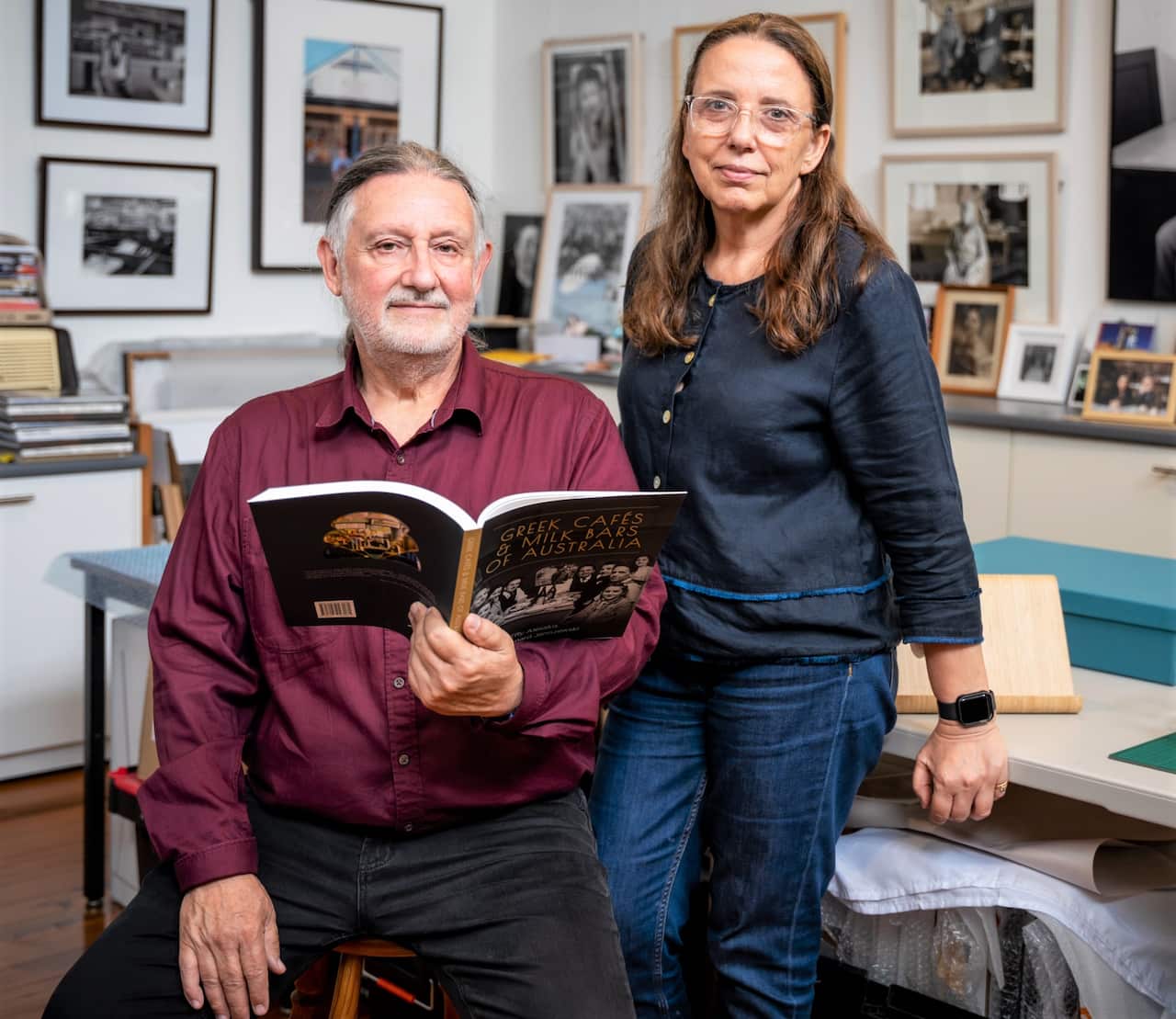
At his home in Sydney, Janiszewski and partner, Effy Alexakis, proudly display an array of cafe and milk bar memorabilia collected from founding families across Australia.
"It is photographic and we have tableware, as well as memorabilia that stretches right back to the late 19th century," he says.
"The collection is focused on food and refreshment catering within Australia that the Greeks were involved in."
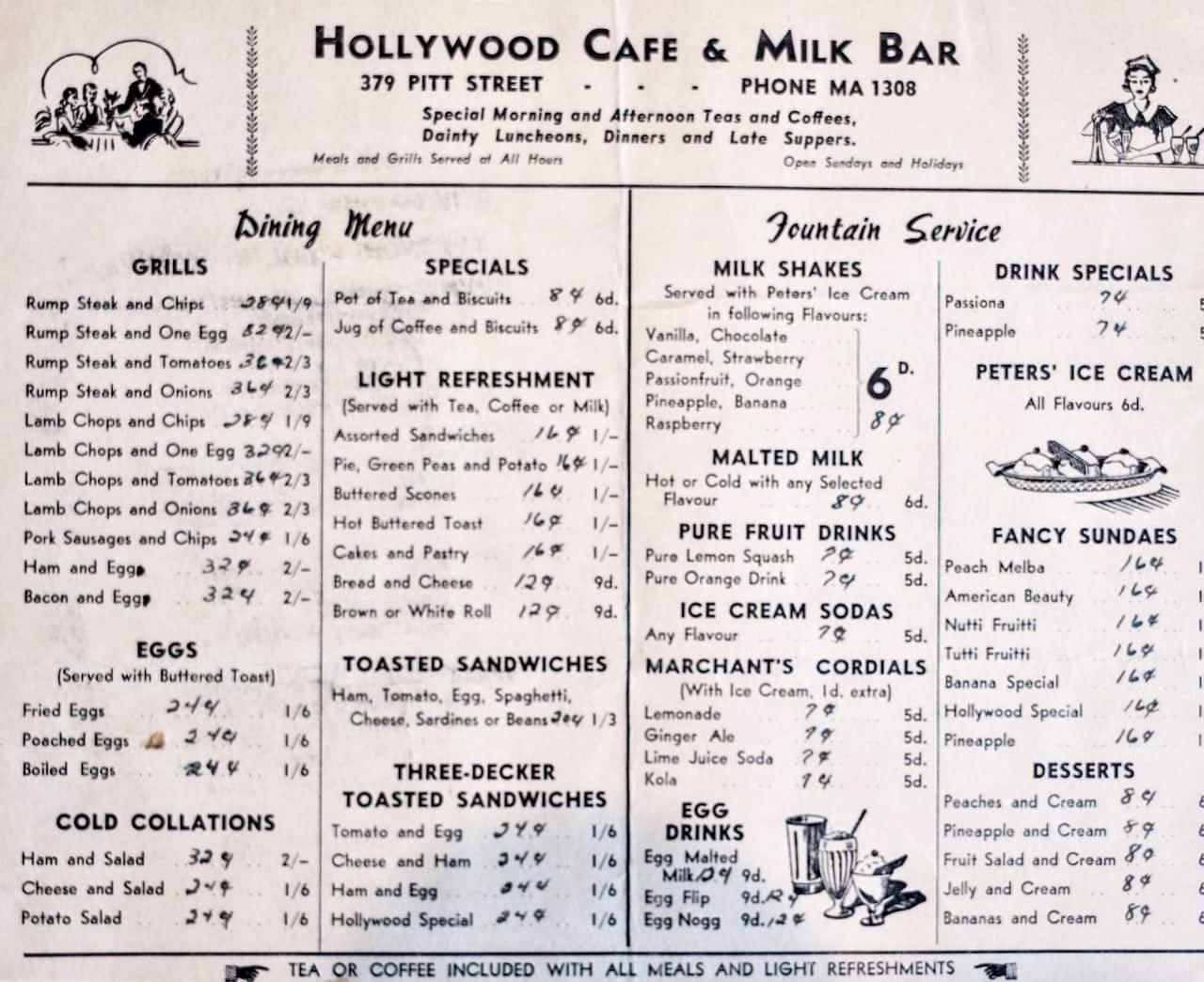
Greek migrants were instrumental in creating the milk bar concept, merging the American drugstore soda fountain with the Greek tradition of selling milk and yoghurt.
"For decades, milk bars were the focal point of communities. They brought people from diverse backgrounds together to enjoy, to discuss," Janiszewski says.
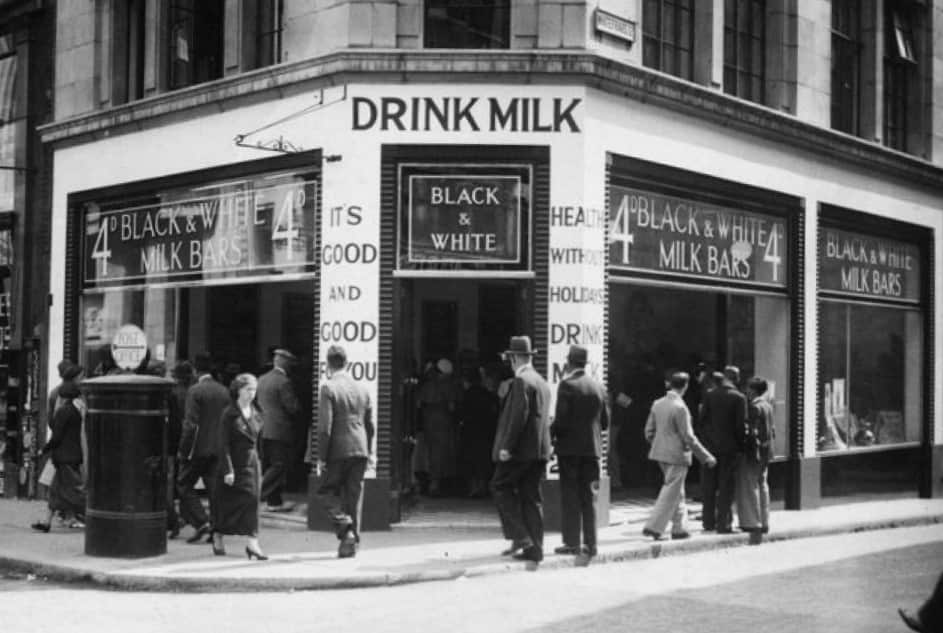
A standout example was Sydney's Black and White, the first of its kind. It featured a long counter with limited seating, designed for standing service and rapid turnover.
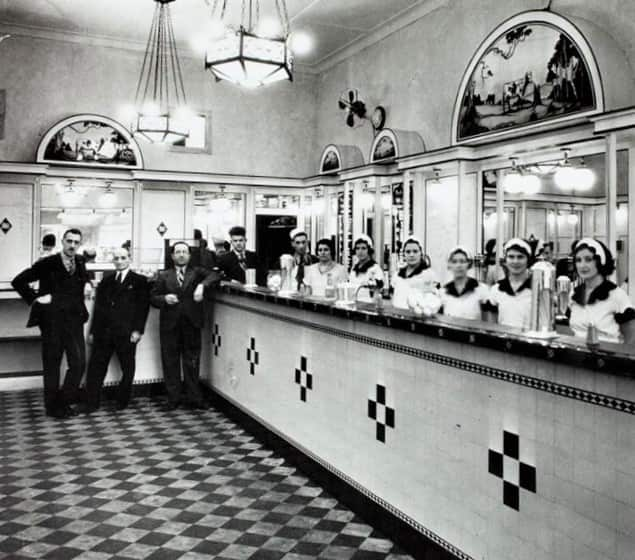
"In 1932, two important things happened in Sydney. One was the opening of the Sydney Harbour Bridge in March that year," Janiszewski says.
"The second, in November, it was the opening of the Black and White, a modern milk bar by Mick Adams, whose original Greek name was Joachim Tavlaridis."
From humble beginnings to a nationwide phenomenon
Mick Adams' granddaughter, Janet France, says he arrived in Australia aged 14, the youngest of 22 children in his Greek family.
"He worked really hard to make his way and eventually opened his own business in Sydney," she tells SBS News.
"It was an instant success. On the opening day, 5,000 people came through and more than 27,000 had visited by the end of the first week.
"He became a role model for other migrants, showing that they could succeed in Australia with limited language skills, because a lot of the early Greek migrants spoke little or no English."
Adams went on to open other milk bars in Sydney, Adelaide, Brisbane, Melbourne, and Wollongong.
"Greeks had been involved in food catering since the gold rush period and the milk bar continued to provide an essential source of employment for founders, and also their extended families," Janiszewski says.
Many owners also used the income to bring relatives from Greece to Australia and to educate their children for professional careers.
The struggle for acceptance
While milk bars welcomed a diverse range of customers, Janiszewski says some owners still struggled to find social acceptance.
"A lot of people we interviewed talked about the fact that they did not feel as if they belonged to the broader community," he says.
"They often felt like the 'other' rather than being part of society, despite the fact that they were the centre of the community.
Australian history is not simply a British-Australian history.
Milk bars on the global stage
The Australian milk bar concept travelled worldwide, gaining popularity in New Zealand, South Africa, Europe, and Great Britain.
Alexakis has photographed cafes and milk bars in towns and cities across the country, capturing their enduring charm. Some venues celebrated their Greek heritage with names like Athenaian and Paragon.
Details are captured in their book Greek Cafes and Milk Bars in Australia, with a second volume currently in production.
This hidden history is also the focus of a new documentary, set to screen on SBS in April.
Changing times and the decline of milk bars
After thriving for many decades, Australia's passion for milk bars eventually waned.
"The development of fast food during the 1970s impinged on these family-owned businesses," Janiszewski says.
"Many could not compete on price and the range that fast-food corporations could provide to the general public."
Yet the milk bar legacy remains alive.
"When you go to the cinema, you still have ice creams, snacks and milkshakes. So these are the ghosts of milk bars past, and those ghosts are quite alive," he says.
Janiszewski and Alexakis' research and memorabilia will soon be preserved for future generations.
"The vast collection that we have gathered, the Greek-Australian history inclusive of the milk bars, cafes and Greeks involved in food catering, will be gifted to the state library of New South Wales," Janiszewski says.
In towns like Broken Hill, a slice of milk bar history has been kept alive by dedicated owners like Kylie Evans.
Bells' colourful, secret-recipe cordials are still made on-site, as they have been for decades.
And serving behind the counter is more than a job — it is a calling for Evans.
"I feel like I have found my place and I am actually living the dream," she says.
"Coming here makes people happy and I hope to keep it going for as long as I possibly can."
For the latest from SBS News, download our app and subscribe to our newsletter.

Sharing business secrets of inspiring entrepreneurs & tips on starting up in Australia's diverse small business sector. Read more about Small Business Secrets

Have a story or comment? Contact Us







