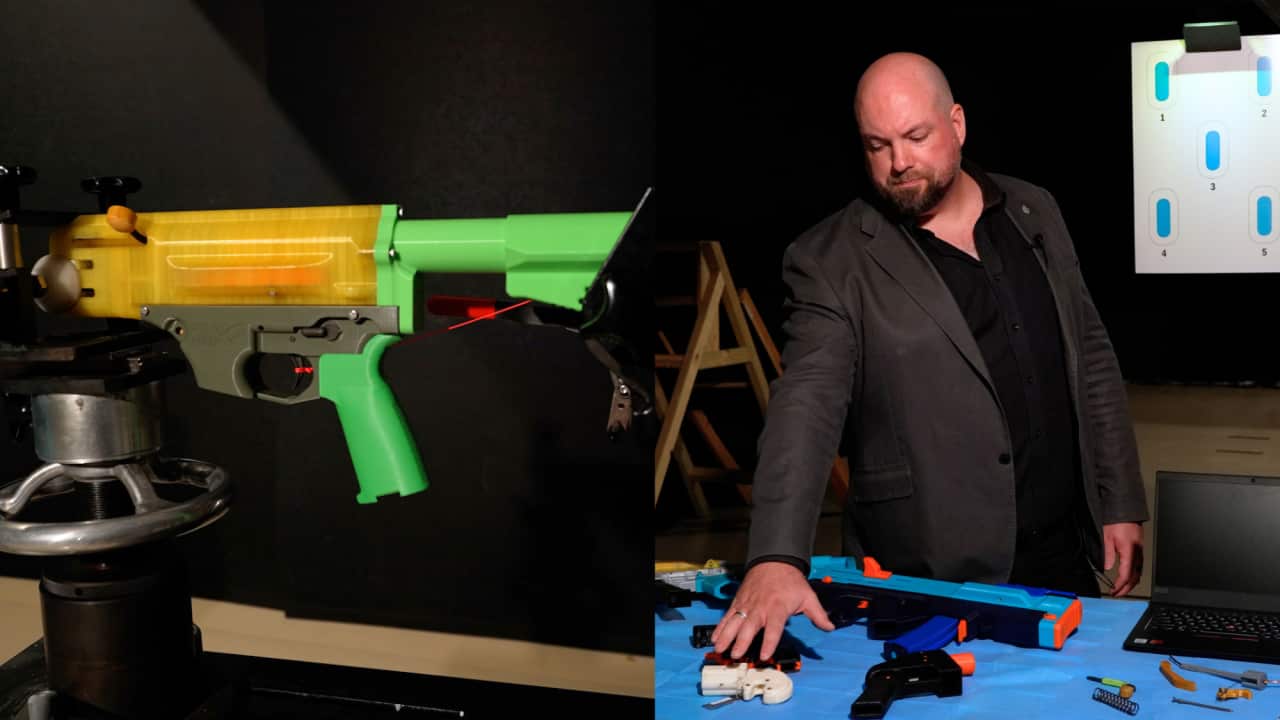
In August 2021, police searching in the Adelaide home of former defence employee Artem Vasilyev found a 3D printer. But they also found a document explaining how to manufacture firearms, an AR-15-style semi-automatic firearm produced by a 3D printer, and a plastic tub of parts.
The court was told he had frequented white supremacist chat rooms, where he shared gun-building and bomb-making instructions.
In sentencing remarks, the judge referred to a forensic psychologist’s report saying he "was in the process of becoming radicalised" and had material on his devices "espousing extremist right-wing ideologies".
Vasilyev was found not guilty of terrorism charges. He did, however, plead guilty to 22 firearm offences and was sentenced to four years and nine months in prison.
News that makes sense
Your trusted source for staying up-to-date with the world around you. Get free daily news updates and analysis, straight to your inbox.
The case offered a stark glimpse into an escalating firearms threat in Australia — one created by digital files, online blueprints and so-called "untraceable" gun parts and weapons made outside regulated markets.
Authorities stress that the vast majority of illegal guns in Australia are still conventional firearms, with the Australian Criminal Intelligence Commission (ACIC) previously estimating in 2023 that around 200,000 circulate within the illicit market.
However, rapidly evolving technology and the spread of online manufacturing methods are fuelling a small but thriving market for homemade firearms and parts, the ACIC said.
A rapidly evolving online market
While manufacturing or possessing guns carries penalties of up to two decades in prison, privately manufactured firearms, including some primarily built with 3D printers, are appearing more frequently in police seizures across the country.
"It's been a phenomenon for the last five years that we've really noticed the trend of increasing seizures," NSW Police detective superintendent John Watson, who heads Australia's Illicit Firearms Working Group (IFWG), told The Feed.
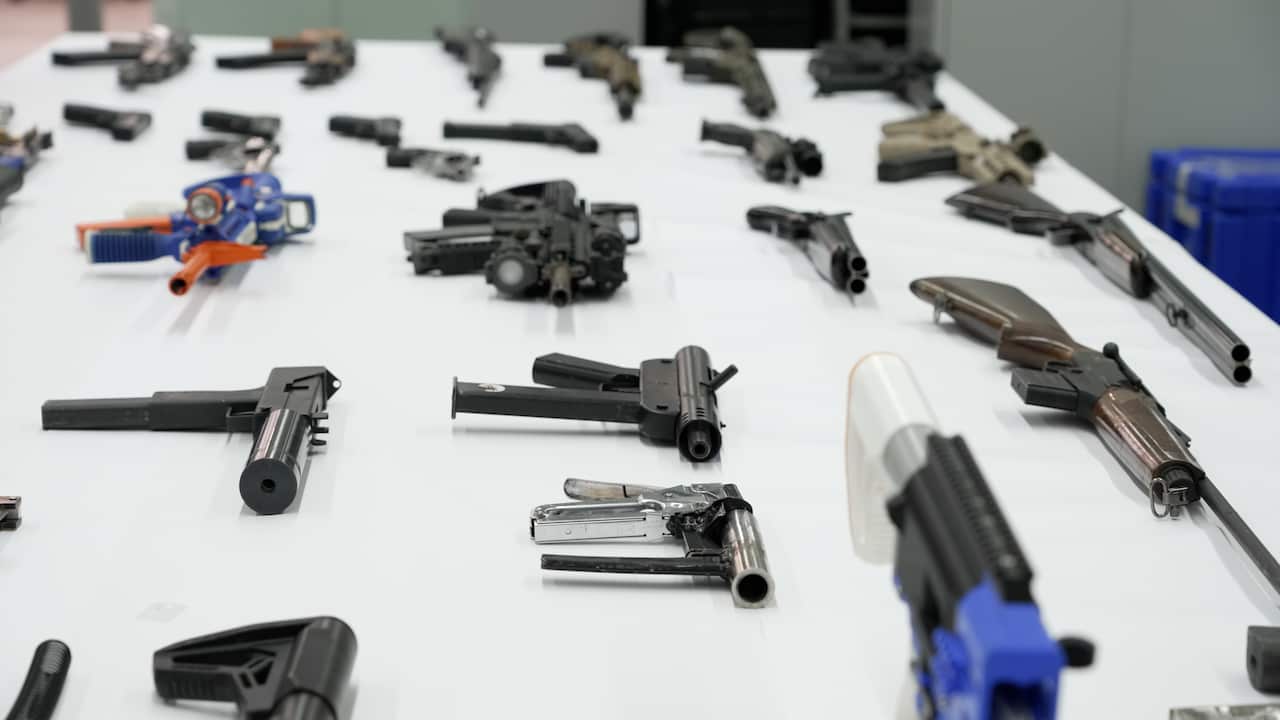
Late last year, more than 1,000 illicit firearms and parts, including 281 3D-printed firearms and privately manufactured parts, were seized in an IFWG transnational operation involving the Australian Federal Police, Australian Border Force and police forces across Australia and New Zealand.
The FGC-9 is one example of a 3D-printed gun commonly seized, Watson told The Feed. Large, often brightly coloured and mostly plastic, it can resemble a NERF gun. Its design was first published in 2020 under a pseudonym in an almost 200-page-long document.
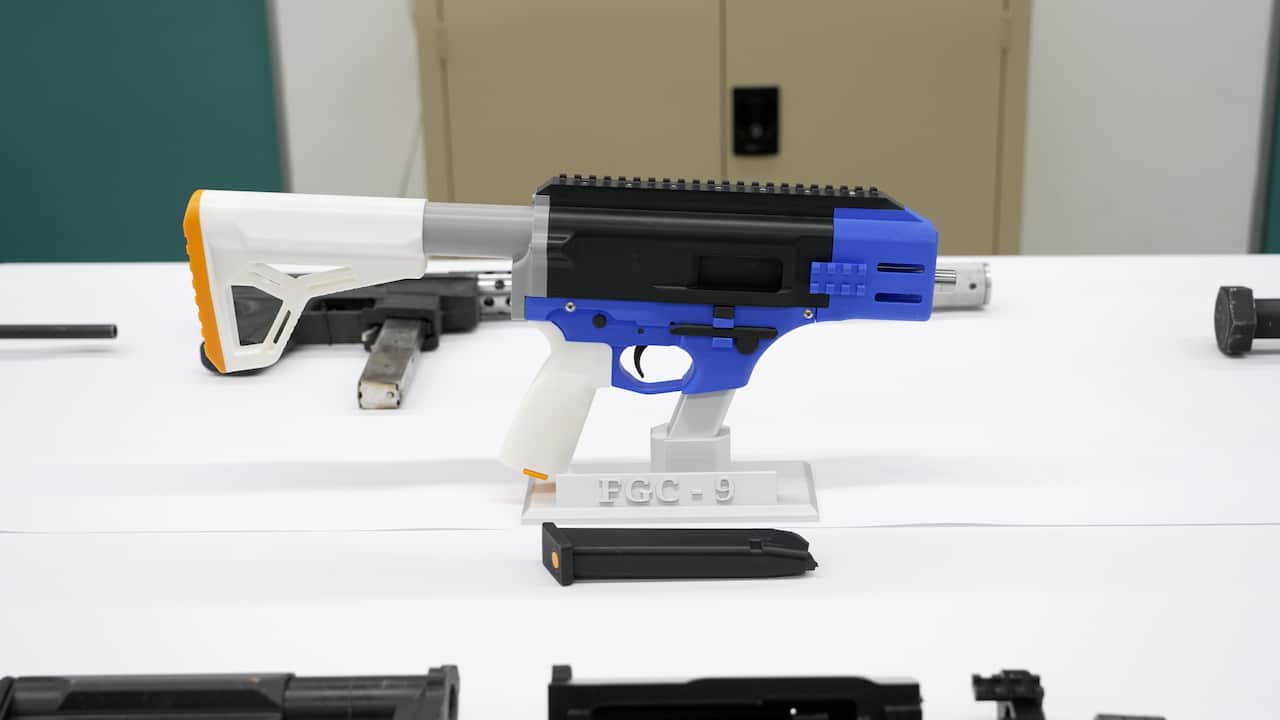
What it creates is a semi-automatic firearm — meaning it reloads itself after every shot. Weapons like that were heavily restricted after the Port Arthur massacre in 1996, Australia's deadliest shooting, in which 35 people were killed.
The gun is made with store-bought items, not traditional gun components — a deliberate choice by its designer in a bid to empower "the common man" and get around strict gun laws.
The name of the FGC-9, given by its designer, is a provocation — FGC stands for F--k gun control.
Australia a ‘global hotspot’ for 3D-printed weapons
Rueben Dass, a researcher at the International Centre for Political Violence and Terrorism Research in Singapore, has spent the past four years building a database tracking the proliferation of 3D-printed firearms around the world.
He said the global trend is moving in one direction: up.
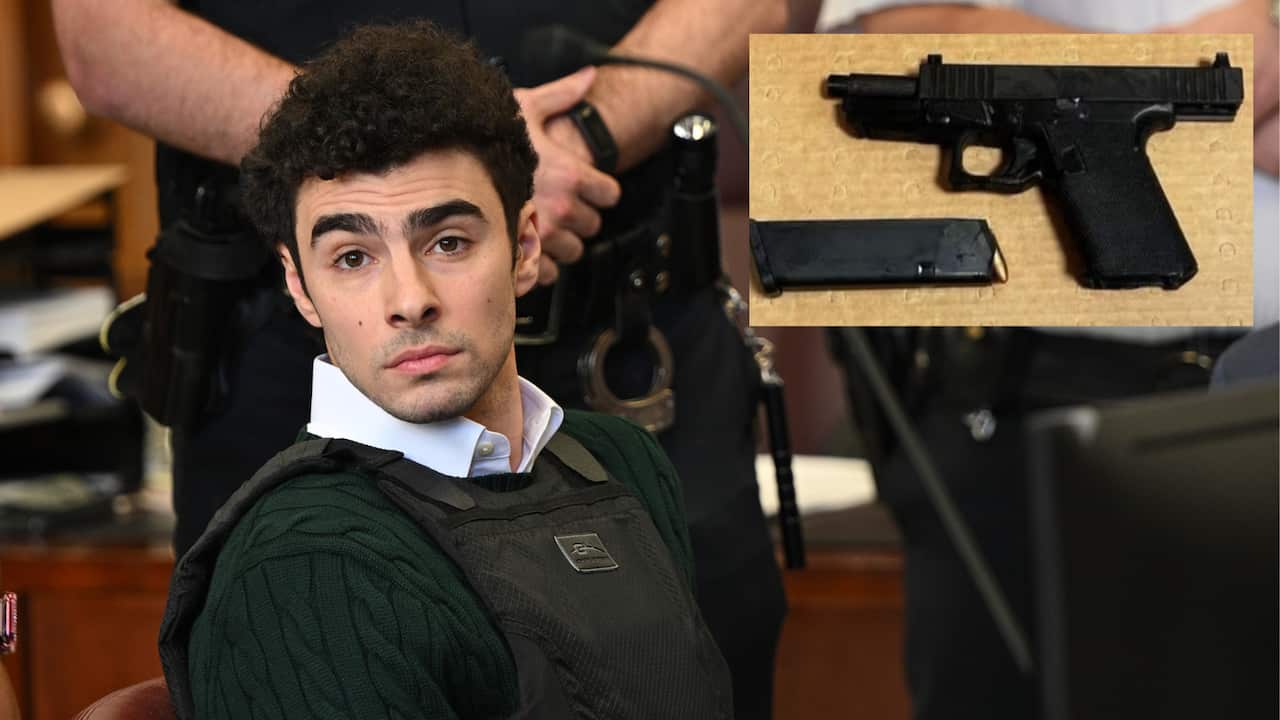
In 2024, global attention intensified after Luigi Mangione allegedly used a 3D-printed "ghost gun" in the killing of UnitedHealthcare CEO Brian Thompson in the US.
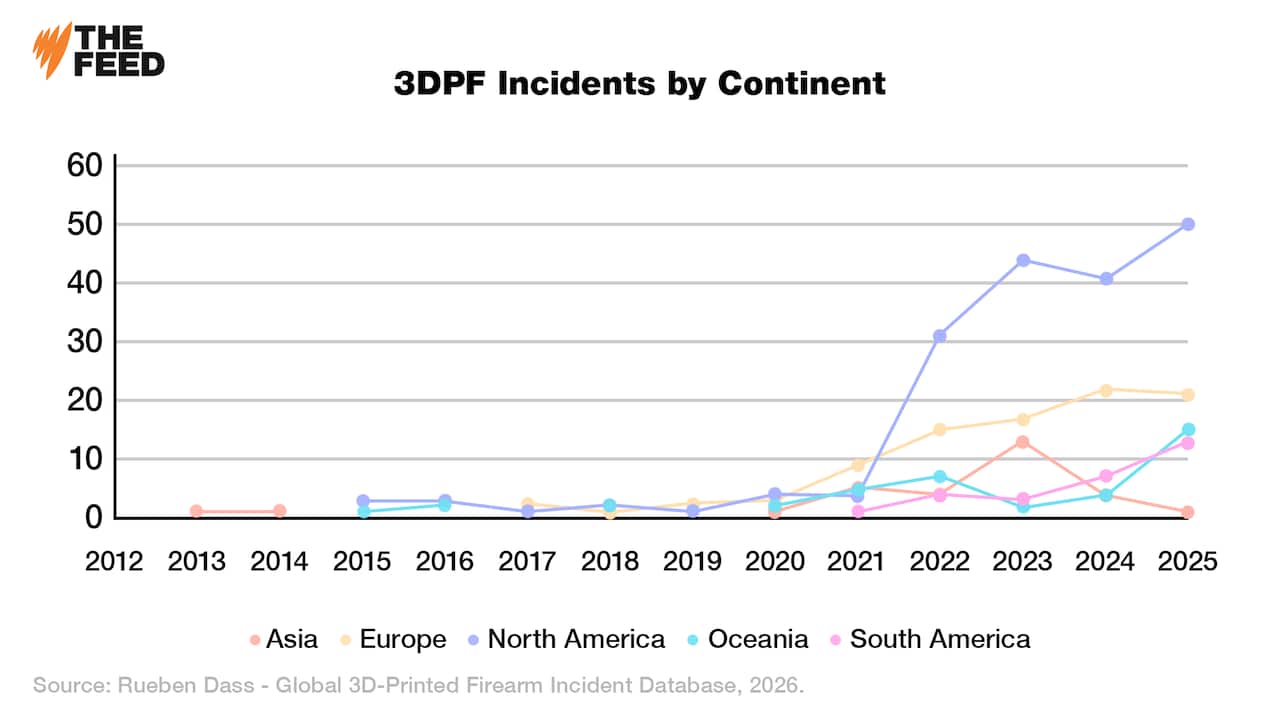
"There’s been ... a marked increase in the number of global firearms, 3D-printed firearm seizures post 2020," Dass told The Feed. "And we’ve seen that steadily increase year on year."
He has identified several global hotspots: North America, Europe, Brazil and Australia and New Zealand.
But he said that because his database is built from media reports, the true figure is likely "much higher".
According to his data, Australia has recorded 392 reported incidents involving 3D-printed guns since 2013 — which includes seizures, discovery, alleged use or attempted use.
In Australia and Western Europe, Dass said: "we are seeing a high number of hybrid firearms" — those that are primarily printed, but require some metal components to finish them off.
The reason, he said, is regulation. In places with tighter gun laws, offenders are "trying to circumvent the regulations by making these hybrid firearms that do not require any regulated components".
Dass said countries that don't yet have a major problem with 3D-printed guns should not be complacent.
Nevertheless, he said that while 3D-printed firearms are rapidly proliferating, conventional firearms still represent a far bigger global threat.
The evolution of a digital weapon
For years, 3D-printed guns were crude plastic devices that were unreliable and sometimes dangerous for the person shooting them.
The modern era of 3D-printed firearms started in 2013 when American Cody Wilson, a self-described gun rights activist, released the design for a single-shot plastic pistol known as the Liberator.
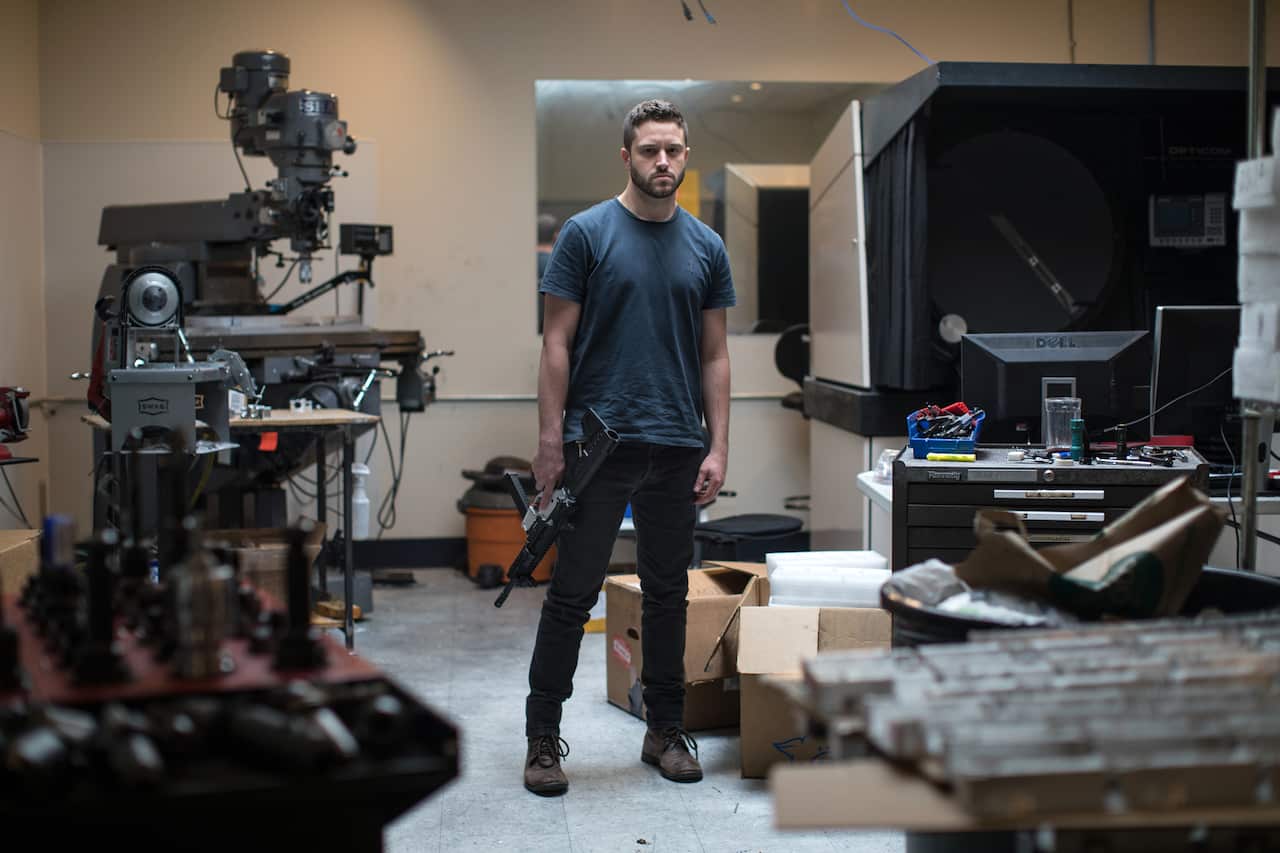
Like several 3D-printed gun designers, Wilson framed his product as a pro-gun statement, saying everyone should have access to a firearm.
US authorities ordered the files to be removed under export-control rules, but after years of litigation, the designs spread widely anyway.
Since then, newer and more sophisticated weapons have emerged from largely anonymous online communities.
"They're becoming more military grade," detective superintendent Watson said.
He added that 3D printers have become cheaper and easier to use.
"We are seeing a market and a technology change that is enabling a lower threshold for people to be inclined to do something like this. And that's the real concern," he said.
Who is printing guns?
Law enforcement officials say no single profile fits people producing these weapons.
"Illicit firearms are sort of crime-type agnostic," Michael Taylor, forensics coordinator at the Australian Federal Police, told The Feed.
"We're concerned about organised crime … extremism … domestic violence," he said.
Taylor said the danger is that the technology itself is "democratised".
"Individuals anywhere in the world, in principle, can design these and release them."
Police say privately manufactured guns have been linked to a range of cases — from organised crime investigations to individuals experimenting with weapon-building at home, as well as fringe groups like sovereign-citizens and preppers.
If you are upset about a white supremacist building a Urutau, you can build one yourself to counter him."Joseph the Parrot", designer of the 3D-printed gun known as the Urutau
But in any case, Watson at NSW Police said the message is the same: "You’re a criminal."
One of the designers behind a weapon known as the Urutau was recently asked on a podcast about extremists using his design.
"I mean, I don’t support them but if they build a gun I can’t do anything about that," the Brazilian designer, known online as Joseph the Parrot, said on a podcast.
"If you are upset about a white supremacist building a Urutau, you can build one yourself to counter him."
The Australians searching for blueprints
Australians were nearly two and a half times more likely to see gun blueprints on the public internet than on the dark web, according to research by the Australian Institute of Criminology (AIC), released in January.
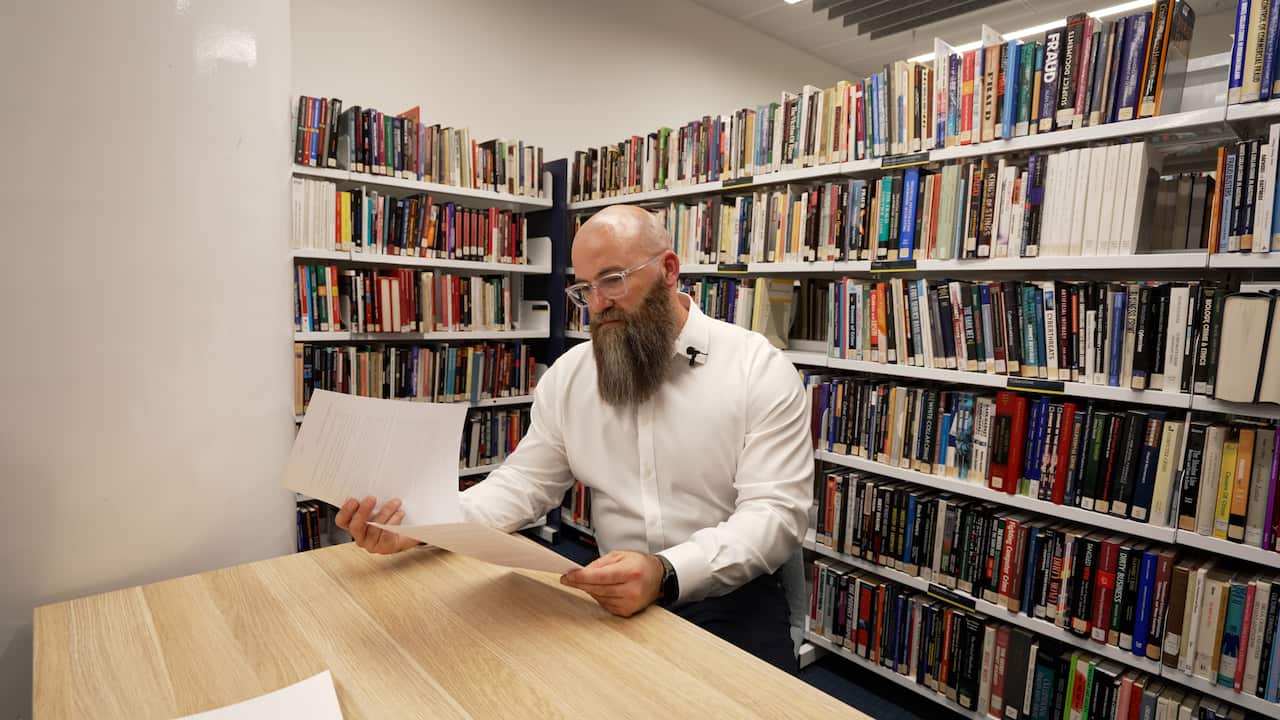
"We surveyed nearly 10,000 online Australian adults," Anthony Morgan, research manager at the AIC, told The Feed.
"I wasn’t aware they were readily accessible on the public internet. I would’ve assumed people were looking on the dark net."
The study also identified a pattern among those most likely to access the material.
"Those buying or trading these products were more likely to be younger, male, technically proficient," Morgan said.
They were also more likely to report a history of violence and intentionally try to access violent content — rather than simply stumbling across it, he added.
Banning the blueprints
Calls for tougher laws grew after 3D-printed parts for a shotgun "speed loader" were allegedly found at an Airbnb used by alleged Bondi attackers Naveed and Sajid Akram, according to police reports.
Fifteen people were killed in the December shooting, and dozens more injured.
Most jurisdictions in Australia now ban the possession of blueprints and design files for 3D-printed firearms, with the ACT moving after the Bondi attack to join other states and territories.
Researcher Rueben Dass said tackling 3D-printed guns will take more than just tougher laws.
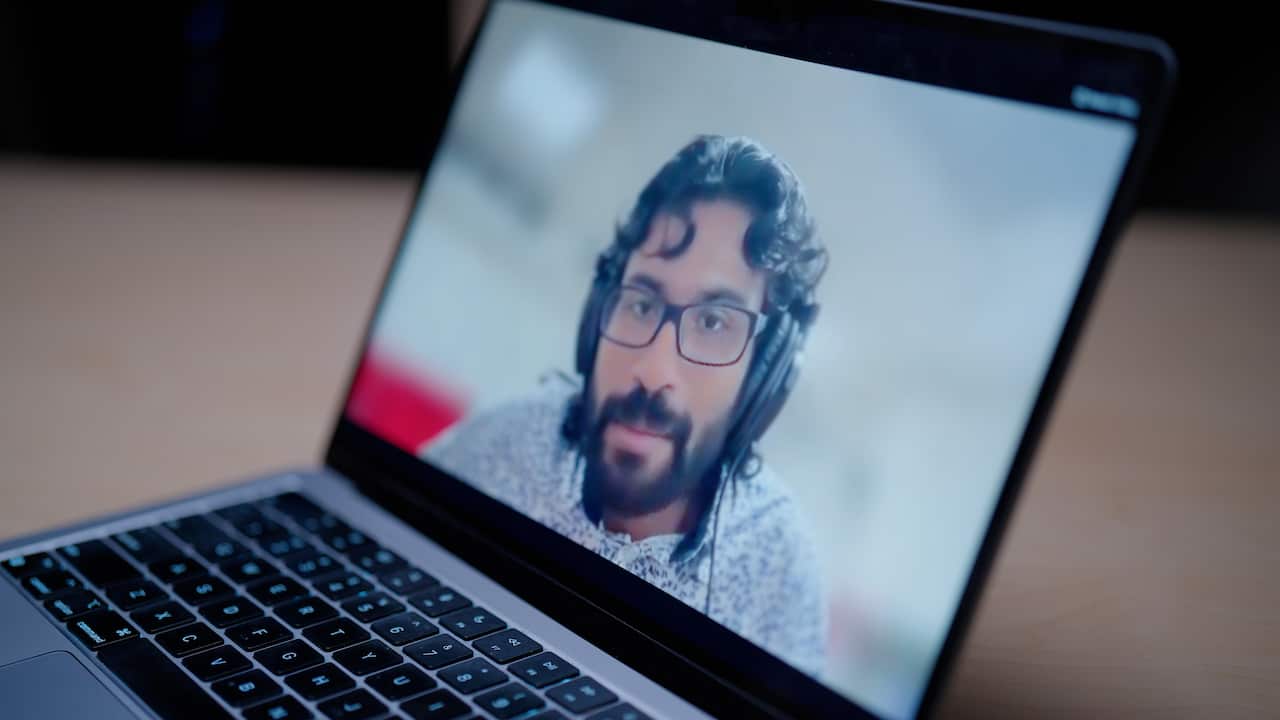
He said the response also needs better coordination. Police and intelligence agencies need to share information more effectively, he argues, and countries should build national databases to track seizures and link cases.
"Developing countrywide databases for 3D-printed firearm seizures is extremely, extremely crucial," he said.
Because many of these weapons move as parts, not whole guns, he said postal services and e-commerce platforms also need to be a big part of the picture.
"A lot of the cases, it’s the parts that are trafficked … even to the trained eye they can look benign."
Are 'ghost guns' really untraceable?
Privately manufactured firearms, which include 3D-printed hybrids, are often described as "ghost guns", suggesting they are impossible for investigators to trace.
But authorities told The Feed that the reputation is misleading.
"Any kind of activity that you undertake generates traces of that activity," Michael Taylor from the AFP said.
Taylor said tracing these guns is a multidisciplinary process and involves matching bullets or casings to a weapon, checking fingerprints and DNA, inspecting tool and manufacturing marks, and following digital footprints.
"All of the experts in this building are centred on exploiting that," he said.
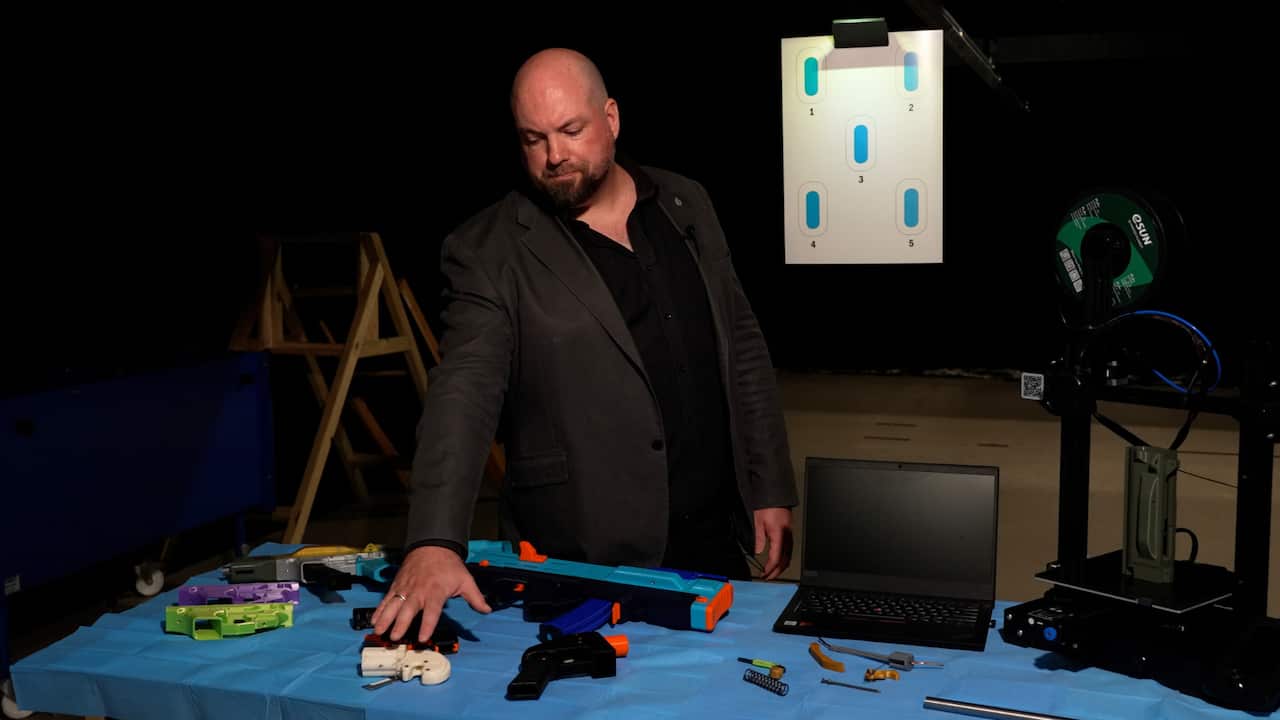
Detective superintendent Watson said people may feel that they are "untraceable" but that's simply "not the case".
However, Dass said 3D-printed guns remain extremely difficult to trace, even as tracing technology improves.
"I could be sitting in my basement and printing a firearm without any exposure to the outside world."
For Dass, many successful investigations rely on mistakes made in online chats, contacts with others, or weapons being uncovered during other investigations.
Work is underway to further clamp down in this area.
In the United States, politicians in New York and Washington state are pushing proposals that would require 3D printers sold there to include technology to detect and block the printing of firearms or gun parts.
Dass said tougher laws are needed, but they come with a trade-off.
Clamp down too hard, he argues, and criminal actors "are going to go more underground" and "develop more innovative ways to circumvent regulations".
He said if blueprints and parts become harder to access on the normal web, the market may get pushed deeper underground, making it even less visible.
— With additional reporting from the Australian Associated Press

Through award winning storytelling, The Feed continues to break new ground with its compelling mix of current affairs, comedy, profiles and investigations. See Different. Know Better. Laugh Harder. Read more about The Feed

Have a story or comment? Contact Us







