
In one TikTok video, a woman tearfully declares she's going to show the audience "what they're putting in our sunscreen". She claims it will "make you just as mad as it's made me", before reading ingredients off sunscreen bottles and listing their alleged dangers.
Anti-sunscreen movements online are growing and making some people more sceptical about using the product.
Misinformation being spread about sunscreen online includes claims it's harmful because it allegedly contains toxic ingredients, prevents people from sunlight exposure that converts into vitamin D and that it even causes cancer.
Experts say this misinformation is driving people to believe sunscreen exposure is more dangerous than exposure to ultraviolet (UV) rays in sunlight.
A survey from Orlando Health of over 1,000 people, published in May last year, found one in seven adults under 35 in the United States believed sunscreen is more harmful to the skin than direct sun exposure, and around a quarter believed drinking water and staying hydrated prevent sunburn.
News that makes sense
Your trusted source for staying up-to-date with the world around you. Get free daily news updates and analysis, straight to your inbox.
Similar beliefs are being found among young people in Australia.
A recent survey from the Royal Children's Hospital Melbourne (RCH) found 45 per cent of Australian teenagers either mistakenly believe or aren't sure if ingredients in sunscreen are bad for their health.
Professor Jane Hanrahan from the School of Pharmacy at the University of Sydney said she has been teaching university students about sunscreen for nearly two decades and has recently noticed students raising more concerns about sunscreen.
Hanrahan said misconceptions about sunscreen are worrying because they could affect sunscreen use and skin cancer rates.
"Sunscreen use in Australia is really good, and we have seen the number of skin cancers plateau — we still haven't started to reduce them, but they've certainly plateaued over the last five or so years," she told The Feed.
So what are the claims being made — and is there any truth to them?
Does sunscreen prevent adequate vitamin D absorption?
Some online influencers claim sunscreen prevents sufficient sunlight exposure to convert into vitamin D — a vitamin produced when UV rays from sunlight hit the skin. The RCH survey found 25 per cent of Australian teenagers believe that people who use sunscreen regularly don’t get enough vitamin D.
One recent study from QIMR Berghofer, a major Australian medical research institute focused on cancer, health and disease prevention, found people who used SPF50+ sunscreen daily for a year were slightly more likely to be vitamin D deficient than those who used it less frequently (46 per cent compared to 37 per cent).
However, researchers were emphatic that this should not deter people from regular sunscreen use because it remains crucial for skin cancer prevention.
There are differing views when it comes to vitamin D supplementation.
Professor Rachel Neale, lead investigator on the QIMR study, said there is "no evidence that sun exposure is more effective than supplementation for maintaining vitamin D".
Neale said the findings suggest people who are “diligent about daily sunscreen use may want to consider vitamin D supplementation” to maintain healthy vitamin D levels.
The Cancer Council says for most people, incidental sun exposure is enough to achieve adequate vitamin D levels.
Can ingredients in sunscreen disrupt our hormones?
Hanrahan said claims that sunscreen contains "endocrine-disrupting chemicals" are a recent and growing myth.
Endocrine-disrupting chemicals are chemicals that mimic, block or interfere with the body's hormones, which control vital functions such as growth, organ function, reproduction and metabolism.
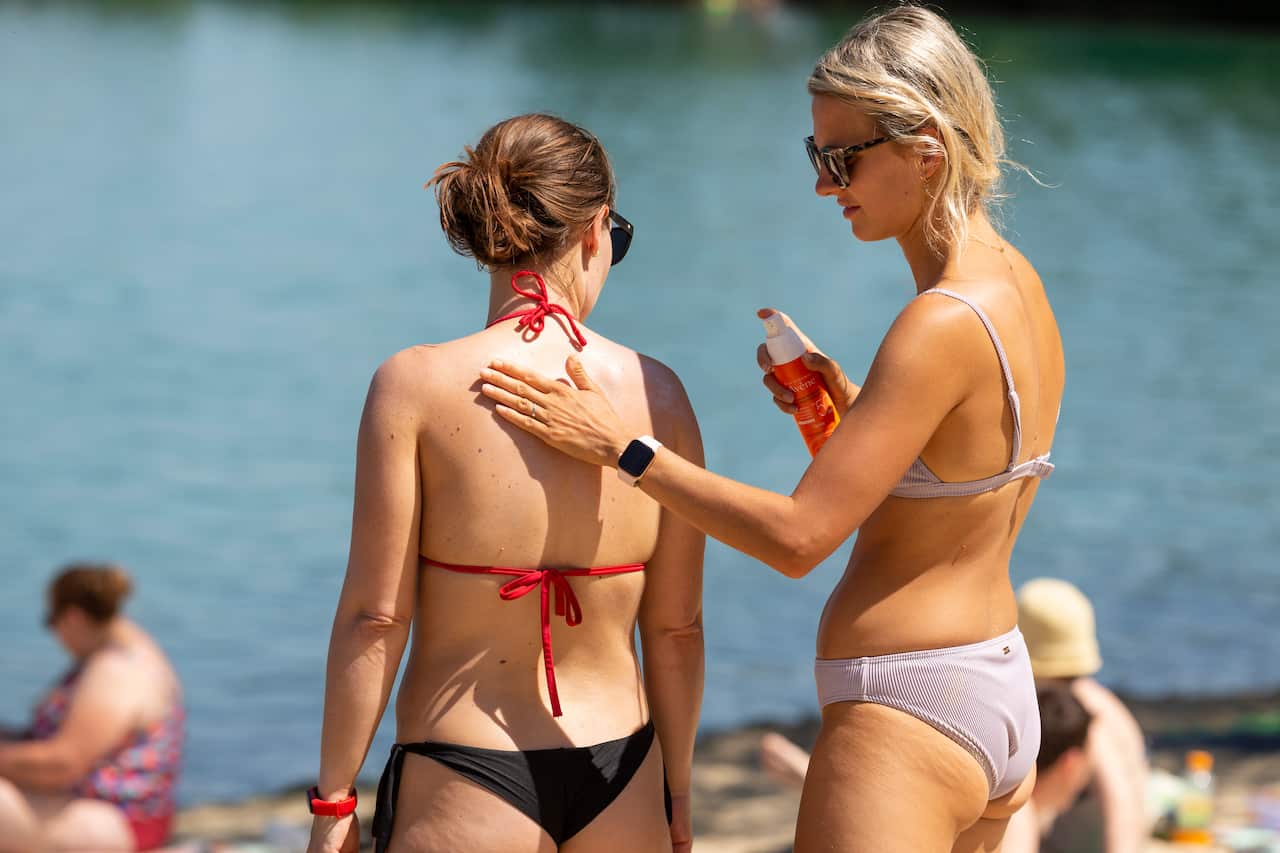
While some animal studies have shown some chemicals contained in sunscreen can have endocrine-disrupting effects, experts say it's highly unlikely these effects would be seen in humans using these products.
For example, oxybenzone — a common ingredient in sunscreen — has been found to affect the reproductive health of rats and mice in some studies, including reduced numbers of offspring, impaired body weight in pups, and lower sperm counts.
But experts say there is little cause for alarm about our use.
"What we're getting in our bodies is going to be a very small, unconcerning dose that would not even get anywhere near having a small effect," Michelle Wong, a science educator and cosmetic scientist who publishes social videos under the name Lab Muffin Beauty Science, told The Feed.
Frederic Leusch, a toxicology expert from Griffith University, echoed this sentiment, saying these experiments are performed with unrealistically high doses.
"In toxicology, we say the dose makes the poison, right? And it basically means that every chemical can be toxic if you take enough of it," he told The Feed.
"Take salt. A little bit of salt sprinkled on your fries — yum yum — but if you empty the whole salt shaker on your fries, you're going for a trip to the emergency department. Same chemical, different dose."
Leusch said it's important to note these high-level exposures in animal studies aren't necessarily relevant to the much lower exposures humans experience day-to-day.
"A very, very rough back-of-the-envelope calculation ... we would basically need half-a-litre of sunscreen a day to come anywhere near those effects that we see in animals. So, we're talking really high doses," he said.
Putting recent TGA review into context
In July last year, the Therapeutic Goods Administration (TGA) published a review of seven common active ingredients used in sunscreen in Australia and recommended the maximum concentration of two ingredients — oxybenzone and homosalate — should be reduced.
Homosalate and oxybenzone were found to exceed the 'margin of safety' — a measure that compares how much of a substance people can safely be exposed to with how much they might be exposed to under current rules. The TGA aims for a highly conservative dose of these chemicals, which is less than 1 per cent of the highest dose that caused no harm in animals.
Leusch said that while the TGA recommended reducing the permitted levels of oxybenzone and homosalate in sunscreens, the levels currently present are still safe.
Leusch said the TGA's assessments are built on a number of "buffers" of safety factors, including assumptions that consumers are using extremely large amounts of sunscreen every day.
"They really run on that sort of worst-case scenario and try to protect for the worst-case scenario," he said.
Hanrahan also noted that most sunscreens contain several different active sun-protecting chemicals, meaning each is present in a smaller amount than if just one were used.
The TGA told The Feed an interim decision on whether to impose further restrictions on homosalate and oxybenzone will be published in early 2026 and a final decision will be made after public consultation.
Why are people saying sunscreen causes cancer?
Wong emphasised there is "no real-world evidence that sunscreen has ever caused cancer in any person".
While the chemical 4-Methylbenzylidene Camphor (4-MBC), which is used as a UV filter in sunscreen, sparked some anxiety after it was banned by the European Union following a 2022 review, Wong said there is no reason to panic.
"[The EU] decided to ban it because there wasn't enough data to set a safe limit," she said.
"With studies on animals, they purposefully use a lot [of the chemical] so that they can see what is the line — and if you don't find a line, then you can't set a safe limit."
Wong also noted that regions that have reassessed the safety of 4-MBC haven't "rushed to get it off the shelves because the evidence isn't really there".
The maximum concentration of 4-MBC approved by the TGA in products in Australia is 4 per cent.
Wong said the EU's ban was simply part of a process of "making already very safe products even safer, which is always something that regulatory agencies should be doing".
Leusch also said while people may be concerned that chemicals in sunscreen cause cancer, there is far greater evidence that failing to use sunscreen causes cancer.
"It's quite the opposite. [Sunscreen] reduces cancer by protecting against UV radiation," he said.
Australia has one of the highest skin cancer rates in the world due to a combination of factors, including high UV levels, outdoor culture and a high proportion of fair-skinned people.
It's estimated that at least two in three Australians will be diagnosed with skin cancer in their lifetime and around 2,000 Australians die from skin cancer each year.
The effectiveness of sunscreen in protecting against skin cancer is well-established in scientific literature.
One University of Sydney study found that Australians aged between 18 and 40 who regularly used sunscreen in childhood reduced their risk of developing melanoma by 40 per cent compared to those who rarely used it.
Wong said sunscreen is one of the best tools available for preventing cancer and maintaining skin appearance over time.
"The cost-benefit analysis is pretty clear. We do have real-world evidence that sunscreen prevents skin cancers and it makes your skin look better.
"It reduces premature ageing, it can help with acne, it can help with dark spots, it really is the most important thing to make your skin look nicer, as well as protecting your skin's health."

Through award winning storytelling, The Feed continues to break new ground with its compelling mix of current affairs, comedy, profiles and investigations. See Different. Know Better. Laugh Harder. Read more about The Feed

Have a story or comment? Contact Us







