"You may as well ask me if I want to wear a skirt around the house," Tyson Gordon from Married at First Sight said recently when asked if he’d consider being a stay-at-home dad. The comment sparked online discussion around how men should father.
The idea that it’s emasculating to be a stay-at-home father is echoed in the manosphere — a network of online spaces focused on masculinity, gender roles and dating — which has become an increasingly influential force shaping how some men think about their role in society and ideas around parenting.
"You get figures [in the manosphere who think] that to be a real man, you need to be a breadwinner — you need to be providing for a family," Dr Simon Copland, an honorary fellow at the Australian National University, whose research focuses on the manosphere, told The Feed.
He said manosphere creators often proclaim that women should stay at home and focus on children, which Copland describes as an "old school" idea of what it is to be a man.
News that makes sense
Your trusted source for staying up-to-date with the world around you. Get free daily news updates and analysis, straight to your inbox.
"And the moment a man shifts that and goes into the caring role; he becomes a woman effectively — and that is emasculating."
"It's about the idea that a man is becoming a woman by doing that."
A generational divide
Copland said that while younger generations are often assumed to be more progressive, his research indicated there has been a shift in some younger men's ideas due to economic uncertainty.
"They're facing economic strain, difficulty getting into a workplace or into secure work, but also the kind of threat of the future where they just don't see a stable future for themselves."
That instability is driving some men toward older, more rigid models of masculinity.
"They're looking towards nostalgic ideas of what the world used to be like," Copland said.
"There's a kind of belief that things were better when people stuck to their traditional gender roles."
Despite the rise in manosphere influencers, some dads are pushing back against these traditional ideas.
Redefining masculinity
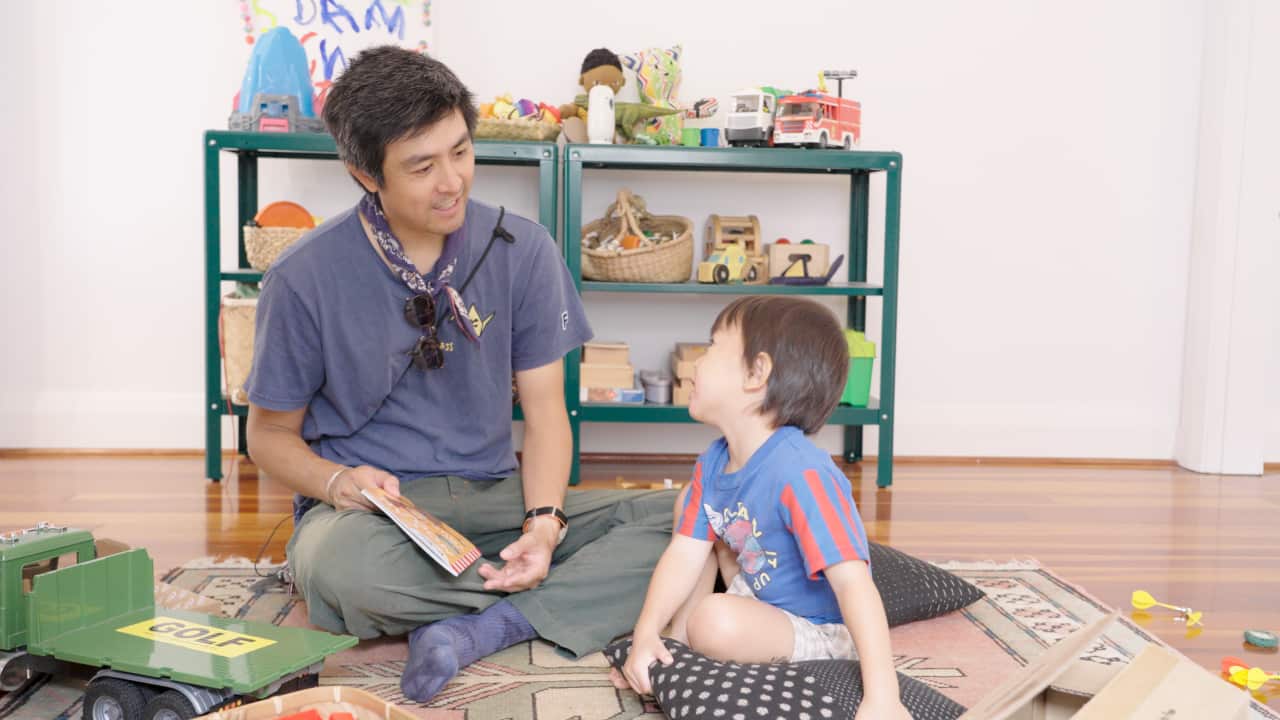
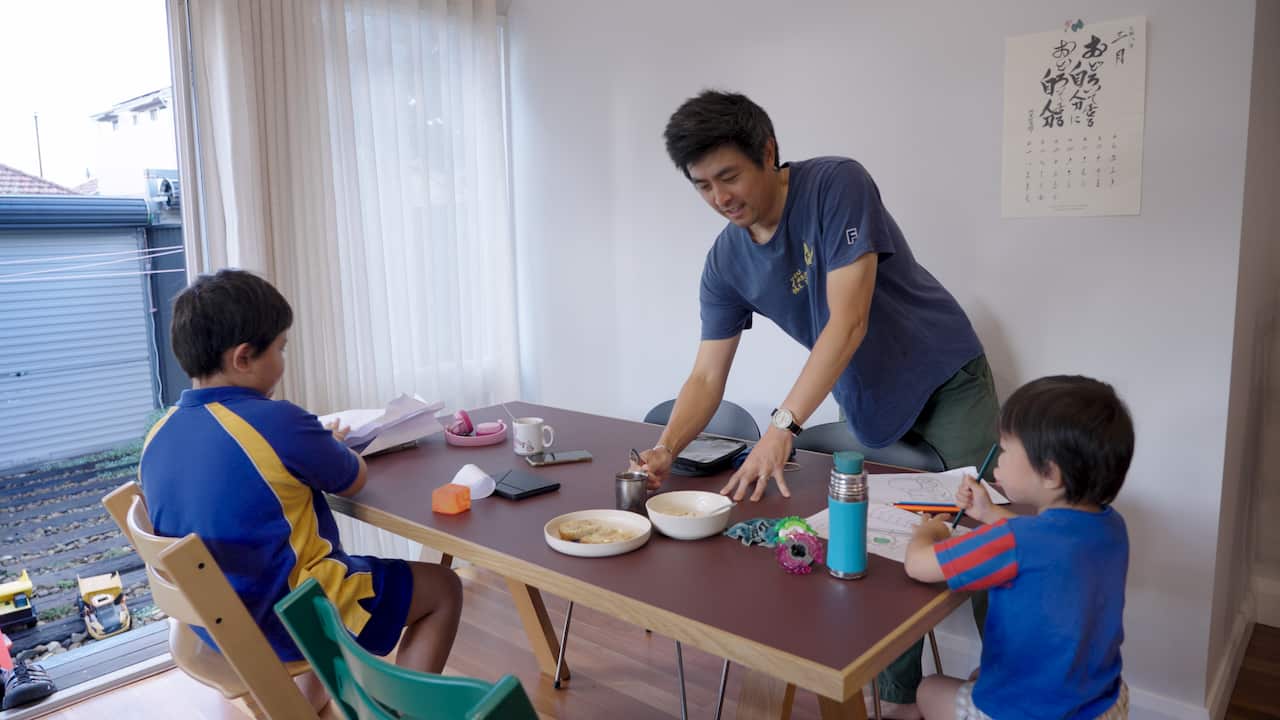
Kelvin Saik, a 40-year-old stay-at-home dad with two young sons, told The Feed his role as a primary carer has made him a better man and has allowed his wife to chase her career as a florist.
"There's a feeling it might take away your masculinity … but in many ways, it makes you a stronger person as a man," he said.

"Being a parent is the hardest job anyone can do — but it's also empowering."
Kelvin still works from his inner-west Sydney home as a freelancer videographer, but he said stepping into the primary carer role has also meant confronting some ingrained ideas of his own.
"I can see why some dads hesitate … often as guys, we're used to being the provider financially," he said.
"You come out the other end and you're a much stronger, more capable, caring [and] loving person — and I think there's nothing wrong with tapping into emotion."
The male breadwinner stereotype, where men work and provide for the family, dominated Australian households, particularly in the 1950s to the 1970s, according to a Monash University project that analysed fatherhood in Australia from 1919 to 2019.
It found that while that idea persists today, social changes like the feminist movement of the 90s gave rise to emotionally present fathers who were more involved and caring than previous generations.
But the study found this relatively new style of fathering is not fully accepted.
Kelvin said lingering gender norms and societal structures that focus on women as primary caregivers can make this approach to fatherhood difficult.
"I tussle with career and identity," he said.
"Sometimes it feels like some of my peers have gone on to do amazing things and [I've] been around watching my kids grow up, [but] that's a memorable time that I wouldn’t exchange for any amount of money … or promotion."
"I'd rather earn less now but build something really special as a family," he said.
A practical — and cultural — barrier
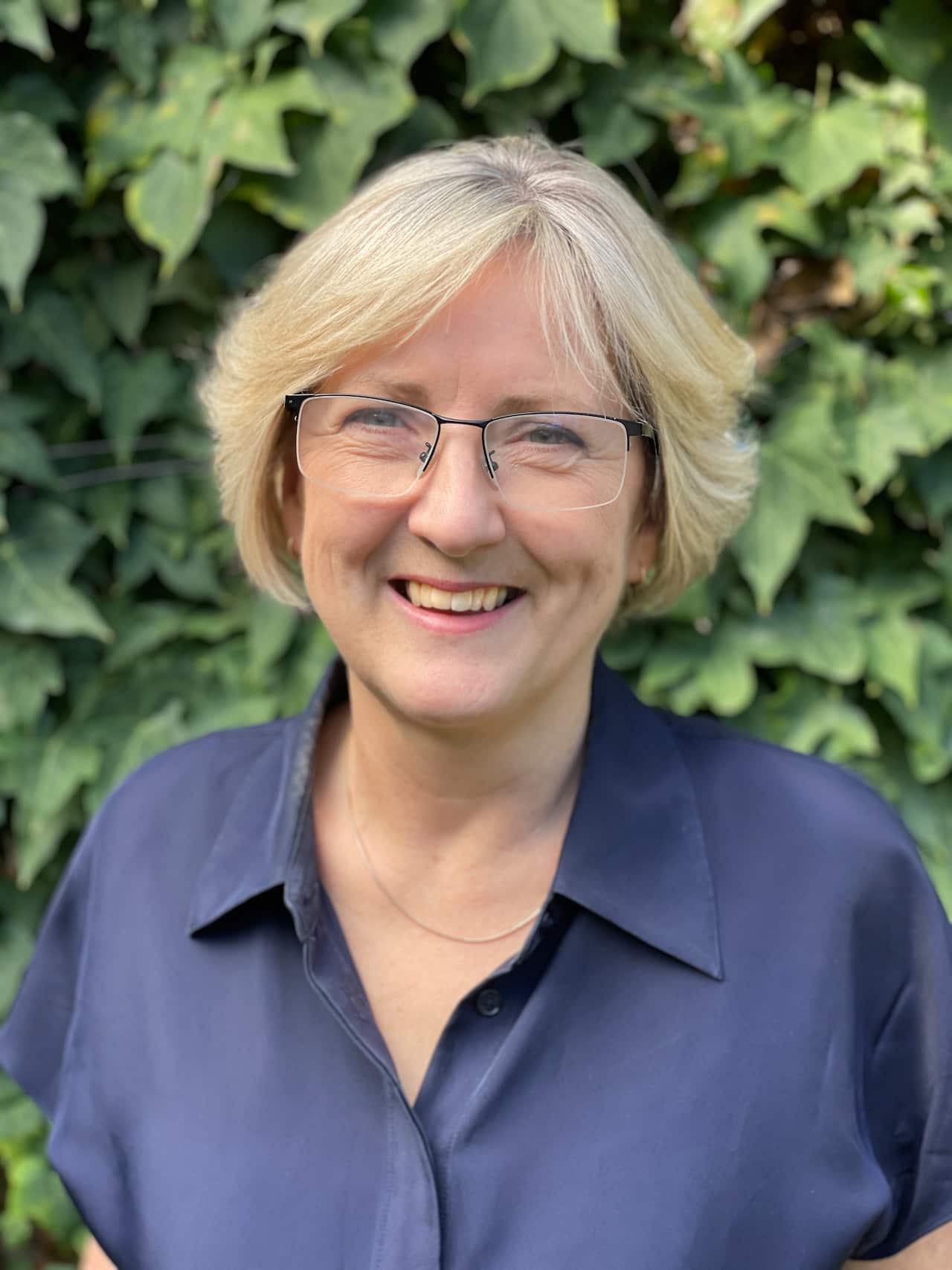
The number of stay-at-home fathers is difficult to quantify in Australia due to limited national data. While research shows that COVID-19 lockdowns led more men into caregiving roles, many of the barriers are also structural, according to associate professor Jacqui Macdonald, a psychologist at Deakin University who researches fatherhood and men’s mental health.
"There's still a long way to go in terms of fathers taking up parental leave," Macdonald told The Feed.
"A lot of that comes down to whether men feel it's accepted in their workplace, but also practical factors like income differences."
Under the federal government's paid parental leave scheme, eligible parents can take a combined 24 weeks of leave paid at the national minimum wage rate, with the option of another year of unpaid leave if they want it. The combined leave time will increase to 26 weeks from July.
Research from Griffith University from 2024 suggested that the structure and language of Australia's paid parental leave schemes could reinforce gendered roles by labelling fathers as "secondary" carers.
"Even when couples plan for shared care … things tend to nudge back towards traditional gender roles," Macdonald said.
But for Kelvin, the role has allowed his wife to thrive professionally.
"It just means that [my wife] can fully immerse [herself] in her work and in the role without the stress of trying to come up with dinner and things that need to happen next."
Shifting ideas around parenting
And yet, more fathers in Australia are taking parental leave, making up 17 per cent of primary carer leave, up from 12 per cent in 2022, with three-quarters of men wishing they had taken more leave than they did, according to a 2024 report from the Workplace Gender Equality Agency.
And Macdonald said her research at Deakin University suggested that most fathers wanted to parent differently from how they were parented.
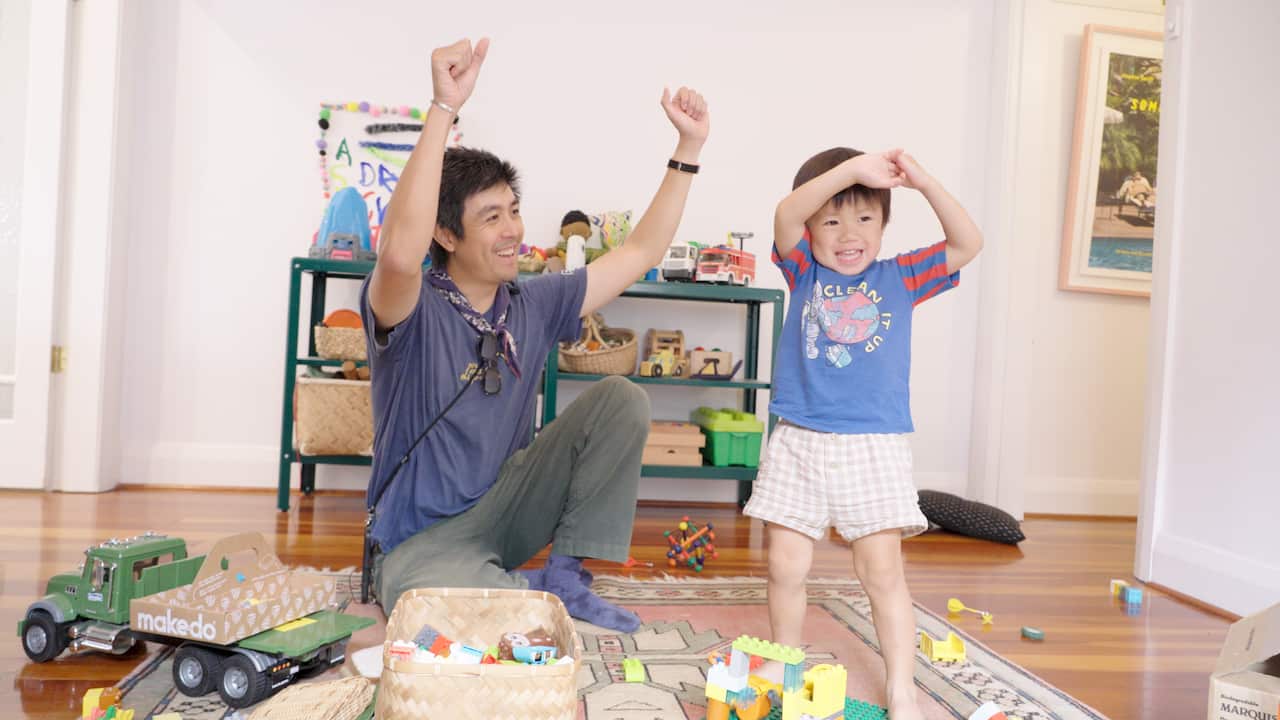
"They want to shift to a different model of care … one where they are providing more emotional care, one where they're more [present] on day-to-day tasks than their dads were for them," Macdonald said.
She believes that type of parenting style outweighs those who support traditional breadwinning ideas.
"There are far more men who want that deeper, connected relationship with their children than those who want to step back into purely breadwinner roles."
The future of fatherhood
Macdonald said the idea that caregiving undermines masculinity misses the point, saying healthy masculinity is about being emotionally available, being present, and showing care.
"It's about being there through the uncertainty and challenges of family life."
And Kelvin believes his role as a primary carer will lead to better outcomes for his children.
"If I put the time in now, that's something they'll carry with them forever."
He also sees it as one small way men can give back to women.
"As all dads know, mums bring kids into the world, they physically grow them and … it's often even a hard experience on mums' bodies. And there's sleepless nights."
"So I think anything that we can give back to supporting our partners is really appreciated."

Through award winning storytelling, The Feed continues to break new ground with its compelling mix of current affairs, comedy, profiles and investigations. See Different. Know Better. Laugh Harder. Read more about The Feed

Have a story or comment? Contact Us







