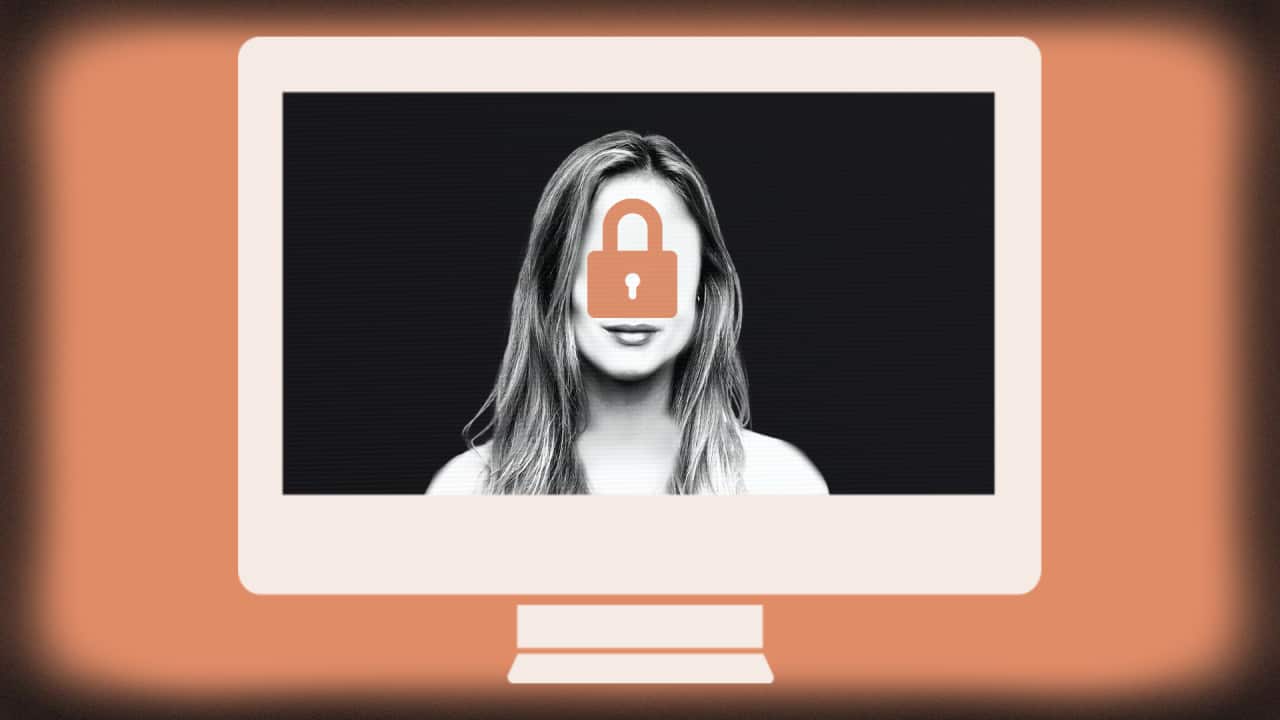
Jean, 22, says systems designed to estimate her age have frequently marked her as under 16.
She doesn't watch porn — one form of online content that can require age verification technology — but discovered the issue when she was blocked from reading a Substack account and was asked to show her face for an age assurance system.
"I thought it should be simple enough. I was happy to do the selfie one, and it didn’t work. I thought that was funny but I'd give it another go, or maybe it was the lighting or the angle.
"I did it over and over, and it just would not recognise me as being over 18," she tells The Feed.
Eventually, she had to ask a colleague to enter their own face so Jean could bypass the system.
News that makes sense
Your trusted source for staying up-to-date with the world around you. Get free daily news updates and analysis, straight to your inbox.
Age assurance systems are known to sometimes overestimate or underestimate age and have also shown reduced accuracy for non-Caucasian users, older adults or female-presenting users.
Jean has since experimented with different age assurance systems and discovered she can only be recognised as over 16 but not over 18. While other methods of age assurance are available in some cases, including handing over documentation, Jean says she's concerned about the security risks of doing so.
She also says it's raised challenging questions for her about what she can and can't do online now.
Jean says new age verification requirements rolled out earlier this month by the eSafety Commissioner could lead to a "ludicrous" situation where she could be cut off from content like porn that she should be able to legally access.
"I think I’d always valued the internet as being free and open, or at least something like that, and it feels like a really ludicrous form of government overreach," she says.
"I feel like I have a parent watching me over my shoulder."
Jean says she wouldn’t be surprised if these feelings of surveillance change how people view porn online and lead to concerns around blackmail about intimate details of porn consumption.
"It's something that is very sensitive and taboo and you're putting people in a very vulnerable position when they have to give such sensitive private information to access it."
The age verification methods used for accessing porn have also been questioned by some Reddit users online.
"New age and identity verification rules open up whole new worlds of identity theft scams and sexploitation scams," one user wrote.
Pornhub blocks Australia
Earlier this month, major porn sites including Pornhub, RedTube and YouPorn unceremoniously blocked Australian users from their adult content.
Australians visiting Pornhub now — previously the most visited adult site in the country — will find a landing page of safe-for-work content, dominated by podcast thumbnails.
The Pornhub block was a response to the latest phase of the eSafety Online Safety Codes, which require strict age verification on content identified as unsuitable for users under 18.
They also restrict content containing high-impact violence, self-harm material and content relating to suicide and disordered eating.
Laura Roscioli, a sex columnist and podcaster, says Pornhub blocking Australians from its X-rated content will feel like a "massive loss" to a lot of people.
While Laura hasn't visited the site herself for a long time, she refers to it as the "Kmart of porn". Before the block, it drew tens of millions of views in Australia every month.
"Pornhub is so massive, it sort of defines porn — online, digital porn. For most people, I think when they think about watching porn online, they think Pornhub," she says.
The codes that have led to Australia's most-visited porn site blocking users are designed to protect children's safety online, but the fallout has also raised questions around how age verification will change adults' approach to these sites.
Any websites hosting pornography in Australia will now need to verify users' ages through systems such as facial-age estimation, digital wallets or photo ID.
Simply asking users to confirm they’re over 18 no longer suffices, and breaches of eSafety's Age-Restricted Material Codes can result in fines of $49.5 million per breach.
Julie Inman Grant, Australia's eSafety Commissioner, compared the new restrictions to real-world expectations that children can’t walk into over-18s venues like adult stores or casinos.
Grant said the codes ensure that children are "having age-appropriate experiences and not being exposed to potentially harmful content too early".
Research published by eSafety last year found 32 per cent of Australian 10- to 17-year-olds had been exposed to sexual images or videos online, and 23 per cent had seen sexually explicit material in the past 12 months.
Aylo, the Canadian company that owns Pornhub as well as a number of other adult websites, argued that the new codes would "not effectively protect minors, and instead creates harms relating to data privacy and exposure to illegal content on non-compliant platforms".
Aylo and Pornhub blocking the Australian market wasn't an unexpected move, according to professor Lisa Given, a researcher in human information behaviour from RMIT.
"That’s certainly the easiest way to comply, and it didn’t affect existing customers," she tells the Feed.
The codes that led to Pornhub blocking Australians are part of a number of age verification regulations that have been rolled out recently in Australia across different platforms and contexts.
The government has left the methods of age verification up to platforms to decide. These can range from verification using third-party sites or using government-issued ID or credit cards to assurance technology that estimates a user’s age based on their face.
However, verification with ID has spurred widespread privacy concerns, and age assurance technology is far from foolproof, as demonstrated by Jean's case.
Surge in VPNs
There has been a surge in VPN (virtual private network) downloads since the pornography age verification requirement came into effect.
VPNs mask a user's IP address with a private internet connection, meaning their browsing history and location are untraceable.
Three VPN apps are currently among Australia's top 20 apps in Apple's app store.
While there is no data available on what these VPNs are being used for, experts say this could be a combination of under-18s seeking to bypass verification blocks, as well as adults seeking to access Aylo sites and adults who want to avoid handing over details for age verification.
Given says it's possible that age verification is making some adults concerned about the privacy of their online porn habits, and VPNs are a solution to this problem.
She compared the feeling of using these systems to walking into a store and purchasing pornographic magazines 30 years ago.
"I think pornography use, even though it’s legal, there'll be some people that really don’t want that disclosed or they don't want their neighbour finding out that they’re looking at pornography," Given says.
"There are many people that have become used to being able to look online, find the content they want and not feel like anyone’s looking over their shoulders — even if that may not be digitally true."
Belinda Barnet, a senior media lecturer at Swinburne University of Technology, tells the Feed many adults may continue to use VPNs for the long term — even if sites like Pornhub unblock content in Australia — to protect their privacy online.
"As long as you get a good VPN and not some kind of cheap random one which has other issues related to it, then that’s a good protective measure for you to take," she says.
However, Barnet believes, in the long term, a trusted and standardised third-party platform should be introduced to mitigate privacy concerns.
A turn to ethical porn?
Laura believes there may also be an opportunity now as users assess their online porn consumption to consider so-called 'ethical' porn sites, which use ethical production and depict safe sex, consent, pleasure and a variety of sexual practices.
Aylo has been accused of a number of infringements in recent years, including hosting content and accepting money from a channel that involved sex trafficking, failing to block child sexual abuse material, and enabling non-consensual material to be shared.
Aylo lists its safety and security policies on its website, including scanning all content for hashtags to prevent known child sexual abuse material, a content flagging and removal system for illegal material reported by users and deterrence messaging to users who attempt to search for potentially illegal material.
Laura says that while these sites often require a small membership fee, some users could reflect on their viewing habits and where they choose to consume porn.
"I wonder if people will feel the loss and — just because we’re such creatures of habit — try to find a way to get back onto Pornhub. Or if we'll find another way and other places to find [pornography] — that could be a really positive thing to come out of it, I think."

Through award winning storytelling, The Feed continues to break new ground with its compelling mix of current affairs, comedy, profiles and investigations. See Different. Know Better. Laugh Harder. Read more about The Feed

Have a story or comment? Contact Us







