
6 min read
This article is more than 4 years old
Profile
This sacred dancing hat has been returned to Traditional Custodians, but it will not go back to Country… yet
A warning to Aboriginal and Torres Strait Islander readers, this story contains images of people who have died.
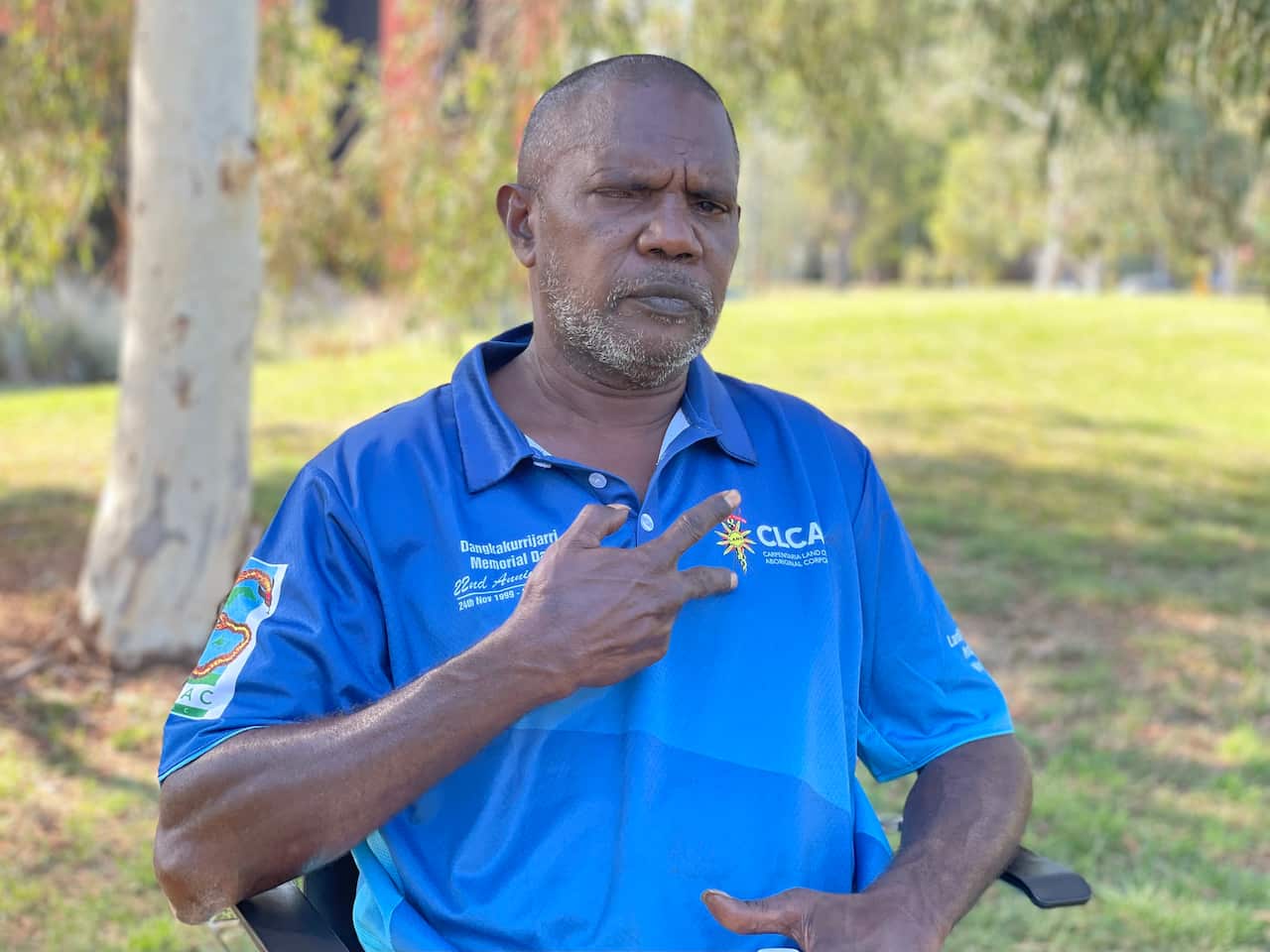
Walking into a room in Canberra, filled with books and artefacts, Lawrence Burke saw his great uncle’s dancing hat for the first time. He had goosebumps.
“My hair was standing up. It was like his spirit was there with me, telling me he was glad to see me, to take it [the headdress] back home,” the Yangkaal songman said.
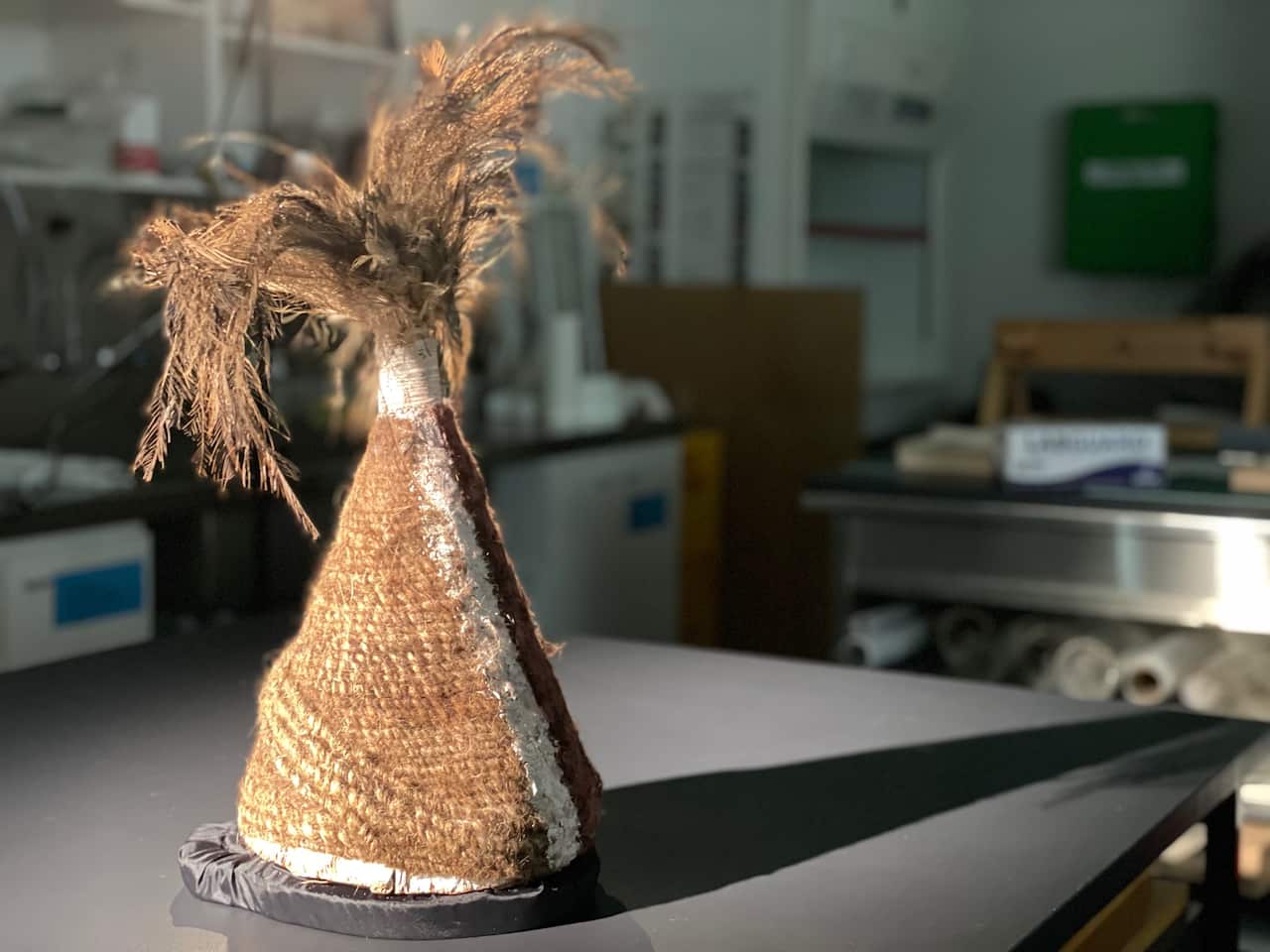
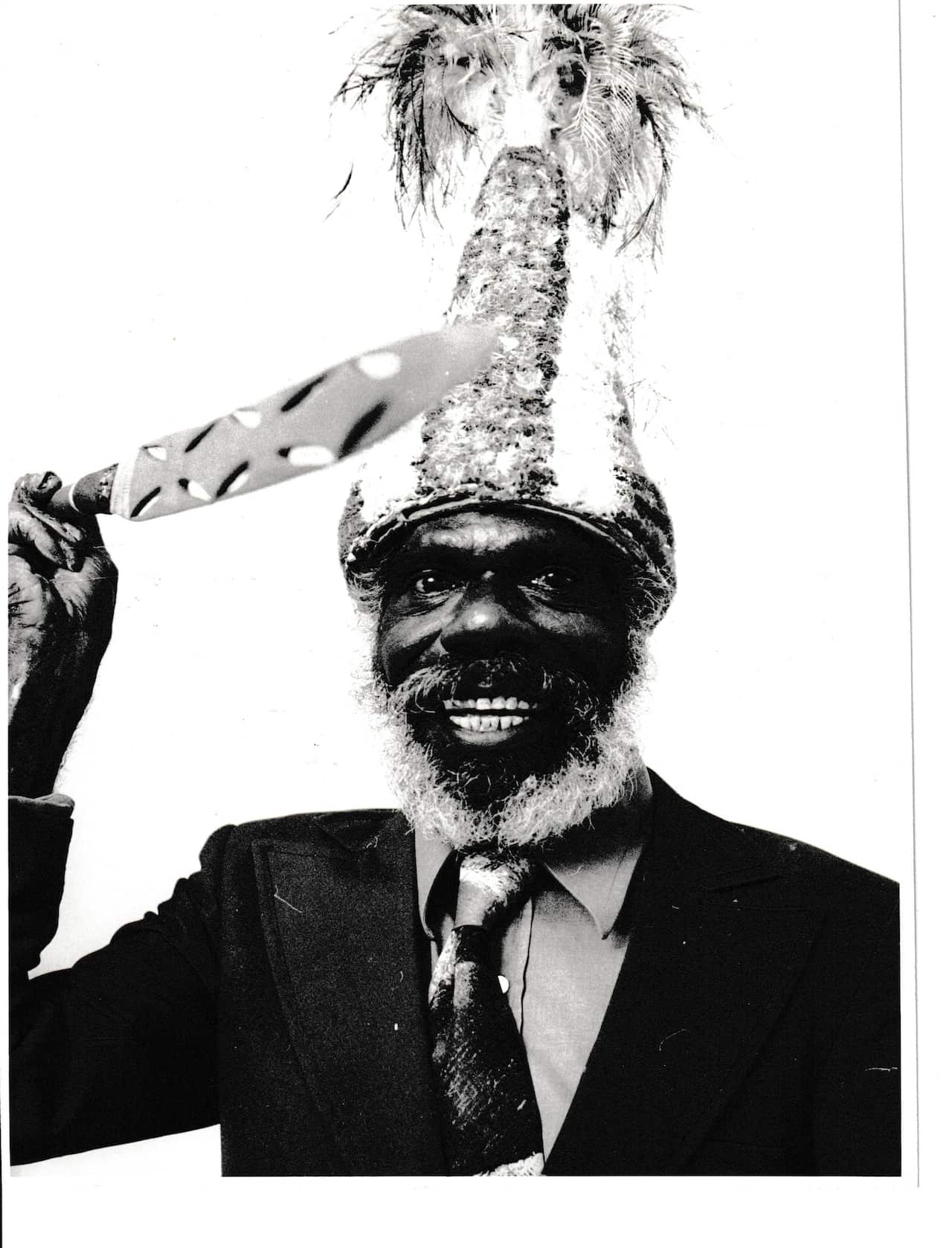
Dancing hats, from Mornington Island in the Gulf of Carpentaria, are painstakingly crafted over four days and presented to boys as they become men.
"When he wears that hat, it doesn't matter where he goes. They know he's a man… a leader, a top man in the community," Mr Burke said.
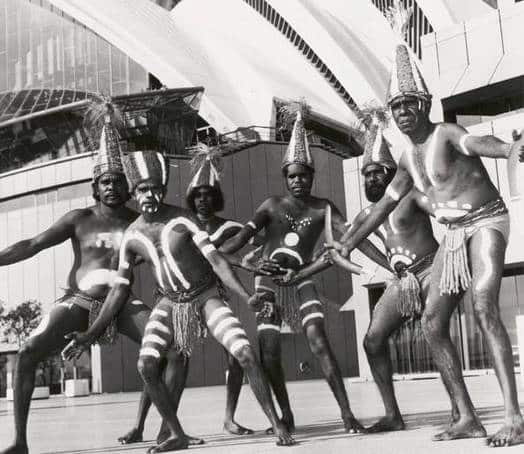
The shape of the hat represent different skin groups. The late Philip Jack’s pointy hat represents the Rainbow Serpent from the Dreamtime stories and much like the Serpent Mr Jack travelled far and wide.
When he wears that hat, it doesn't matter where he goes. They know he's a man… a leader, a top man in the community.Lawrence Burke
He was part of the first dance troupe from Mornington Island to perform off Country. The five-man group toured Australia in the 1970's, including a special performance at the opening of the Sydney Opera House in 1973.
Mr Jack’s headdress was returned from England to Traditional Custodians through the Australian Institute of Aboriginal and Torres Strait Islander Studies (AIATSIS).
“The thing we are learning from our Return of Cultural Heritage Project is that there is a significant change happening in the museums and the collecting sector generally that is predisposing institutions and individuals much more towards the return of material,” said AIATSIS chief executive and Dhunghutti man Craig Ritchie.
“We have had around 1900 items returned to date. There are at least 112,000 items overseas. So, we have got a long way to go.”
Old friends and a dancing dream
Unlike many First Nations items in overseas museums, the Lardil headdress was not stolen. It was a parting gift to a friend.
Philip Jack met Englishman Maurice Routhan in Sydney. The pair were neighbours and enjoyed each other’s company, often bouncing intellectual ideas off each other.
“Well, as I remember him, he was fairly tall, a very bright chap. He had an air of authority about him,” the now 92-year-old Mr Routhan said.
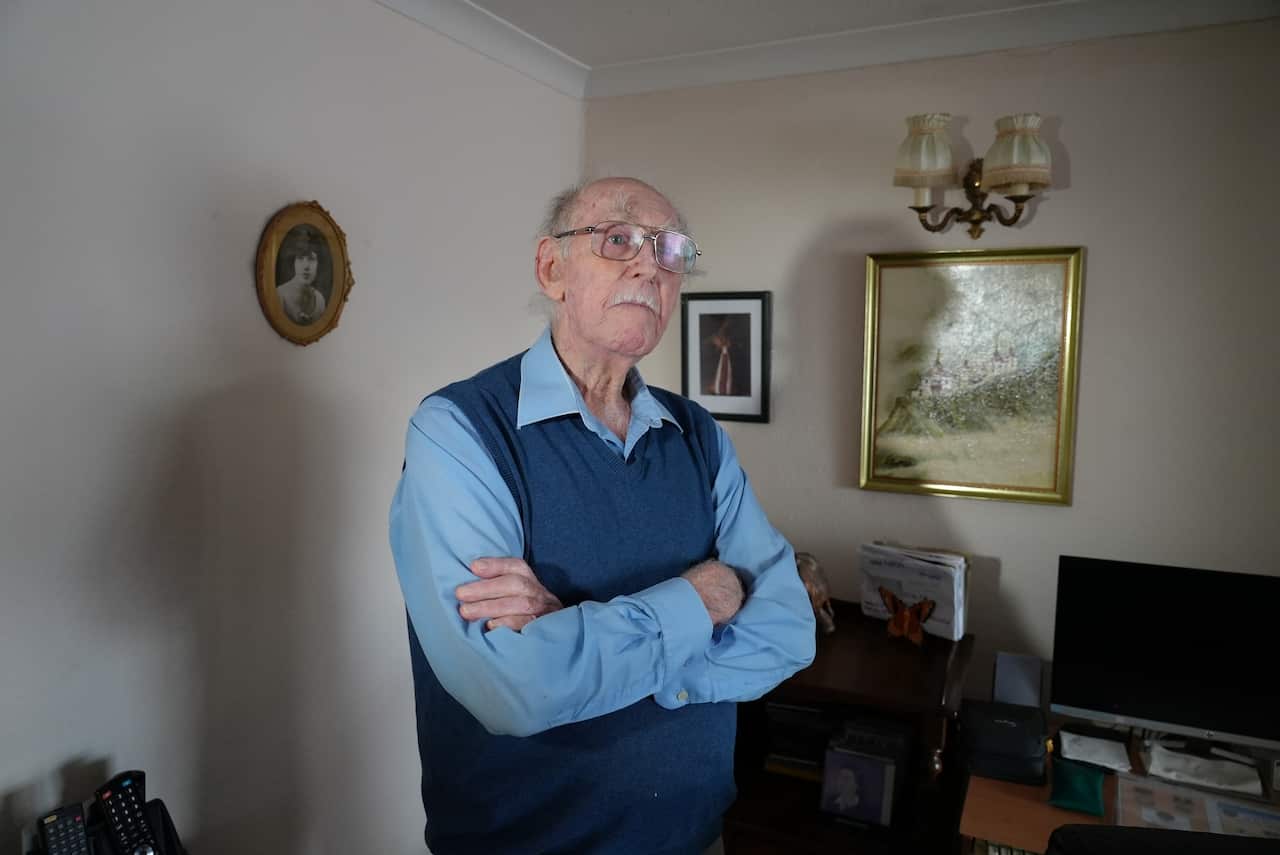
“It was only when I left to go back to England [in 1975], my daughter came in and said, ‘Philip’s got a very special present for you’. I thought myself; 'I hope it is not a pet kangaroo or something’. I was amazed when he presented me with that."
The headdress sat on Mr Routhan’s mantelpiece for almost 50 years, at his home in East Sussex, until one night in mid-2020, when he had a vivid dream.
"I know this sounds ridiculous, but this is absolutely true. I woke up in the morning and I could remember being back in Australia in the bush," the great-grandfather said.
“I can remember the chant of a didgeridoo and figures dancing and I can remember thinking; I must return the headdress. It's difficult to explain these things, but I was quite positive about it.
“I'd spoken to a friend of mine. He said, ‘you put that in an international auction, you could make yourself a lot of money’. I said, ‘yes, maybe I could, but that's not the point’."
Following the dream, Mr Routhan made arrangements for the headdress to be returned to Australia.
I know this sounds ridiculous, but this is absolutely true. I woke up in the morning and I could remember being back in Australia in the bush.Maurice Routhan
The Mornington Island representatives praised Mr Routhan for listening to the spirits.
“I think old Phil probably was saying, mate, I think I'm ready to go back home. It's been too long and overseas it's time for me to go to my country and see my land,” Lawrence Burke said.
Creating a Keeping Place
Despite the return of the headdress to Australia, it will be months, if not years, before it can return to its spiritual home. Caring for a 50-year-old artefact made of human hair is no easy feat.
Mornington Island is hot and humid and the average maximum temperature is 30.4 degrees.
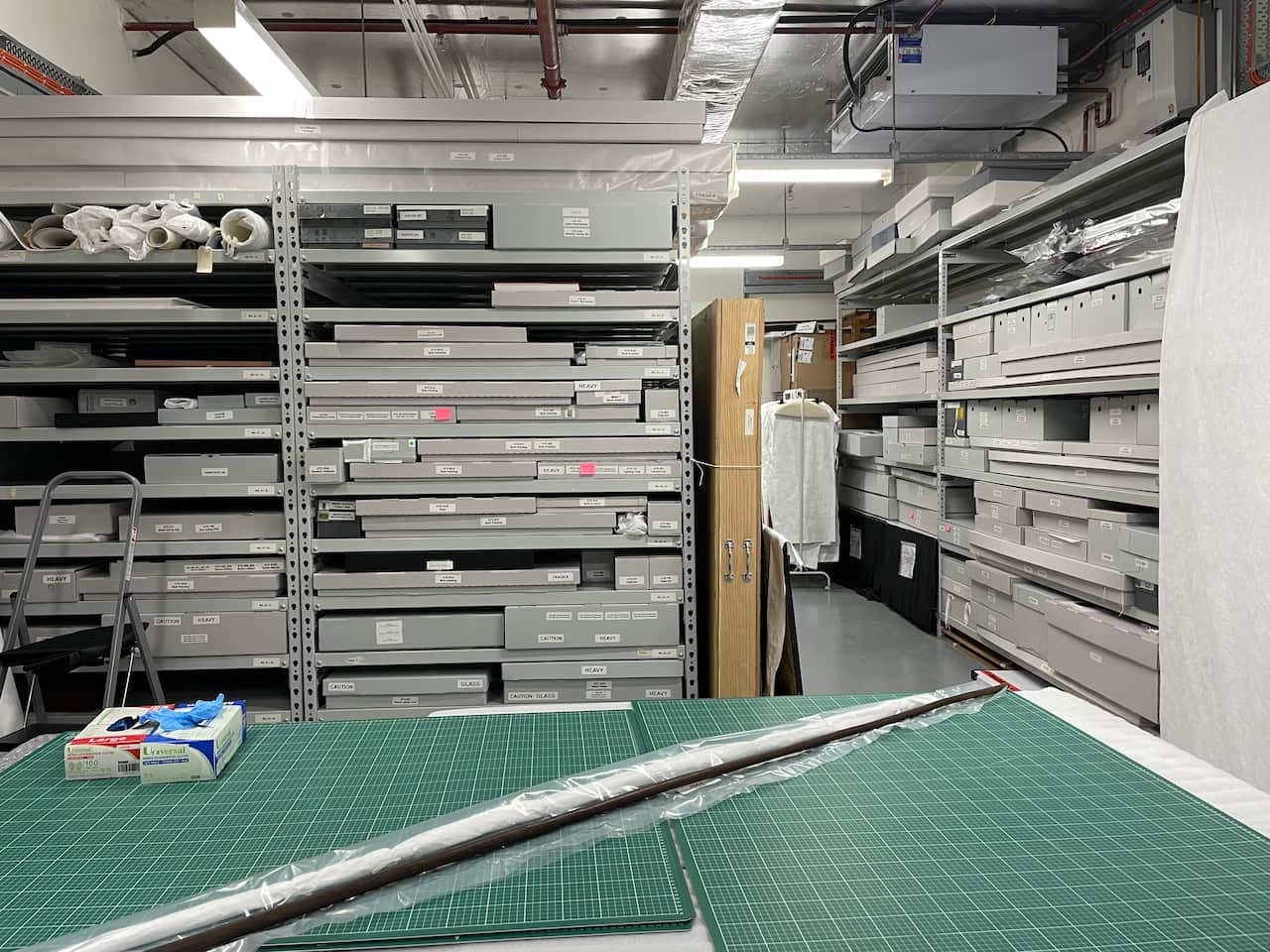
The headdress will remain in an AIATSIS cool room, alongside hundreds of other boxed up artefacts, until the community can build a secure and temperature controlled Keeping Place.
"The challenge, is that many communities don't have somewhere they can house their items in the appropriate infrastructure and the right kind of climatic conditions," said AIATSIS CEO Craig Ritchie.
“I think one of the things that going forward [as more items are returned], that we all have to grapple with, is how do we facilitate the creation of such places? That's going to take a significant investment of money, but also a significant investment in capacity building in communities on the ground.
“That said, if we can arrive at a point where there are the very least regional Keeping Places … then we are a lot further advanced than we are now.”
![Michael Gavenor [front] and Lawrence Burke [back] visit Parliament House in Canberra.](https://assets.sbs.com.au/ff/31/23c491404901bb21daee6ab4b91b/phouse.jpg?imwidth=1280)
The governing bodies on Mornington Island are determined to bring Philip Jack’s headdress home eventually.
Michael Gavenor, the chair of the Gulf Regional Aboriginal Cooperation, said the return of the hat would be important to the younger generation on Mornington Island.
“It'll mean a lot to the younger generation, because today on Mornington the culture is slowly fading away,” he said.
“To have the hat back on display in community, the younger generation can be taught about the hat, the meaning of the hat. Understanding the hat and culture itself would make a big difference.”
Mr Gavenor and Mr Burke accepted the headdress at a ceremony in Canberra on behalf of the Lardil and Yangkaal people.
Mr Gavenor said grant applications are underway for funds to upgrade display cabinets at the local airport.







