
The Rio Olympics have been a reflection of the worst in all of us and it’s time for a change. How The Olympics are located and operated is in dire need of a shake-up.
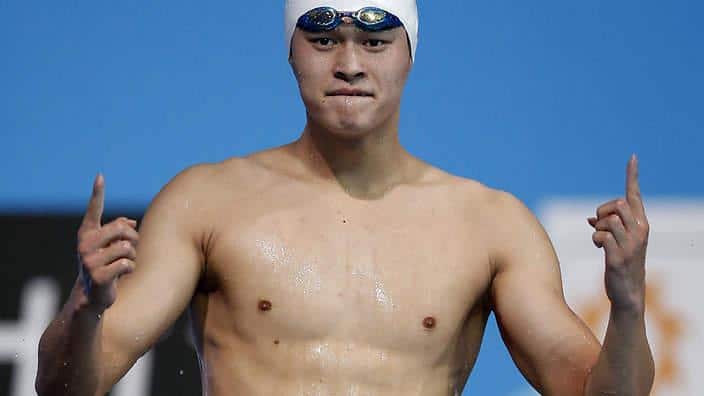
Over the last fortnight we’ve had a group of US swimmers lie about gunpoint robberies. Nine Australian athletes were charged for falsifying their credentials so they could watch a basketball match. China and Australia have been using Mack Horton and Sun Yang’s doping bitchery as an excuse for geopolitical posturing. Boxing judges were suspected of taking bribes, sent home, and then reinstated and returned. Volunteers have abandoned their posts, compromising drug-testing efforts. African American athlete, Gabby Douglas was mercilessly bullied for failing to put her hand on her heart during a medal ceremony. Caribbean audiences all but abandoned its Canadian born gymnast Marisa Dick over favouritism claims after its native-born Thema Williams was bumped from the competition. And even athletes from countries like Russia that were revealed to have its own state-sanctioned doping organisation were allowed to compete despite an initial IOC ban.
And while the Brazilian Real plummets and hundreds of thousands of Brazilians live in favelas and slums with barely enough to make ends meet, those privileged enough to score a ticket to the stands booed a gold-medal winning Frenchman to tears as he stood on the podium.
This is not who we are. This is not what the Olympics is about.
News that makes sense
Your trusted source for staying up-to-date with the world around you. Get free daily news updates and analysis, straight to your inbox.
Cleaning up the Games
The Olympics need a new code of conduct for its athletes, who, in exchange for a place in the competition should be required to keep their mouths shut and behave themselves for a fortnight. No sledging about doping. No complaining about living conditions in the Olympic village. No staying out past curfew (sorry, Emma McKeon). No talking to the press unless otherwise authorised. And certainly no lying about daylight robberies.
"It is now difficult to avoid the impression that the IOC is no different from the Sepp Blatters of this world"
But it shouldn’t stop there. At this stage, that rather than an international tribunal that picks its Olympic host countries by their development potential, the IOC appears to be a circus for bribery and corruption. For years the IOC insisted it had reformed itself while FIFA and the World Athletics Championships were - deservingly - dragged through the court of public opinion after staggering revelations of corruption. It is now difficult to avoid the impression that the IOC is no different from the Sepp Blatters of this world. 2020 is still four years away but France is already investigating how Tokyo came to win the Olympic bid amid bribery allegations.
Brazil should never have hosted the Games. When questions were raised over its bid the old excuse was rolled out that the Olympics encourages democracy in developing nations and offers them an opportunity for reform. This mantra is beginning to ring pretty hollow as the homes of some of the country’s most hopeless were razed to make room for an exclusive lightrail to transport athletes from the Olympic Village to the stadium. In any case, the economics of hosting the Olympic Games has been well covered. The risk of bankruptcy is large and common, so much so that the city of Boston successfully lobbied its government not to bid.
In any case, there is simply too much money tied up in the Games, both from advertisers and countries bidding. If the opening ceremony demonstrated anything it’s that you can do a lot on a shoestring budget. A lot more can be done to make sure our Olympic dollars go further.
"Money gravitates towards power"
The IOC cannot reform itself. It must be disbanded and reorganised. But this is not without its challenges. There is the argument that money gravitates towards power, meaning that no matter how you try to structurally reform an Olympic organising committee, the same temptations and problems will continue. But that is not reason enough to not give it a red hot go. Host countries must be required to prove that the wellbeing and livelihood of its citizens will not be significantly threatened before bids are accepted. And we need a better system for catching drug cheats. (The Australia today recommended overhauling the World Anti-Doping Agency).
What can be done?
Statistician Nate Silver of Five Three Eight fame (he most closely predicted the Obama 2008 election outcome) came up with a few suggestions just as Rio’s successful bid was announced, claiming many of the 108 IOC member countries are chronically underrepresented.
Silver recommended that (after disbanding and reorganising), IOC membership should be decided on a formula basis reflecting population, participation, revenues and possibly other metrics. There is no reason this couldn’t also include negative weighting, for example. Countries with an inadequate rule of law, or democratic governance could be precluded IOC membership. This has the knock-on effect of conflating revenue with development and justice.
Other Silver suggestions include compulsory publication of the voting records of individual IOC members, adopting a preferential voting system to increase the likelihood of gamesmanship and deal-making.
I would go further however, adding to the list of rules an instant lifetime ban for any athlete caught doping. Countries caught with organised doping departments (as both Russia and China were reported to have this year), should be stripped of their membership for a certain number of years until such time as they can prove they run a clean sport. This should also not preclude jail terms and fines so financially punishing it would cripple further participation from offending countries.
In an age where the political and cultural climate has never been more precarious, we need the Olympic Games more than ever. The Olympics stand for collegiality, for sportsmanship, for peace. They offer an opportunity for bipartisanship, where for two weeks every four years, each country puts aside their differences & gather in a stadium, in a corner of the globe to celebrate the triumph of humanity and the human form, where athletes push themselves to their physical limits to compete for glory and gold. The Olympics offer an opportunity for disarmament. But this can only be achieved with a structure that supports the true spirit of the Games.
Claire Connelly is a freelance writer, journalist and consultant. She writes for The Australian Financial Review, SBS, The Australian, The Age, specialising in finance, technology, economics and policy. She tweets here.
Tune in to #TheFeedSBS at 7.30pm Monday - Friday on SBS 2, stream live, or follow us on Facebook, Twitter, Instagram, Tumblr, or Vine.

Through award winning storytelling, The Feed continues to break new ground with its compelling mix of current affairs, comedy, profiles and investigations. See Different. Know Better. Laugh Harder. Read more about The Feed

Have a story or comment? Contact Us







