
Watch the full story above.
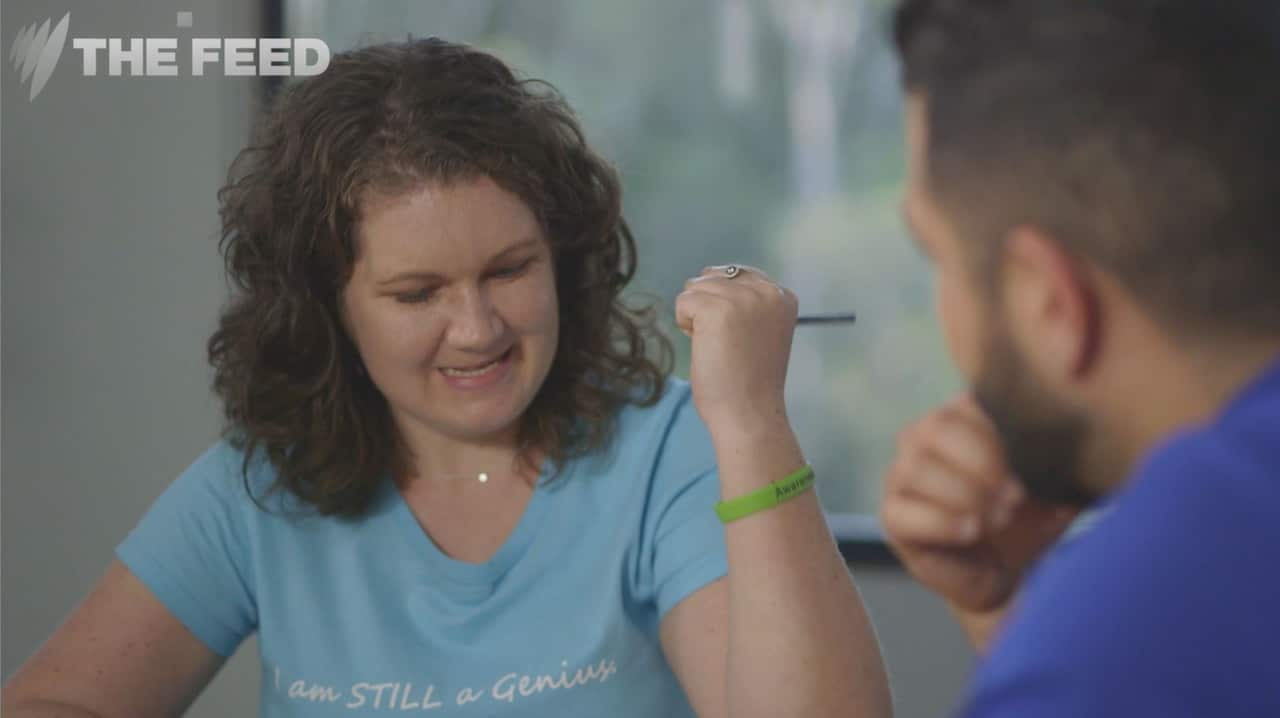
Two years ago, Emma Beasley was a fit, ambitious 33-year-old Family Court lawyer engaged to be married when a stroke left her paralysed and without speech – then her fiancé walked away.
Emma has aphasia. Caused by stroke or traumatic head injury, aphasia shuts down the part of the brain that tells us how to communicate. Although it doesn’t affect intelligence, many lose the ability to talk, write, read or comprehend at all.
News that makes sense
Your trusted source for staying up-to-date with the world around you. Get free daily news updates and analysis, straight to your inbox.
“She recognised us but she couldn’t say our names,” said Emma’s father John Beesley. “She couldn’t talk. She couldn’t find the right words. When Emma came out of hospital she felt isolated and she has told us that she felt like ending it. She felt like killing herself,” says Kim Beesley, Emma’s mother.
But something incredible happened. Something Emma’s parents call a miracle. ‘I Will Survive’ came on the radio and Emma started singing along.
“We were stunned. She could sing that song, but she couldn’t tell me my name,” says Kim.
She could sing, but she couldn’t tell me my name.
Speech pathologist and voice teacher Bernadette Matthias has been researching the role of singing in the rehabilitation of stroke survivors and aphasia sufferers for almost a decade. As part of her study, a choir of stroke survivors and those with aphasia was set up. She says the results speak for themselves, so to speak.
“With music you’re not trying to use that side of the brain that’s damaged. Other parts of the brain can take over the function so they’re really accessing ‘words’ which we use in songs via the music networks rather than going through the channel of language that’s been damaged,” says Bernadette.
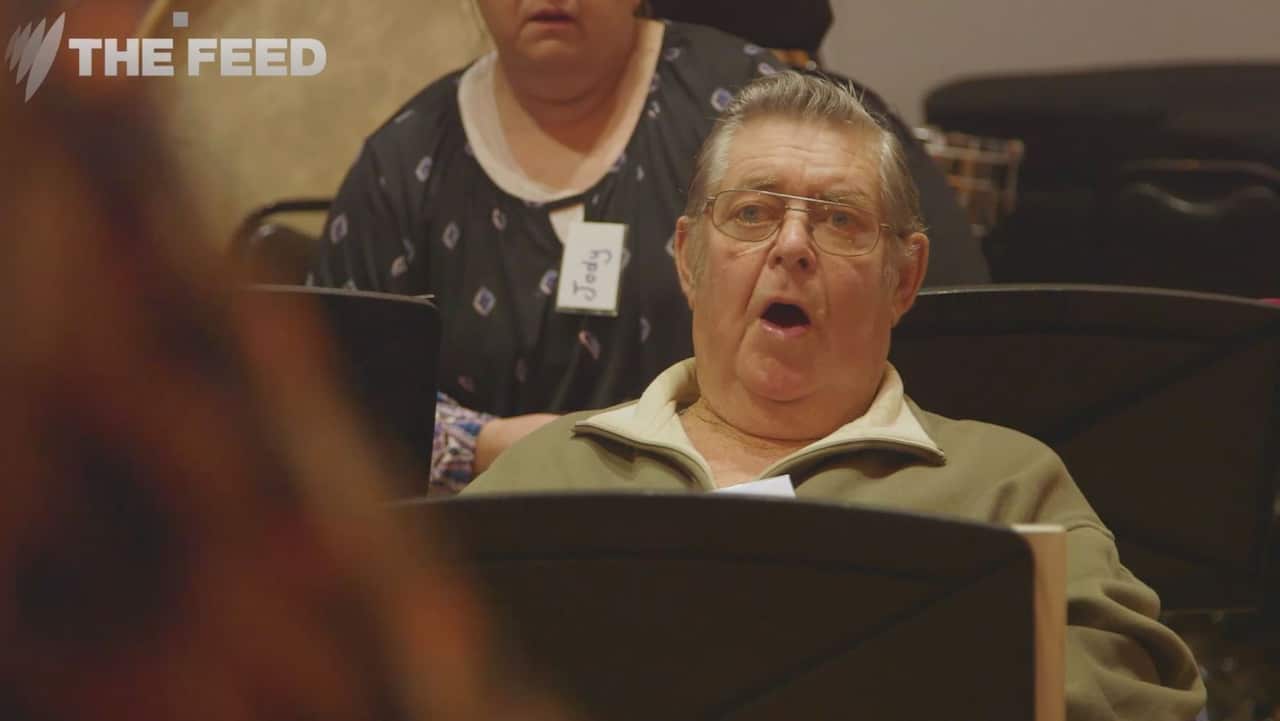
Like Emma, many in Bernadette’s choir are not able to speak but can sing along to multiple songs.
“Sure it’s singing in choir and you’re not having a conversation. But there is research to suggest there can be some carry over into speech,” says Bernadette.
For Emma, now 35, she can confidently sing. Her ability to talk fluctuates. Some days she can speak a little, others she’s lost for words completely. And some days she can write more than speak. But she may never return to full conversation ability again.
If you or someone you know needs support, talk to someone you trust or contact a crisis support service listed below:
- Lifeline 13 11 14 www.lifeline.org.au
- beyondblue 1300 224 636 www.beyondblue.org.au
- Suicide Call Back 1300 659 467 www.suicidecallbackservice.org.au

Through award winning storytelling, The Feed continues to break new ground with its compelling mix of current affairs, comedy, profiles and investigations. See Different. Know Better. Laugh Harder. Read more about The Feed

Have a story or comment? Contact Us







