SEASON 2 EPISODE 1

Bodies R Us: What Really Happens to Bodies Donated to Science?

Jackie Dent.jpg

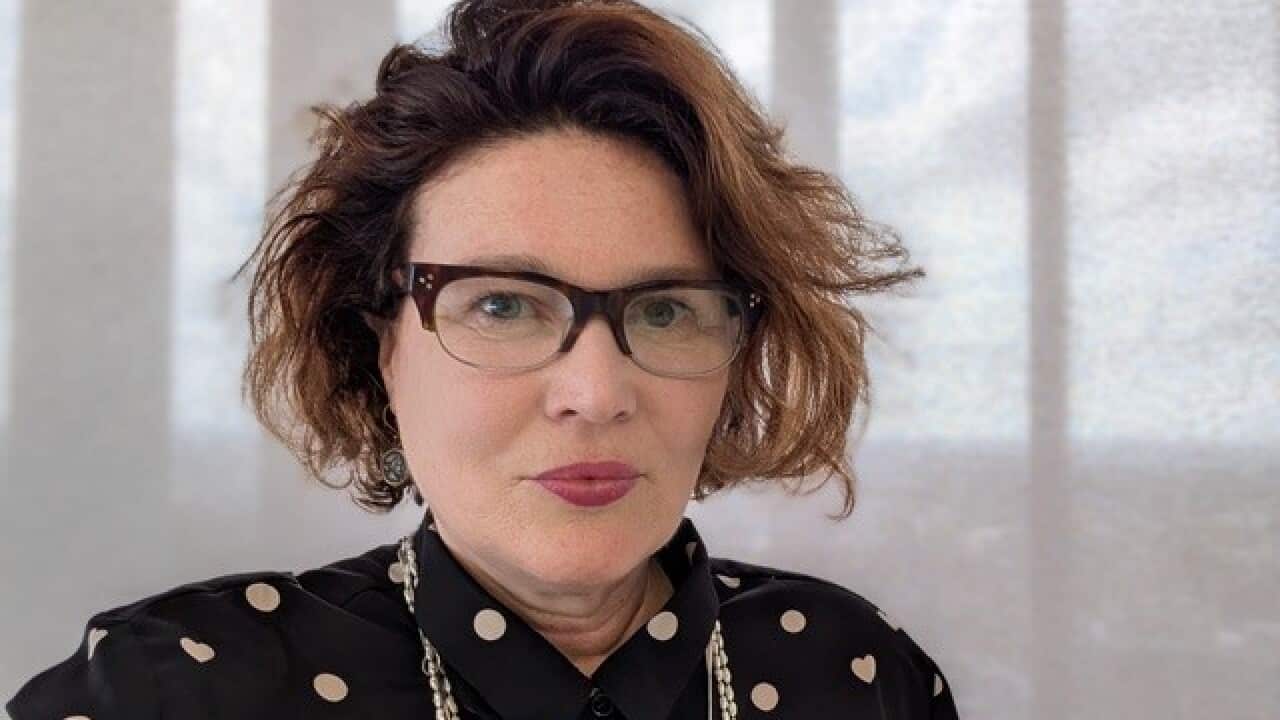
Journalist Jackie Dent

Have you ever wondered what type of people donate their bodies to science? Or if body supply equals demand? Organ donation may be increasing but the numbers surrounding whole body donation remain vague. What happens to the bodies that do end up in labs? And what if there’s a shortage? One woman decided to find out.


For journalist Jackie Dent, what began as a casual conversation over Christmas drinks evolved into a quest for answers that inspired a book. She had always known her grandparents had donated their bodies to the University of Queensland, but didn’t really know what that meant.

So, when her parents’ neighbour said, “I've got this job at this surgical facility and you’ll probably find it interesting…” she decided it was time to find out.
It took me nearly three years into researching the book to actually see a dissection. It is a very, very hidden thing
Jackie Dent
Dent’s Walkley-longlisted book, The Great Dead Body Teachers, chronicles her journey to find answers, and with it, the little-known and fascinating history of whole body donation, medical training, and dissection.

A self-proclaimed “deathy person,” she joins hosts Anthony and Nadine in the studio to talk about this vital, niche, and somewhat secretive corner of medicine.

Grave Matters is an SBS Audio podcast about death, dying, and the people helping us do both better. Find it in your podcast app, such as the SBS Audio app, Apple Podcasts, Spotify, or LiSTNR.
Links
Credits
Hosts: Anthony Levin and Nadine J. Cohen
Producer: Jeremy Wilmot
Writers: Anthony Levin and Nadine J. Cohen
Art and design: Karina Aslikyan
SBS team: Joel Supple, Max Gosford, Bernadette Phương Nam Nguyễn, and Philip Soliman
Guest: Jackie Dent @jackiedentwrites @jackiedentyay

Helplines If you'd like to speak to someone, you can reach a counsellor at Beyond Blue at any time, day or night, by calling 1300 22 4636 or visiting www.beyondblue.org.au. Also, Lifeline offers 24/7 crisis support on 13 11 14, and Embrace Multicultural Mental Health supports people from culturally and linguistically diverse backgrounds. In an emergency call 000.

Jackie Dent

What happened is that Mum and Dad and I had a drink with their next door neighbour and the daughter of the house said to me, oh, yeah, I've got this job at this surgical, facility. And you'd probably find it interesting, like, the students don't do full body dissection and they're flying in body

parts from the U.S.

Nadine J. Cohen

Welcome to Grave Matters, a lively look at death.

Anthony Levin

All of us at Grave Matters would like to acknowledge the traditional owners of the land we are recording from. We pay our respects to the Camaraygal people and their elders, past and present. We also acknowledge the traditional owners from all Aboriginal and Torres Strait Islander lands and other

First Nations territories from which you are listening.

Nadine J. Cohen

A, warning, this episode contains references to death and dead bodies and discussions of body dissection. Please take care.

Anthony Levin

Nadine J. Cohen. Hello there.

Nadine J. Cohen

Anthony Levin. Mahalo. So, Lev, we're back for another season.

Anthony Levin

We are back to the future, baby.

Nadine J. Cohen

God, this is. I forgot about this guy.

Anthony Levin

What do you mean this guy?

Nadine J. Cohen

This guy that comes out when you're, like, in front of the microphone.

Anthony Levin

I'm excited. I'm excited.

Nadine J. Cohen

Okay. All right. I love it. I love every guy that's inside of you. That sounds weird. So, in sad news, you and I have both experienced death since last season.

Anthony Levin

Yes, we have.

Nadine J. Cohen

Your beautiful, inspirational maternal grandmother, Olga Horak, passed.

Anthony Levin

Yes. And your beautiful, inspirational cat, Blanche Devereaux, also passed.

Nadine J. Cohen

Two absolute icons. Hey, do you know what will cheer us up?

Anthony Levin

weighted blankets and funny dog memes?

Nadine J. Cohen

Yes, but also body dissection.

Anthony Levin

Excuse me?

Nadine J. Cohen

So, remember in season one, we learnt what happens to dead bodies donated to science, specifically to help solve crimes?

Anthony Levin

How could I forget? I've been solving them ever since.

Nadine J. Cohen

Well, today we meet a journalist who set out on a small quest and ended up writing a big book about the history of medical body donation and dissection. In today's episode, we ask what really happens to dead bodies donated to universities? And how has the practise evolved or in some cases, devolved

over time?

Anthony Levin

So, we covered a lot in season one, Nadine. But. But still, we felt we had unfinished business. What questions are on your mind? What's been keeping you up at night in death and dying world?

Nadine J. Cohen

indigestion. But also I think that last season we looked a lot at, you know, the bases and we looked at grief and we looked at, ah, funerals and we looked at a lot of stuff. But my, I guess, favourite part of last season was just meeting super cool people doing really interesting and inspirational

things. And I, just really wanted to carry that into season two and just find more people in this world or various worlds that connect in some way. And I also wanted to talk about vampires.

Anthony Levin

Who doesn't? Yeah, look, I share that feeling as well and I, think we. I feel pretty confident that we have found some really excellent people. Every episode is just a banger, as they say, as the kids say. You can tell I'm not down with the kids.

Nadine J. Cohen

Alright dad.

Anthony Levin

since season one, a few friends of mine and colleagues have lost loved ones. And I've noticed that instead of funerals, there are, more celebrations of life happening. And so I found myself wondering, are we really starting to move away from those more traditional ways of memorialising? It feels

like it's gone a bit mainstream to do something different.

Nadine J. Cohen

I wouldn't say it's gone mainstream yet, but I definitely think it's, it's growing. And I also don't know if we're necessarily moving away so much as just getting more options because there are lots of people who want a traditional funeral and families who want to give their loved one a traditional

funeral or with many traditional aspects. So I just. To me, it's just an opening up of options that's happening.

Anthony Levin

Not to invalidate someone choosing a more traditional option, but I'm very pleased to see that expansive approach, even with my own. My Nana, who also passed in January of last year after we'd finished recording season one.

Nadine J. Cohen

Your paternal grandmother?

Anthony Levin

My paternal grandmother, that's right. We did a celebration of life for her and it was no less emotional for me, but it was just really nice that the overall tone was a bit different and we didn't feel constrained.

Nadine J. Cohen

Yeah, I went to a memorial, for a friend's mum who passed sadly but didn't want a funeral or a traditional funeral, so they cremated her. And I'm not sure if they've actually scattered the ashes yet or not, but they bought her a park bench in the botanical gardens and we all. Cause she loved

gardening, she loved flowers, she loved all of that. And a bunch of us gathered to commemorate the bench and her. And there were speeches and yeah, it was great and it's good to see this sort of stuff happening.

Anthony Levin

So, Nadine, who's our first guest for season two.

Nadine J. Cohen

Jackie Dent is a journalist and author currently completing a PhD on the pleasures of War at the University of Sydney. She has reported for the Sydney Morning Herald, the New York Times, the Guardian, Reuters and more, and worked for the United nations in Afghanistan, Pakistan, North Ossetia and

South Sudan. Jackie's book, the Great Dead Body Teachers, was long listed for the 2023 Walkley Book Award and the Mark and Yvette Moran NIB Literary Award. Welcome, Jackie.

Jackie Dent

Hi.

Anthony Levin

Hi, Jackie.

Jackie Dent

Hello.

Nadine J. Cohen

So, Jackie, who are Ruby and Julie and how did they inspire your book, the Great Dead Body Teachers?

Jackie Dent

So Ruby is my paternal grandmother and Julie, that was his name. He, is my paternal grandfather and they, both donated their whole bodies to the University of Queensland in the 60s and the early 80s. So, yeah, it's a pretty. You never really know as a writer what you're gonna end up wr. And what

happened is that Mum and Dad and I had a drink with their next door neighbour a few Christmases ago and the daughter of the house said to me, oh yeah, I've got this job at this surgical facility and you'd probably find it interesting, like, the students don't do full body dissection and they're

flying in body parts from the us and so I was like, that's weird. And then, you know, Mum and I go home and I said, oh, that's weird. Do you think people have stopped donating their whole bodies? Because, you know, my grandparents were body donors and it's just always been this weird thing in the

family. And yeah, like being a journalist, I went on the Internet and just, it just didn't stop. I just fell down this enormous rabbit hole of, researching what might have happened to their bodies.

Nadine J. Cohen

Did you ever find out what did.

Jackie Dent

I have a pretty good idea. they got dissected and they. I mean, I think that was the incredible thing is that at first I thought I was just going to be researching, cutting up. Right. When you think of going to a medical school, you just think dissection, but it just turned into this whole other,

embalming. you know, did their bodies end up in anatomical or pathological museums? were they researched like the amount of research that doctors do on, on bodies, other, other professions like physios or, you know, were they drawn? Because there's this whole, anatomical art world so on a, on a

basic level, I kind of have an idea of what happened to bodies at the University of Queensland in the 60s. Cause I tracked down old doctors and scientists and interviewed them about the process. So I kind of have a fair idea. I don't know exactly. And that was the thing that was kind of hard, is

that I'm very squeamish. And so it was pretty gross. And the way some of the surgeons and doctors reminisced about dissection was pretty, it was pretty gory at times.

Anthony Levin

Was it important to you to find out what happened to their bodies?

Jackie Dent

yeah, like, I guess in a way. I'd always thought about what they had done and I always thought it was really strange and I didn't really understand it. But I think it's like, all sorts of factors. Like I grew up in the Philippines that has a really full on death culture. And I don't know, I've

always been into sort of like, kind of watching horror films through my fingers, like, you know, gore and I don't know, like the idea of a dead body. But I guess, yeah, in a way, it wasn't really important. But then I just went on this quest and it did actually become kind of an incredible

experience. Now I sort of feel, you know, kind of quite proud of what they did, which is unexpected.

Anthony Levin

Mm. And you mentioned you grew up in the Philippines. And it's interesting to think about how body donation culture might differ in different places. You trace some of that history of whole body donation and the availability of bodies for dissection in your book. Can you tell us about that?

Jackie Dent

Well, yeah, I think that's the thing that really kind of shocked me was that I thought that, you know, it was all really legit. Cause anatomy has this really terrible history of, you know, bodies snatching. And you know, it is a very transgressive, taboo thing. and so basically in Australia we have

what's called a gold standard donation. Like if you donate your body to a university, you have to fill out paperwork. It's all, you know, consent is crucial. But in actually most parts of the world, they aren't using donated, bodies. So they rely on, you know, bodies that they will get if someone

dies in a mental hospital or like, you know, all across the Middle east, they will import bodies from the U.S. the U.S. has got kind of a big export business, so much so that some anatomists have written a paper called Bodies R Us. And yeah, so it's, it's very diverse around the world. And sadly,

like, in most parts of the world there's a real shortage of donated bodies and they actually sort of get them through practises which, you know, unclaimed bodies. I just find that kind of like a sad, a sad fact.

Nadine J. Cohen

And those unclaimed bodies are from, as you mentioned, mental institutions, but from other places as well.

Jackie Dent

Yeah. So, for example, I mean, even in the us, in some instances, if bodies are in some states, if bodies are unclaimed, then they can be sent for dissection. So it could be, you could die in a mental hospital or you could actually be a victim of crime or something, or. And your body's just left in

the morgue and then after a period of time it will be be sent for dissection. In the book I interviewed a Turkish anatomist and they have got, because of religious beliefs connected to Islam, et cetera, they have no bodies. And in fact they've been working on one body for like 15 to 20 years.

Anthony Levin

Oh, wow.

Jackie Dent

Yes. And so it's, you know, so in Australia, where, you know, the medical faculties here have, you know, a very, you know, they're very fortunate that people are still willing to donate their bodies.

Anthony Levin

And it used to be the case in some places that those who were convicted criminals sentenced to death, their bodies could be donated for dissection. But that's been outlawed in many places.

Jackie Dent

I don't know if outlaw's the word. So I mean, I didn't go because that is sort of like kind of the juicy end of, anatomy. And I didn't go too much into that contemporary world. But definitely in the past, if you committed a crime in England, as a top up to your crime, you would be sent for

dissection. And, you know, you've got these incredible stories where families would be fighting at the gallows with the anatomists are like, we want the body. And they're like, no, we want the body. so it was a, Yeah, you know, it was a, it was a pretty appalling state of affairs. I mean, do you

know, Gunther von Hagens, the Body Worlds. You know, some listeners might have been to one of, of the shows.

Anthony Levin

For those who haven't been, Body Worlds is a travelling global exhibition by German anatomist Gunter von Hagens, which first opened in Tokyo in 1995. Blending science, art, and theatre, Hagens displays preserved human bodies and body parts in lifelike positions, revealing the intricate structures of

muscles, organs, nerves and blood vessels which make humans Human.

Jackie Dent

there was a bit of a scandal a few years ago about where were those bodies from. He's you know, obviously it's all sort of above board now but from what I understand in some m parts of the world they are using plastinated bodies, that you know, might come from convicted criminals. Right, yeah.

Who've been sentenced to death. So yeah, it's still got some edgy elements to it.

Nadine J. Cohen

Yeah. And just harping on the history. There's also in the book you talk about as well, like an early history of like grave robbing and exhumation. Can you talk to that a little bit?

Jackie Dent

Oh yeah. So that's all like the in, you know, there's a lot of stuff known around British around the time of, around the 1830s upwards there was yeah, like people. It was a case of BYO body if you were at medical school. So you would have to actually bring your own body. And so an important figure

like you know how you've got Copernicus or Einstein, a really important figure in anatomy is a guy called Andreas Vesalius and he wrote this incredible book in it came out in the 1500s, and it just changed the history of medicine. And Vesalius, you know, he was totally a body snatcher. Like he

would, you know, break into tombs and he's got some stories about the mistress of a famous, of a well known monk died and they got hold of her body but luckily they skinned her in time and so they couldn't, you know, no one could track down where her body was. You know and up until about the 1830s

in England it became actually a huge problem. So there was the introduction of this thing called the Anatomy act. And you know, that was a way to sort of control the body snatching problem. But the thing is though is it's a very complicated ethical space because you know, scientists and doctors, I'm

not saying that they should absolutely, it should be all consensual but the fact is, is through time and space, you know, scientists need to study the dead. They absolutely need to study the dead. I mean if you need knee surgery or some sort of operation, you know, we need, they. There's all this

fancy software now but you know, we need to study the dead.

Anthony Levin

M I went on to the Cambridge Digital Library to have a look at the. This work by Andreas Vesalius and some of the images in the text are very amusing. I mean apart from being quite gory, you know, because this is kind of like the bible for anatomists Right. My favourite thing was there's a few

images of himself, I guess I don't know who painted them or drew them. Call them kind of self portraits. And he's kind of looking sidewards as if to say, look what I did, mum. While he's like, pulling the flexor muscles out of someone's wrist.

Jackie Dent

Yes.

Anthony Levin

I just found it so interesting.

Jackie Dent

He put out that book when he was 28 and he really went against all conventional thinking. And I just see him as being a real show pony, actually, like kind of walking around in a glittery COD piece. And, he was a very confident man. But, yeah, like. And the thing that's so scandalous about the book

is that if you look at the cover it comes out in the 1500s. It's actually got a naked dissected woman on the cover which you wouldn't even be able to do now. When it came out, he was absolutely. And you know, it's him looking out at the, the audience from the picture and it's. It is a very, a very

scandalous image in a way.

Anthony Levin

We were talking earlier off mic about the theatre of dissection and how, you know, once upon a time, at least in the 16th century, dissection was open to members of the public. But that doesn't really happen anymore, does it? No one turns up with a beer and hot chips to watch someone get cut up.

It's just for the medical and scientific community. So what is the place of dissections now in of how we think about dead bodies?

Jackie Dent

Well, I think this is actually a very fascinating point, is that it's so hidden that it's, I mean, I, you know, it took me nearly three years into researching the book to actually see a dissection. it is a very, very hidden, thing. And I understand why it is. I mean, if you're a body donor and do

you donate your body and, you know, obviously the medical profession doesn't want people to get upset, but I almost feel like it's quite paternalistic. you know, I'm not calling for, hey, let's have a theatre. In fact, although it did happen recently, and in the us like not long ago, because you can

easily get access to bodies. There was a public dissection at a Marriott hotel. You know, it was an old guy who got dissected and a lot of people turned up to look at it.

Nadine J. Cohen

Yep, you heard that, right. In 2021, a Marriott hotel in Portland, Oregon hosted a, cadaver lab class. Attendees paid up to $500 per ticket to observe the dissection of 98 year old war ve David Saunders. Saunders widow had donated his body for research and was not informed it would be used for a

public and for profit spectacle. The event sparked widespread condemnation with the hotel stating it had been grossly misled by organisers.

Jackie Dent

And I think that's the thing that needs to be explored is that I think we really have a fascination with looking at this stuff and I think people are really interested in looking at dead bodies. They want, they want to learn about the inside of their bodies and it's kind of incredible how I think

that's why Gunther von Hagen's really tapped into something like people really flock to see these, you know, the inside of our bodies because I think we just naturally find them interesting.

Anthony Levin

I do and I'm pretty squeamish like you. But we were talking about this earlier, Nadine, about like the difference of opinion just between Nadine and I, for example, on this very point about how much we wanna know, how much we wanna see.

Nadine J. Cohen

Yeah, I think my point was, I think it's valid and I'm not against it. I'm not as squeamish, I don't think as the two of you. I'm squeamish, but more with like horror films and things like that. You know, we were talking about, you know, why we don't talk about dissection much and why, you know,

it's not a part of what we do in life and what we say and I don't see why we would. Cause it's a medical thing to me. It's not that I don't want to and it's not that I think we shouldn't. I just don't, I don't necessarily think it's missing from the conversation.

Jackie Dent

Yeah, I don't think people are crying out too like albo's not gonna, It's not going to be a. In the parliament, is it? I mean the fact is though is that every weekend in Sydney across the country there are surgeons practising on body parts because they need to, you know. So eventually I, I did get

access to a dissection and it's a bit like when you're a writer and you know, when you go to an event you write a much better story. The same for the surgeon. So the workshop that I got access to was head and neck. And so, you know, it was a room at a hospital in the city and there were, you know,

five heads on the table. And it was very shocking for me at first, but then afterwards you could see how important it was for the doctors. But do we need to know about dissection? Probably not, but I do think that this is where in ethical issues with the medical establishment, we really need to be

keeping abreast of what doctors do behind closed doors with. You know, I think there needs to be sort of transparency about all medical practises, because what happened in the past is that, you know, in Australia, up until the 80s, they were using people who had died in a mental hospital for. I

mean, researching the book, I found out that my great grandfather died in a mental hospital and was dissected. So it sort of runs in the family, bizarrely. But, yeah, I can see. I totally see your point, Nadine. Like, you know, it's not like I'm at a party going, you know, we really need to get on

to dissection. But I do think it's just important to know about what the medical establishment gets up to.

Anthony Levin

Maybe we can come back to the ethical implications. Cause that's really interesting. But you say, you know, people aren't crying out for it. But then again, when the Body Worlds exhibition first came out, I think it was in the mid-90s. And Gunther von Hagens eventually created a number of

exhibitions that toured the world. I think there are four now established in different cities. And he invented this plastination method as well. And it brought the human body to people in a way that we'd never seen before.

Nadine J. Cohen

Plastination is a preservation process invented by Vonhaagens to keep biological tissue intact without decay. The body's water and fat are replaced with a liquid polymer such as silicone, epoxy or polyester resin, which once hardened, leaves the body odourless and indefinitely durable.

Anthony Levin

And I mean, my fascination with this goes back a long way. I remember when I was at university and I had a couple of friends in medical school and they took me into the pathology lab and we opened up the vat and we pulled some arms out and we had a look at them. And it was absolutely fascinating to

me to be able to do that. But I didn't really turn my mind to those ethical implications, such as, where were these bodies sourced? I just assumed they were sourced ethically. Perhaps one shouldn't assume that. But to my point, I think when those exhibitions came out, people realised that they had

been secretly intrigued by what happens inside the body. This thing that, as von Huygens himself says, is so close to us, yet we know so little about it, you know, so when you get to see a dead body in that way, where the whole or. Or partial. I don't know, something very strange happens. It's kind

of defamiliarising and familiar all at once.

Jackie Dent

Well, I think it's also incredibly beautiful. Like, I mean, I'm probably gonna sound like Celine Dion, like, you are beautiful on the inside.

Nadine J. Cohen

Please note that all of us at Grave Matters wish no offence to queen and icon Celine Marie, Claudette Dion.

Jackie Dent

I looked at a lot of anatomical art and it's really fascinating to see over the last thousand years how artists have interpreted the human body. And it is incredible how, you know, the little seahorses that are in our head, the, you know, the capillary. I mean, we are absolutely beautiful on the

inside. And I think that's where it became very complicated for me with the book is that when I was writing about body donors, it was between. It shifted between subject and object. You know, people whose bodies were, you know, they had agency, but then they become a scientific object. And I think

that's what I really loved about anatomical art, because it sort of brought life and beauty to the inside of the body. But I guess. Cause it is about death as well. It just sort of adds this sort of extra layer of kind of weirdness to it. And it's about chopping up the dead too, which. So, yeah,

ethically, morally, aesthetically, I just think there's a lot going on.

Nadine J. Cohen

I think it's interesting. I was talking to someone on the weekend about having blood taken and that they can't look at it. And for me, I love having my blood taken because I love looking at this vibrant red liquid and going, that is inside me. It's a little peek into what's inside. And I love that.

But also, I think the thing with bodies is, we have to talk about as well is that we've created taboos about body parts that are visible. We've designated certain body parts as taboo. And that's in some ways it's created, it's not inherent. And I think that that means the insides of us is even more

kind of taboo and mysterious and interesting because it's just a further layer of. Oh, we don't get. We don't see that.

Jackie Dent

Well, I guess you're dealing with corpses and dismemberment. So that in itself is sort of quite provocative. And I think instinctively we get scred of, you know, looking at a dead body or looking at, a dismembered body. I mean, the thing That I found really interesting was, there's lots of

incredible books that I came across, but there's one book by Thomas Lecure, and it's about the work of the dead, and it talks about the dead kind of cast a spell over us in a way. You know, we build graveyards to them. We, You know, people go and visit Jim Morrison in Paris. So I think that in terms

of bodies and death in itself, I think that there is kind of a very intrinsic spell that the dead cast over us.

Nadine J. Cohen

Well, and I think, to me, like, I've seen a couple of dead bodies, and immediately that took the stigma away from me about dead bodies. I mean, they were both in a very whole and natural state. I think that's a factor as well. There was no injury, but I do think, like, that kind of hesitancy or

weirdness about dead bodies can just disappear once you see one.

Jackie Dent

Well, the thing that I found really amazing is that in the book, it's a lot about anatomists. And so, because they're figures that don't ever really get interviewed. And, so I, you know, profiled a lot of anatomists in the book, and they. The thing that I found incredible is they all love

dissecting. They just so into it. Like, they totally get lost in it. They'll just. They'll start, you know, working on one part of the body, and hours later, they look up and they're like, oh, my God, the day has just gone by. And I found that really incredible. And, you know, one anatomist talked

about. About how she dissects to relax. You know, some women like sewing. She likes having a little dissect.

Nadine J. Cohen

Hey.

Jackie Dent

And so I found. And, at first I was really shocked. I was like, oh, wow. gosh, they like dissecting. But then, I started watching a lot of dissection on YouTube because I couldn't get access to an anatomy lab. I just watched a lot of, YouTube dissection. And at first it really freaked me out. But

then after a while, I was like, oh, my gosh, it's really fun. Incredible. Like, you can see when they get stuck on one particular nerve and they follow it through and all the fat that they've got to cut away and the fascia, I could. I started to sort of see again, going back to when I was talking

about anatomical art. Like, there is sort of, sort of beauty in the mayhem.

Nadine J. Cohen

And talking about watching the dissections. And you've watched a lot on YouTube as well. How has social media, such as YouTube changed how we relate to dissection and changed the world of dissection.

Jackie Dent

Who donates their bodies? So, yeah, the thing I found really incredible is that there's not much research. I mean, because it is a. This is a pretty sort of small area. But I did speak to researchers and boiled down into all the studies. The main reason? Well, it depends which country. Like, usually

it's people in their 60s and 70s will sign up. Apparently women sign up more, but it's men that end up there. They also. They tend to be. Okay, this might be a bit of a generalisation, but apparently, like Sophie Bolt, she's a researcher in the Netherlands, she said that all the people were a little

bit feisty. The thing I love, though, was the reasons why people donate. So we all think that you donate your body for altruistic reasons, right? Because you, you want to, help science, which is absolutely true. But then there's all these other kind of funny reasons, including people don't want a

particular relative at their funeral. So they would rather get dissected than have this relative at their funeral. So they. Yep, yep.

Nadine J. Cohen

And they consent to their own.

Jackie Dent

They just say they sign up to be dissected. Send me to the, you know, send me to the lab. And then that way there's no Kind of like, I mean, I think people still, obviously still have memorial services. And the other reason I thought was kind of funny is that some people, donors think that their

bodies are really interesting and so they're like, you know, the doctors really want to look at me and. Yeah, so it's all quite eclectic.

Nadine J. Cohen

I think I've dated all of those people.

Jackie Dent

Yeah, right.

Anthony Levin

Narcissism from the grave. Oh my God.

Jackie Dent

Well, I m. Guess some people, you know, they might have had a particular injury and so there's all sorts of reasons, but I think the most compelling thing is that when it comes to body donation, you'd think people are getting something out of it. They actually want to be dissected. So for some of us

that don't, might not want to do it, it sort of seems like a weird idea. But for donors, they actually want to be dissected, which I find just absolutely fascinating.

Anthony Levin

Yeah, yeah. And I guess that naturally leads into a question, which is what happens after a body is dissected or it's fulfilled its purpose?

Jackie Dent

Well, generally they'll be cremated. I mean the main thing I have to say too is that every medical school is different. So if you donate your body to the University of Melbourne, for example, your body will go down different pathways. You could be chopped up into prosected parts and then a

professional dissector will cut into the thigh to sort of show a special part. you could do end up being what's known as fresh frozen. So they freeze you and then they defrost you and then a surgeon will work on you. there's all different pathways, but generally at of it, you will be cremated and

then the ashes will be handed back to the family.

Anthony Levin

Alongside the Marriott debacle, another recent scandal reveals just how vulnerable this system is to exploitation. In 2023, Cedric Lodge, the long standing morgue manager at Harvard Medical School, and several accomplices were caught stealing and selling body parts, including head, heads, brains,

skin, bones, organs, and even stillborn babies donated for medical research.

Nadine J. Cohen

And I have heard you talk about there are certain reasons why bodies would not be accepted.

Jackie Dent

Yeah, there's all. I think that's one thing that's So, you know, people sign up to be a body donor. They're ah, like, okay, this is what I want to happen. But what can happen is that you could die at a certain time of year and no one, you know, at Christmas. And so there's no one there to take your

body because the body has to get to the university pretty quickly. There could also Be, various diseases. So the university website sort of lays this out and it's been quite interesting since the book's come out. I've gotten messages from people lamenting that their relative didn't go to the

university for various reasons. And also you could just be living too far out of a, major capital city. So really you have to be living quite close to a big city university to be a donor.

Nadine J. Cohen

So we don't have such a short of bodies that like they'll take whatever comes.

Jackie Dent

Well, this is the fascinating thing is that I really couldn't get a handle on whether they had enough bodies or not. In Australia. it's definitely quite, not a closed shop, but yeah, it's sort of, it's just very hard. There were no statistics, for example on how many bodies are donated each year,

gender breakdown, age. in Australia it was really quite, quite incredible how hard it was to get information. I did obviously in the book I profile some fantastic anatomists who were very open minded and they wanted to talk about anatomy, but I think they were just sort of very nervous because, you

know, they need bodies. I think they, you know, they just need to keep the supply coming. And so, you know, they're sort of nervous about the story, I guess, because, you know, the sensational bad thing happening in the anatomy lab would turn people off or some people off. Well, it was interesting.

one of the anatomists that I profiled, her name's, Nalini Patha and she's got an incredible life story and she is an Indian woman who grew up quite poor in South Africa and she ended up doing a lot of dissection and she said they had a lot of young male bodies because people travel from all over

Africa to South Africa to work in mines and to work in these different contexts. So they had a lot of young men. And she said it was really interesting when they came, she moved to Australia, it was all just like old white people. And so this is the other kind of fascinating element to it is that

they're trying to improve diversity in the anatomy labs. It tends to be Anglos that donate. So they're looking for more, you know, people from different descents to donate their body, which I thought was kind of amazing. So if I can have like a favourite dissection story, it was this holy anatomy

that was conducted in the 1300s by, by Chiara de, it was a woman who died. Her name was Chiara de Montefalco. She was a nun. All the other nuns got together and dissected her. And so it's this incredible story of, you know, them just wanting to look for signs of Christ in her body.

Nadine J. Cohen

Chiara de Montefalco was an Italian Augustinian nun who lived from 1268 to 1308. Also known as St. Clair of the Cross of Montefalco, she lived in Umbra. Victoria entered religious life at a very young age and eventually became abbess of her convent. She is remembered for her deep spirituality, her

visions, and the fact that after her death, her fellow sisters cut her open to find allegedly symbols of Christ's passion in her heart. In 1881, DeFalco was canonised by Pope Leo 13. And her feast day for all interested is celebrated on all August 17th.

Anthony Levin

Can I just say, I love the names. When you start looking into the history of anatomy and dissection, I found a couple that I just kept repeating around the house, like Mondino Deluzzi and, Niccolo Bertuccio. Great names from.

Nadine J. Cohen

Excellent accent work there.

Anthony Levin

Thank you. Thank you. Been practising, you know. These were two of the, luminaries of the dissection scene in Bologna, apparently.

Jackie Dent

Yeah, it's interesting. The Italians, were really at the forefront for, you know, a few centuries. They were, they were big on their dissection.

Nadine J. Cohen

They were so obsessed with the body, I feel like, as well in art, and in sculpture and in. I feel like that kind of makes sense to me for that reason.

Jackie Dent

Well, and some of the most incredible anatomical art. You have Cessini, who does these wax works and they are absolutely lifelike. He was an Italian wax worker and he used to get bodies from the hospital, from the orphanages. And they're so lifelike that in fact, there's one figure where some modern

anatomists and scientists studied her body and they've worked out what she died from. This girl, they think she had a congenital heart problem. I think the other interesting thing too is that I would say that in anatomical research there's a very flourishing, mediaeval, feminist dissection research

scene. So women were always dying in childbirth. And so what you have is, you know, doctors would have a look to see what might have happened, what didn't happen. And so even, you know, rich Italian women used to leave in their wills, you know, when I die, can you please cut me open to see what was

wrong with me?

Anthony Levin

Okay. I mean, I'd like to think that most people would know that Leonardo da Vinci dissected a lot of bodies and that was how he drew so many amazing anatomical drawings until he was Banned from doing so by papal decree. But that might be one of the most mainstream ways in which people are familiar

with that Renaissance era anatomical work, I would have thought. Cause they've seen Vitruvian man or they might have seen some drawings by da Vinci alone.

Nadine J. Cohen

I think you're giving most people a lot of credit.

Anthony Levin

M. Oh, I said I'd like to think. Right. I'd like to think. But maybe. Maybe Body Worlds is a far more contemporary and, you know, recent kind of entry point for people to see what the human body is about. There's clearly a long history here of people, as you say, looking inside. Maybe people don't

realise how critically important all that dissection work was to our ability to represent the human body in art. So we wouldn't have all these incredible paintings and sculptures, surely, without that work being done.

Jackie Dent

Well, I guess in that world, it was sort of before photography. So it was the only way that, you know, scientists that could. Could share the information is through these incredible drawings. There's, I mean, some of the work is. You know, there's a guy called Joseph maclise, who is a Irish British

anatomist and his work is sort of sublime. The people that he was dissecting were these kind of these absolutely beautiful looking men, you know, and then their sort of innards are sort of beautifully portrayed. So, I mean, that was how people learned by looking at these drawings.

Anthony Levin

How did writing this book change your perception of death and how you think about the human body?

Jackie Dent

Well, I think I've always been really fascinated. I'm sort of like a deathy person. I've always been interested in death and I feel like, in a way, I'm not over death, but I feel like it's sort of helped me answer a few questions about death. There's so much life in death. Yeah, I feel like I've

sort of come to terms with death in a really different way. And I, you know, met all these people that work with the dead every day and they were all pretty lively and engaged and, you know, it wasn't like a miserable. It was actually a very energetic, fascinating, important, significant. The

science that grows from it, the politics that grows from it. Yeah. So I feel like I sort of moved through a lot, actually. I mean, I'll be honest, I had moments when I was writing the book where I got quite upset and it felt really disrespectful or something. Like I sort of felt kind of bad. You

know, my grandparents, their bodies had been chopped up and they'd been studied and it seems like kind of a really yucky, gross, ugly thing, but now I actually just see it as sort of very beautiful.

Anthony Levin

are you more comfortable with your own mortality?

Jackie Dent

yeah, I think so, actually. I mean, I wouldn't donate my body. I don't think I will donate my body because I think this, is gonna sound ridiculous. But, I feel like. I think, I'd probably be really cold in the anatomy lab and I'd want someone to put a donut over me or something. What about. Would

you two. Would you do it?

Nadine J. Cohen

I'm not a no, but I'm not a definitely. I'm an organ donor I don't know about whole body. We did an episode last season on natural organic reduction, also called terramation, also called human composting. And that is currently. That would be my preferred method of body disposal. The whole body goes

into a vessel. It comes out as soil, the soil gets spread. So that's where I'm at. But I'm not against donating it whole as well.

Jackie Dent

Most people don't really sign up until they're older anyway, so we've still got a few years. Years.

Anthony Levin

What she said, really. I'm also an organ donor and I also want to have my body, you know, become soil through. Nor, as the people in the biz call it, or tera mation. Yeah, I mean, I think I share that kind of discomfort on some level with the idea of being cut up. I'm so intrigued and fascinated by

seeing it and, and understanding why other people choose for that to be their method of body disposal or disposition. But I don't think it's for me.

Jackie Dent

And see, that's what I find really interesting. Like, you would be dead, right? So you wouldn't know or feel anything. Like the body's just there. They, you know, they use it for scientific research. But I find it interesting that people do imagine themselves dead, being cut up.

Nadine J. Cohen

Cause there's that little niggle there that goes, what if I can feel it? Like there's a tiny, tiny, tiny voice in there going, what if I'm cold? What if I can feel it? Like, it doesn't make any sense, but that's what's there for me.

Anthony Levin

Well, even for me to say the words, it's not for me. Sounds absurd coming out of my own mouth. Because I know, of course, on a rational level that there's no reason for me to care about what happens at that point. Even though I may think that the soul is eternal. And all that sort of stuff. It's

really more about, I think, my own inability, I can only speak for myself on this point to dissociate my consciousness from my body and the level of identification that I have as a human being with my body. Others who are more spiritually evolved might not feel that. But that's just where I'm at at

the moment, I suppose.

Nadine J. Cohen

So Jackie, what do you think people will say about you at your funeral?

Jackie Dent

Funeral? Okay. This is a really, really hard question, isn't it? So I think that if there was a eulogy for me, there would definitely be some mention of garlic bread and potato scallops.

Nadine J. Cohen

I was not expecting that.

Jackie Dent

definitely. I have a real interest in those. I think maybe I would be described as droll. I asked my son about it and he said that he's heard people say that I'm free spirited. and I thought that made me think of like dancing around in a paddock in sort of like a fairy costume. So I wasn't sure

about that. But you don't, you don't do that regularly. No. And so because when you say the word free spirit, it sort of conjures that, doesn't it? Sort of a wispy. Anyway, so definitely garlic bread and that would be there for sure.

Nadine J. Cohen

So Jackie Dent, thank you for coming on Graveyard Matters.

Jackie Dent

Yeah, thanks for having me. It was, yeah, it was great.

Anthony Levin

Yeah, thank you.

Jackie Dent

I think I'm actually going to have some garlic bread for lunch now.

Anthony Levin

So Nadine, thoughts, unresolved feelings.

Nadine J. Cohen

I mean it was a lot, thoughts that come to mind straight away. I can't stop thinking about Jackie being cold in the dissecting room like that. Like I had never thought about that. And now that's what I'm thinking too. I think it's bonkers and kind of terrifying that medical students don't

necessarily learn to operate on body, actual human bodies. that's crazy. And I also like, I loved learning about the history of it all from the art and the grave robbing and just so many awesome things. But I also think that what happened at that Harvard morgue, I can't. Like it's gotta be happening

in other places too. Like that cannot be. There's a, there's a black market, obviously body parts trade that others, ah, must be contributing to and it's kind of horrifying.

Anthony Levin

Absolutely. Yeah.

Nadine J. Cohen

And how about.

Anthony Levin

Look, as I said earlier, I have been known to faint at the sight of blood and injections and stuff like that. So it might sound odd that I would be really fascinated and interested in anatomy and dissections, but I think, yeah, it's kind of like a strangely enticing subject for me. I remember

there's this great book by Drew Leder called the Absent Body. And the central argument of the book is basically that most of the time we're unaware of our body when we're doing everyday activities, despite it being the thing that kind of carries us through the world. So it's really fascinating just

to get under the hood and find out about how the biological machine is kind of working. So I love that.

Nadine J. Cohen

Thanks again to the very droll Jackie Dent. In our next episode, we meet counsellor and coordinator of the Love Project, Russ Gluyas to chat about ageing and dying in the LGBTQI community and satin blue mini dresses.

Anthony Levin

Aged care traditionally is not an environment that's open and inclusive, so it becomes like a re. Traumatisation. and often spoken about as going back into the closet.

Nadine J. Cohen

If this episode has raised issues for you and you'd like to seek mental health support, you can contact beyondblue on 1300224636 or visit beyondblue.org au Also, embrace multicultural Mental Health supports people from culturally and linguistically diverse backgrounds. Visit embracementalhealth.org

au for 24. 7 crisis support. Call Lifeline on Thursday 13, 11, 14, or in an emergency, please call Triple Zero.

Anthony Levin

Grave Matters is an SBS podcast written and hosted by me, Anthony Levin, Nadine J Cohen and produced by Jeremy Wilmot. The SBS team is Joel Supple, Max Gosford, Bernadette Phuong Nam Nguyen and Philip Solimon. If you'd like to get in touch, email audio@sbs.com au follow and review. View us wherever

you find this podcast.

END OF TRANSCRIPT

Share
Follow SBS Audio

Download our apps
SBS Audio
SBS News
SBS On Demand

Listen to our podcasts
An overview of the day's top stories from SBS News
Interviews and feature reports from SBS News
Your daily ten minute finance and business news wrap with SBS Finance Editor Ricardo Gonçalves.
Ease into the English language and Australian culture. We make learning English convenient, fun and practical.
Get the latest with our podcasts on your favourite podcast apps.

Watch on SBS
SBS On Demand

SBS On Demand

Watch movies, TV shows, Sports and Documentaries