

Why buy it?
As a child, Yottam Ottolenghi prized nothing more on his birthdays than a plate of prawns with butter and garlic. This palate-precocious 10 year old would later leave Jerusalem for London, and open four eponymous deli-cafés and fine-diner NOPI, as well as author the much-praised Plenty and Ottolenghi – also co-authored by Sami Tamimi, his Palestinian-born business partner and head chef of the Ottolenghi chain.
If this book holds immediate intrigue, it’s because who among us really knows what the food of Jerusalem looks like? (Lamb? Hummus? Lentils?) Drawing on techniques and ingredients from Turkey, Morocco, Lebanon and beyond, the book defines Jerusalem’s cuisine as born from "the peoples that have been coming and going for millennia". Thus complexity is key.
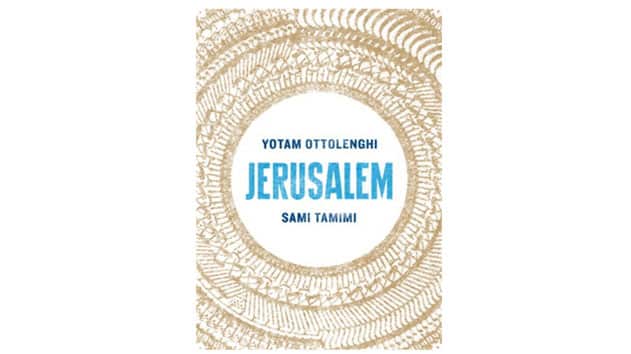
The book’s first stop is vegetables and what a way to kick off. There’s a psychedelic root vegetable slaw with labneh, not to mention a roasted cauliflower and hazelnut salad, which, the intro reveals, was inspired by Australian chef Karen Martini. Jerusalem is broken up into your stock-standard chapters – pulses, soups, meat, etc, but with one anomaly: stuffed – a section devoted to the much-loved technique of hollowing carrot, eggplant and even quince, and filling with ingredients of contrasting colour, texture and taste. For dessert, there’s the stand-out mutabbaq – a popular Palestinian pie that follows the theme of using soft white cheese in sweets.
Drawing on techniques and ingredients from Turkey, Morocco, Lebanon and beyond, the book defines Jerusalem’s cuisine as born from "the peoples that have been coming and going for millennia".
This is good-looking food, and yet the photography inspires rather than intimidates. The authors’ interspersed anecdotes reveal the complex history of the Holy City, and you get the sense that, as far as melting pots go, this is the real deal; a place where religions, traditions and worlds have converged to form a cuisine that we really should have known about long before Ottolenghi and Tamimi showed up.
Cookability
The recipes are, in every sense, approachable. The ingredients are hardly new, aside from date syrup (its fruity sweetness is said to lend itself nicely to roasted veg), instructions are direct and, perhaps best of all, the resulting dishes are photo-worthy.
Must-cook recipe
Lamb shawarma.
Most surprising dish
Roasted potatoes with caramel and prunes.
Kitchen wisdom
"A hummusia is a simple eatery specialising almost only in hummus, normally open for breakfast until late afternoon. The hummusia fetish is so powerful that even the best of friends may easily turn on each other if they suddenly find themselves on opposite hummus camps."
Ideal for
Dinner party enthusiasts looking to extend their abilities and kitchen cred; lovers of Egyptian, Lebanese, Jewish and Middle Eastern cuisine; part-time vegetarians; and those whose pantries are no strangers to za’atar and sumac.
Cook the book
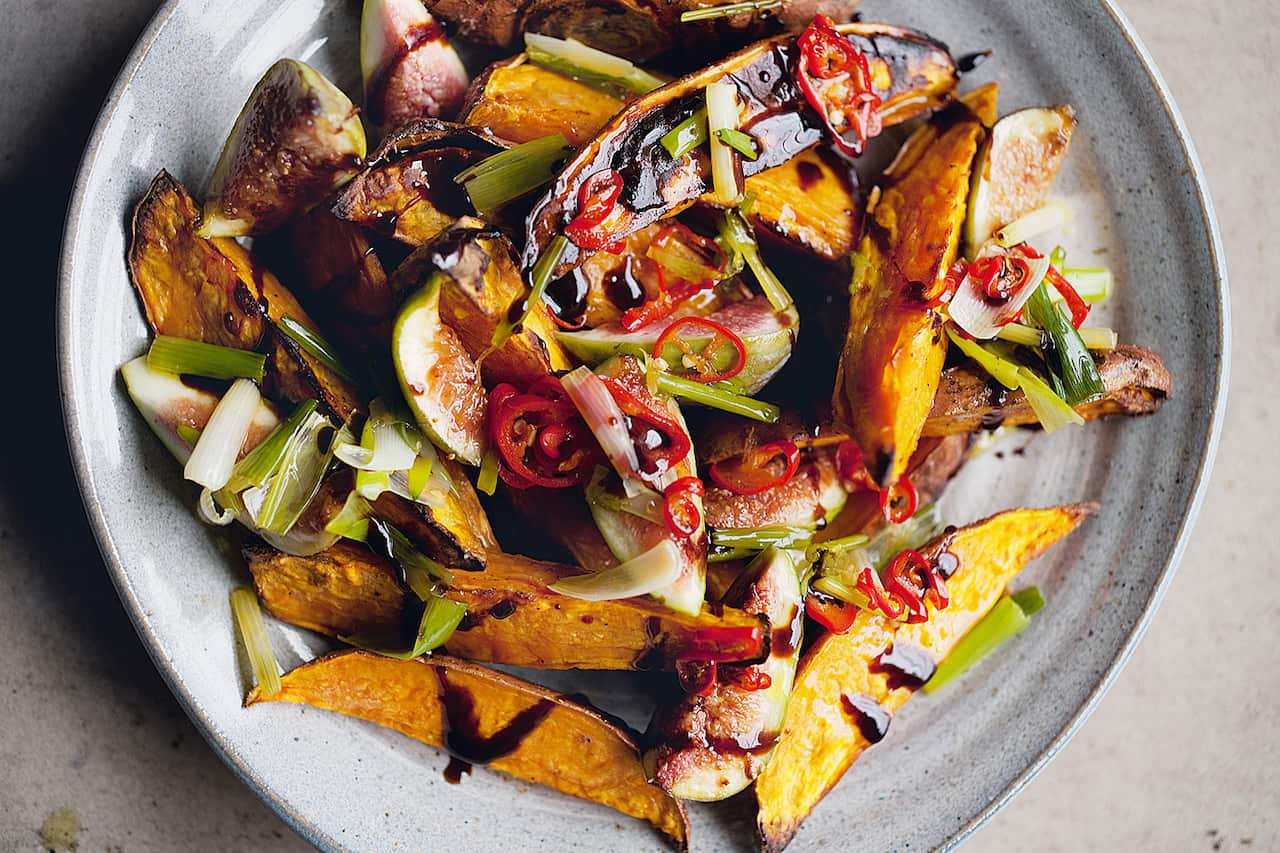
1. Roasted sweet potatoes and fresh figs
This unusual combination of fresh fruit and roasted vegetables is one of the most popular at Ottolenghi. It wholly depends, though, on the figs being sweet, moist and perfectly ripe.
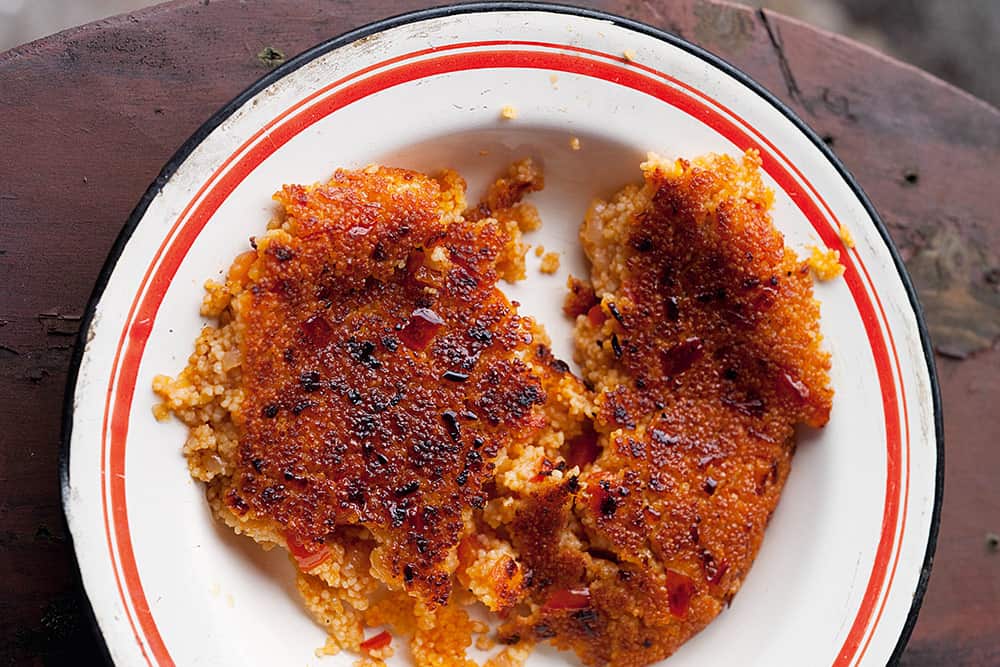
2. Couscous with tomato and onion
All we did was add a crust, similar to Iranian tadik, which is a famous rice dish cooked in such a way that a crispy crust forms at the bottom of the pot; this crunchy bit is everybody’s favourite.
3. Roasted chicken with Jerusalem artichoke and lemon
The combination of saffron and whole lemon slices does not only make for a beautiful-looking dish, it goes exceptionally well with the nutty earthiness of the artichokes.
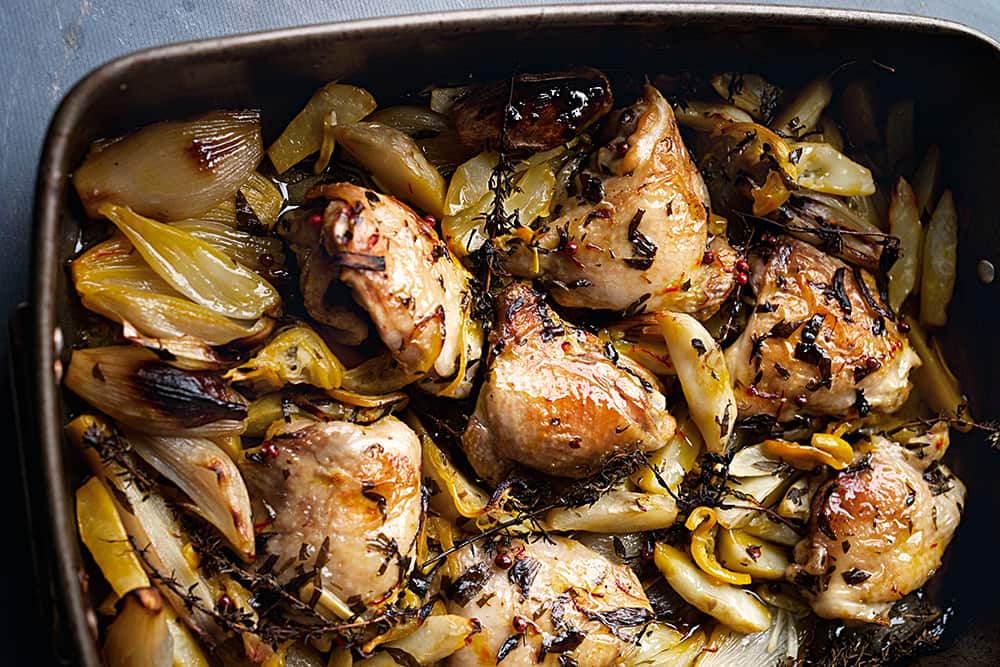
Recipe from Jerusalem by Yotam Ottolenghi and Sami Tamimi, with photographs by Jonathan Lovekin. Published by Ebury Press.
Watch Jerusalem on a Plate
Internationally-renowned chef Yotam Ottolenghi returns to his home town of Jerusalem to discover the hidden treasures of its extraordinarily rich and diverse food culture. He meets and cooks with both Arabs and Jews in restaurants and at home who draw on hundreds of years of tradition to create the dishes that define the city, and explores the flavours and recipes that have influenced his palate. From the humble street foods of hummus and falafel to the cutting edge of Jerusalem cuisine, Yotam uncovers the essence of what makes the food of Jerusalem so great.

SBS Food is a 24/7 foodie channel for all Australians, with a focus on simple, authentic and everyday food inspiration from cultures everywhere. NSW stream only. Read more about SBS Food

Have a story or comment? Contact Us



