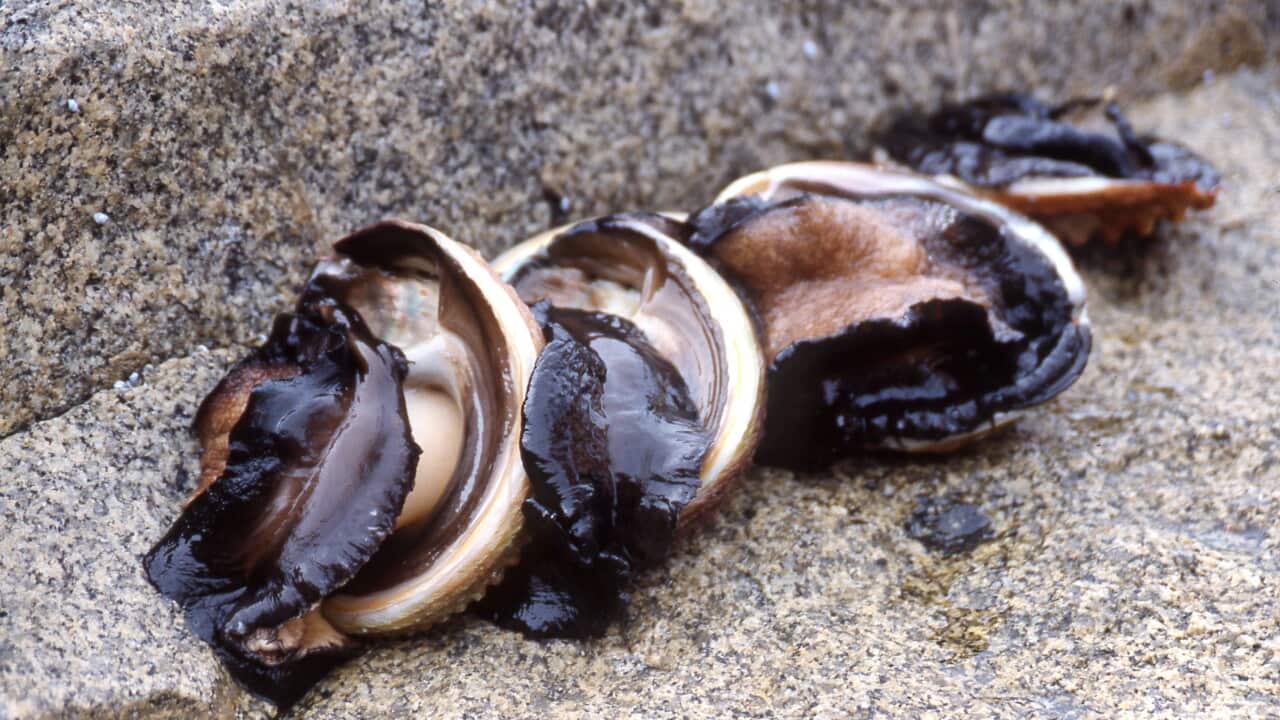
Daniel Kelleher has been diving for abalone since he was a boy. Looking out over Turrakana/Tasman Peninsula, he reveals it's a treasured tradition he has passed down to his own children.
"I grew up near the beach, and my earliest memory is diving for abalone," Kelleher says.
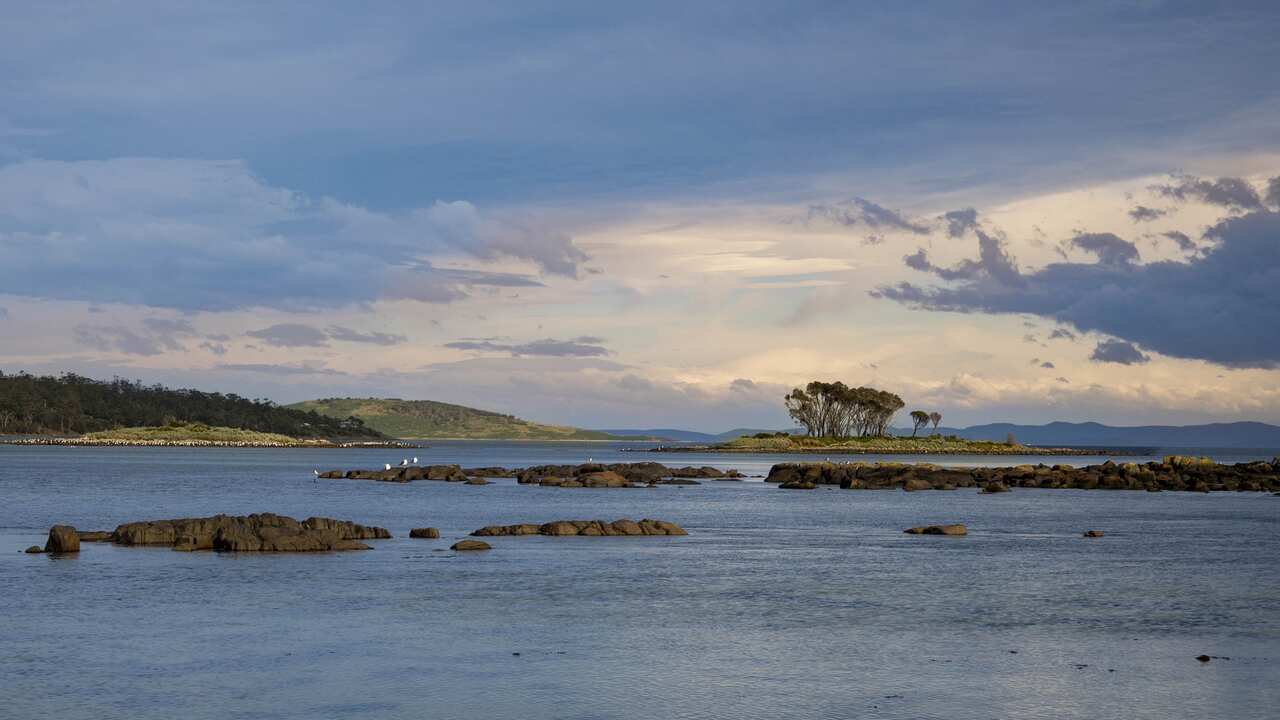
"Coming down here, and looking at this beautiful country, those two islands out there, Brother [Island] and Sister Island, that's where I teach my boys to dive for abalone now."
For the former marine biologist, abalone is more than a delicacy. It's family, culture and a relationship with Sea Country.
"Abalone is everything. It's culture, it's food... and it's beautiful food," he says.
"It's been part of our culture for 40,000 years."
A food that's sustained people for millennia
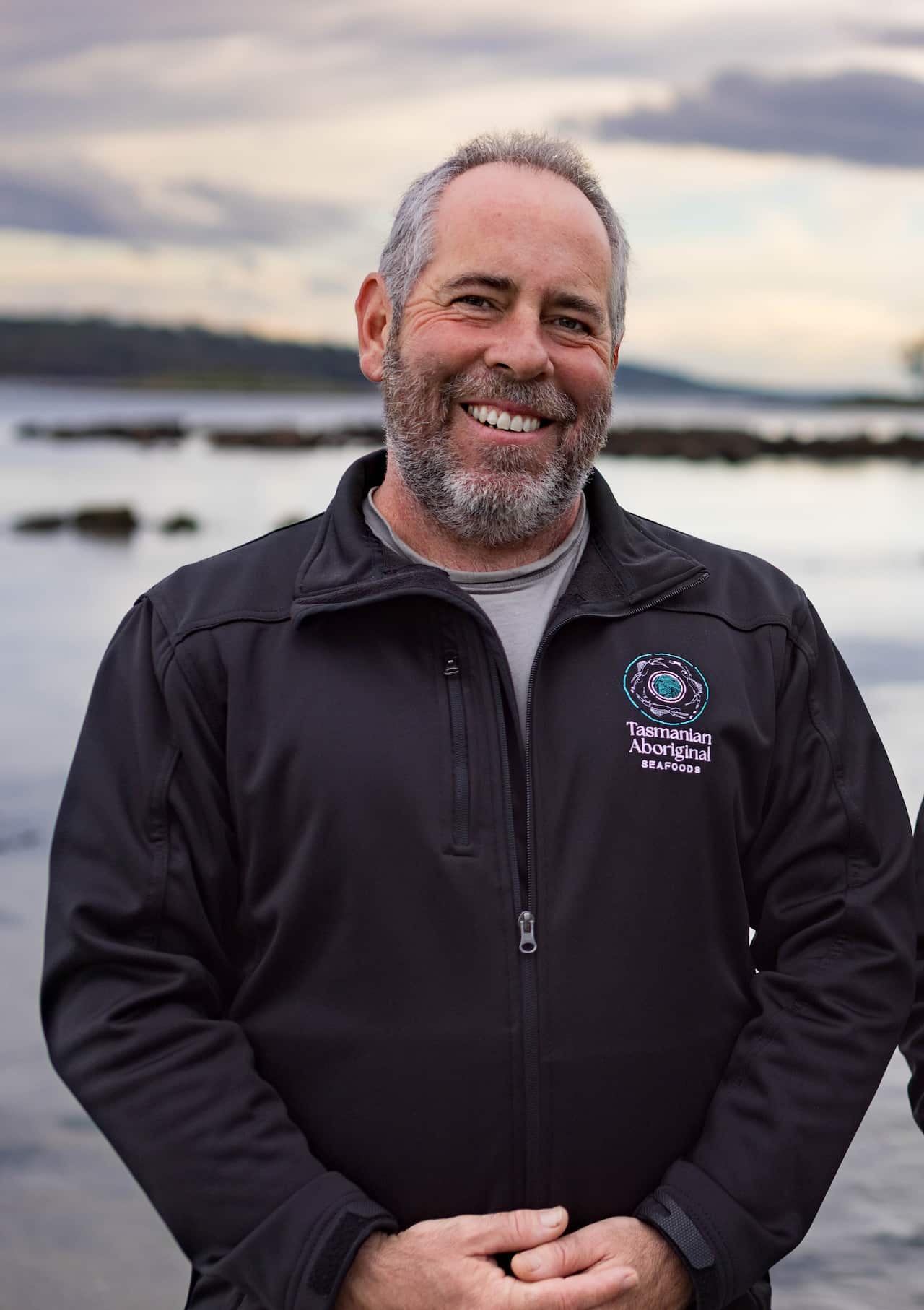
First Nations people have been diving for abalone off the coast of Lutruwita for tens of thousands of years. Traditionally, it was women who collected the abalone - women were of the sea, men were of the land, and everyone came from night sky country. They used handwoven baskets, dived with hand-crafted tools, and collected abalone as a key food source.
"It was traditionally Aboriginal women's business to go out and do that," says Kelleher. "They went down with wooden baskets, no scuba tanks, and free dived to prise abalone off the rocks."
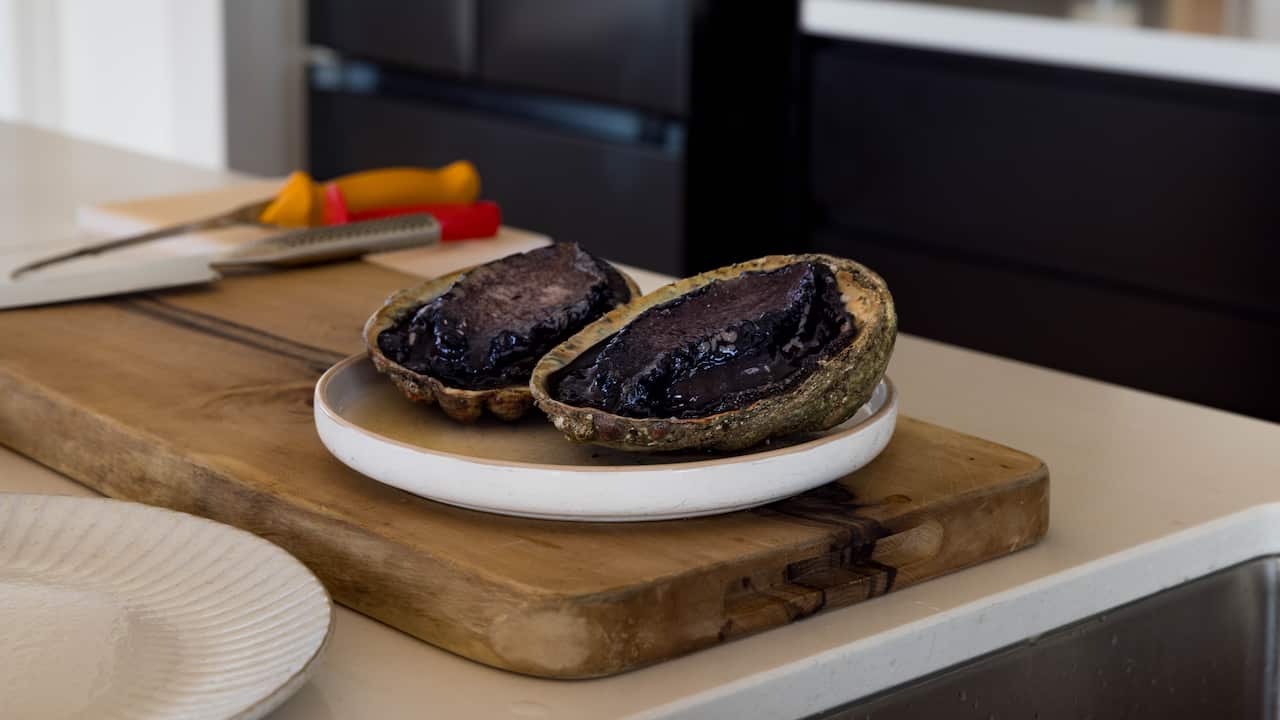
These days Kelleher likes to serve abalone flash fried in a pan with some garlic and chilli, but traditionally preparation was much more simple.
"They would bring it back, put it straight over an open fire, cook it in its shell... a very simple way: cooked in its own juices," he says.
"[Abalone] was abundant and it was a base protein. It wasn't for special occasions or prized in the way people prize it today."
Sustainability begins with culture
Kelleher's relationship with Sea Country also shapes how he approaches commercial harvesting today.
He is a director of the Land and Sea Aboriginal Corporation Tasmania (LSAT), which runs Tasmanian Aboriginal Seafoods, Tasmania's only producer of culturally fished abalone. Unlike farmed abalone, every animal is hand-collected by divers from natural reefs.
While Tasmania still has a strong abalone population, Kelleher says the sustainability of Tasmanian abalone is their number one consideration, from when and where the abalone is sourced, to quotas and restrictions on how much commercial and recreational fishers can take.
LSAT doesn't fish for abalone during spawning season, which is generally during Tasmania's summer months, despite it being when the best weather is, and when Kelleher says the export markets in Asia really want it.
"For us, culturally, it is really important to ensure that abalone can reproduce and repopulate. That way we have a truly sustainable product and practice," he says.
Another key focus is minimising waste. So every part of the mollusc gets used.
"The shells are donated for jewellery making," Kelleher says.
"The guts are disposed of. The side bits we cut off now go to a pet food supplier to make pet food treats. One chef we supply keeps the offcuts and makes a garum, a fermented sauce, from them."
When the ocean changes
Fishing for abalone might be as simple as prising them off the rocks, but there's nothing easy about the job.
"It's dangerous," Kelleher says.
"You're dealing with great white sharks. You're often working remotely, where there are no Bondi lifeguards and no one is going to come and save you. You might be in a small 17-foot tinny with a 60-horsepower engine, one deckhand, and be 30 kilometres from anywhere else."
Despite the hazards, Kelleher says there's nowhere he'd rather be.
"You're on Country, surrounded by humpback whales, dolphins, seals, rock lobster, urchins, scallops and all kinds of beautiful seafood," he says.
But while sharks and rough seas have always been part of the job, a less visible threat is becoming increasingly difficult to ignore.
The impacts of climate change are already being felt beneath the surface.
"We're in the water, with divers in the water just about every day. They're telling us the waters are getting warmer," says Kelleher.
"We know the East Australian Current running down the east coast from Sydney to Hobart is getting warmer. We know we've nearly lost giant kelp on the east coast of Tasmania. We know invasive species like sea urchins are moving in, creating barrens and stripping out habitat for abalone.
"Tasmania is still a pretty cold place, so we think we're okay for a few decades yet, but it's not looking good for species like abalone that rely on cool, nutrient-rich ocean waters."
Bringing abalone back to Australian plates
For Kelleher, the future of abalone depends on more than healthy oceans. It also depends on Australians rediscovering the cultural and culinary value of a seafood that has long been prized around the world.
Abalone is considered a luxury seafood across much of Asia, where it's often served during Lunar New Year celebrations as a symbol of prosperity and good fortune.
Yet despite being harvested in Australian waters, more than 90 per cent of Australian abalone is exported to Asian markets. Kelleher would like to see far more of it stay closer to home.
"We want to get abalone back on plates, not only for Tasmanian Aboriginal people and Aboriginal people around Australia, but for Australia more broadly," he says.
Daniel Kelleher was interviewed by NITV's Zev Ryall, who travelled to Tasmania as a guest of Tourism Tasmania.

SBS Food is a 24/7 foodie channel for all Australians, with a focus on simple, authentic and everyday food inspiration from cultures everywhere. NSW stream only. Read more about SBS Food

Have a story or comment? Contact Us