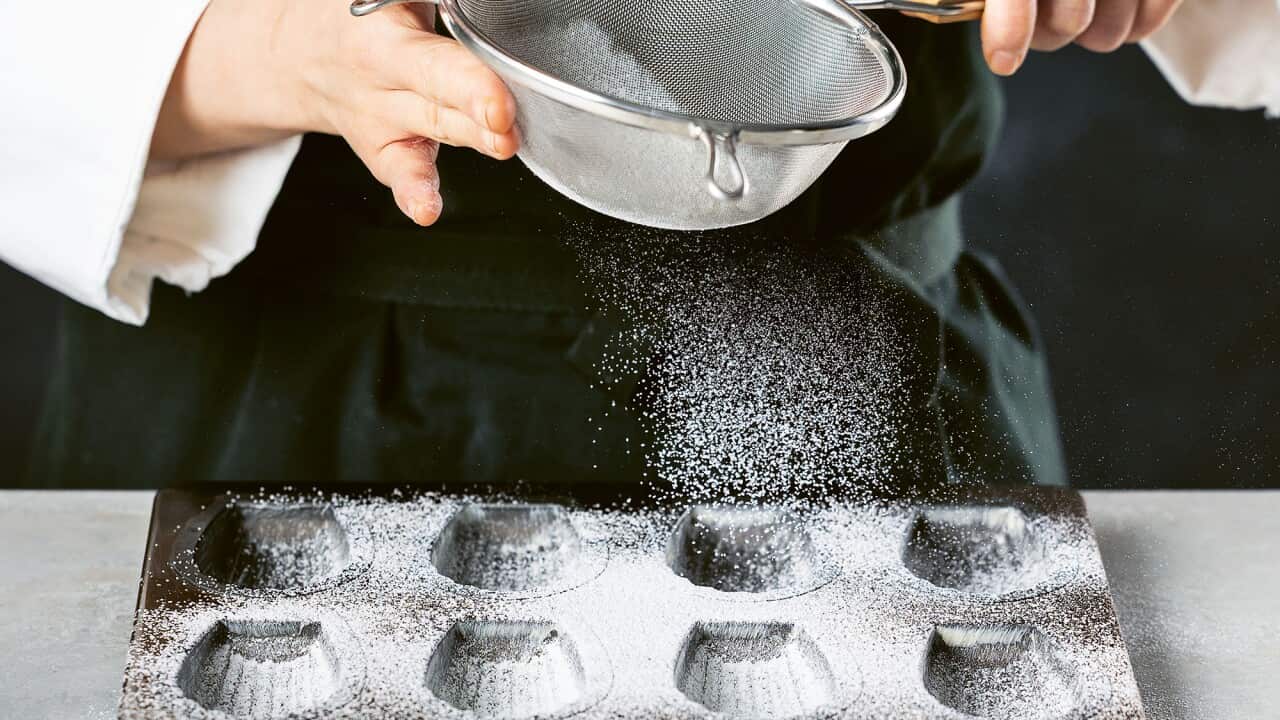
A madeleine is a small French pastry, golden at the edges, soft and buttery inside, and best enjoyed warm.
The traditional madeleine is made in the classic shell-shaped moulds but there are all sorts of shapes and sizes you can experiment with, from teddy bears, mini-cakes and bananas to cats, crowns and cacao pods. Whatever the size of your mould, you want to fill the cavities 80 per cent full, so if you choose a smaller mould than the one specified, stick to the 80 per cent full rule. You can make more madeleines and bake for a shorter time.
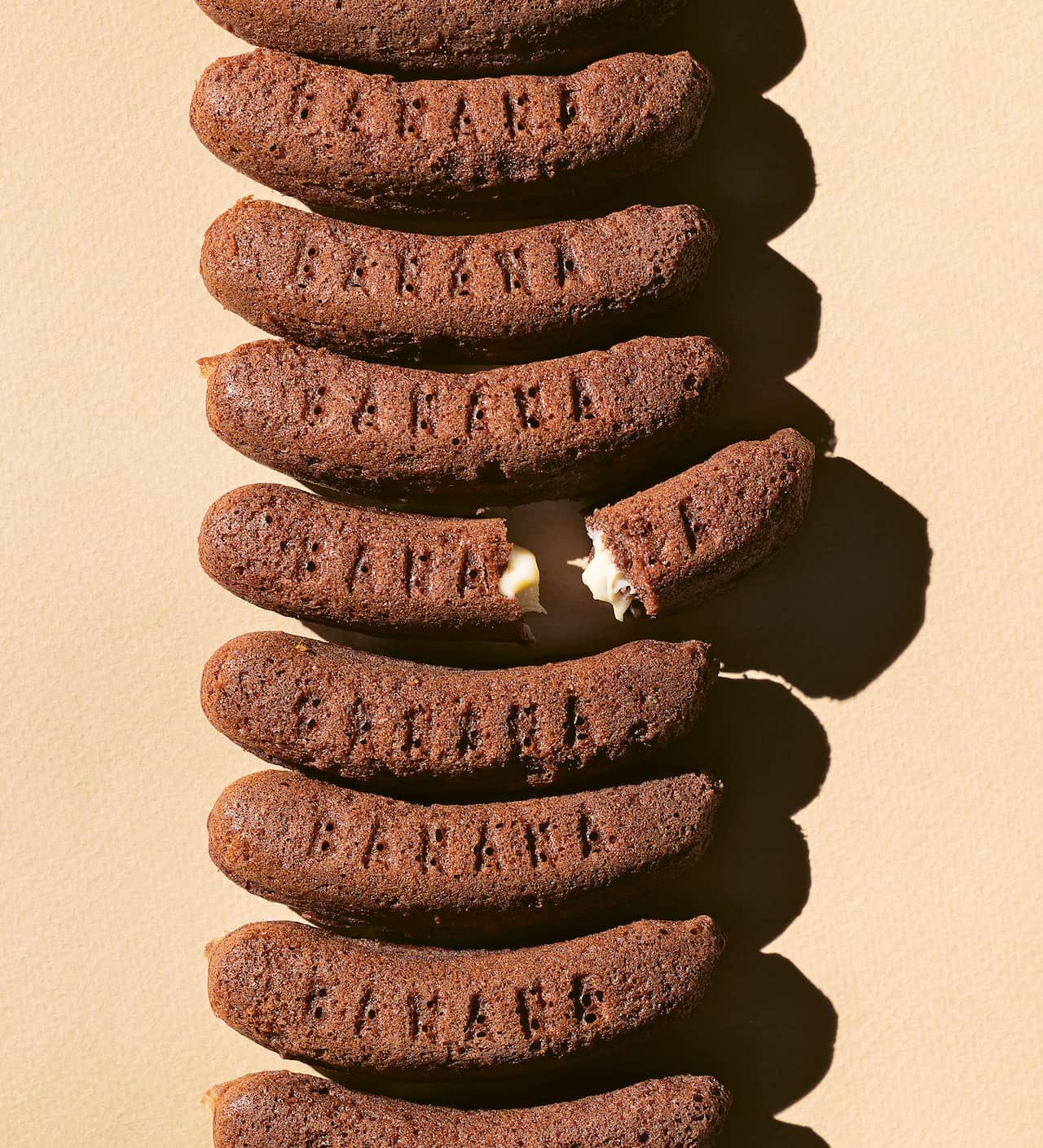
If you don’t have a madeleine mould, don’t let that stop you. You can use a muffin tray, a round silicone mould, even a small baking pan if you like.
Popular mould brands include Chiyoda (Japanese, tin-plated steel with silicon coating); Woojung (Korea, carbon steel with SILPAP no-stick coating); Gobel, Matfer, De Buyer (French, tin-plated or coated steel); various brands using aluminised or carbon steel with non-stick coating; and moulds made with silicon.
A properly prepared mould ensures clean release, defined shape and a beautifully even crust. Different materials require different approaches. Here’s how we prepare ours.
Steel moulds
If you’re using Chiyoda or Woojung moulds and they’re still in good condition, you can usually skip the butter- and-flour step. Simply wipe a very thin layer of neutral oil (like grapeseed) over each cavity using a soft tissue. Even high-end moulds like these may eventually start sticking as their coatings wear. In that case, lightly butter and flour the moulds before use.
Butter-and-flour method
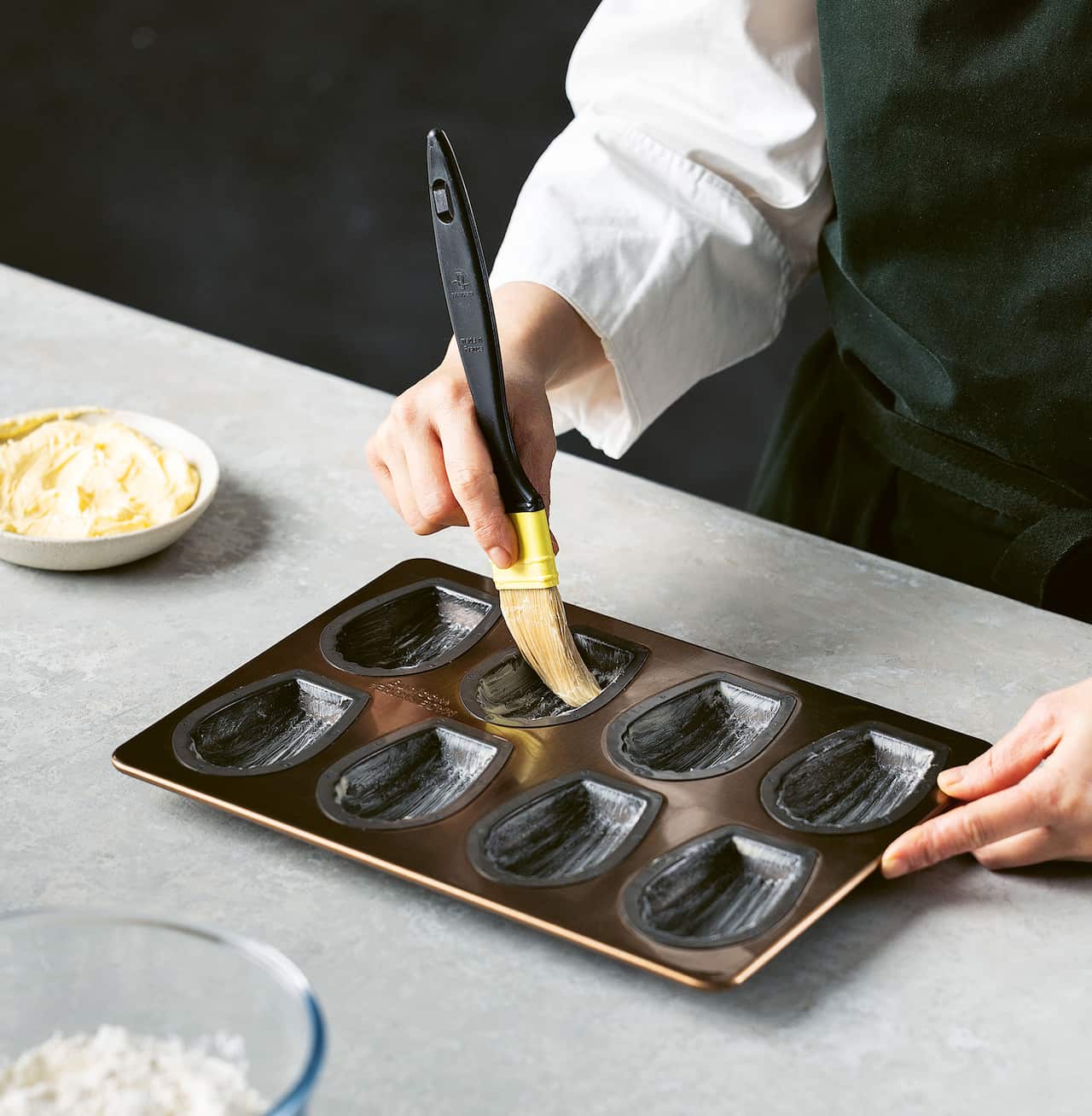
To protect the coating and extend the mould’s life, you can also use this traditional butter-and-flour method.
- Use softened butter (not melted) and brush an even layer over each cavity.
- Dust lightly with strong flour or bread flour – the larger particles help with release.
- For chocolate-based recipes, use cocoa powder instead.
- Turn the coated mould upside down and tap gently to remove the excess.
Silicone moulds
Spray the mould generously with oil spray. This helps improve colourisation and surface definition. Always place the silicone mould on a baking tray before filling and baking to ensure even heat distribution and support.
This is an edited extract from Madeleines by Hyoju Park and Rong Yao Soh, published by Quadrille. Available in stores nationally from 24 February. Photography by Michael Gardenia.

SBS Food is a 24/7 foodie channel for all Australians, with a focus on simple, authentic and everyday food inspiration from cultures everywhere. NSW stream only. Read more about SBS Food

Have a story or comment? Contact Us