Anyone who stops by Guru Nanak Sikh Temple in Edmonton, south of Cairns, on Sunday afternoons can expect a free spread which might include chapati, a hearty bowl of dhal, chai, plus fresh mangoes or mango jam in the summertime.
For many people, the sight of Sikh volunteers handing out free and delicious food to the community in times of crisis – bushfires, floods , pandemic lockdowns – have become ubiquitous. Gurdwaras are more than just Sikh places of worship, they are places for communal dining where everyone is welcome - anytime.
Gurpreet Kaur Kotkapura, one of the volunteers at the Sikh Temple in Edmonton explains this further. “On Sundays we have the usual langar, attended by about 50 people, but outside of that, if anyone drops in, we offer tea and coffee,” she shares. “We get many truck drivers who stop here for their mandatory break.”
What is a langar?
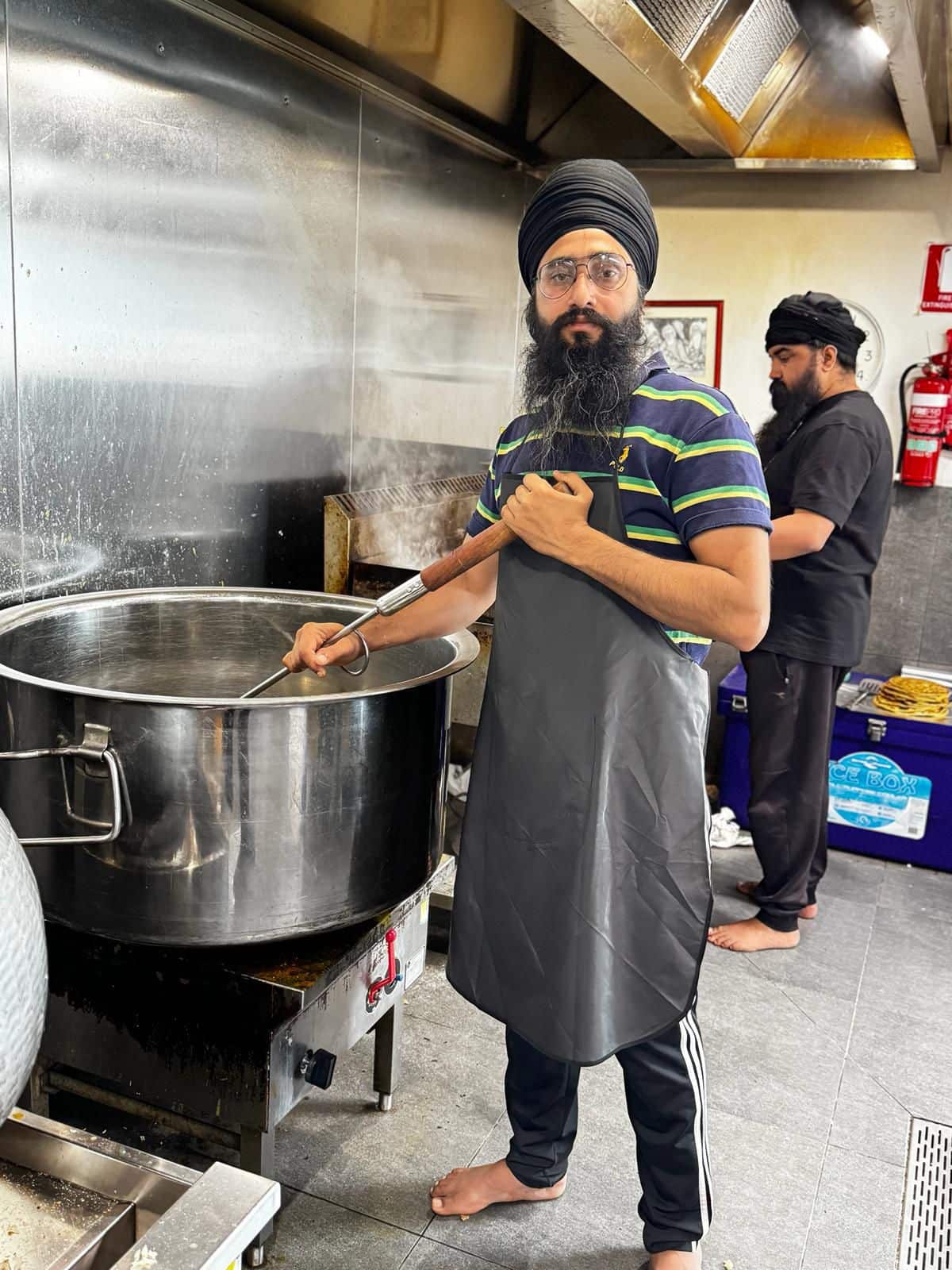
The ‘usual langar’ here refers to community kitchens in gurdwaras where volunteers cook and serve food; these acts of service are deeply embedded in the religious tenets. “It is related to Guru Nanak’s teaching of equality, where everyone cooks, cleans and eats together. The work is done by dedicated volunteers,” Jarnail Singh explains. As the former committee president of the Sikh Gurdwara in Perth, he has overseen his share of langars. “The kitchen is open every day but Sundays are the busiest and we serve about 4,000 to 5,000 people. We get all sorts of people attending, not just the Sikh community.”
What does it take to feed so many people?
So what does it take to plan and manage meals with so many variables, such as volunteer availability, food availability and cost, an unpredictable number of attendees, not to mention the too-many-cooks-spoil-the-broth problem? The first step is to plan the vegetarian menu and in general it consists of carbs (rice, chapati), curry (chickpeas, lentil, spinach), vegetables (mixed vegetables, potatoes) and occasionally, desserts (kheer, gulab jamun, fruit). While the food is typically Indian-centric, the Sikh community also learns and adapts to suit the changing demography and local cuisine.
Harpreet Singh Kandra, a volunteer at the Gurdwara Siri Guru Nanak Darbar in Officer, south of Melbourne, can attest to this. “On Fridays, one of the gurdwaras prepares vegetarian pizzas to attract the youths and at times we purchase pizzas for kids’ events from local stores,” Kandra says. “We also found that nut allergies can be an issue for people, so we strictly do not use any nuts when we make kheer.”
The next step is to source the ingredients, and each gurdwara does it differently depending on the location, congregation size and simply, what is needed for that week. “We have an Excel sheet to track what we need. For 100 people, we need 4kgs of paneer and 9kgs of green peas for matar paneer, 5kgs of dhal, 7kgs of wheat flour for rotis, 6kgs of rice and 10kgs of yoghurt,” Kandra shares.
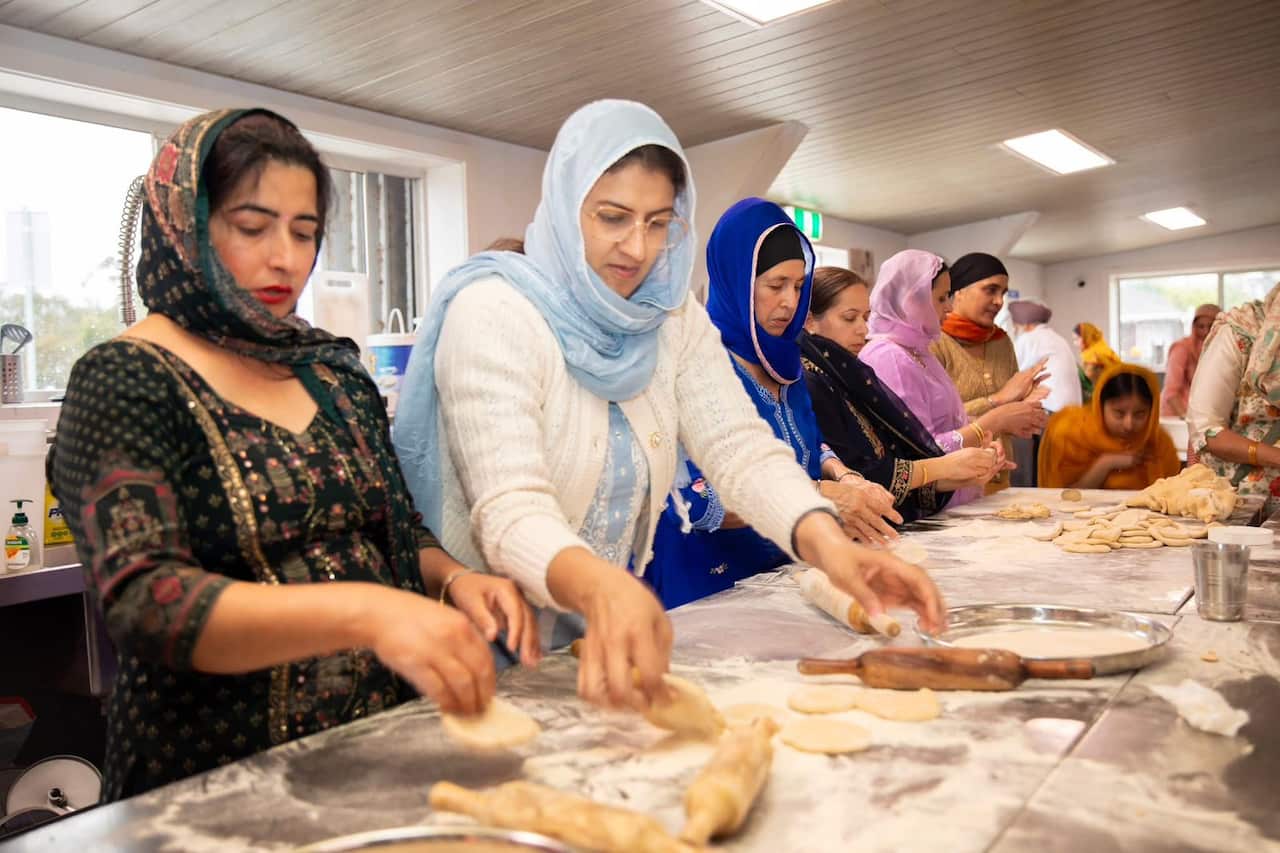
Each week, selected families volunteer to sponsor the langar, which can also include buying the ingredients. If not, a nominated volunteer does the weekly shop or works with dedicated suppliers to order spices and vegetables in bulk.
As a resident in Far North Queensland, Kotkapura has another option for her agriculture supply chain. “Many of the community members here have small acres of land which they cultivate and grow vegetables like bottle gourd, bitter gourd, okra and share the excess with the Gurdwara. We never have to buy coriander, chilli, potatoes,” Kotkapura says proudly.
Many hands make light work
The final and important step is prepping and cooking the food. To manage this, there is usually a seasoned volunteer chef and a team of sous chefs. The chef determines what is needed for the day and directs people to prepare the ingredients (wash, cut, assemble), stir pots of bubbling curries, fill serving plates and keep the space tidy.
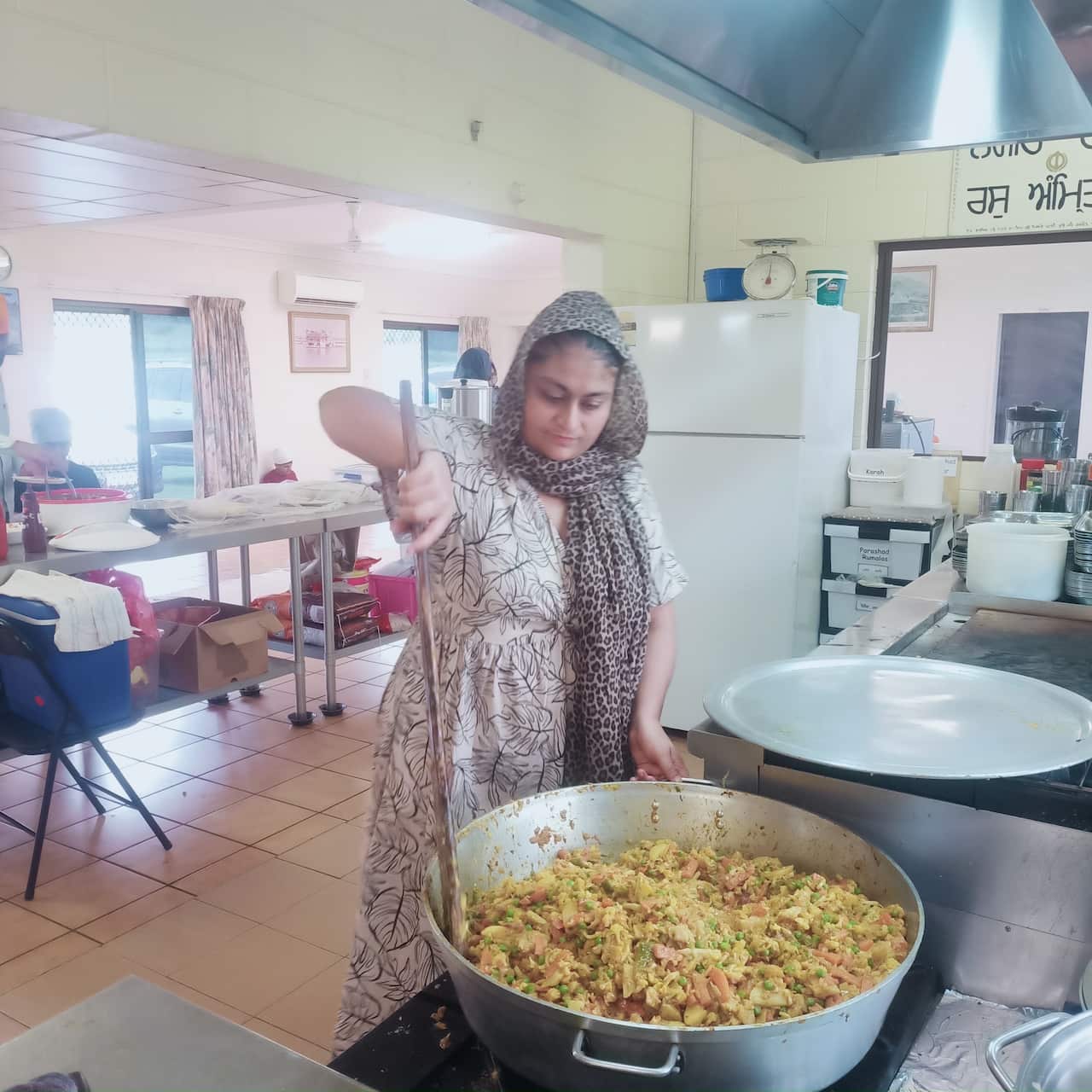
Although it is perfectly acceptable for guests to just eat and leave, most people want to contribute something in return. This system makes it easy for people, especially those who have never been to a langar, to volunteer their time and energy. “If people want to help, we ask what they can do. Sometimes what is needed is sweeping the floors or cleaning the dishes but if they really want to help in the kitchen, we will accommodate them. Even if they cannot cook, they can chop vegetables or even just hand things to the cook, like an assistant,” Kotkapura says.
Many gurdwaras have this food system down to a science and fine-tune it over time, such as using food processors to grind spices but declining the use of dishwashers, largely because the volunteer work is part of the selfless act taught in Sikhism. “In India, big gurdwaras might use a chapati maker, which is more efficient than making it by hand, but I have not seen one in Australia,” Singh says.
Whether the chapatis are made by hands or with an appliance, gurdwaras are a welcoming space for the broader community. “We are never short of volunteers. Everyone here chips in,” he concludes.

SBS Food is a 24/7 foodie channel for all Australians, with a focus on simple, authentic and everyday food inspiration from cultures everywhere. NSW stream only. Read more about SBS Food

Have a story or comment? Contact Us