My mother’s small and delicate hands worked swiftly. Clinging to her fingers, with their smooth olive skin and unmanicured yet perfectly oval nails, were small rectangular pieces of gandana, a type of native Afghan allium that sat somewhere between chives and leek. These thin-bladed leaves shooting out from a modest white bulge and mess of stringy roots were so highly revered in my family home that they transfigured into a vegetable of near sacredness. Not only was gandana fabled for its sweeter and less pungent flavour than its stand-ins, such as garlic chives, but also for its rarity and the epic journey it had taken to arrive to us in Australia.
It had been, no doubt, snuck into the country as tiny black seeds by an anonymous aunty, impervious, possibly wilfully, to the potential seriousness of her smuggling operation, risking the ire of the law for the love of food and a chance to taste a living reminder of home.
This small but potent relic of Afghanistan had embedded itself into garden beds thousands of miles away from its origin, where it sprung forth bountifully under the hot Australian sun...
This small but potent relic of Afghanistan had embedded itself into garden beds thousands of miles away from its origin, where it sprung forth bountifully under the hot Australian sun. It had been harvested and shared around our community, and that summer’s day, the gandana had found its way into our kitchen, where it was organised into four or five handful-sized stacks of deep-green leaves with an elongated appearance and velvety texture.
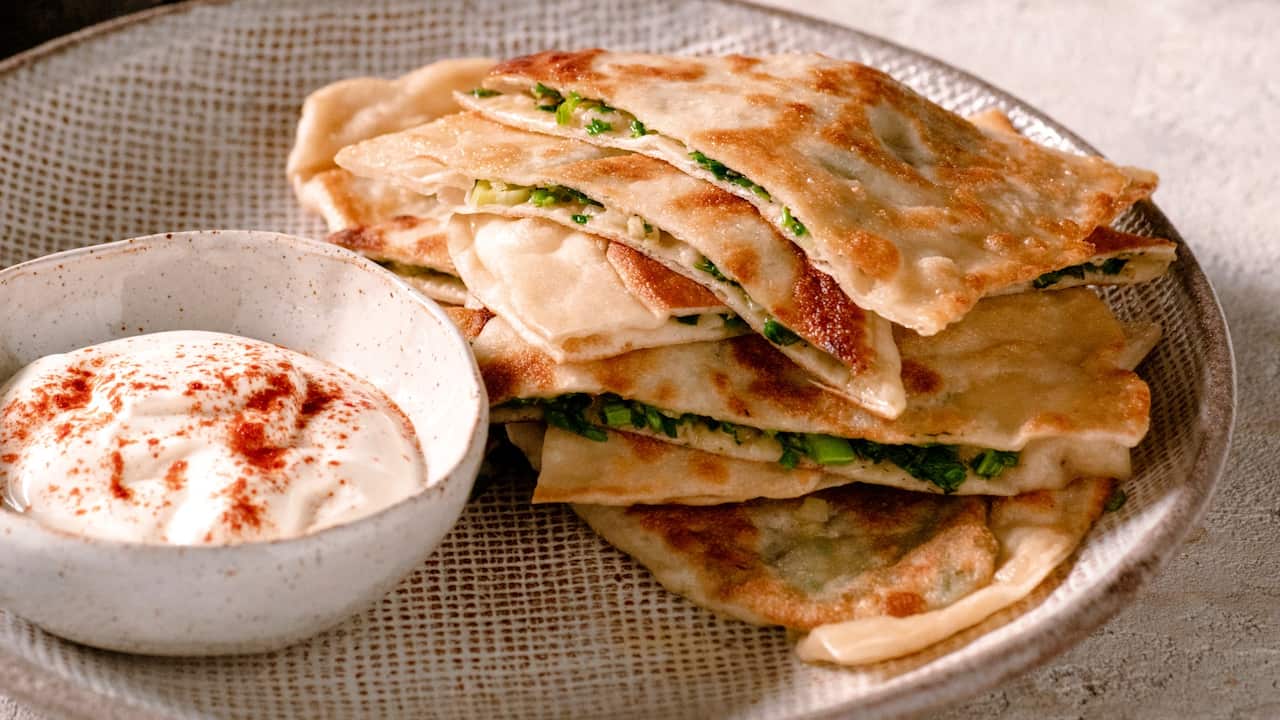
Bolani, a stuffed flatbread, is another dish traditionally made with gandana. Try this Ayubi family recipe, adapted to Australian ingredients.
As my mother diced deftly through the small heaps, tipping each lot into an awaiting large plastic colander sitting in a bowl of water, ready to wash off any soil and grime, the gandana’s distinctive aroma filled the room: a slightly sharp oniony smell, tempered by earthiness. I sat at the kitchen table ready to be instructed by my mother that we were ready to begin using the gandana to stuff ashak dumplings.
Jostling with me for prime position to nibble on things, or to be in charge of the imminent dumpling-folding proceedings, were my sisters. We were four girls, all under the age of nine when we first left Afghanistan in the mid-eighties. We had endured those early years of dispossession and loss as children and together. Each of us had been shaped by the experience in our own way, but what it did for all was to bind us so tightly that, so the story goes, if one of my sisters heard the other crying from an adjacent classroom, she’d weep alongside her in an instinctive act of solidarity.
Making ashak around our kitchen table hinged upon that same spirit of interconnectedness. It meant working alongside one another – some kneading and rolling out dough, others cutting the large flattened sheets into high stacks of circular dumpling skins roughly the size of the palm of one’s hand, and all of us hand-stuffing each of the skins with gandana, pressing them shut into small semi-circles with just enough water to make them stick and not too much to make them gooey and formidably unable to seal. Then we’d watch as they boiled in bubbling salted water for a few minutes until the skins became translucent, revealing a tinge of the chlorophyllic gandana green that they held within.
Sitting around our scratched dining room table, the ashak that day tasted of different things to each of us.
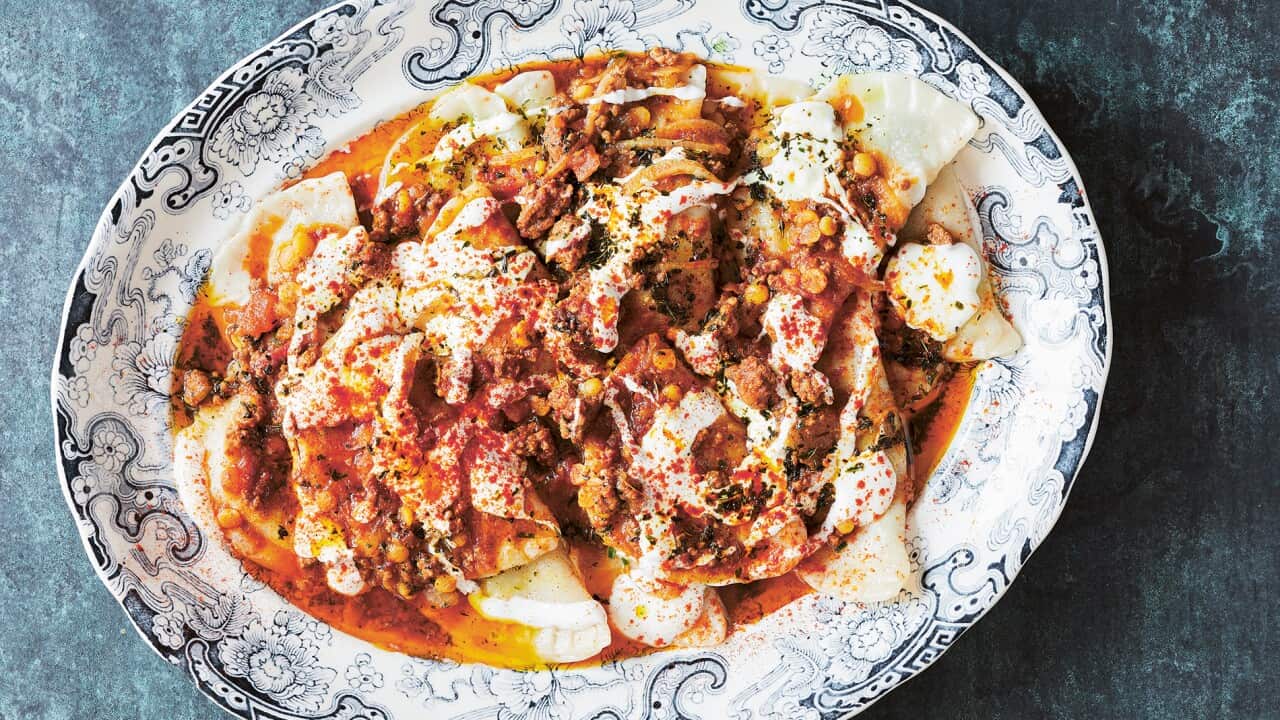
We’d huddle around closer, knowing our meal was nearing readiness, as our mum drained the dumplings, instructing one of us to spread a thick bed of garlic-infused salted yoghurt onto a platter for the ashak to be gently laid out on, ready for the sauce she’d prepared as we were filling and folding away. The topping was a rich and gently spiced tomato, lamb mince and split pea sauce. When oils from the meat released and the sauce’s already deep red colour was enhanced, it was ready, and one of us had the honour of being the artist that added the final delectable decorative touches – doling the sauce out liberally atop the ashak, layering the mass with streaks of more yoghurt, and finally dusting a hefty smattering of dried mint and paprika to complete the masterpiece.
Sitting around our scratched dining room table, the ashak that day tasted of different things to each of us. For my parents, of a generation that left carrying lived experience of what had been lost, each glorious morsel of slippery dumpling skin and fibrous gandana filling sent joy and grief simultaneously dancing across their tastebuds. For me, a baby in my mother’s arms when we crossed the border out of Afghanistan and a child at that table, each bite – with its perfectly harmonised savoury and acidity, its balance of hot dumplings and cold yoghurt – held the flavours of a dawning consciousness.
In a life that was to be defined in many ways by the task of finding belonging amid a torrent of the unknown, of drawing out agency at the border of helplessness, of existing across the worlds of East and West, of making myself a bridge across all manner of gaps – food was sowing within me a critical awareness of all that had been rendered unseen.
In my lifetime alone – from a baby leaving a Cold War–torn Afghanistan in the eighties, to coming of age in a post-9/11 world, through to experiencing with an adult’s consciousness the devastation wrought by the collapse of Afghanistan to the Taliban in 2021 – I formed alongside an increasing hostility towards, and helplessness heaped upon, my ancestral lands. Afghanistan was, apparently, a sinkhole for modernity and inherently fundamentalist, a place where women flourished in miniskirts only fleetingly in the seventies, a place of constant war, where our persistently tribal propensities could not be shaken off – a place, all in all, of no hope. Only, every time I sat at the table that my childhood unfolded around, every mouthful of my mother’s cooking contradicted this pervasive message of our worthlessness. From the ways in which we gathered together to prepare food, to the spirit of hospitality and generosity etched within the practice of the ways in which we ate, to the richness of the flavours and abundance of ingredients on the plate – our food was a freedom song, chanting the buried tunes of our ancestors.
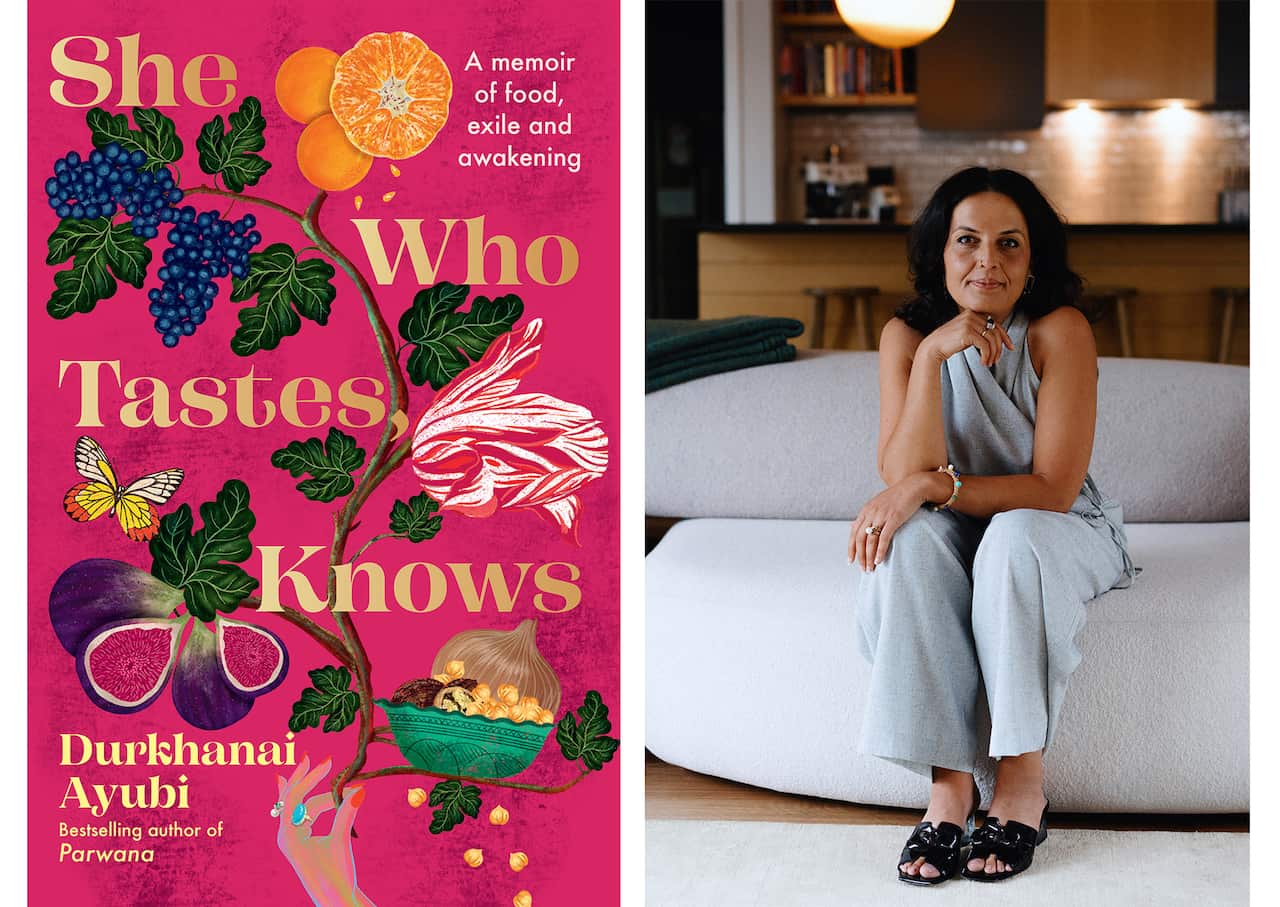
This is an edited extract from She Who Tastes, Knows by Durkhanai Ayubi (Murdoch Books RRP $34.99). Ashak recipe from Parwana by Durkhanai Ayubi, image by Alicia Taylor.

SBS Food is a 24/7 foodie channel for all Australians, with a focus on simple, authentic and everyday food inspiration from cultures everywhere. NSW stream only. Read more about SBS Food

Have a story or comment? Contact Us