
This message shaped the discussion at the Ethiopian Digital Payments Conference 2.0 (EDPC 2.0) in Addis Ababa, where government officials, central bank leaders, fintech innovators and regional institutions assessed the pressures and opportunities shaping Africa’s digital economy.
Despite Ethiopia registering more than 128 million digital accounts, conference data showed that only 30 per cent are active, highlighting a continent-wide pattern in which digital account ownership is rising but meaningful usage lags far behind.
“We need to stop counting accounts and start counting usage,” said Oswell T. Kahonde, Head of Africa at the Better Than Cash Alliance, in an interview with SBS.
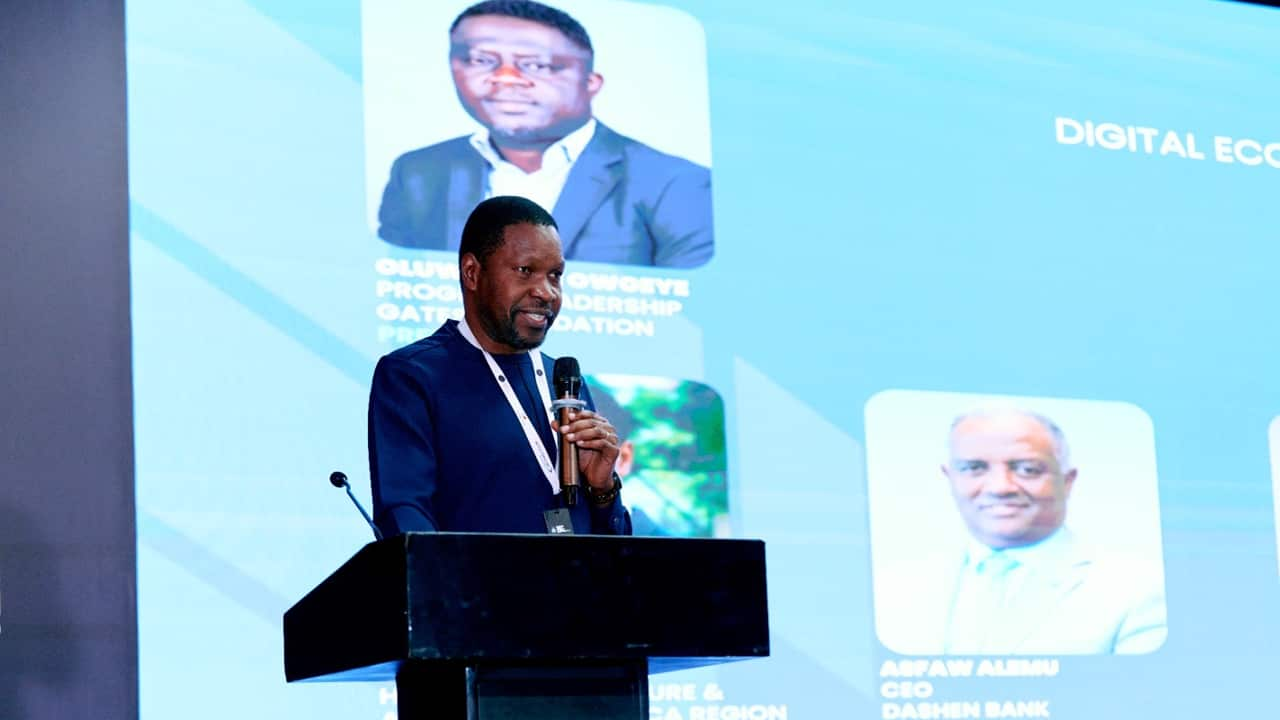
“If only 30 per cent of accounts are active, then the work has just begun. Digital finance must be better than cash, or people will not adopt it.”
Africa’s Digital Trust Deficit
Mr Kahonde warned that Africa’s digital finance expansion is increasingly threatened by a breakdown in public trust, driven by cybercrime, fraud, opaque fee structures, and inadequate consumer protection.
Across rural and informal markets—where millions are encountering digital finance for the first time—even a single negative experience can drive people back to cash-based transactions.
Digital literacy gaps further widen this mistrust. Kahonde noted that women face a 66 per cent knowledge gap in using digital tools, despite being central to agriculture, small business and household finance.
“Most digital systems are not designed with women’s realities in mind,” he said. “Without inclusive design, financial inclusion cannot progress.”
From Expansion to Responsibility
The Better Than Cash Alliance outlines four requirements for responsible digital finance: access, fairness, interoperability and security. Africa has performed well on access, but still struggles with the remaining pillars.
High transaction fees discourage low-value payments, siloed platforms limit interoperability, and cybersecurity challenges leave users exposed. These gaps contribute directly to the high rate of dormant accounts.
“Responsible digitisation is no longer optional,” Kahonde emphasised. “It is the only way digital payments can become the default choice.”
Data, Digital ID and Credit Inclusion
A primary concern raised at EDPC 2.0 was the failure to transform digital payments data into access to credit. Without national data-sharing frameworks, millions of small farmers and entrepreneurs remain invisible to formal lenders—even if they regularly use digital services.
“If institutions cannot see transaction history, they cannot lend,” Kahonde said.
Ethiopia’s Fayda Digital ID system was highlighted as a potential enabler, providing a trusted identity layer that could support secure data exchange and credit scoring—if privacy and governance safeguards are maintained.
Ethiopia’s New Digital Payments Strategy
In response, Ethiopia unveiled its National Digital Payments Strategy (NDPS) 2026–2030, one of Africa’s most ambitious plans for digital finance reform.
Central Bank Governor Eyob Tekalign (PhD) said the strategy aims to raise digital payments volume from 82 per cent of GDP to 750 per cent by 2030, while increasing active digital participation to 60 per cent.
“Our objective is to build a digital payment system that is trustworthy, inclusive and interoperable,” he said.
At the centre of the strategy is EthioPay, a national instant payments platform that integrates banks, mobile money providers, and QR-based systems into a unified network.
Regional Integration Through AfCFTA
Ethiopia’s reforms complement the digital trade agenda under the African Continental Free Trade Area (AfCFTA).
By connecting EthioPay with the Pan-African Payment and Settlement System (PAPSS), Ethiopia could enable cross-border payments in local currencies, reducing dependence on the US dollar.
AfCFTA Secretary-General Wamkele Mene noted that Africa loses $5 billion annually due to currency conversion costs in intra-African trade.
“This is a major step toward financial sovereignty for Africa,” he said.
Digital Transformation as Governance Reform
Deputy Prime Minister Temesgen Tiruneh framed Ethiopia’s shift as a governance reform rather than merely a technological upgrade. With 18.5 trillion birr flowing through digital channels annually, he stressed that trust, transparency and security must anchor the digital transition.
“Digital transformation is fundamentally about governance,” he said. “Trust is the foundation of any digital economy.”
From Access to Action
As EDPC 2.0 concluded, one message became clear: Africa’s digital finance systems will ultimately be judged not by the number of accounts created, but by the number used regularly and confidently.
For Ethiopia and much of the continent, the challenge now is transforming rapid expansion into sustained trust.
“We must solve African problems as Africans,” Kahonde said. “If we build systems people trust, they will use them.”